

The complete guide
How To Choose Floor Puzzles For Kids (And Why 100 Pieces Is The Sweet Spot)
The problem with most kids' puzzles
There are two ways a children's puzzle fails. The first is that it is too easy. A child snaps it together in four minutes, looks up, and asks what else there is. The box goes on a shelf and never comes down again. The second is that it is too hard. The pieces all look the same, the picture is a wall of blue sky, and after twenty minutes of nothing fitting, the child wanders off and the half-built puzzle sits on the table for a week until someone sweeps it into the box.
What you actually want is a puzzle that takes real effort but ends in a finished picture the same day. That feeling of pressing in the last piece and sitting back to look at the whole thing is the reason kids come back to puzzles at all. Get the difficulty right and you are not buying a toy, you are buying an hour of quiet focus that your child chose for themselves.
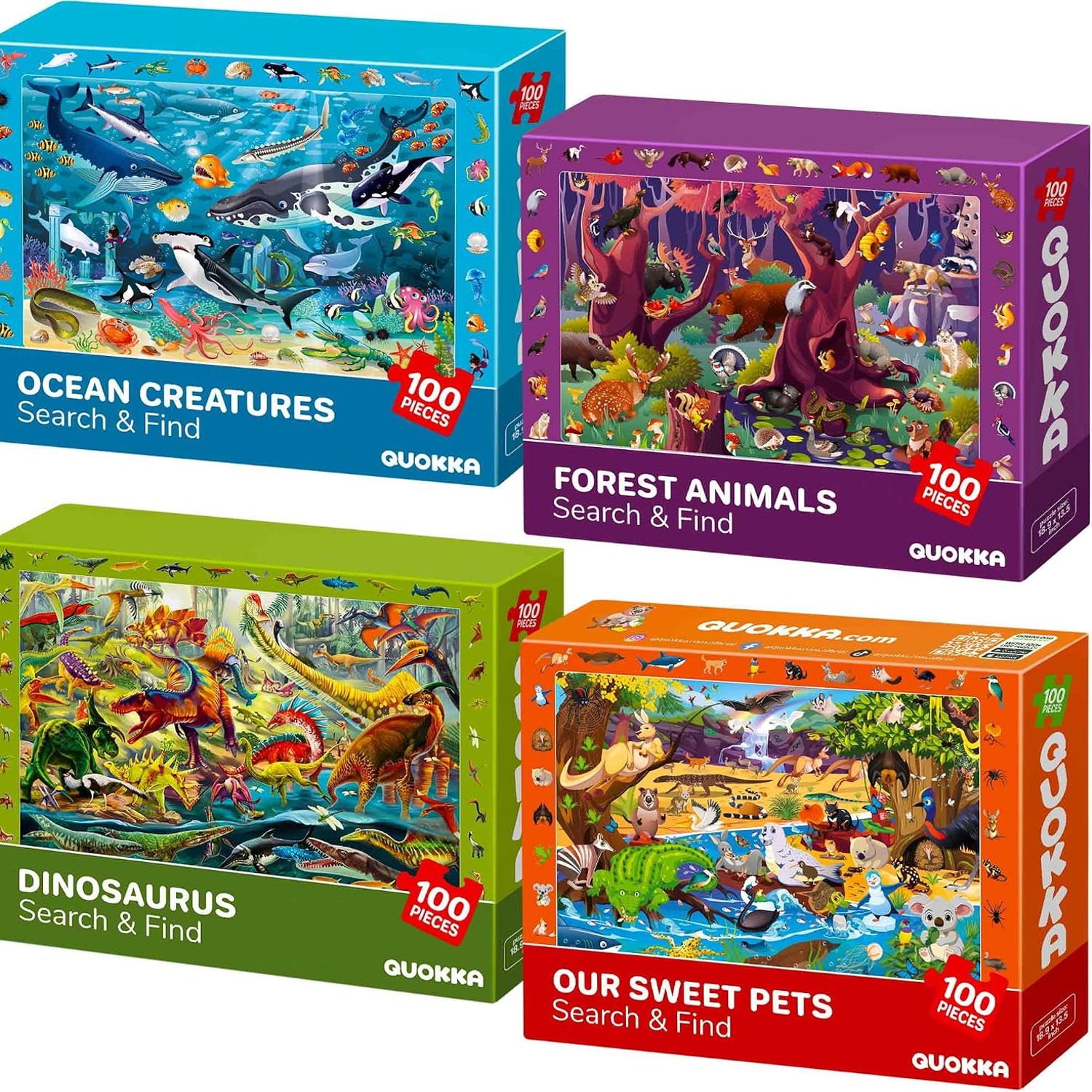
A set of three 100 piece floor puzzles is aimed squarely at that middle ground. Enough pieces to be a proper job, big enough artwork to be worth the trouble, and two more waiting once the first one loses its surprise.
Why piece count is only half the story
Parents tend to shop by piece count, and that is a reasonable starting point. A rough guide looks like this. Around 24 to 48 pieces suits most four year olds. Sixty pieces works for five and six. One hundred pieces is comfortable for six to eight year olds and is a stretch worth making for a confident five year old with company.
But two puzzles with the same piece count can feel completely different. The things that actually change the difficulty are the size of each piece, how varied the artwork is, and how the pieces are cut.
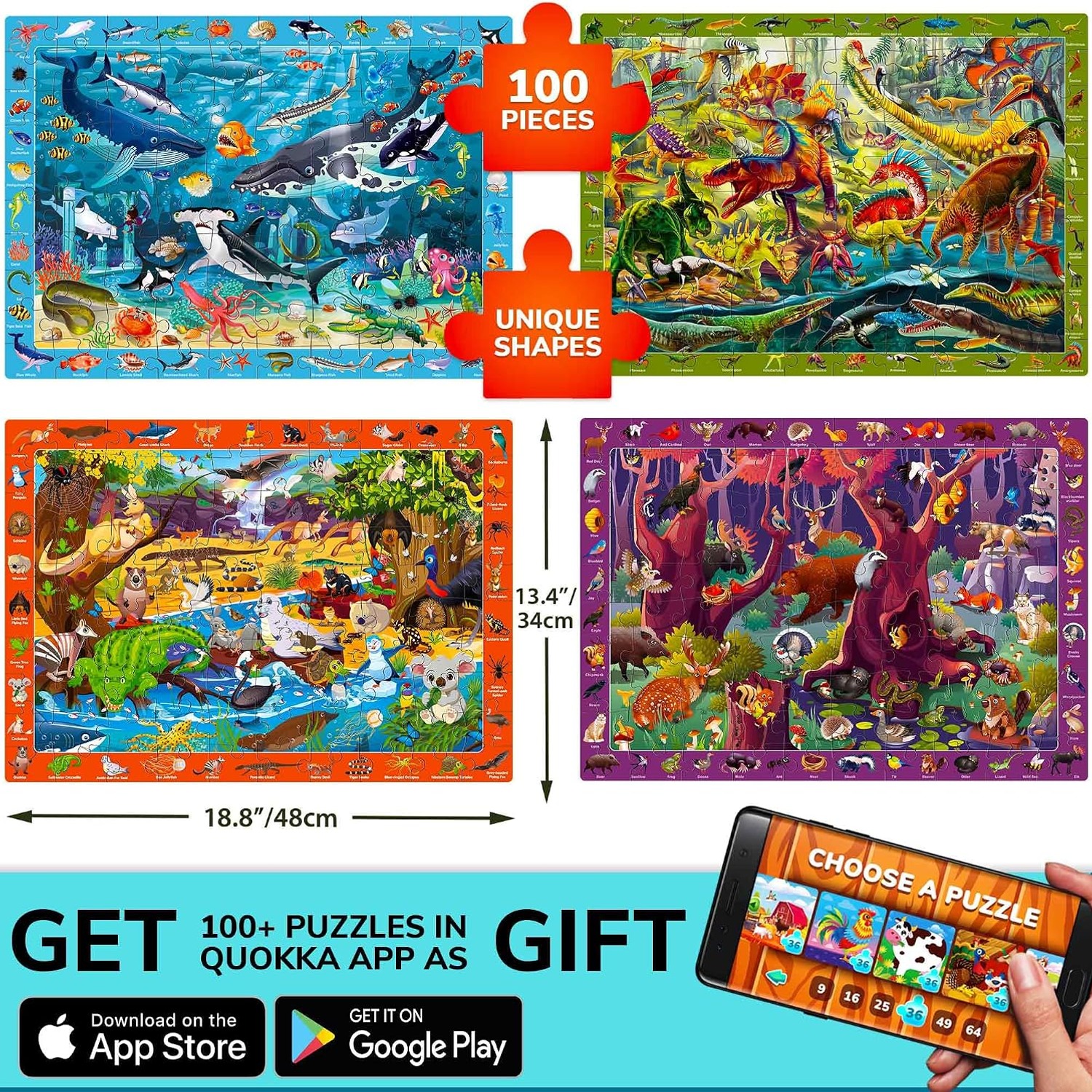
Larger pieces are easier to handle, easier to see and easier to place. Because these puzzles build to 70 cm by 50 cm with only 100 pieces, each individual piece is generous. Small hands can pick one up, turn it over and try it without fumbling. Compare that to a 100 piece puzzle that finishes at A3 size, where the pieces are postage stamps, and you can see why the finished dimensions matter as much as the count.
Varied artwork helps too. A busy scene full of different animals, plants and colours gives a child constant clues. They can say "this bit is orange with a stripe, that goes near the tiger" and act on it. A puzzle that is mostly one colour forces guesswork, which is where frustration starts.
Cut style is the quiet one. When every piece in a puzzle has its own distinct shape, a wrong piece simply will not go in. That honest feedback is what lets a child work on their own without an adult checking every placement. It is a small design decision that changes how independent the play feels.
Who this set actually suits
The listed age range runs from 36 months to 10 years, which is wide. Here is how that plays out in real homes.
A three or four year old will not finish 100 pieces alone, and that is fine. Sit with them, sort out the edge pieces together, and let them do a corner. You are building the habit, not testing them. Many families treat the first year of a puzzle like this as a shared activity rather than solo play.
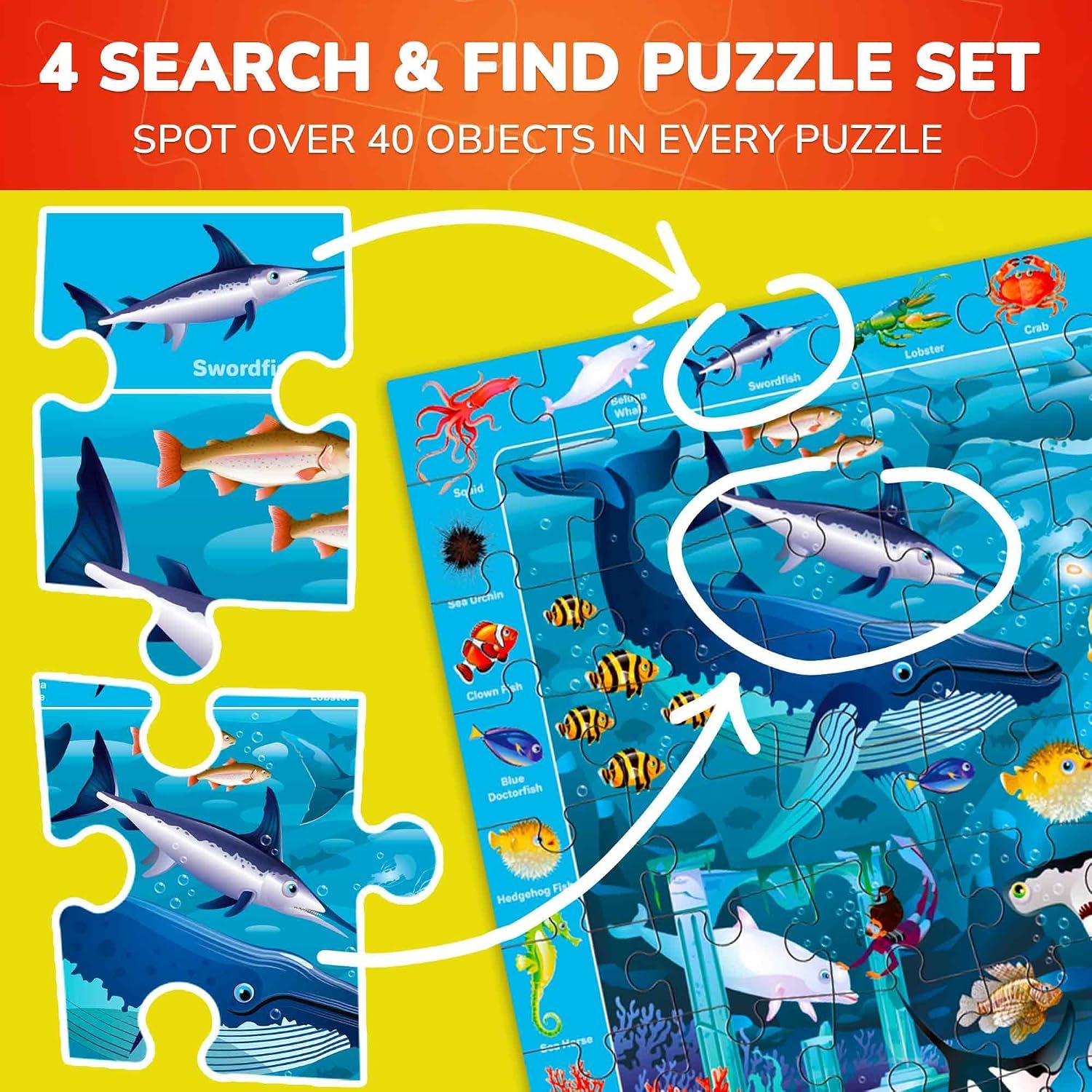
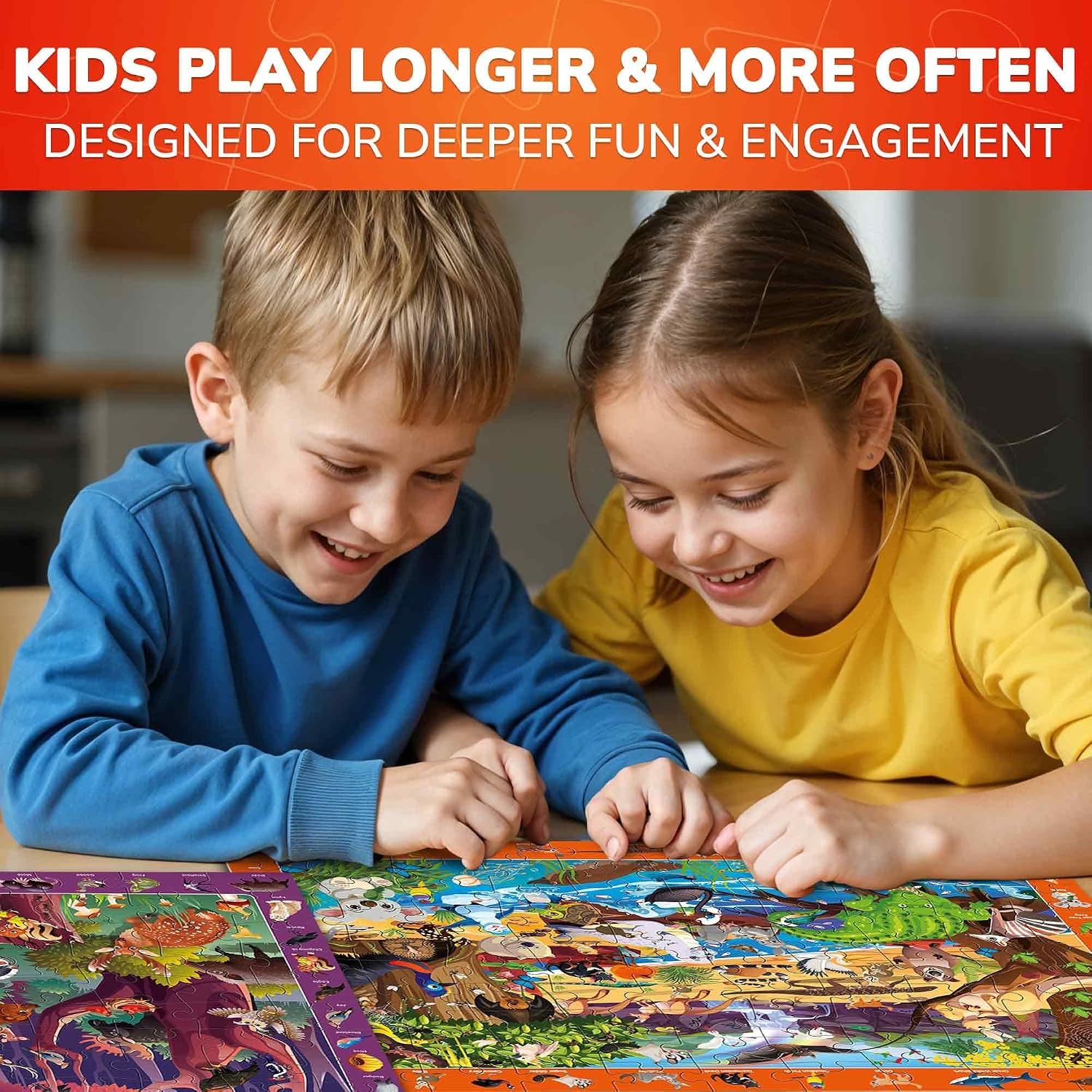
Five to eight is the heart of it. This is the age where a child can take the box off the shelf, tip it out, and get it done without you hovering. The search and find detail in the artwork gives them something to do afterwards, counting creatures or finding the one animal doing something silly in the background.
Nine and ten year olds will find a single puzzle quick, but the three themed scenes still hold interest, especially for a dinosaur-obsessed kid. At that age it also works nicely as a timed challenge or a race between siblings.
If you are shopping for a mixed-age group, a cousin sleepover or a classroom corner, three puzzles in one box is practical. Three children, three puzzles, no arguments about whose turn it is.
Choosing between themes
This set gives you dinosaurs, ocean and wild animals in one purchase, which sidesteps the usual problem of guessing what a child is into this month. Interests shift fast at primary school age. A child who only wants sharks in March may only want triceratops by June.
If you are buying a single puzzle elsewhere, think about what the child already collects, draws or talks about. Theme does more work than any other factor in whether a puzzle gets opened twice. A child who loves sea creatures will tolerate a harder ocean puzzle than they would an equally difficult picture of a castle.
Also think about where it will be built. Floor puzzles need floor. Seventy centimetres by fifty is bigger than a lot of coffee tables, so you need a clear rug, a dining table, or a large tray. If space is tight, a rollable puzzle mat lets you move a half-finished build out of the way at dinner time.
Making the first build go well
A few small things turn a shaky first attempt into a success.
Start by turning every piece picture side up before you do anything else. It feels like a chore but it saves twice the time later. Then find the edges and corners and build the frame. A completed border makes the remaining space feel manageable instead of endless.
Sort the middle pieces into loose colour groups. All the green, all the water, all the sky. Young children grasp sorting faster than they grasp shape matching, so this plays to their strength.
Keep the box lid in view. The printed artwork is a map, and using it is not cheating. Older kids will stop needing it on their own.
If attention starts to drift, stop. A puzzle left half built on a tray and finished the next afternoon is a much better outcome than one pushed through tears. The goal is for puzzles to feel like something they want to do.
Looking after cardboard puzzles
Cardboard is the right material for this kind of puzzle. It holds a sharp cut, it is light, and the printing is crisp. It has one weakness, which is water.
Build on a dry surface and keep drinks on a different table. If a piece does get damp, press it flat under a book and let it dry fully before boxing it up. Wipe marks with a barely damp cloth and dry it straight away, never soak.
Store each puzzle in its own box so the three sets never mix. Mixed puzzles are the fastest way to kill the fun, because a child who cannot find the piece they need assumes it is lost. A zip bag inside each box helps if the lid starts to sag after a few dozen openings.
Keep boxes flat and in a dry cupboard or shelf, not a garage or shed where humidity swings. Cardboard warps slowly and quietly, and you only notice when the pieces stop clicking properly.
Finally, do a quick count sweep after each build. Check under the rug edge and down the back of the sofa before you put the lid on. Finding a stray piece on the day is easy, finding it six months later is luck.
The short version
A 100 piece floor puzzle hits the point where a child has to think but can still finish. The large 70 by 50 cm format means generous pieces and a picture worth looking at when it is done. Distinct piece shapes let kids self-correct, which is what makes solo play possible.
Getting three themed puzzles in one set covers shifting interests and gives you something new to pull out on the next rainy afternoon. Build on a clear flat surface, sort before you start, keep the pieces dry, and store each puzzle separately.
If your child is between five and eight and already finishing smaller jigsaws quickly, this is the sensible next step. If they are younger, treat it as a together activity and let them grow into it.