
The complete guide
How to Choose Wooden Dinosaur Puzzles for Kids Aged 3 to 8
The problem with most kids' puzzles
Buy a jigsaw for a small child and one of two things usually happens. Either it is too easy, finished in ninety seconds and never touched again, or it is too hard, abandoned halfway with the child in tears and the pieces swept into a drawer. Both outcomes end the same way, with a box in a cupboard.
There is a third failure mode that is even more common. The puzzle is pitched perfectly, the child loves it, and then three pieces go missing. A 24-piece puzzle with 21 pieces is not a puzzle anymore. It is a source of mild household grief.
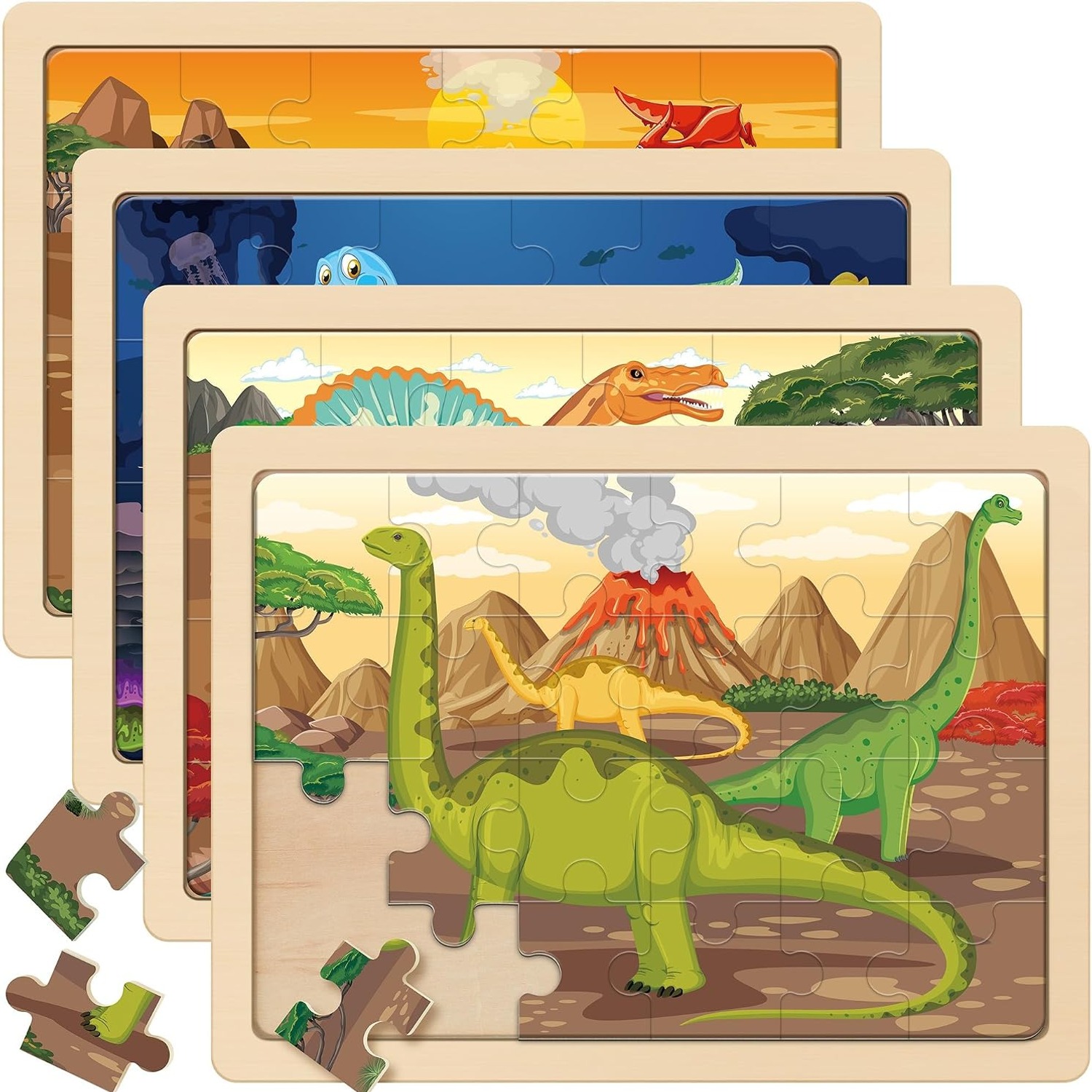
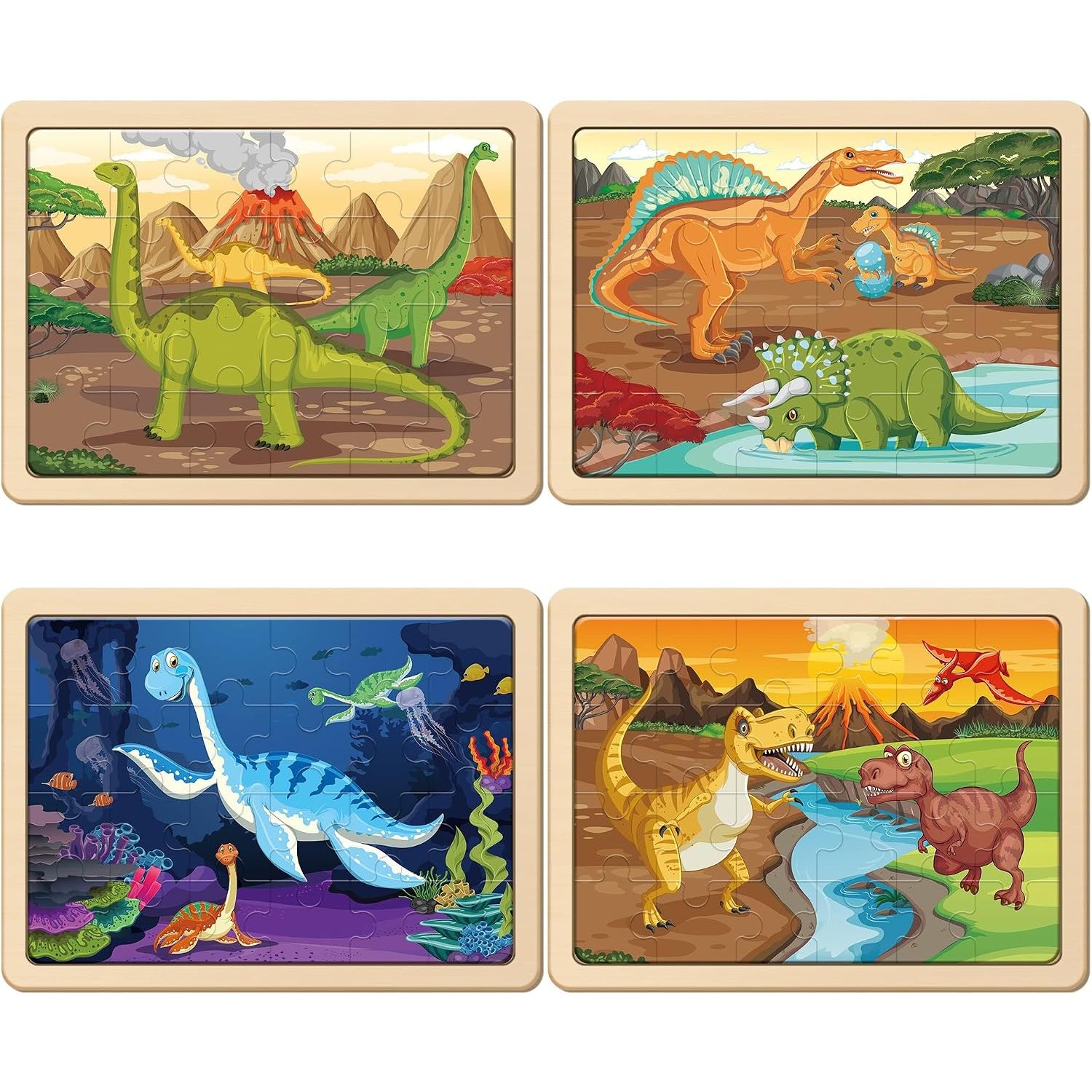
A set of four wooden dinosaur puzzles with framed trays tackles all three problems at once, and it does it without any clever tricks. Four puzzles means the child does not run out after one go. Wood means the pieces survive rough handling. The frames mean pieces stay where they are put.
How the framed tray design works
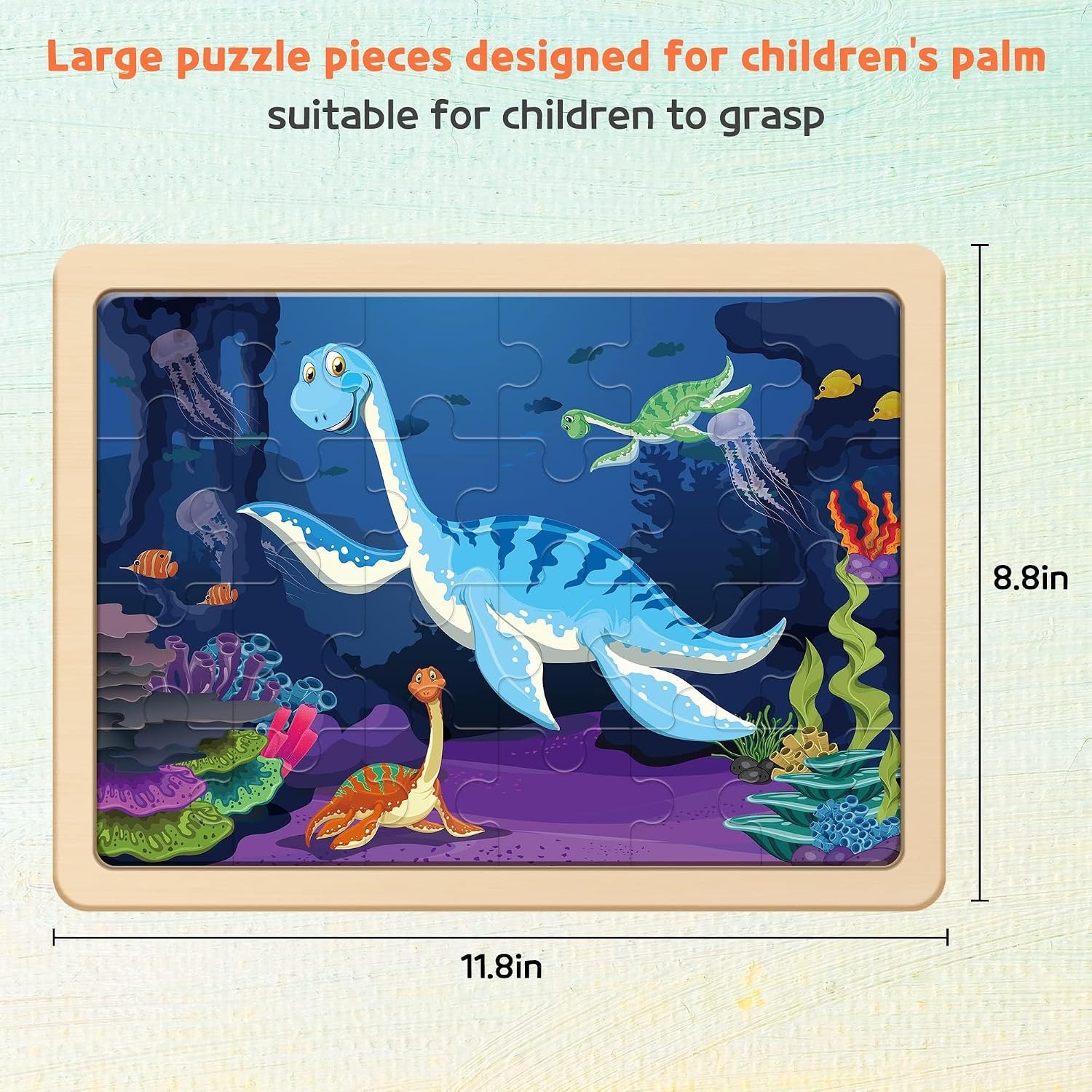
Each of the four puzzles sits inside its own wooden frame. The frame is a raised border around the edge of the tray, and the 24 pieces fit inside it. When a child works on the puzzle, the frame acts as a wall. Pieces that get pushed sideways stop at the edge rather than sliding across the table and onto the carpet.
It also gives a huge hint to a beginner. The four corners and the straight edges are obvious because the frame shows exactly where they go. For a child who has just graduated from chunky peg puzzles, that structure is the difference between making progress and giving up.
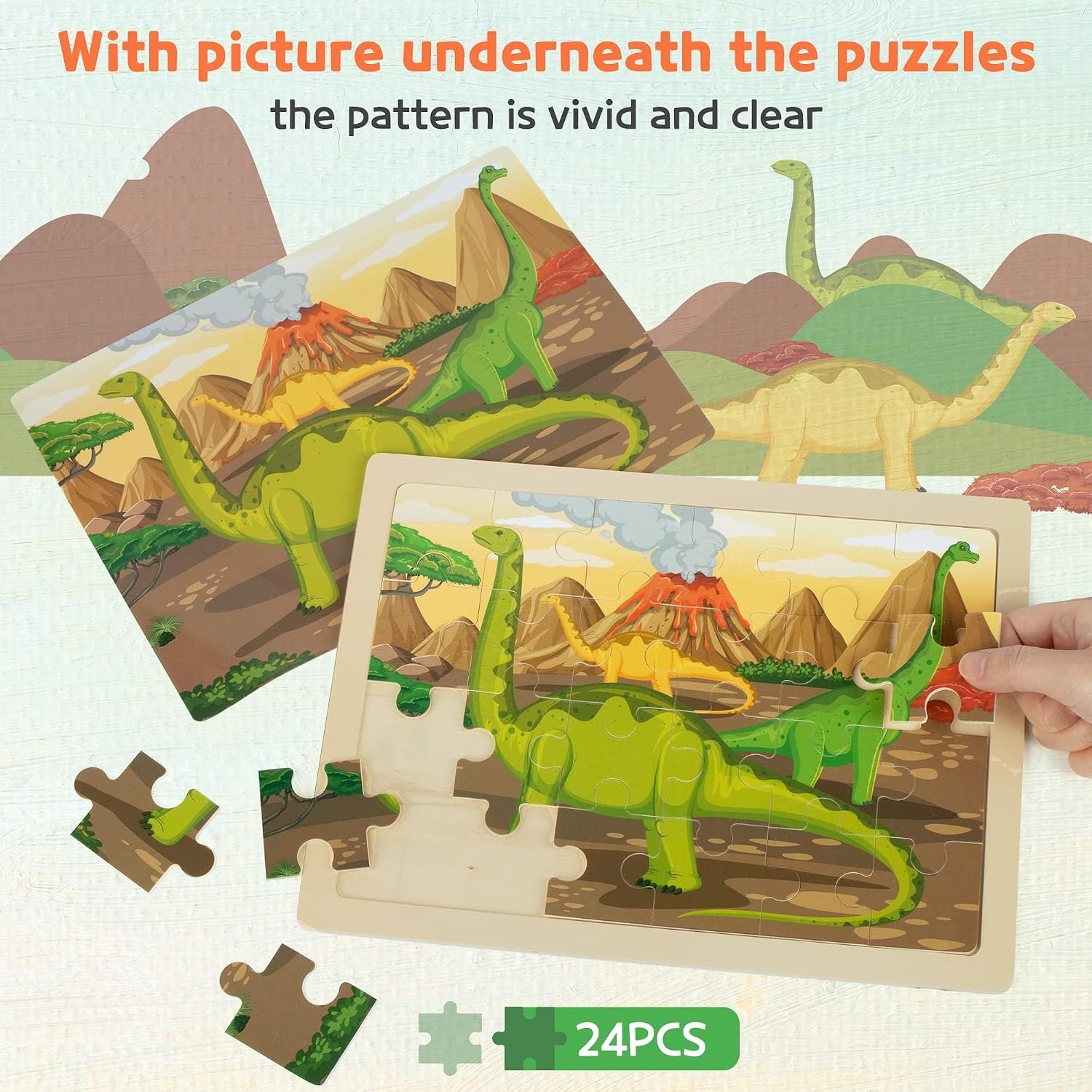
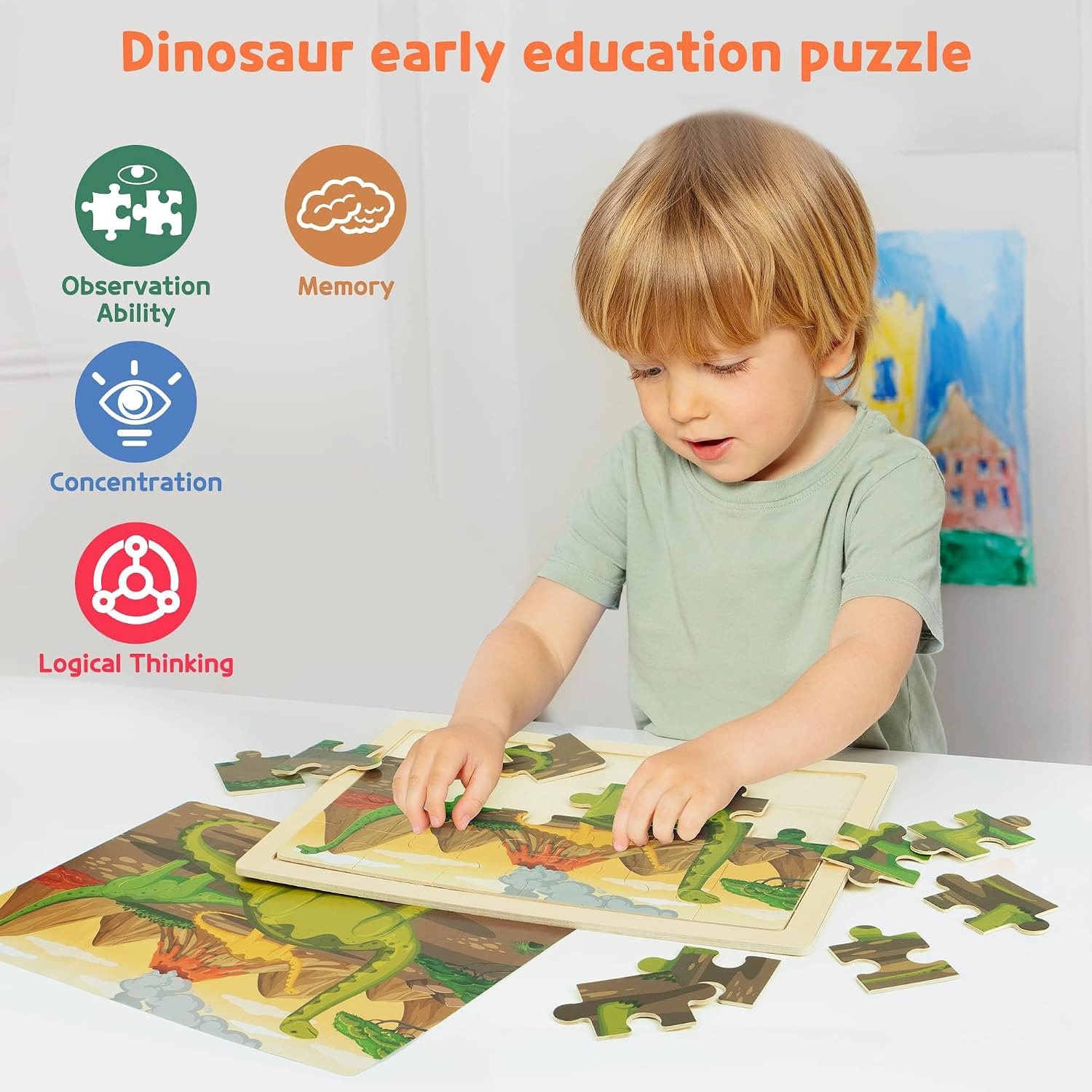
Underneath the pieces there is a removable printed illustration of the finished picture. This is the quiet genius of the design. A three or four year old uses it constantly, lifting a piece and hunting for the matching patch of colour. A six year old glances at it once. A seven year old will usually ask you to take it out so it is harder.
That one removable sheet is why a set like this lasts years rather than months. Same box, three difficulty levels, controlled entirely by whether the picture is in or out.
Why wood instead of cardboard
Cardboard jigsaws are cheaper, and for an adult they are fine. For a child under eight they are a short-term purchase. The failure points are always the same. A piece gets bent when it is forced into the wrong slot. The printed layer separates from the backing at a corner. Something gets spilled and the whole board warps.
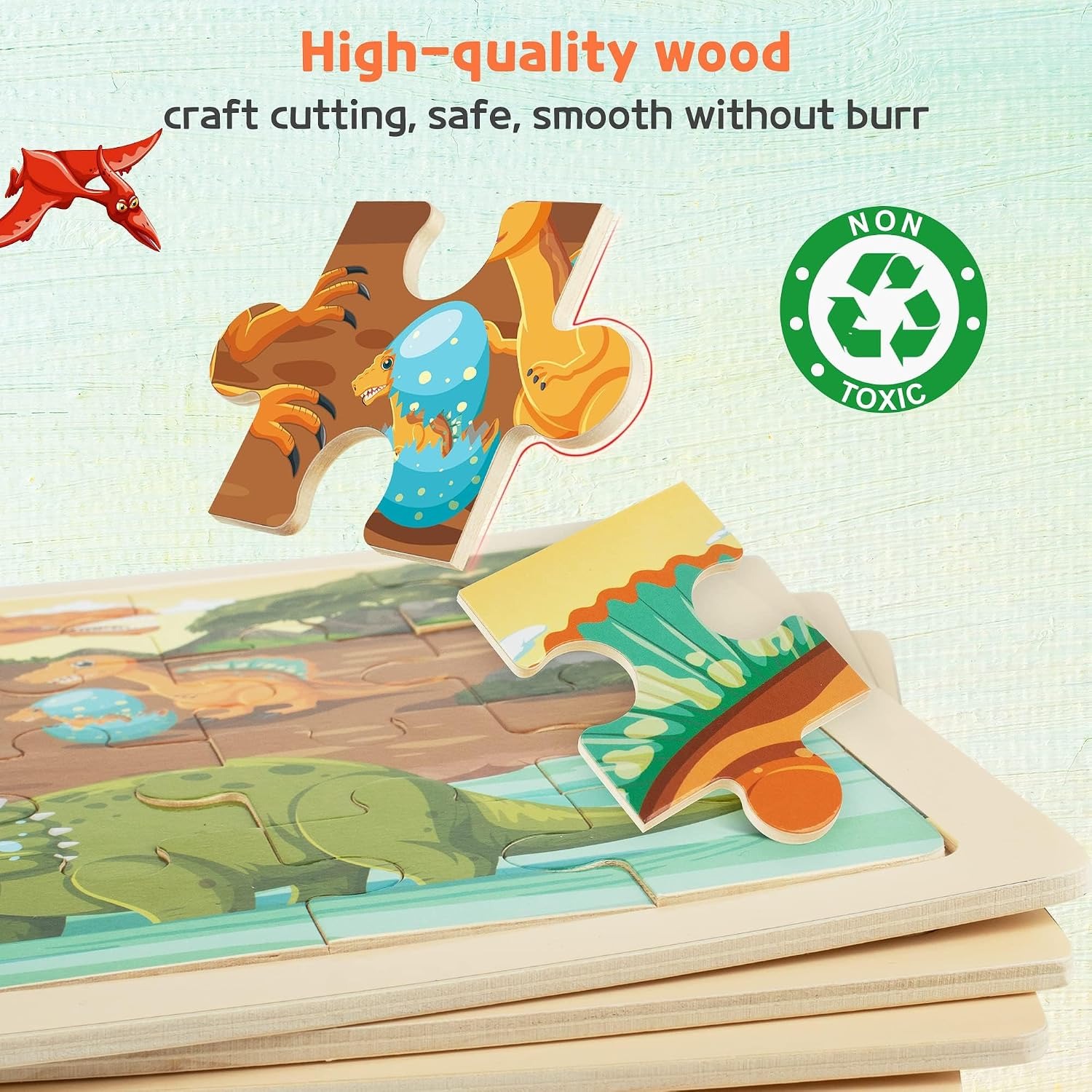
Wood solves most of that. The pieces in this set are listed as wood, cut and finished for children's hands, and they are thick enough that a small child can pick one up without pinching. Push a wooden piece into the wrong gap and nothing happens. It simply does not fit, which is actually useful feedback.
Wood is also heavier in a good way. Pieces stay put on the table instead of fluttering when somebody walks past. The whole set weighs 0.74 kg, with each tray at 31 x 23.8 x 2.5 cm, so it has enough substance to feel solid without being awkward to carry.
The tradeoff is water. Wooden puzzles do not like being soaked, and you cannot throw them in the wash. A dry cloth or a barely damp one is as far as you should go.
Who this set actually suits
The manufacturer recommended age is 36 months to 8 years. That is a wide band, and the honest answer is that different parts of it get different value.
A three year old will need company. Sit with them, sort the edges together, let them place the pieces using the guide picture. Treat it as a joint activity rather than something you hand over. Children under three should not use it, since the piece count and size are not intended for that age.
Four and five is the sweet spot. By then most children can handle 24 pieces with the picture guide, and the sense of having done it themselves is the whole point. This is the age where a parent gets twenty quiet minutes, which is not nothing.
Six, seven and eight is where you start removing the guide sheet and mixing trays together. Two trays combined is a 48-piece challenge. All four is 96 pieces and a genuinely tricky job, since the child has to sort by theme before they can even start.
How to choose between puzzle sets
A few things actually matter when you are comparing options.
Piece count against age is the first filter. Under four, look for twelve to twenty-four pieces. Four to six, twenty-four to forty-eight. Over six you can go higher. A set at 24 pieces per puzzle with a beginner skill level is aimed squarely at the younger half of that range, with room to grow by combining trays.
Number of puzzles is the second. One puzzle is one afternoon. Four puzzles is a resource you come back to. If you are buying as a gift and want it to feel substantial, a multi-pack does more work than a single larger board.
Subject matter is the third and it is more important than people admit. A child who loves dinosaurs will sit down for a dinosaur puzzle and will not sit down for a puzzle of a farmyard. Theme is the hook. Everything educational happens after the child has already decided to join in.
Storage is the fourth. Framed trays are far better than a loose bag, because the pieces have a defined home. Look for a design where a half-finished puzzle can be moved without disaster.
Getting the most out of it
Keep each puzzle in its own tray. Do not tip all four into one tub. The four-tray structure is what stops pieces mixing, and the moment you pool them you have created a 96-piece sorting job that a five year old will find miserable.
Do a quick count at tidy-up time. Twenty-four pieces per tray is easy to eyeball, and spotting a missing piece the same day means you will probably find it under the table rather than never.
Store flat, dry and out of the sun. Damp swells wood and lifts the printed surface. Direct sunlight fades the colours over a year or two. A shelf in a normal room is all you need.
If the puzzles start feeling too easy, change the game rather than buying new ones. Remove the guide sheet. Turn a tray upside down and build it blank-side up if the backs allow it. Time them. Mix two trays. These are the kind of tweaks that keep educational wooden toys in rotation long after the original challenge has worn off.
Screen-free, battery-free, fuss-free
There is something to be said for a toy that does not need charging, does not make noise and does not need an app. This is a manual tabletop activity for one or two players, with no assembly required before first use. You open it and it works.
That makes it useful in specific situations. The half hour before dinner. A waiting room. A grandparent's house. A long car journey, where the frame keeps most pieces contained. A quiet corner during a family gathering when a child needs something to do that is not a tablet.
It also means there is nothing to break in the way electronic toys break. No battery compartment, no speaker, no screen. Wood and print, which is about as low-maintenance as toys get.
The short version
Four wooden dinosaur puzzles, 24 pieces each, every one in a framed tray with a removable picture guide underneath. Recommended for ages 36 months to 8 years, beginner skill level, 0.74 kg for the whole set, each tray 31 x 23.8 x 2.5 cm.
It suits a three year old with help, a five year old working alone, and a seven year old if you take the guide sheet out and let them combine trays. The dinosaur theme does the job of getting a child to the table. Concentration, hand-eye coordination and patience are what quietly happen once they are there.
Buy it as a gift and it feels generous because it is four puzzles rather than one. Buy it for your own child and it earns its space because the difficulty can be adjusted as they grow.