Toy Warehouse
Company
Shop By Category
T&Cs
Shop Online
  • Box contents listed
  • Free tracked NZ-wide delivery over $175
  • 14-day returns

13 in 1 Solar Robot Kit | Solar powered robot toy | Robot building kit for kids

13-in-1 Solar Robot Kit

$74.99 $89.99 Save $15
  • Runs On Daylight
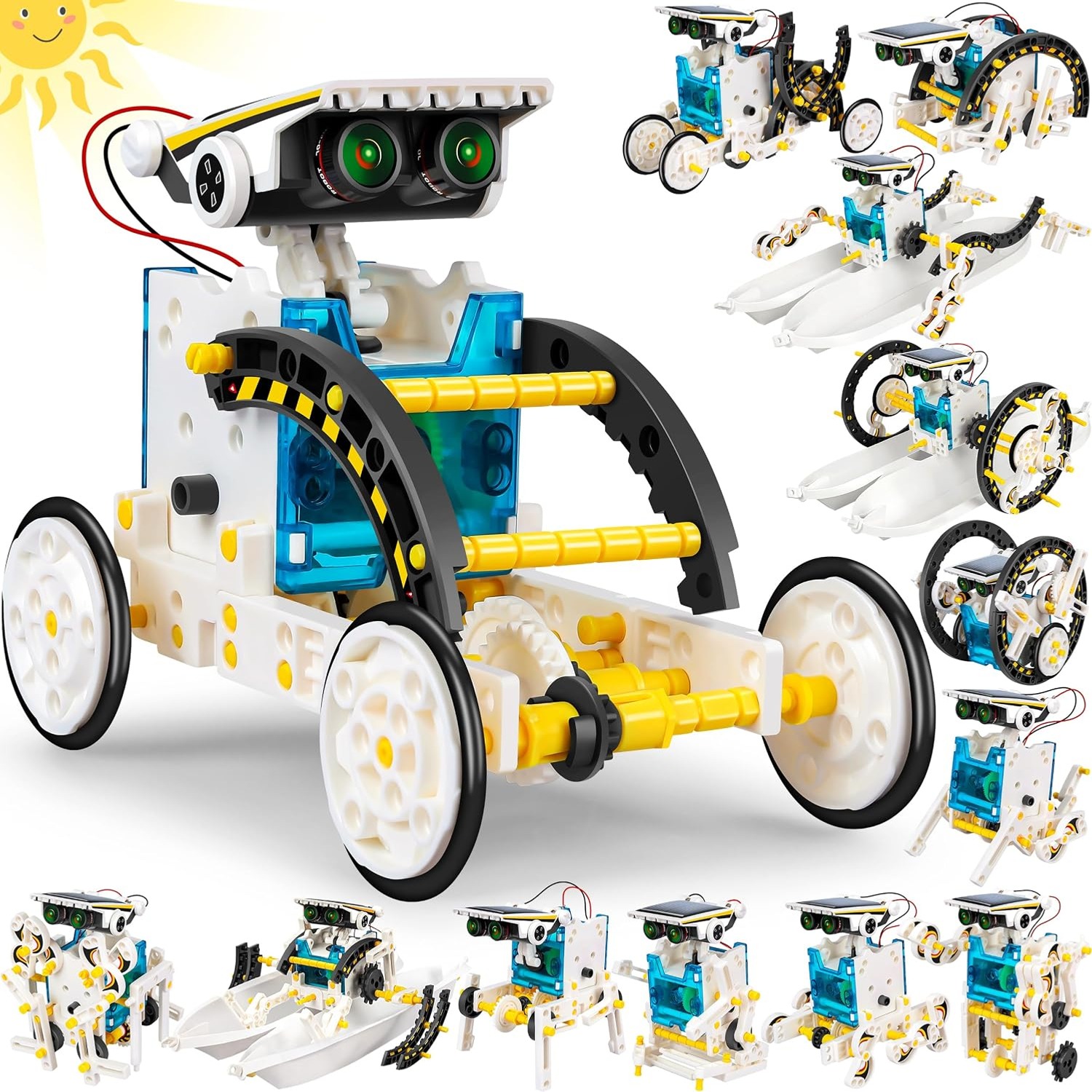
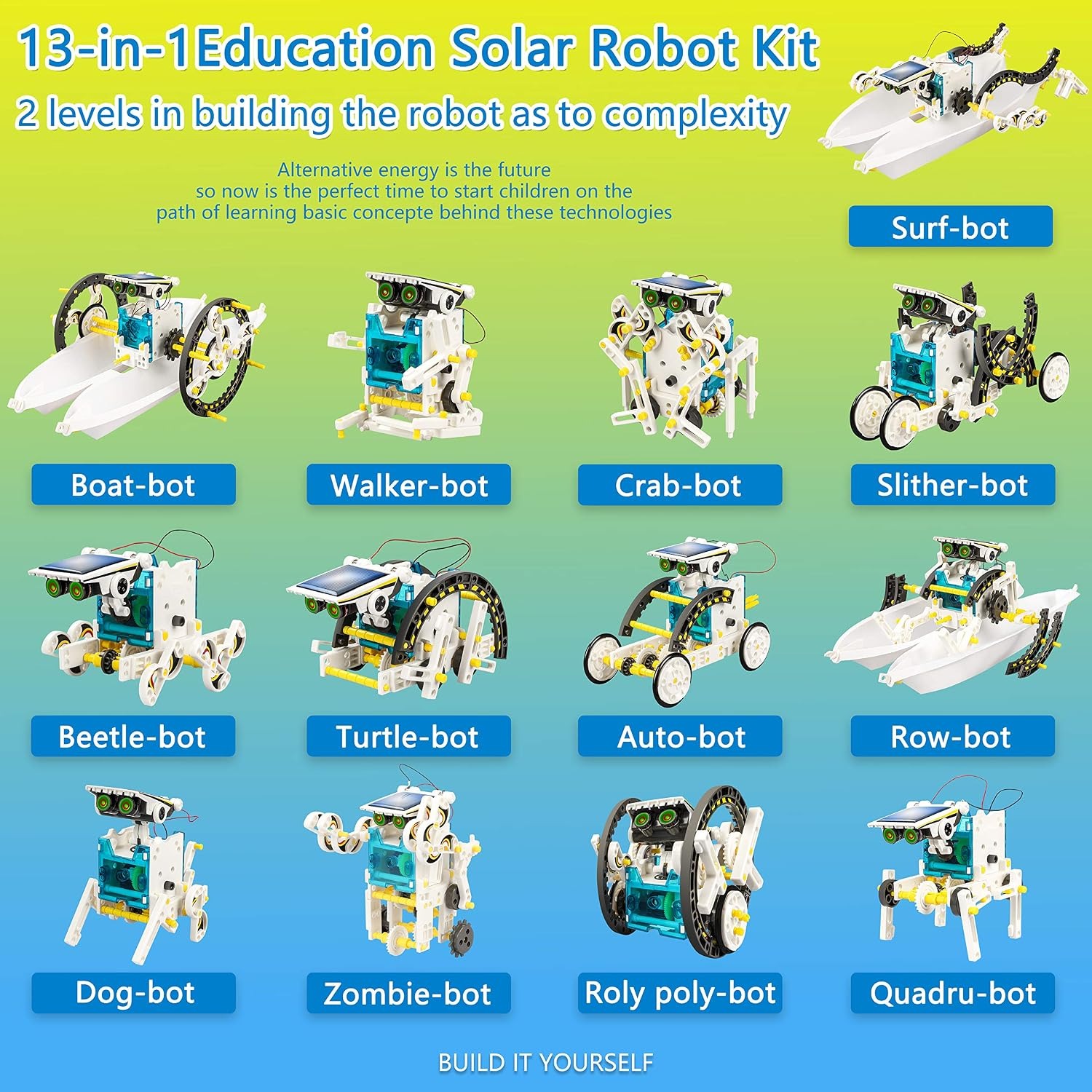
  • Thirteen Builds
  • Step By Step Manual
  • Ready To Give

Price: $74.99 $89.99

  • Free tracked NZ-wide delivery on orders $175+, otherwise a flat $20
  • Pay by card or PayPal, handled by the payment provider
  • 14 days to change your mind, plus your statutory rights
Product specifications
BrandBottleboom
Model Number2115
ManufacturerBottleboom
Manufacturer Part Number2115
Set Name13-in-1 Solar Robot Kit
Manufacturer Recommended Age4 to 12 years
Age Range DescriptionKid
Educational ObjectiveCreative skills, imagination development, problem solving skills, STEM
ThemeRobots
Material TypePlastic
Unit Count13 Count
SizeSmall
Assembly RequiredNo
Shipping & returns

Tracked delivery anywhere in New Zealand. It is free on orders of $175 or more, and a flat $20 below that.

If it is not right for you, send it back within 14 days of delivery in resaleable condition and we refund the price you paid, including standard delivery. That is a voluntary policy we offer on top of your legal rights. You cover the cost of returning it unless the item is faulty.

If it arrives faulty, damaged or not as described, we put it right at no cost to you under the Consumer Guarantees Act 1993 and the Fair Trading Act 1986, return postage included.

Shipping details · Refunds and returns

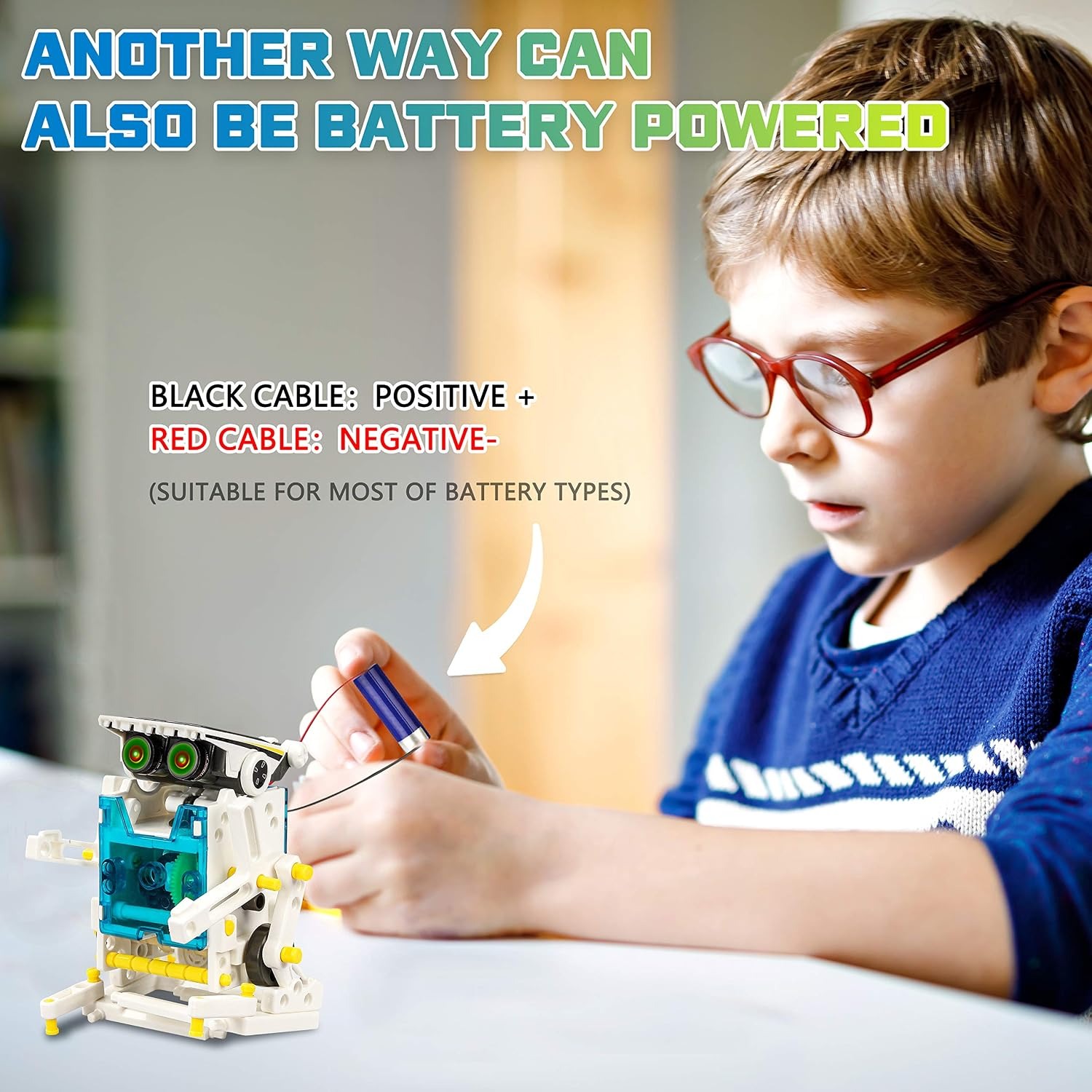
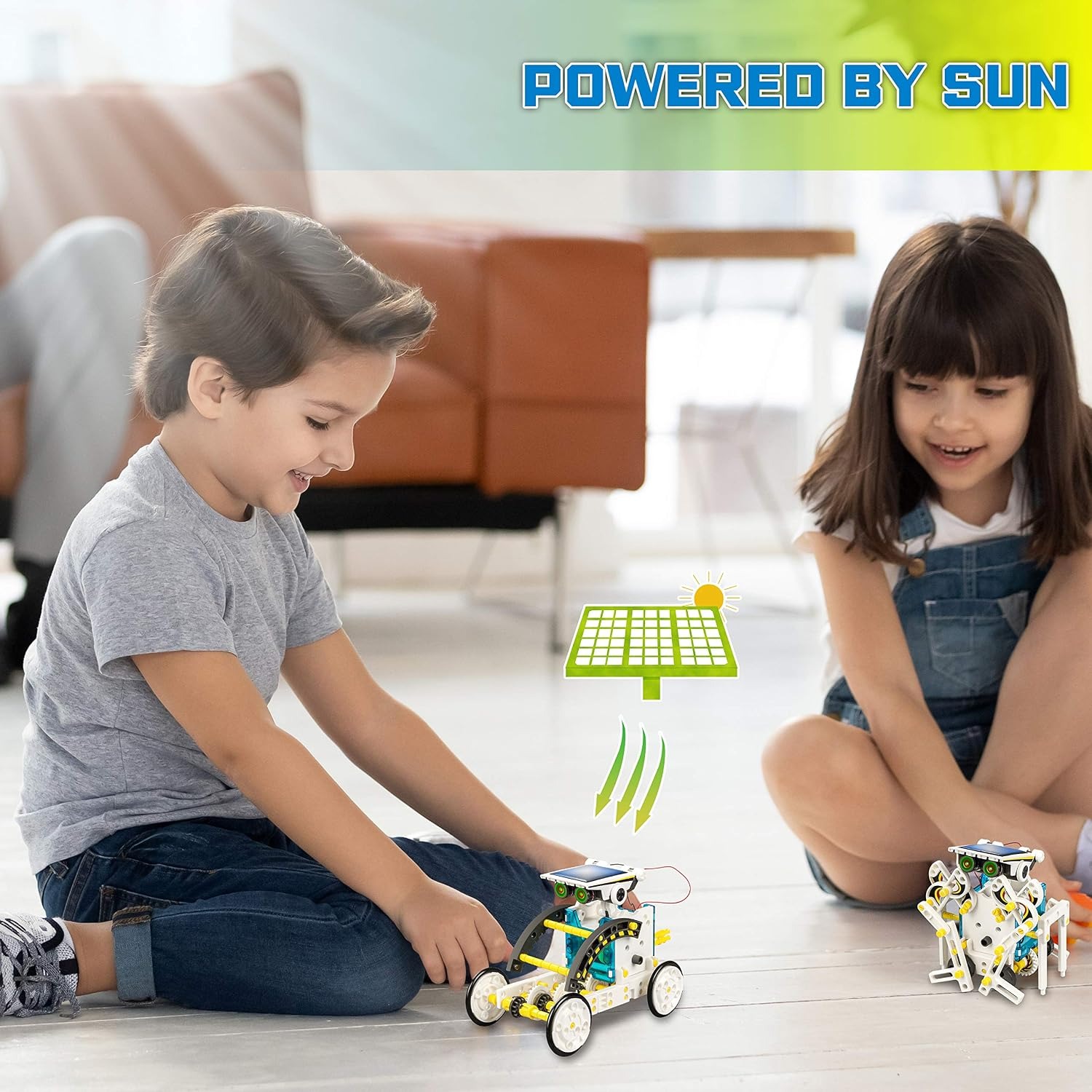
Runs On DaylightA small solar panel drives the motor, so there are no batteries to buy or replace.
Thirteen BuildsOne set of gears, plates, tyres and shafts makes thirteen different robots.
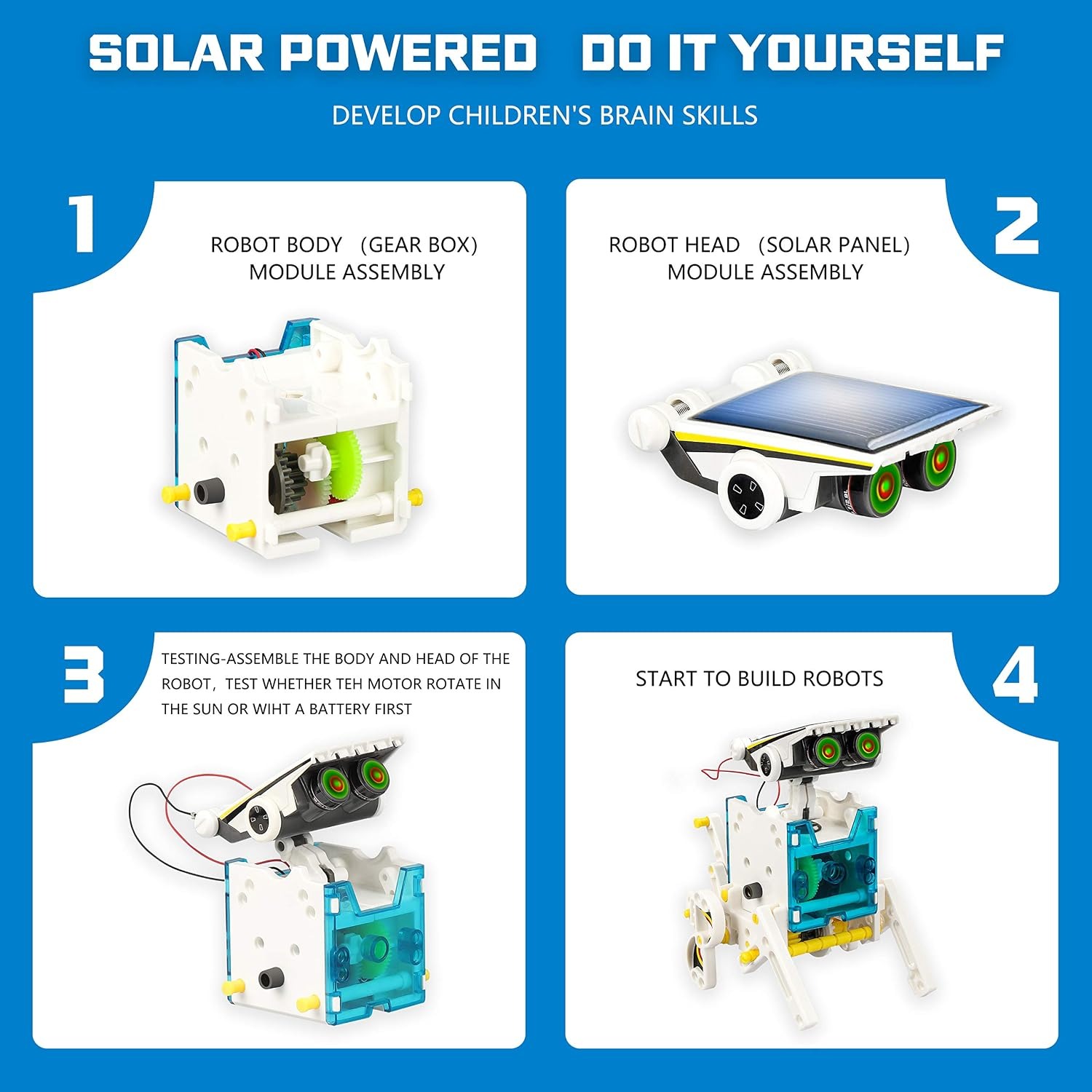
Step By Step ManualIllustrated instructions take builders from the simple models up to the harder ones.
Ready To GiveArrives boxed and suited to birthdays, Christmas and end of term presents.

Turn a quiet afternoon into a workshop with a 13 in 1 solar robot kit that runs on nothing but daylight.

Thirteen different builds share one set of gears, plates, tyres and shafts, so children take a robot apart and start again as soon as the first one is finished.

Build thirteen different solar powered robots from a single box of parts, following the step-by-step manual.

A small solar panel and motor drive the models, so daylight does the work and no batteries are needed.

Pieces come apart cleanly after each build, so children can move straight on to the next design.

Gears, plates, tyres and shafts teach how motion is passed from one part to the next.

The manufacturer recommends it for ages 4 to 12, with the harder builds suiting older children.

13-in-1 Solar Robot Kit

This is a building set with a motor in it. Inside the box are the moving and connecting parts of a small robot, things like gears, plates, tyres and shafts, plus a solar panel that powers the motor. The manual walks through thirteen separate models, each one built from the same pool of pieces. When a child finishes one, they pull it apart and the parts go straight back into the next design.

13-in-1 Solar Robot Kit

The power source is the interesting bit. Instead of a battery compartment, there is a panel that feeds the motor when light hits it. Take the finished robot outside on a bright day and it starts to move. Step into shade and it slows down or stops. That connection between light and movement is obvious enough for a young child to grasp without anyone explaining it, and it tends to prompt a lot of questions.

13-in-1 Solar Robot Kit

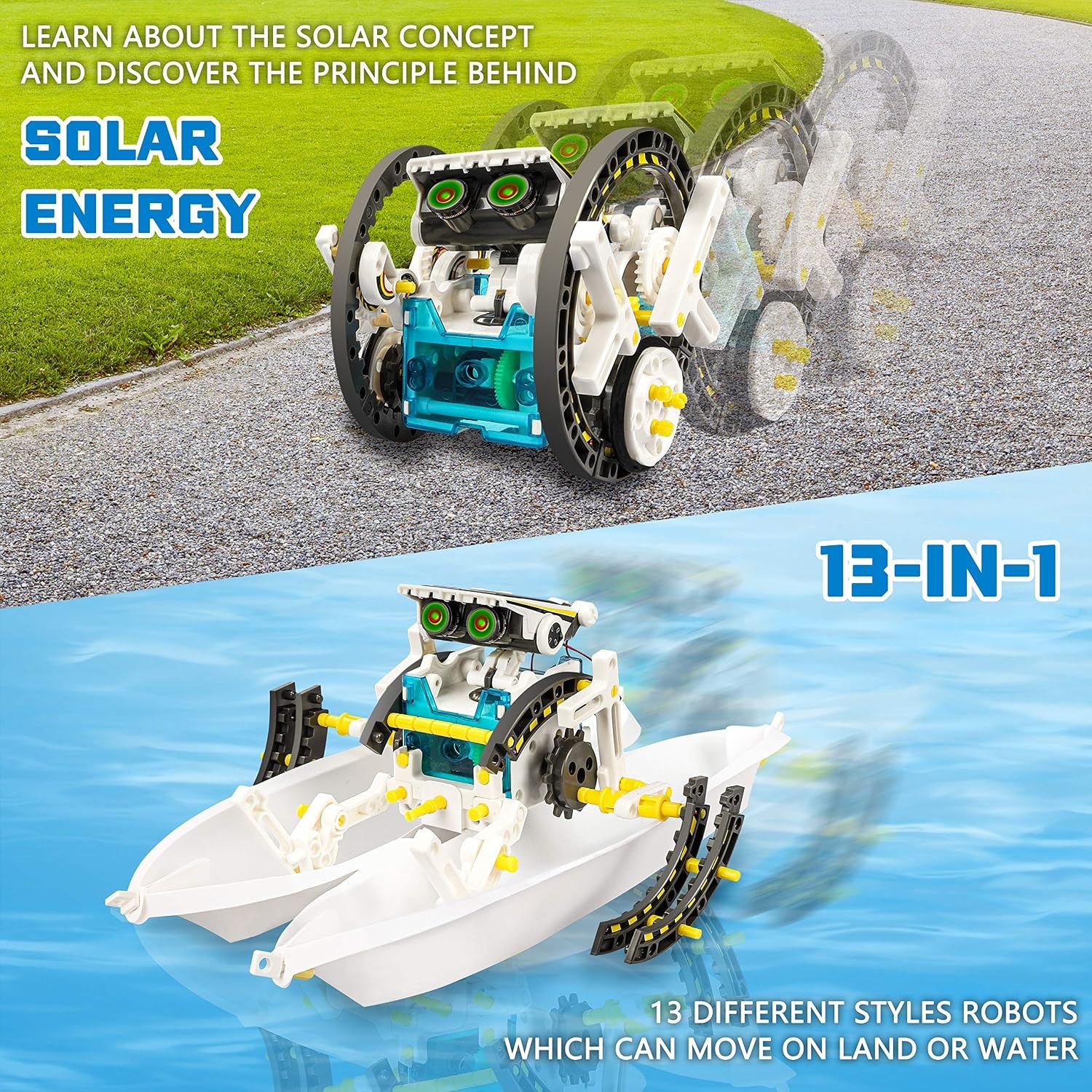
Some of the thirteen builds are designed to move on land and some are designed for water, which gives the set more range than a single-model kit. The early designs in the manual are short and forgiving. The later ones have more parts and more steps, so a child who starts at four or five with help can come back at nine or ten and work through the harder ones alone. That spread is what makes the set last beyond the first weekend.

13-in-1 Solar Robot Kit

The pieces are plastic and are sized for small hands. Nothing in the kit needs glue, tools or adult assembly before use, and the parts separate again cleanly once a model is finished. The manufacturer lists the recommended age as 4 to 12 years. Younger builders usually want a grown-up alongside them for the fiddlier steps, which is often the point, since it turns the kit into something you do together rather than something you hand over.

13-in-1 Solar Robot Kit

As a gift it sits in a useful spot. It is not a screen, it does not need an app, and it does not quietly eat batteries. It asks for daylight, a flat surface and some patience. For a child who already pulls things apart to see how they work, this gives them something built for exactly that.

Not sure yet? That is fine.

A toy has to suit the child it is for, and you cannot always judge that from a photograph. If it is not right for you, send it back within 14 days of delivery in resaleable condition and we refund the price you paid, including standard delivery. That is a voluntary policy we offer on top of your legal rights.

If it turns up faulty, damaged or not as described, that is on us. The Consumer Guarantees Act 1993 and the Fair Trading Act 1986 covers you, and we pay the return postage. Read the full detail on our refunds and returns page, or ask us anything before you order.

Frequently Asked Questions

What exactly is in the box?

The kit contains the plastic building parts for the robots, including gears, plates, tyres and shafts, along with the solar panel and motor that drive them. A step-by-step illustrated manual is included. The listed unit count is 13 and it ships as a single pack.

How does the solar power work?

A small photovoltaic panel converts light into electricity and feeds it straight to the motor. There is no battery storing charge, so the robot runs while light is hitting the panel and stops when it is not. Bright, direct sunlight gives the strongest result.

Does it need batteries?

No. The kit is powered by its solar panel, which is part of what makes it one of the best solar powered toy options for parents tired of replacing cells. You only need daylight to run the finished models.

Will it work indoors?

Indoor light is usually much weaker than it looks to the eye, so performance inside is unreliable. A spot right next to a sunny window can sometimes be enough. For consistent movement, take the robot outside.

Does it work on a cloudy day?

It may run slowly or intermittently under heavy cloud. Overcast light carries far less energy than direct sun, so the motor gets less to work with. Bright but hazy days often still work fine.

What age is it suitable for?

The manufacturer recommends 4 to 12 years. Younger children in that range will want adult help with the smaller steps, while older children can usually follow the manual alone. It is often picked as the best robot kit for 8 year olds because that age handles most builds independently.

Are the thirteen robots built at the same time?

No. The models share one pool of parts, so you build one, play with it, then take it apart to build the next. That is deliberate, because the disassembly is part of the learning.

How long does one build take?

The simpler models in the early part of the manual can be done in well under an hour. The more complex ones take longer, especially for a first attempt. Working with a child rather than racing them usually makes it more enjoyable.

Can any of the robots go in water?

Some of the thirteen designs are intended to move on water, while others are built for land. The manual indicates which is which. Keep water play shallow and supervised, and dry the parts afterwards.

Is it hard to put together?

The parts are designed to fit together without tools or glue, and the manual uses pictures for each step. Some of the later builds have more pieces and need more care. Most children find the first few models straightforward.

Do I need any tools?

No tools are required. The pieces connect by hand. A clear table and good light are the only setup worth bothering with.

What is it made of?

The material type listed for this product is plastic. Further material detail is not specified by the maker. The parts are sized to be handled comfortably by children.

Is assembly required before use?

The listing states no assembly is required before use, meaning the product ships ready for the child to start building the models themselves. Building the robots is the activity, not a setup chore for a parent.

Can the parts be reused many times?

Yes, that is the design intent. Parts come apart after each build and go back into the next one. With reasonable handling the same set gets used repeatedly across all thirteen models.

Does it teach anything useful?

The educational objectives listed are creative skills, imagination development, problem solving skills and STEM. In practice children pick up how gears transfer motion and how light becomes movement. That makes it a strong pick for the best hands on learning toy category.

Is this suitable for a classroom?

It works well as a small group project or a science corner activity, which is why it is often shortlisted as a best classroom stem kit. One set serves a pair or small group rather than a whole class. Teachers often pair it with a lesson on renewable energy.

Can a child do it alone?

Older children in the recommended range usually can, particularly on the simpler builds. Younger ones benefit from a parent nearby for the fiddlier connections. Many families treat it as a joint project.

Is it a good gift?

It presents well as a birthday or Christmas present and does not require anything else to be bought alongside it. For a child who likes taking things apart, it is among the best gift for a curious kid options in this price range.

Does it come gift boxed?

It arrives in its retail packaging, which is designed for display and gifting. We do not add separate gift wrap. The box also doubles as storage for the parts afterwards.

How should I store it between builds?

Keep all the pieces and the manual together in the original box or a lidded container. Small parts are easy to lose on a carpet, so pack away at the end of each session. Counting the parts back in becomes part of the routine fairly quickly.

How do I clean it?

Wipe the plastic parts with a dry or slightly damp cloth, then dry them. Keep the solar panel clean, as dust and fingerprints reduce how much light it picks up. Avoid soaking the panel or motor.

What if a part breaks?

Contact us with your order details and a photo and we will advise on the options available. Spare part availability depends on the manufacturer. Careful handling of the small connectors helps avoid the problem in the first place.

Are there small parts?

Yes, this is a construction kit with small components. Keep it away from children under three and from pets. Adult supervision is sensible for younger builders.

What size is the product?

The size is listed as small and the item dimensions recorded for this product are 5 x 5 x 5. The finished robots are desktop scale rather than large toys. Exact per-model dimensions are not specified by the maker.

How much does it weigh?

The product weight is not specified by the maker. It is a small plastic construction kit, so it is light to handle and to post.

What colour is it?

The colour is not specified by the maker. Product images on this page show the kit as supplied.

Where is it made?

The country of origin is not specified by the maker. The brand listed is Bottleboom and the model number is 2115.

How long will delivery take?

Delivery times depend on your address and are shown at checkout before you pay. You will get tracking as soon as the order is dispatched. Remote areas can take a little longer.

Can I return it?

Yes. Unused items in their original packaging can be returned within the returns window shown on our returns page. Get in touch first so we can issue instructions and keep the process simple.

What if it is not right for my child?

If the kit turns out to be too advanced, too simple or just not what you pictured, contact us and we will sort out a return or exchange within the returns window. Keep the box and parts together so everything can go back as it came. We would rather fix it than have a kit sit unused in a cupboard.

Choosing a Solar Robot Kit, A Practical Buyer's Guide

6 min read Toy Warehouse

The problem with most "educational" toys

Plenty of toys claim to teach something. A lot of them teach a child how to press a button and wait. The box says STEM, the thing inside flashes, makes a noise, and then sits in a drawer by the second week because there is nothing left to find out about it.

What actually holds a child's attention is cause and effect they can change. Move this, and that happens. Add a gear here, and the wheels turn faster. That kind of feedback loop is why construction kits have outlasted nearly every other toy category, and it is why a build-it-yourself robot set tends to stay in use long after the noisy plastic gadget has gone quiet.

A solar robot kit adds one more hook on top of that. The power is visible. There is no sealed battery compartment doing something mysterious. There is a panel, there is light, and when the light arrives the thing moves. Children work that out fast, and then they start testing it, holding it in shade, tipping it towards the sun, taking it outside at different times of day. That is the whole lesson, and nobody has to deliver it as a lecture.

How a solar robot kit actually works

The panel on top is a small photovoltaic cell. When light hits it, it produces a current, and that current runs the motor. The motor turns a shaft, the shaft turns a gear, and the gear drives whatever the model needs driven, wheels, legs, a paddle.

There is no battery in the loop. That matters for two reasons. First, there is nothing to buy or replace, which is a quiet relief for any parent who has gone hunting for AAs on a Sunday night. Second, the robot responds instantly to light conditions. Bright sun means strong movement. Shade means it slows down or stops. A child gets immediate, honest feedback from the physical world, which is more than most toys offer.

The trade-off is that performance depends on the weather. Indoor lighting is far weaker than daylight, even in a room that feels bright, so indoor runs are usually disappointing. Set expectations early. This is an outdoors-on-a-sunny-day toy, or a sunny-windowsill toy at a stretch.

Thirteen models from one box

The structure of this kit is worth understanding before you buy, because it shapes how it gets used. You do not get thirteen separate robots. You get one set of gears, plates, tyres and shafts, and a manual that shows you thirteen different ways to arrange them.

So the cycle goes: build, run it, pull it apart, build the next one. Some people see the disassembly as a downside. In practice it is the strongest feature. Taking a working machine apart and seeing which pieces did which job is exactly the kind of thinking the kit is meant to encourage. It also means a single box keeps delivering. A child who finishes model three on Saturday still has ten to go.

Some of the designs are made to travel across the ground, and some are made for water. That split gives the set a wider range than a single-purpose toy and gives you two kinds of play from the same parts. Water builds should be kept to shallow, supervised play, and everything wants drying off afterwards.

Who it suits

The manufacturer recommends ages 4 to 12. That is a wide band, and in a kit like this it is honest, because the manual starts easy and gets harder.

At the younger end, around four to six, a child will want an adult sitting with them. The pieces are sized for small hands, but matching a part to a picture and lining up a shaft takes a bit of patience that very young builders are still growing into. Treat it as a shared project. This is often where the best parent and child moments happen, somewhere around step nine when the gear finally clicks in.

From around seven upwards, most children can run the simpler builds solo and will come to you only for the tricky joins. This is the sweet spot, and it is the reason the set is so often suggested as one of the best stem toys for kids in this age group.

At the older end, nine to twelve, the appeal shifts. The simple models go quickly, and the interest moves to the harder designs and to messing about with the variables, which surface gets the best speed, what angle catches the most sun, whether the water build really floats level.

It also suits a particular kind of child regardless of age. If yours already unscrews things to see inside, this is the right present.

How to choose between kits

If you are comparing solar robot sets, a few things separate the decent ones from the filler.

Count the actual builds, not the marketing number. A kit advertising a dozen or more models should have a manual that genuinely covers them all with step-by-step pictures. An illustrated manual matters more than most buyers expect, because a child who can follow pictures independently will build far more often than one who needs an adult to read every step aloud.

Check the age guidance against the child you are buying for, and then think about where they sit in that range. A kit rated 4 to 12 given to a four year old is a parent-and-child activity. The same kit given to a ten year old is a solo weekend project.

Look at whether the parts are reusable across builds. Sets where parts come apart cleanly are worth more over time than sets where everything is a tight one-way fit.

And think about where it will be used. A solar kit needs outdoor access or at least a genuinely sunny window. If you live somewhere with long grey winters, know that the kit will be seasonal, and that is fine, it just changes when it gets its best use.

Getting the most out of it

A few small habits make a real difference.

Build on a tray or a table with a lip. The parts are small, and a floor build turns into a search party. Keep the box nearby and drop spare pieces straight back in.

Start on a bright day. Nothing kills enthusiasm faster than finishing a build and having the robot sit there doing nothing because it is overcast. Save the first run for sunshine.

Keep the panel clean. A film of dust or a greasy thumbprint cuts the light reaching the cell and the motor slows noticeably. A quick wipe with a dry cloth fixes it.

Do not rush the order of the manual. The early models teach the connection methods that the later ones assume you already know. Skipping to the complicated build usually ends in frustration.

Care and storage

This is plastic, so maintenance is minimal. Wipe parts with a dry or slightly damp cloth and dry them before packing away. Avoid submerging the solar panel or the motor, even when using the water builds, and dry everything properly afterwards.

Store the pieces and the manual together. The manual is the part most likely to go missing, and without it the kit loses most of its value. Keeping it flat in the box solves that.

Keep the set away from heaters and out of a hot car, since sustained heat is not kind to small plastic parts.

The short version

A solar robot kit earns its place because the lesson is built into the object. Light goes in, movement comes out, and a child can see every step in between. Thirteen builds from one shared set of parts means the box does not retire after the first afternoon, and the fact that it runs on daylight means there is nothing to replace and nothing to charge.

Expect to be involved if the child is on the younger side of the four to twelve range. Expect it to be a sunny-day toy. And expect at least one conversation about why it stops working in the shade, which is, really, the whole point.

Browse the shop

Ready to build something that runs on sunshine?

Order the 13-in-1 Solar Robot Kit today and we will ship it with tracking so you know exactly when it lands.

Ask us a question

Page summary

The 13-in-1 Solar Robot Kit by Bottleboom is a plastic construction set that builds thirteen different robot models from one shared set of parts, including gears, plates, tyres and shafts. A solar panel powers a small motor, so the finished models move in daylight without batteries. Some builds are designed to travel on land and others on water. An illustrated step-by-step manual is included, progressing from simpler models to more complex ones. The manufacturer recommends ages 4 to 12 years. Model number 2115, UPC 793610399212, unit count 13, material listed as plastic, size listed as small, no assembly required before use. Colour, country of origin and product weight are not specified by the maker.