
The complete guide
Choosing a Tambourine That Actually Gets Played
The instrument that never gets put back in the box
Most musical gifts for children follow the same arc. Huge excitement for two days, then a slow slide to the back of the cupboard. The electronic keyboard loses a battery cover. The recorder gets banned at the dinner table. The toy drum kit develops a wobble and somebody quietly puts it on the kerb.
Tambourines break that pattern, and the reason is simple. There is no gap between wanting to make music and making it. A child picks one up and the first shake already sounds right. No tuning, no fingering, no reading. That instant feedback is what keeps an instrument in rotation instead of in storage.
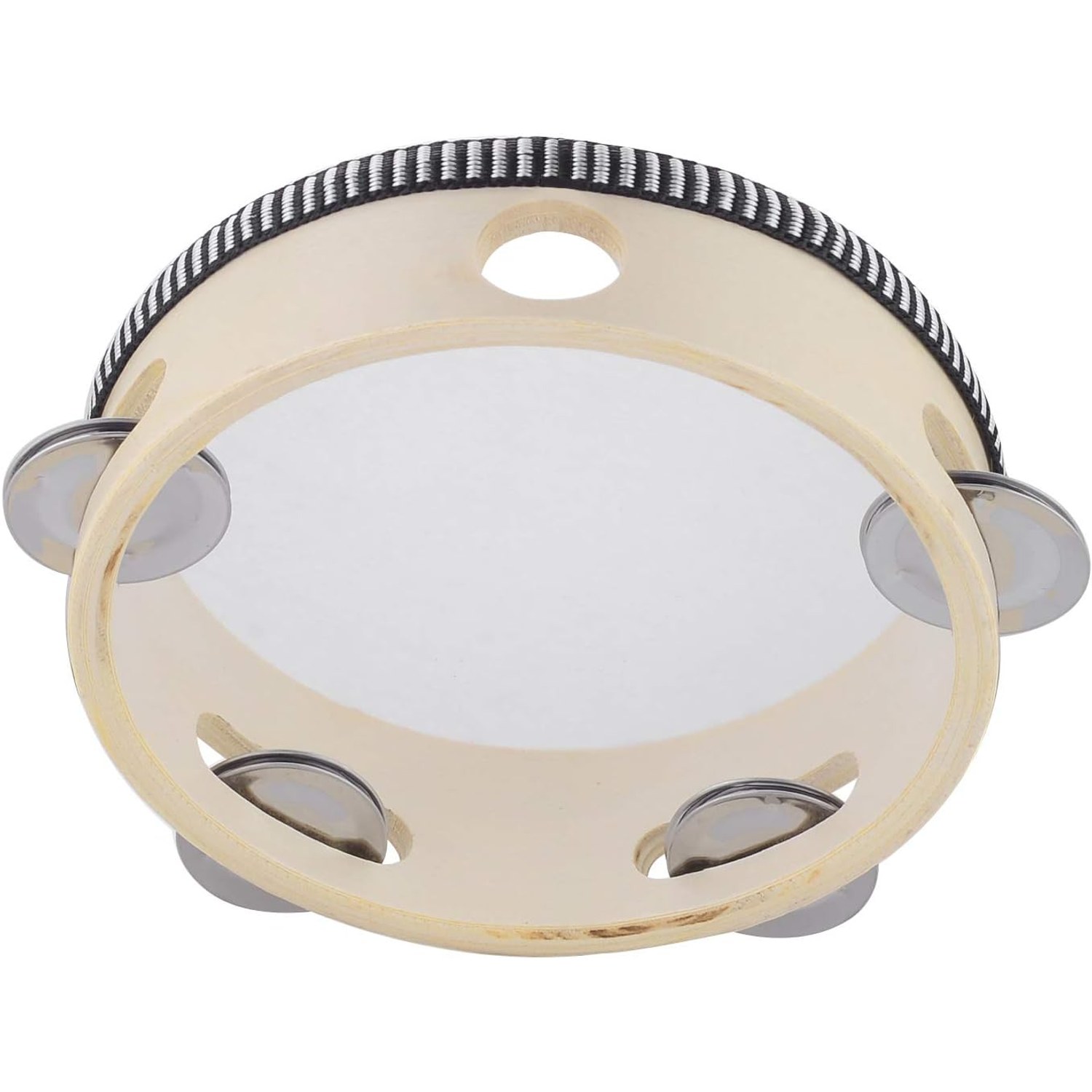
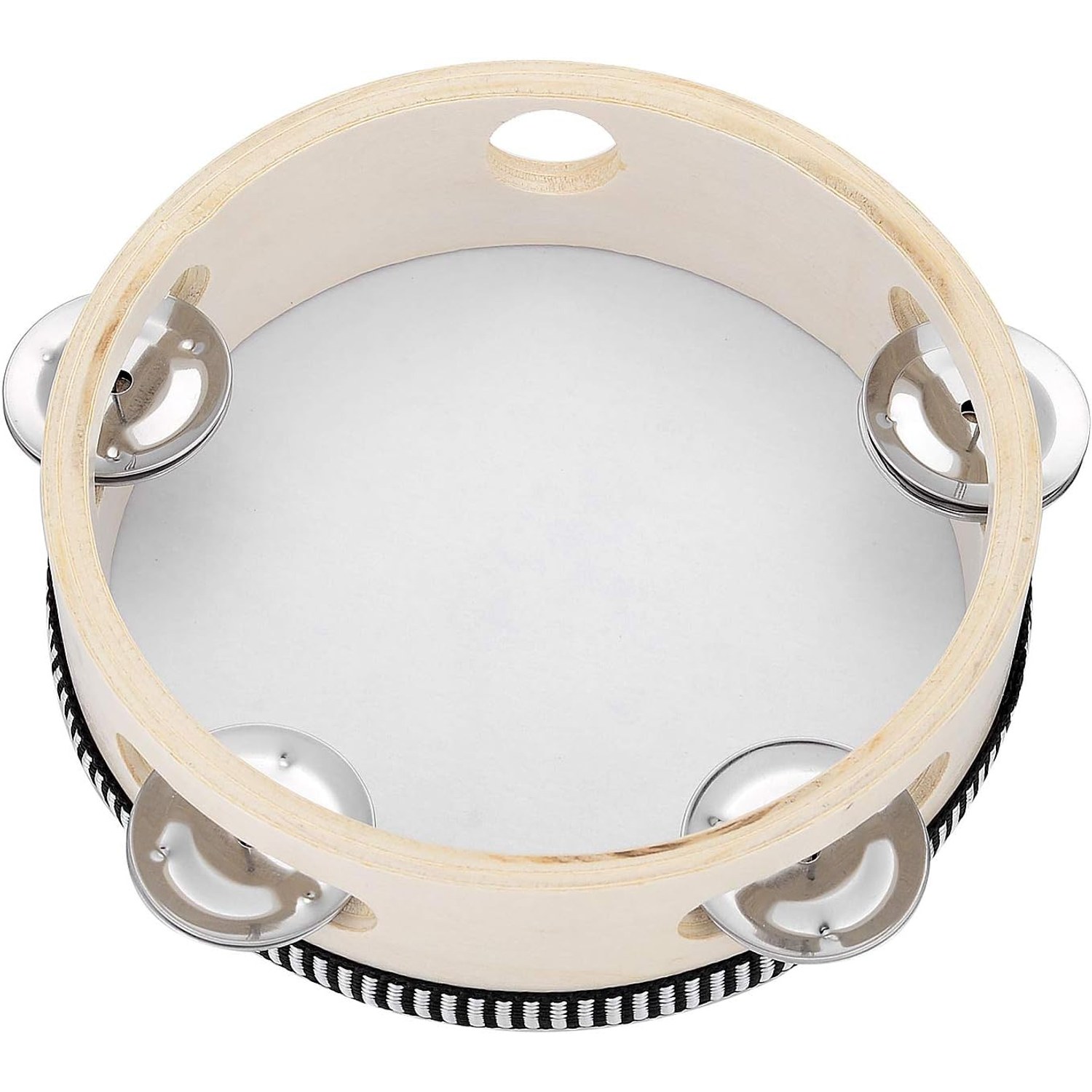
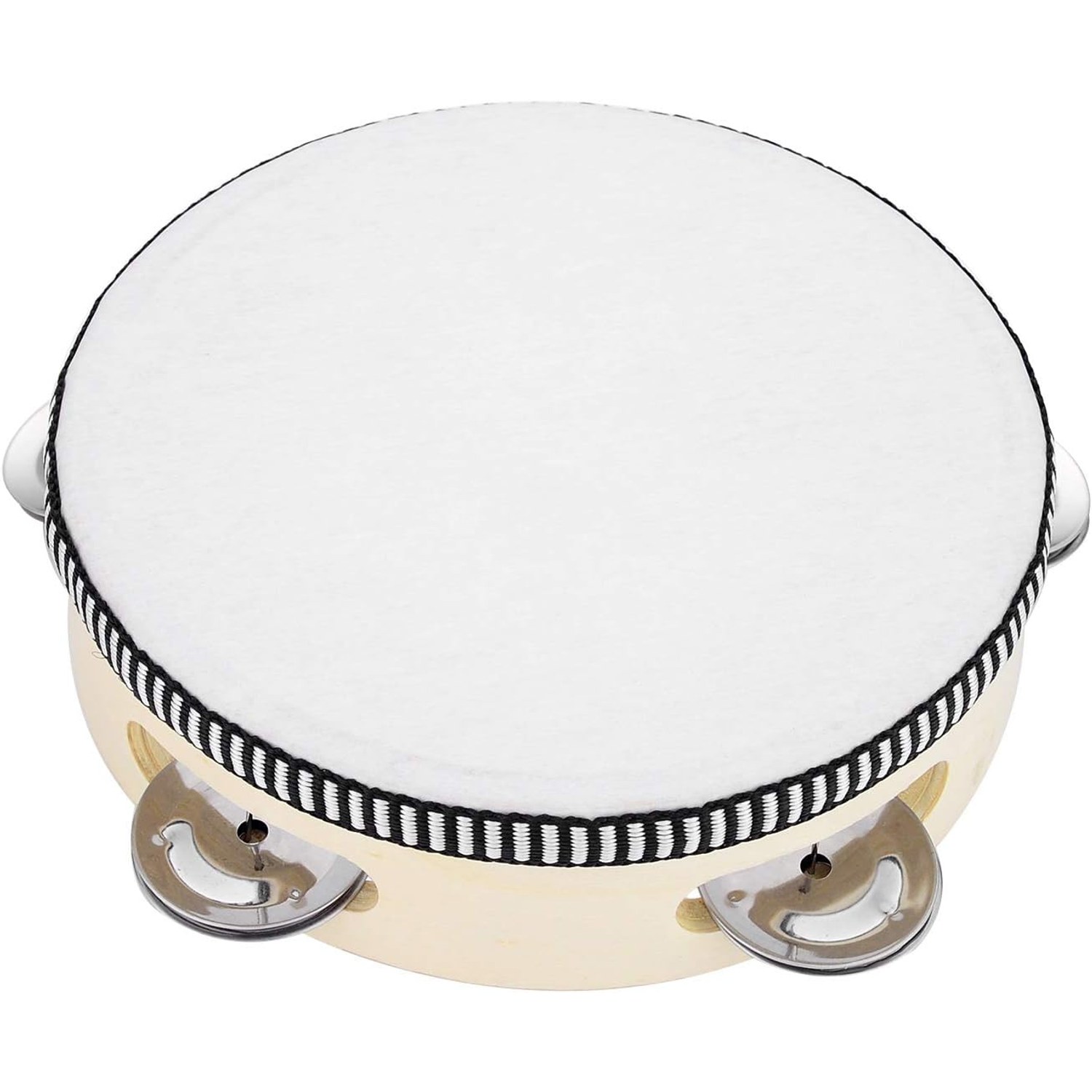
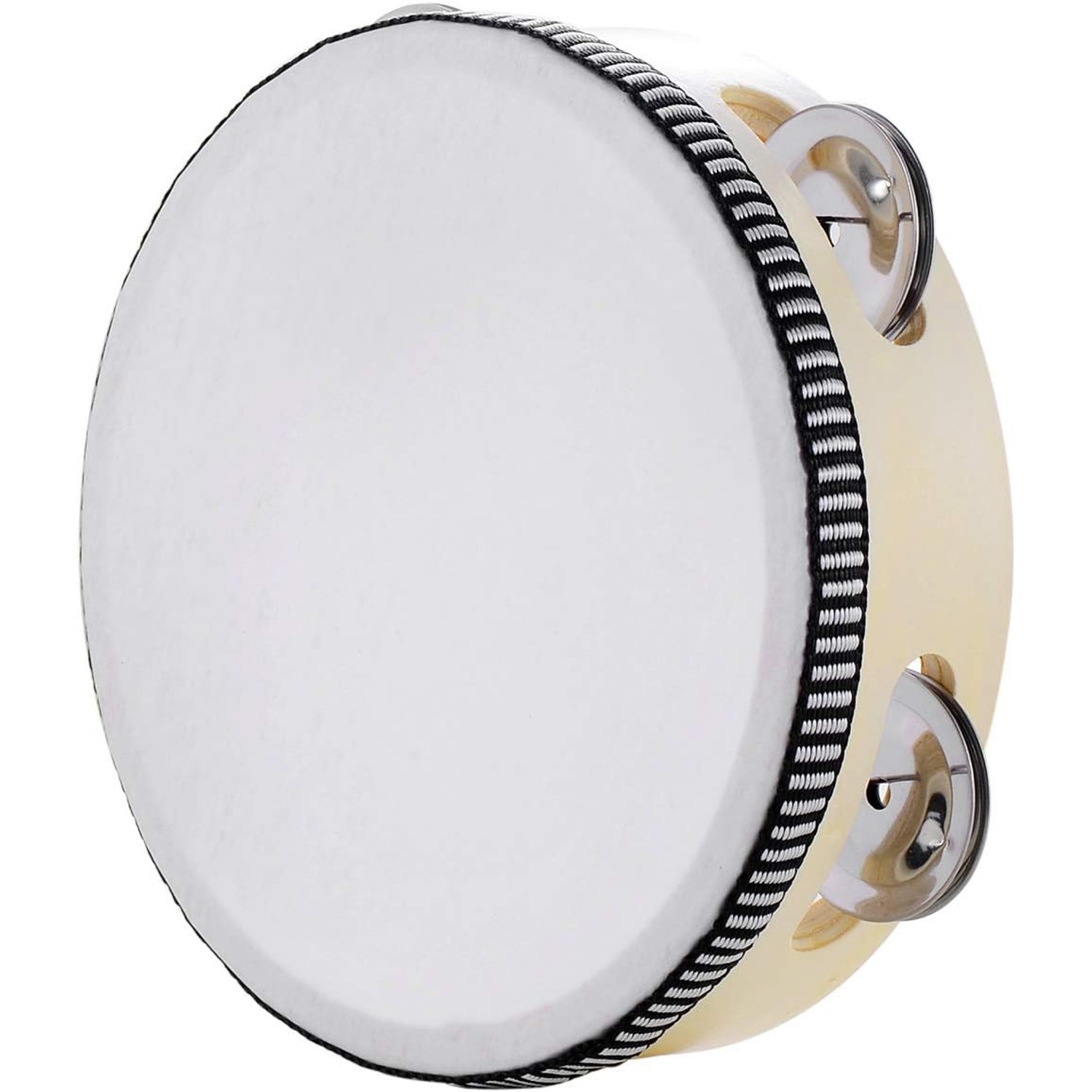
This page is about a 6 inch tambourine with a birch wood shell and metal jingles. Along the way it covers how these things actually work, what size really means for small hands, and how to tell a decent one from a rattly disappointment.
How a tambourine makes its sound
A tambourine does two jobs at once, which is why it is more interesting than it first appears.
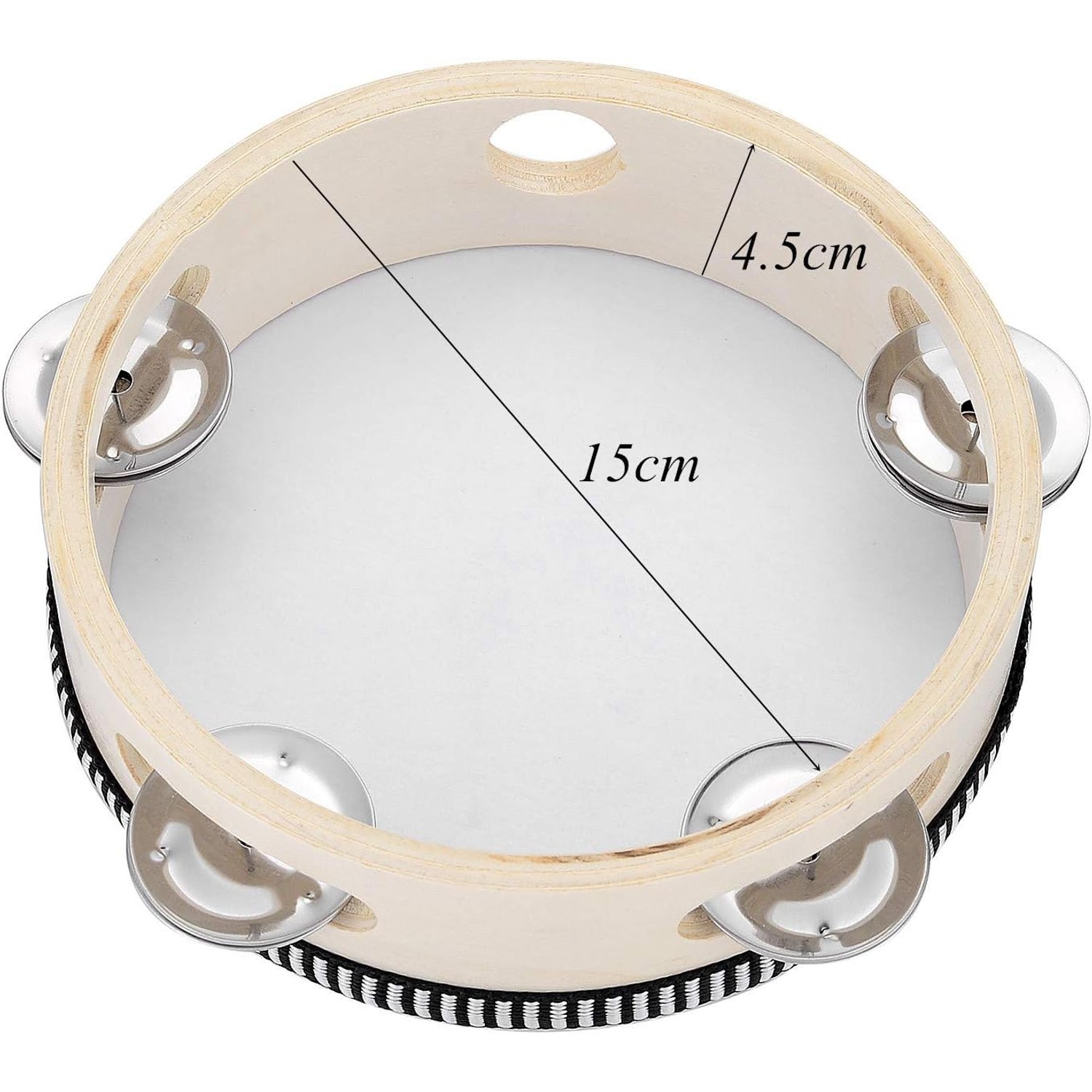
The jingles are the obvious part. These are small metal discs mounted in pairs inside slots cut around the frame. When you move the instrument, the discs knock against each other and ring. Pairs matter. A single disc flapping against wood gives a dull clack, while two discs facing each other produce a proper shimmer with some sustain to it.
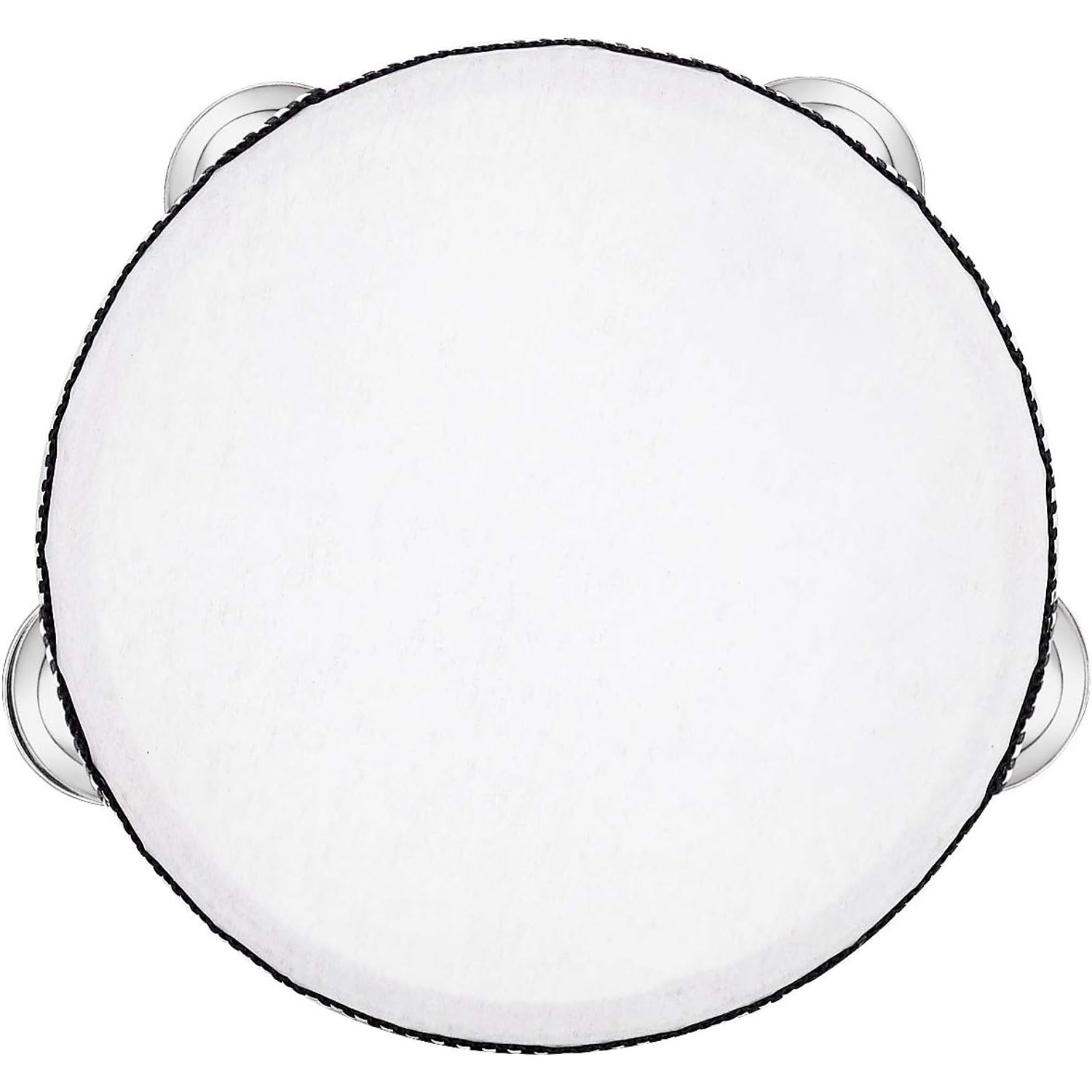
The head is the second half. On this model a stretched head covers the frame, so you can tap it with your fingertips for a drier, more defined note. That gives a player two completely different sounds from one object. Shake for a long ring. Tap for a crisp beat. Combine them and you have a rhythm part.
The shell ties it together. Birch is a standard drum timber because it is stiff and light. A stiff frame holds the head tension and keeps the jingle slots in shape, which means the sound stays consistent over months of use rather than going soggy.
Why six inches is the sweet spot for young players
Walk into a music shop and you will see tambourines from about four inches up to ten or twelve. The big ones look impressive on a stand. They are also a poor choice for a seven year old.
Holding an instrument out in front of you is tiring. Not for thirty seconds, but for a whole song, and then another one. A larger frame carries more timber and more jingles, and all of that weight sits at the end of an outstretched arm. Children adapt by tucking it against their body, which kills the sound, or by giving up.
At roughly 15 centimetres across, this tambourine stays in the comfortable range. It balances in the palm, the wrist can do the shaking rather than the whole arm, and it does not swing wildly when a child gets enthusiastic. The curved rim helps here too, because a square timber edge pressing into a palm gets uncomfortable fast.
The small size has a second benefit that parents notice before children do. It fits in a bag. School music mornings, holiday trips, a grandparent's house, the back of the car for a long drive. An instrument that travels gets used.
Who it suits
Home players. A tambourine is the easiest way to let a child join in when someone else is playing. Put on a song, hand it over, and ask them to tap on every second beat. That is a real musical skill, taught in about ten seconds.
Preschool and primary classrooms. Circle time runs on instruments that need no setup. A teacher can hand these out, use them, collect them and stack them on a shelf inside a minute. Many teachers hunting for the best preschool rhythm instrument settle on frame percussion for exactly that reason.
Music therapy and care settings. Because any amount of movement makes a sound, a tambourine rewards participants who cannot manage a firm grip or a strong strike. Light contact still produces a result, and the result is cheerful.
Adults who play something else. Songwriters, worship teams and kitchen table guitarists all end up wanting something to keep time. A hand held tambourine is the traditional answer.
What to look for when you compare
A few things separate a tambourine worth keeping from one that ends up in a bin.
Frame material is the first. Plastic frames are waterproof and cheap, but they sound thin and they crack at the jingle slots when dropped. Timber gives a warmer tone and takes knocks better. Birch in particular is the standard for a reason.
Jingle mounting is the second. Discs should be free enough to ring but not so loose they rattle when the instrument sits still. Give one a gentle wiggle. Firm pin, loose discs, that is the combination you want.
Edge finish is the third, and it is the one people forget. Run a finger around the rim. If it feels sharp or splintery it will be unpleasant to play and worse to shake hard. Curved, smooth edges are not a luxury on an instrument held by children.
Head condition matters if the model has one. It should be taut with no dents or wrinkles. A loose head sounds flat and does not respond to a light tap.
Last, think about how many you need. Group music falls apart when two children share one instrument. If you are buying for a class or a family of three, buy for the number of hands.
Getting the most out of it
A few simple games turn a tambourine from noise into learning.
Start with copy the beat. You tap a short pattern, they repeat it. Keep it to four taps at first. Children get this quickly and it builds the ear faster than any explanation of rhythm.
Try loud and soft next. Shake gently, then firmly, then gently again. Volume control is genuinely useful and it also saves your ears later.
Stop on cue is the household favourite. Play along to a song, and when you raise a hand everybody freezes. It teaches listening, which is the part of music people skip.
For older players, show them the thumb roll eventually, where a damp thumb dragged around the head makes a continuous ring. It takes practice and it feels like magic when it finally works.
Looking after it
Care is about as easy as it gets. Wipe the shell and head with a dry cloth, or a barely damp one for sticky fingerprints, and let it dry fully before storing. Keep it away from water, radiators and long hours in direct sun. Timber and stretched heads both dislike extremes.
Store it flat on a shelf or hanging on a hook rather than buried under heavier toys. The rim takes the damage in a toy box, and a dented rim throws the jingles out of line.
Every so often, check the jingle pins and the rim for anything loose. This takes five seconds and it matters, because a loose metal disc around a small child is a hazard. If something works free, set the tambourine aside and get in touch with us rather than patching it.
The short version
A 6 inch tambourine is one of the most reliable musical purchases you can make for a child, and one of the most useful small instruments for an adult who plays something else.
This one has a birch wood shell, a matte metallic finish, metal jingles in the frame and a 15 x 15 x 4 centimetre footprint, with one tambourine per pack. The size suits smaller hands, the curved rim stays comfortable through a long song, and there is nothing to set up before the first sound comes out.
If you want an instrument that gets picked up again tomorrow rather than shelved by Friday, this is a sensible place to start.