
The complete guide
How to Choose a Motorised Robot Building Kit for Kids
The problem with most "building" toys
You buy a kit. The child builds it. It sits on a shelf. Three weeks later it is in a drawer with two pieces missing, and you are back where you started.
The reason is usually simple. Once the last piece is in place, there is nothing left to do. The model does not move, does not react, and does not reward the hour of work that went into it. A child who liked the building part has no reason to come back to the box.
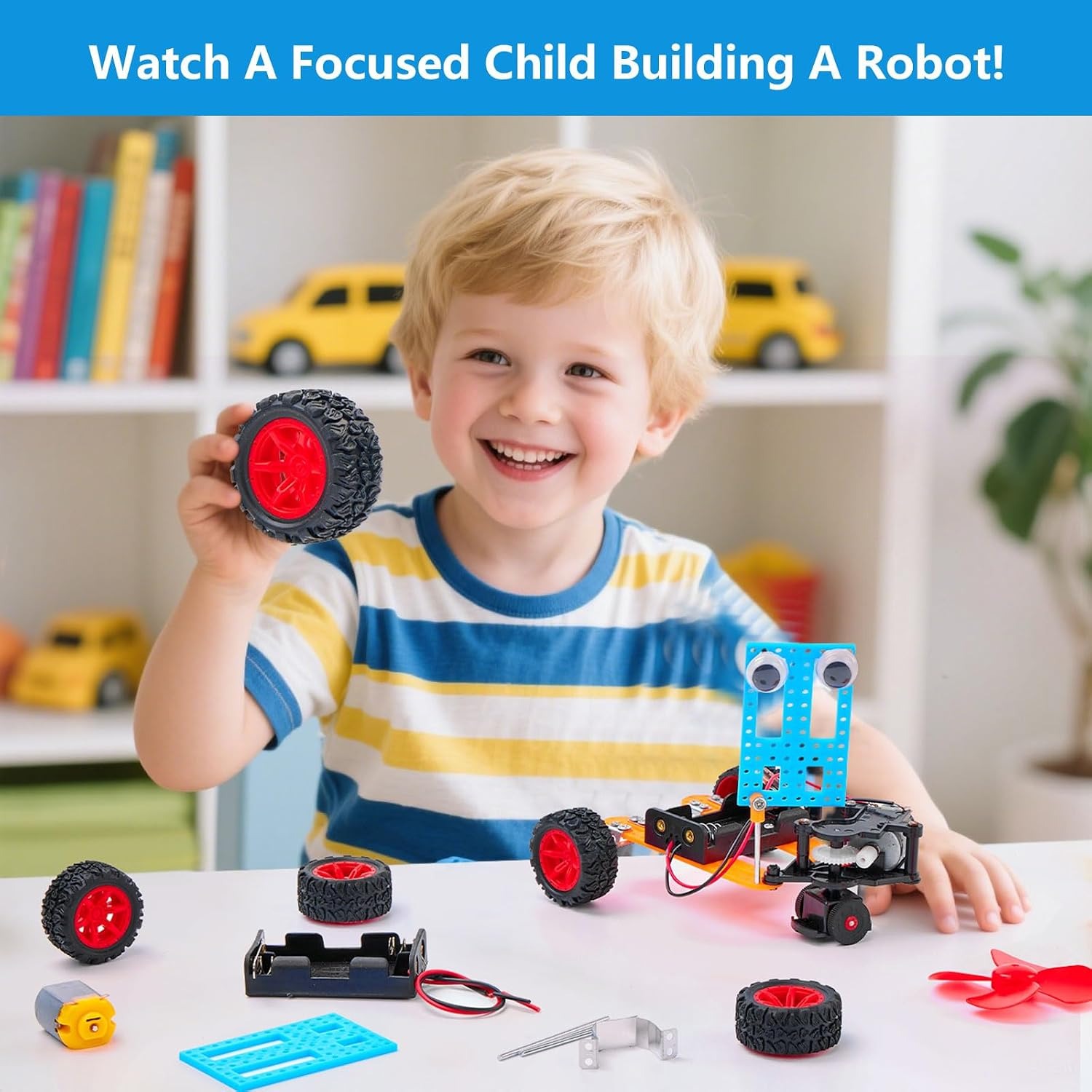
A motorised kit changes that equation. When the final screw goes in and the model starts crawling across the carpet, the build has a payoff. And when the same parts can be pulled apart and turned into something completely different, the box has a second life, and a third, and a fourth.
That is what this set is built around. One kit, five models, a motor, and a screwdriver small enough for a child to actually use.
What you actually get
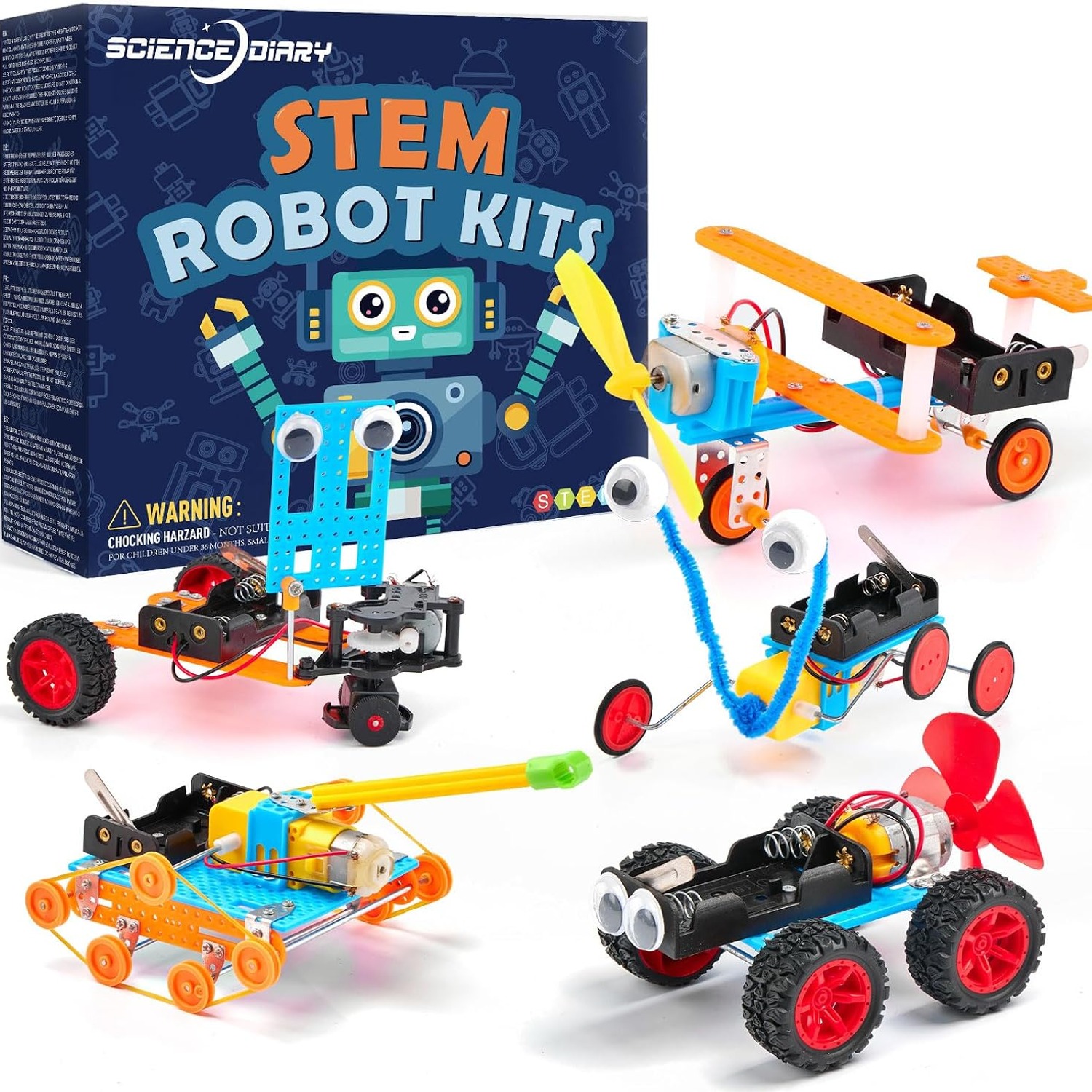
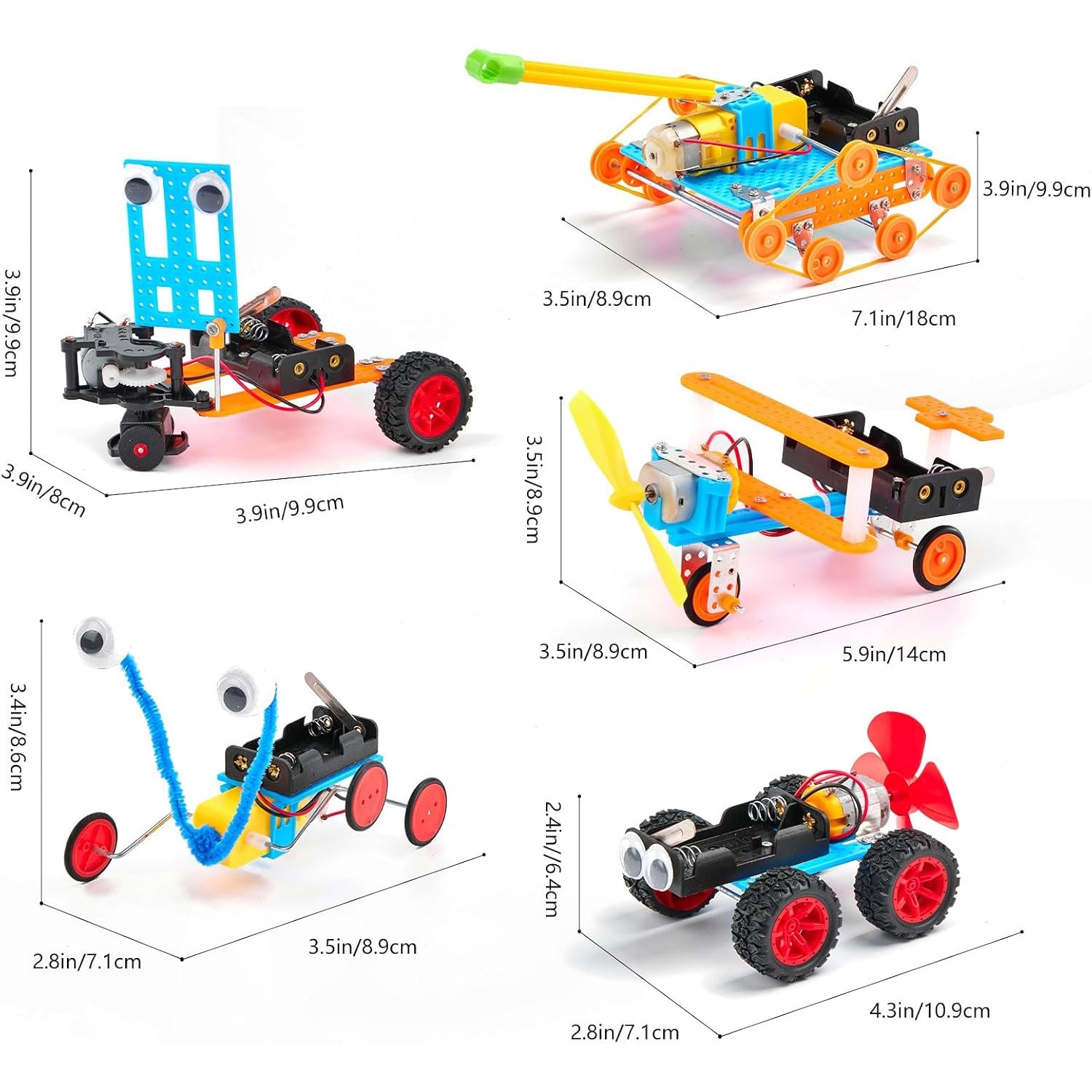
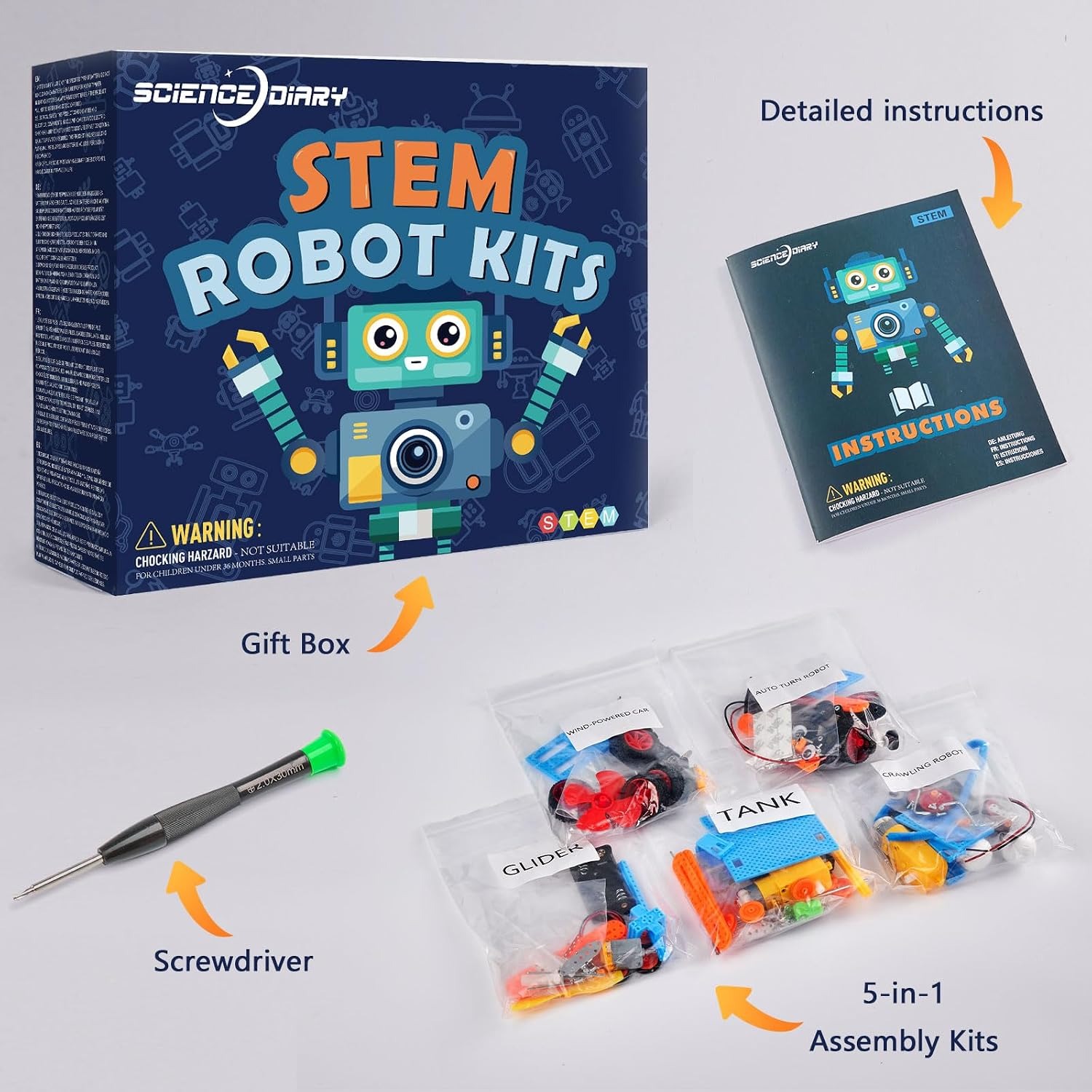
The box contains the parts for five models: a wind powered car, a tank, a glider, a crawling robot and an auto-turn robot. They share a common set of components, so you build one at a time, play with it, take it apart, and start the next.
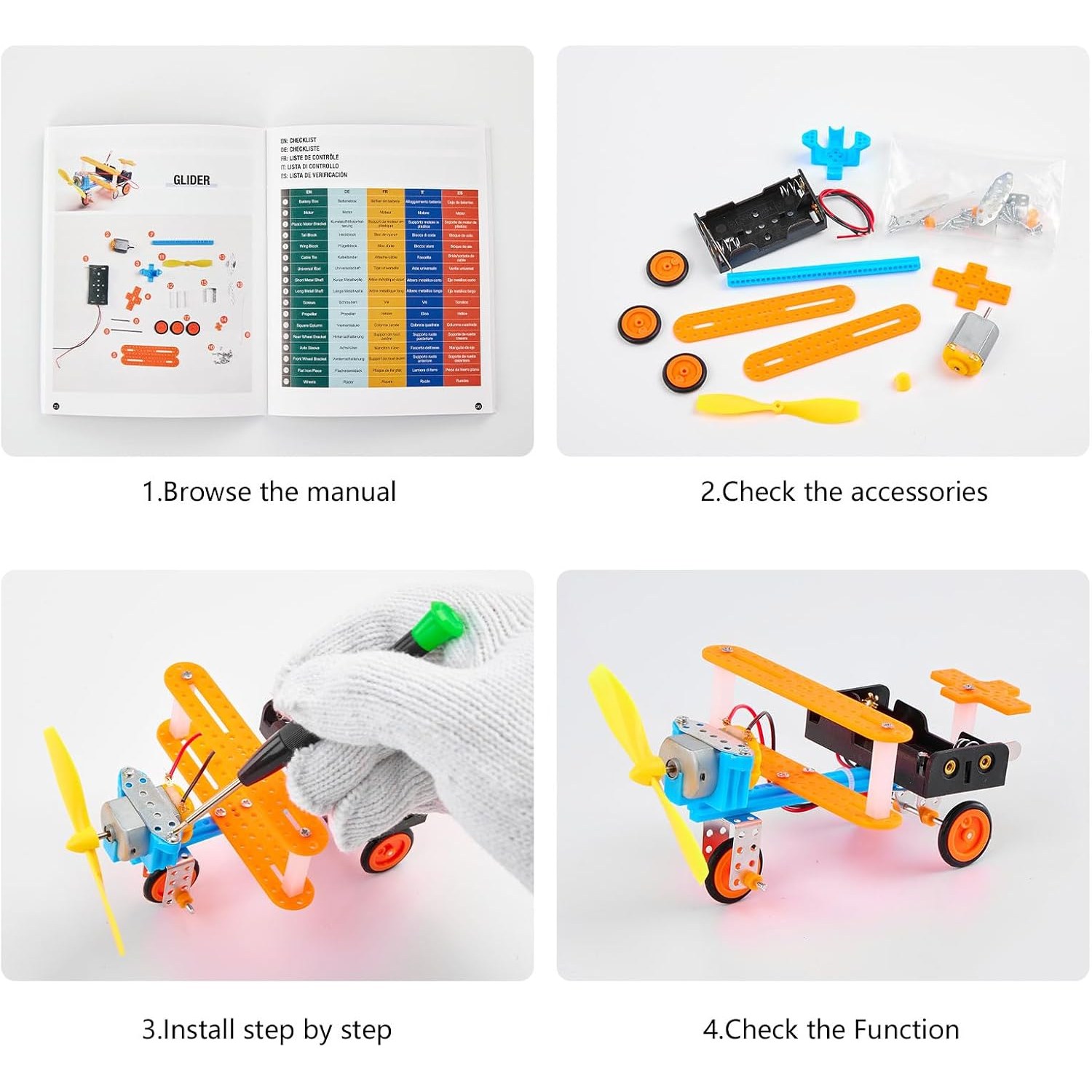
Also included are the motor, the screwdriver, and illustrated manuals in English, German, French, Spanish and Italian. Batteries are not included. That is worth repeating, because a flat start on a birthday morning is a sad thing. Check the manual for the type needed and have a pack in the cupboard.
The whole thing measures 18 x 16 x 7 cm and weighs 0.49 kg. It is a small box. That is a point in its favour if you are short on storage, and it posts easily if you are sending a gift to a nephew in another city.
How a motorised build actually teaches something
There is a lot of talk about STEM toys, and a fair bit of it is marketing. Here is what genuinely happens when a child builds one of these.
First, they have to read a diagram and work out which real part matches the picture. That is a skill, and it is harder than adults remember. Second, they have to work in order, because step seven will not fit if step four was skipped. That teaches patience and sequence better than any worksheet.
Then comes the mechanical part. The motor spins. A gear transfers that spin somewhere else. A wheel or a leg converts it into movement. When the crawling robot shuffles instead of rolling, the child can see exactly why, because they put the legs on themselves. When the auto-turn robot bumps a wall and changes direction, that is a mechanism they assembled, not a mystery inside a sealed shell.
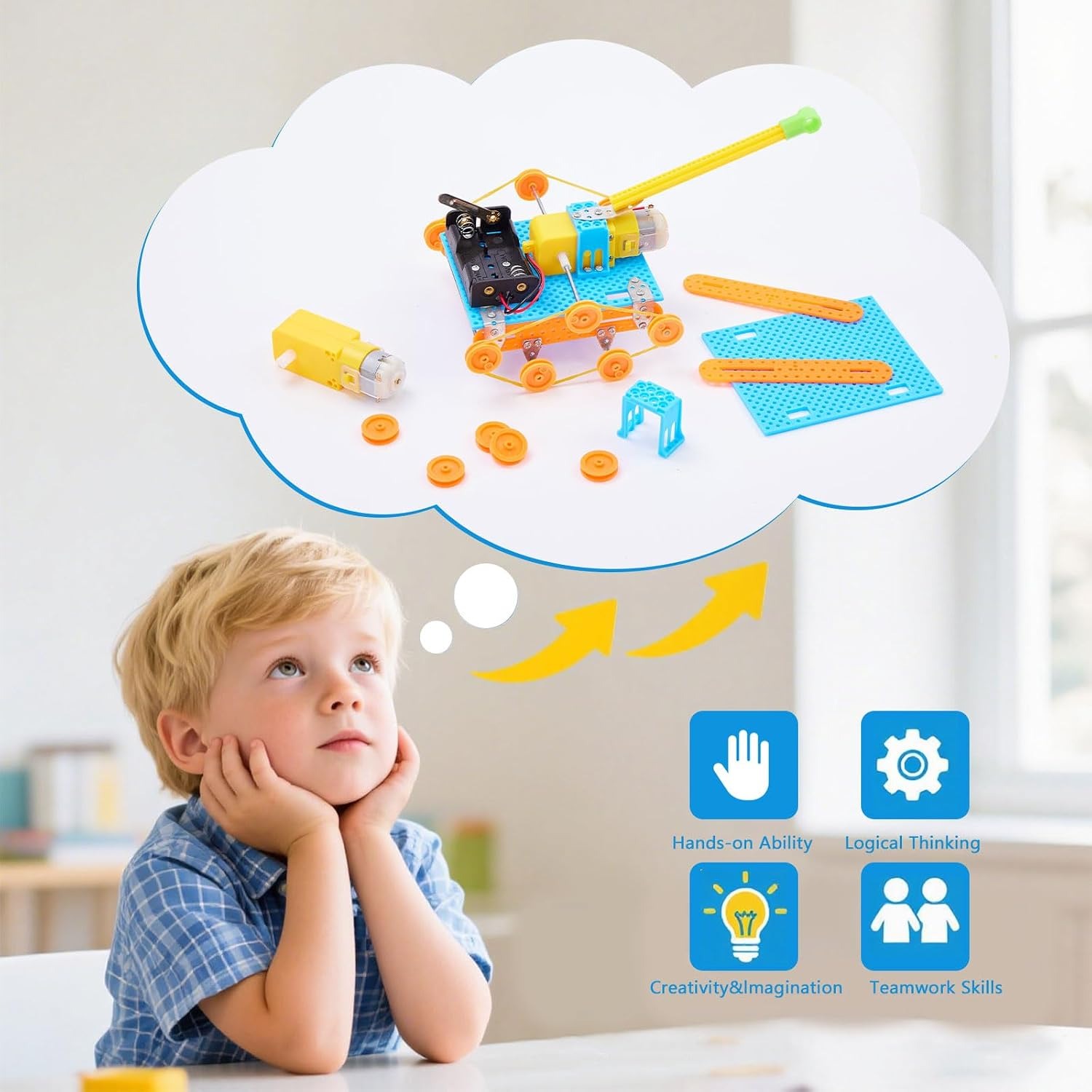
The stated learning aims are construction skills, critical thinking, observation skills, problem solving and STEM. In practice, those all show up as the same moment: something does not work, the child looks at it, and figures out why.
Who it suits
The manufacturer recommends 8 years and up, and that is an honest number. An average 8 year old can work through the manual with light supervision and finish a model in a sitting or two.
Children of 6 or 7 usually do well with a parent beside them. The adult reads out the step numbers, holds a piece steady while a screw goes in, and lets the child do the satisfying parts. This is often the real reason people buy a kit like this. It gives you a shared project at the kitchen table with a clear beginning and end.
Older kids, 10 and up, will find the builds quick but still enjoy the mechanics, especially if you challenge them to modify something. Can the tank go faster? What happens if you swap the wheels? That is where the set stretches beyond the manual.
It is not suitable for children under three. The parts are small and some of them are very small.
Choosing between kits: what actually matters
If you are comparing a few options, a short checklist helps.
Does it include the tool? A kit that needs a screwdriver you do not own is a kit that sits unopened. This one includes one sized for its own screws.
Does it move? A static model is a puzzle. A motorised building kit is a machine. For most children the difference in engagement is large.
How many builds are in the box? One model means one afternoon. Five means a child can revisit it across a whole school holiday.
Are the instructions picture led? Text heavy manuals stall children who read slowly or read in a second language. Illustrated steps in five languages remove a lot of friction.
Is assembly required at all? Here it is, and that is the point. A pre-built toy teaches nothing about how it was made.
Setting up the first build
Clear a table. A hard, flat surface beats a carpet or a bed, because small screws roll and vanish into fabric. Put a tray or a shallow baking dish on the table and tip the parts into it.
Have the batteries ready and the manual open before anything else. Let the child find the first few parts themselves rather than handing them over, since that is part of the observation practice.
Expect the first build to take around an hour. Later ones will be faster. If attention runs out halfway, leave it assembled and come back the next day. There is no rule that a build has to happen in one go.
Looking after it
The parts are plastic, so the care routine is short. Keep them out of water, away from radiators and out of direct sunlight, which makes plastic brittle over time.
Wipe finished models with a dry or lightly damp cloth. Let them dry properly before they go back in the box. Avoid cleaning sprays entirely.
Take the batteries out if a model is going to sit unused for weeks. Leaking batteries ruin motors, and that is a sad end to an otherwise fine toy.
Most importantly, keep the parts together. The original box or a lidded container works. A kit with 90 percent of its pieces is worth a lot less than a kit with all of them, and the difference is usually one careless pack-up.
As a gift
It arrives in retail packaging meant for shelf display, so it looks like a present without much help from you. The themes listed are vehicle and airplane, which covers a lot of common interests.
Two things worth doing before you wrap it. Buy the batteries. And if the child is on the younger end, be ready to sit down with them for the first session. A kit that gets opened and abandoned because nobody helped is a wasted gift. A kit where a parent pulls up a chair tends to get built five times.
The short version
This is a compact plastic kit that builds five motorised models, one at a time, from a shared set of parts. The motor and screwdriver are included, the batteries are not, and the instructions come in five languages with pictures at every stage.
It suits children from about 8 upward working on their own, and slightly younger ones with an adult alongside. It teaches sequence, diagram reading, and the basics of how a motor turns into movement.
If you want a screen free activity kit that gets opened more than once, this is a sensible pick. If the child already has a drawer full of half-finished sets, the thing that makes this one different is that the finished model actually goes somewhere.