
The complete guide
The Honest Buyer's Guide to Bean Bag Toss Games for Kids
The problem with most kids' party games
You buy a game for a birthday. It gets played for twenty minutes, then one piece goes missing, then the box ends up on top of the wardrobe. Six months later you find it when you are looking for something else.
A lot of that comes down to two things. The game only does one thing, and it is a pain to set up. If a child has to wait for an adult to assemble something, or if the game only works in one specific spot in the house, it gets played less. The games that survive in a family are the ones a kid can drag out, set up and start without asking anyone.
That is the practical argument for a bean bag toss game built on a folding fabric board. It takes seconds to open, it works in several places, and it holds three different games instead of one. The bar for "let's play" drops low enough that it actually happens.
How a 3-in-1 toss board works
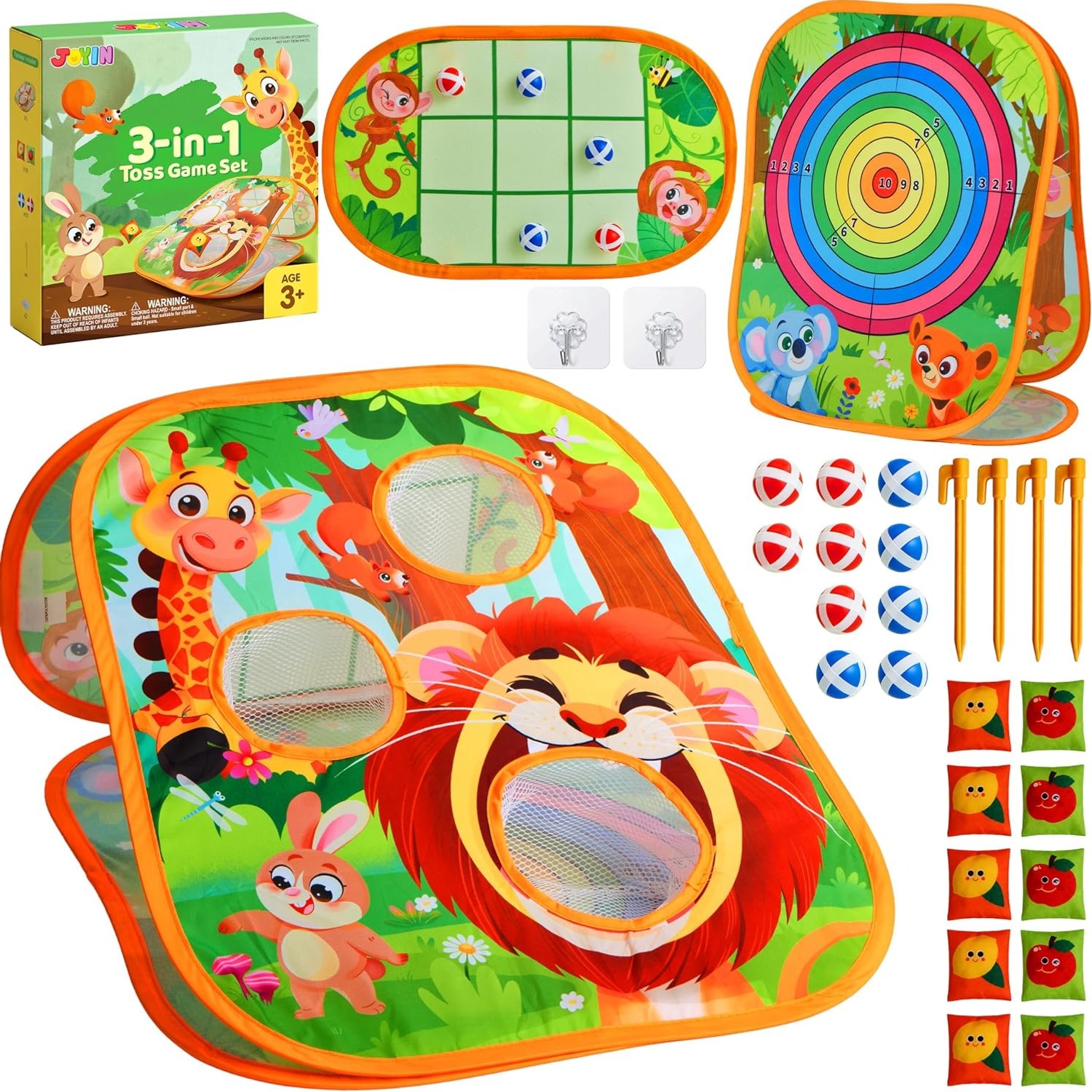
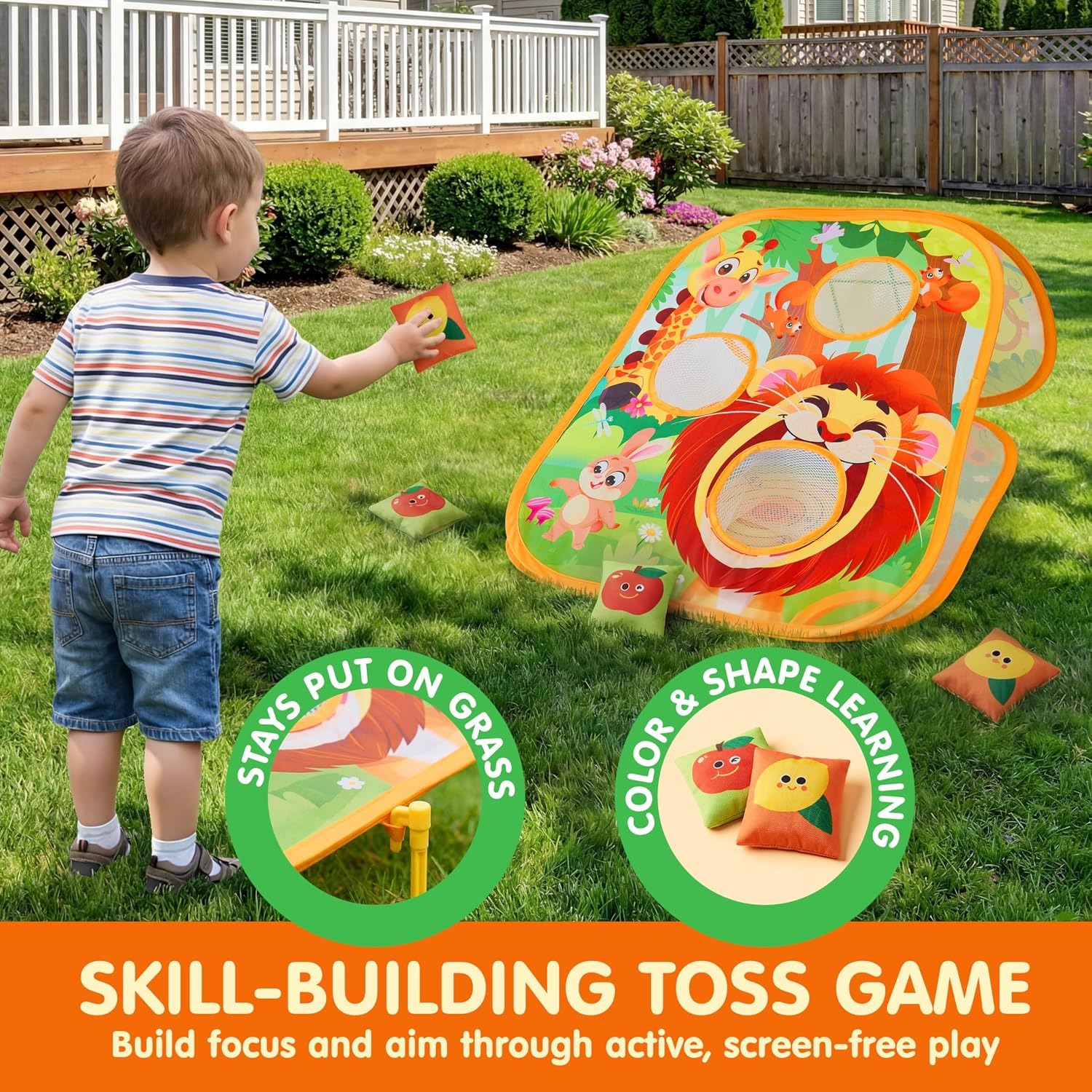
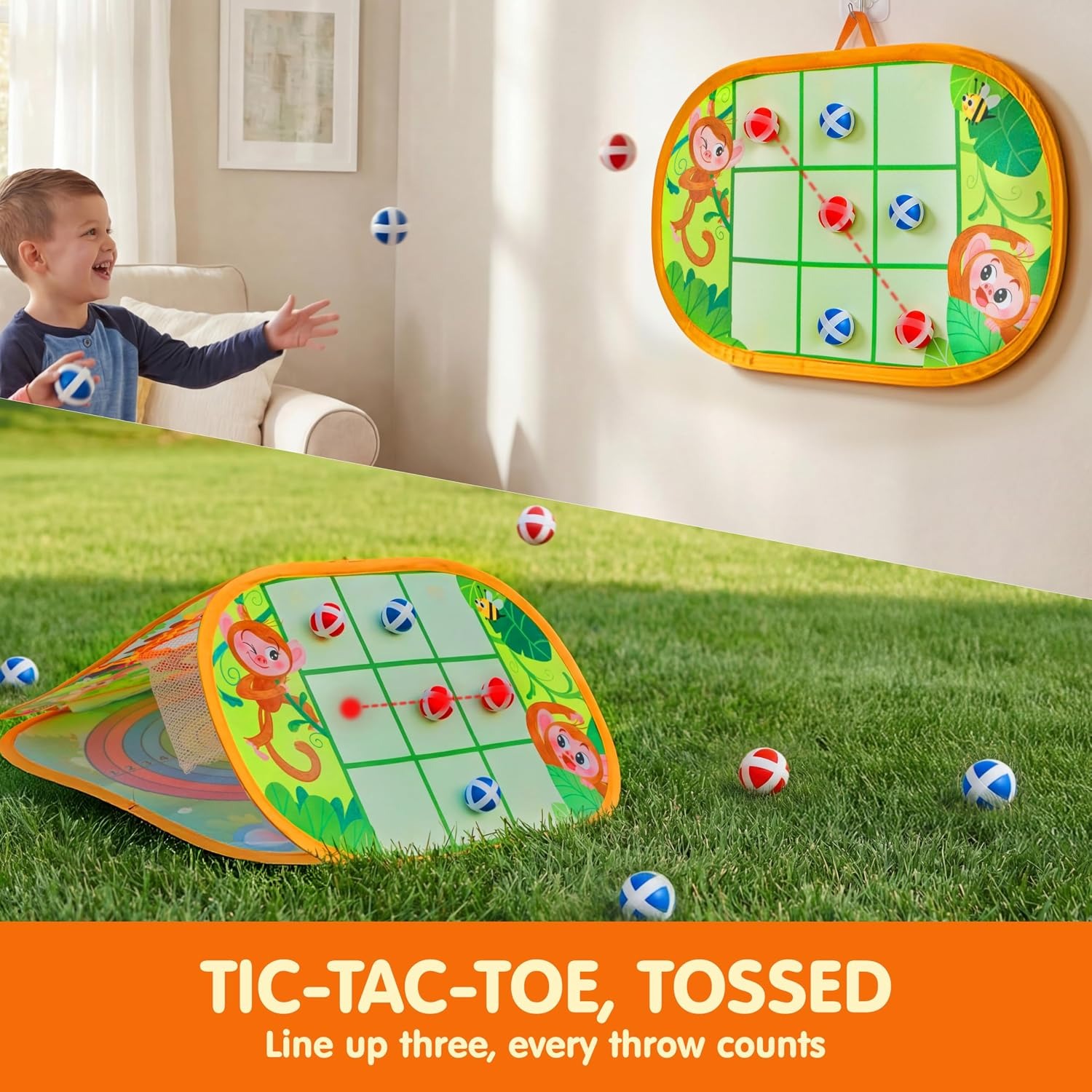
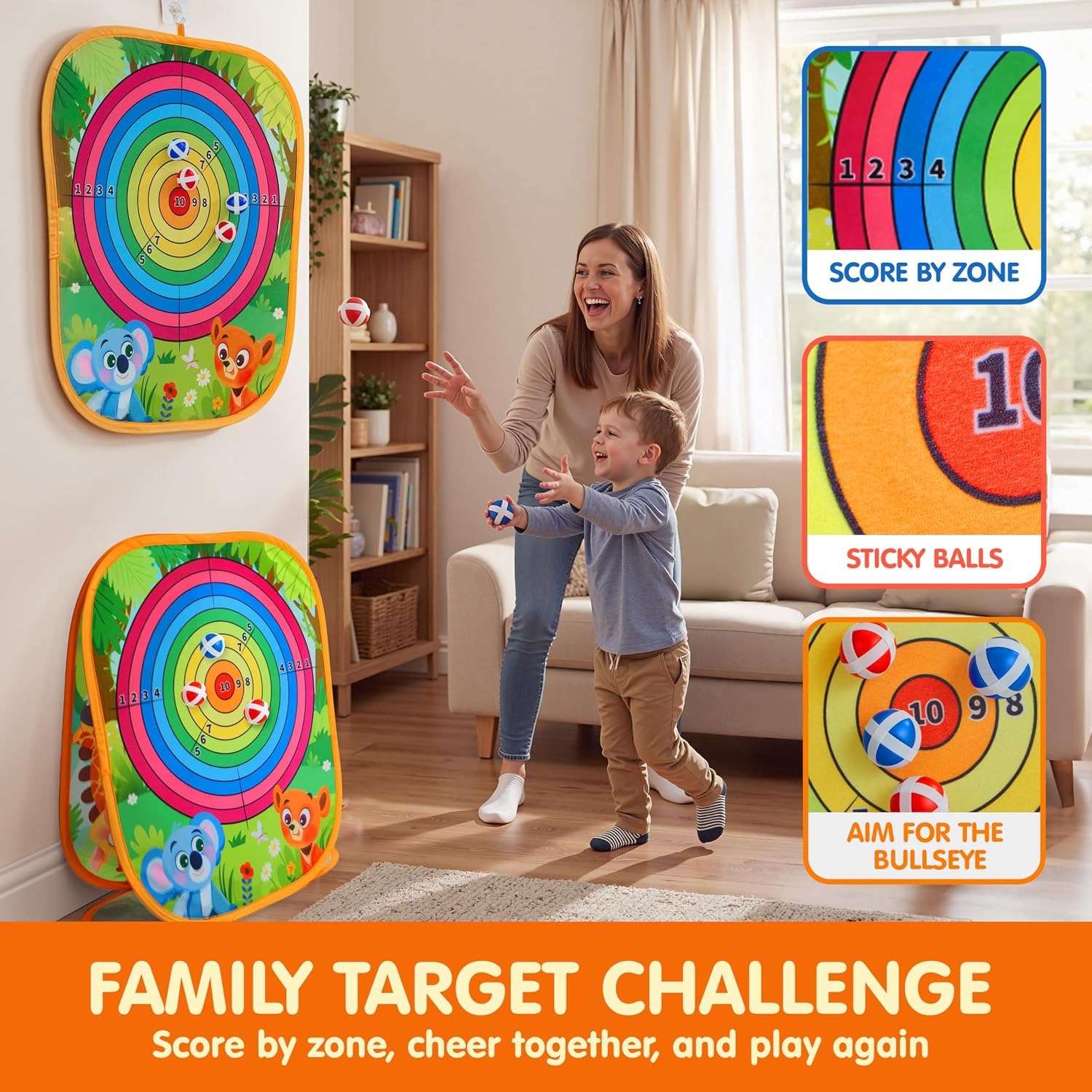
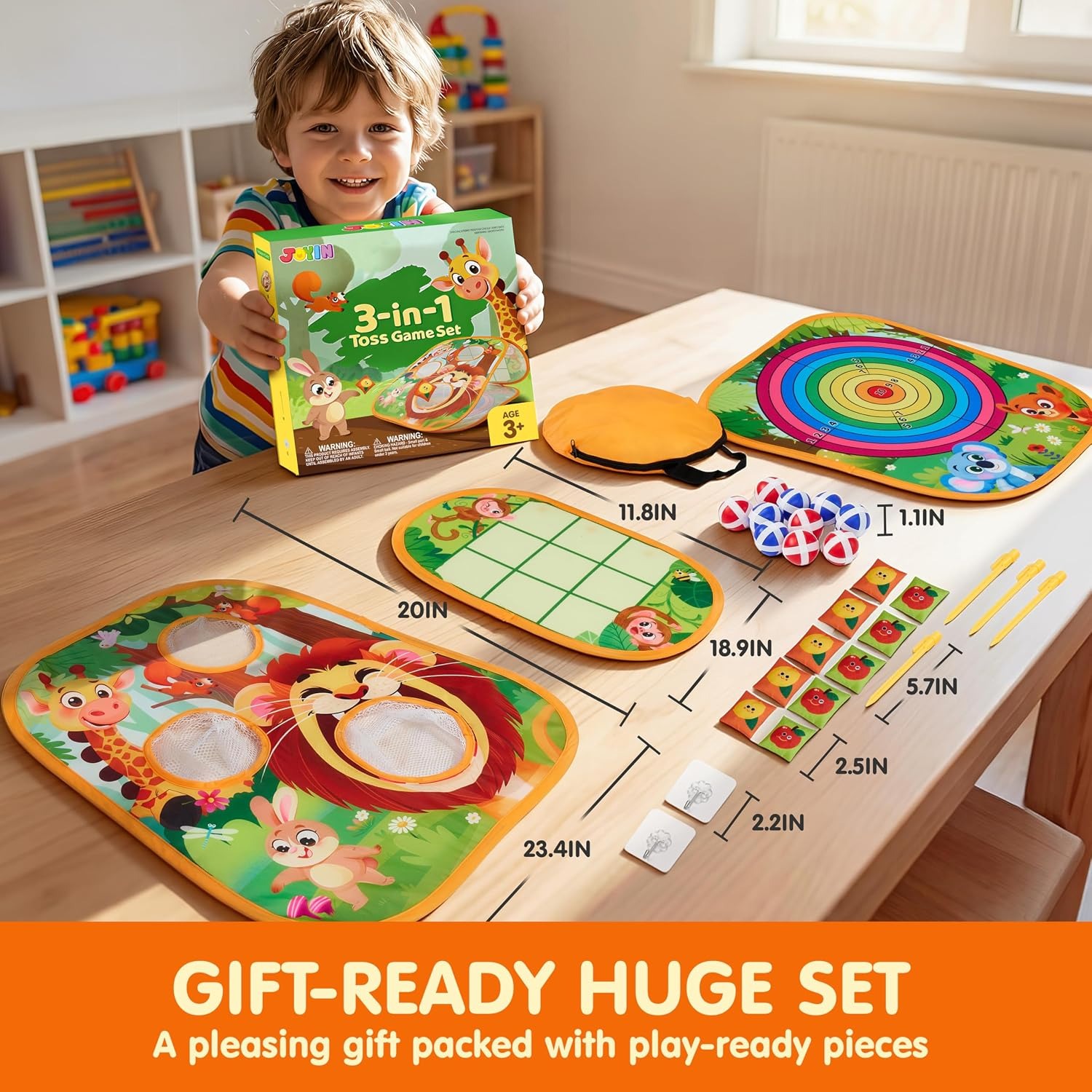
The board is fabric stretched on a frame with no sharp edges. On one face you get the classic cornhole layout, target holes you aim bean bags into. Flip or switch modes and you have a sticky dartboard, where small soft balls cling to the surface where they land. The third mode is tic tac toe, which turns the same board into a slower, more strategic game for two players.
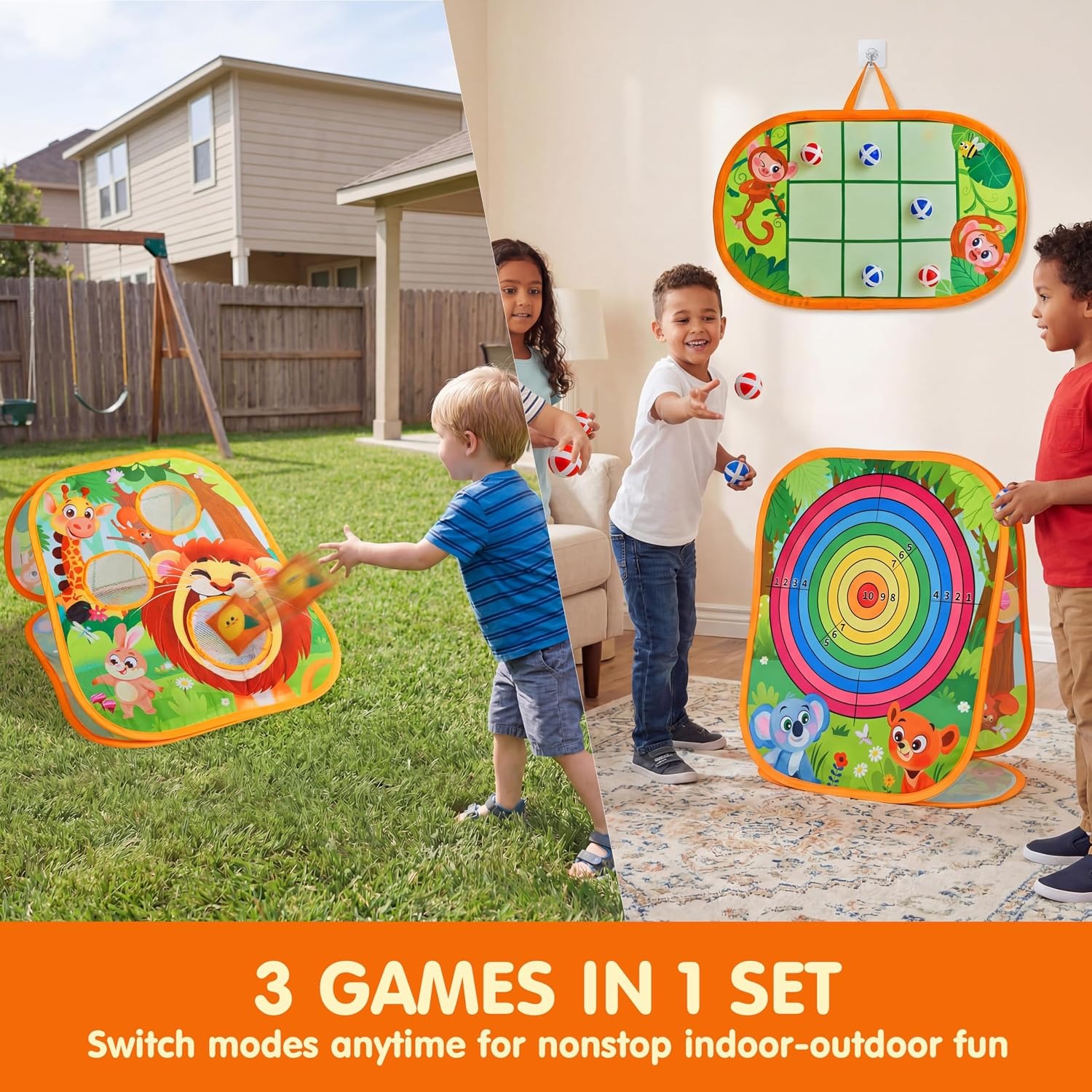
That mix matters more than it might sound. Bean bag toss is loud and physical. Sticky darts rewards precision and works well against a wall. Tic tac toe is quiet and lets a tired child sit down and still play. Three energy levels, one piece of kit.
The set is manual. No batteries, no app, no charging cable. The operation mode is listed as manual and batteries required as no, which means it behaves exactly the same on the hundredth game as it did on the first.
Setup, and why three options beats one
Most toss games give you a single way to stand them up. This one supports three.
Flat on the ground is the easiest for small children. They stand close, lob a bag down onto the target, and get instant feedback. No frame to tip over, no height to judge.
Leaning at an angle against a wall, a step, a fence or a couch gives you the proper cornhole arc. Bags need to be thrown with a bit of loft to land and stay. This is the setup older kids and adults will gravitate to, and it is where a backyard party game gets competitive.
Hanging it on a wall is the best setup for sticky ball mode, since the balls need a vertical face to grip. It is also the move when floor space is short. A hallway, a garage wall or the back of a door all work.
Being able to pick means the game fits the space instead of the space having to fit the game. In a small apartment that is the difference between using it and not.
Who it suits
The recommended age is 3 years and up. In practice the age range it serves is wide, because difficulty is set by distance rather than by the game itself. A three year old throws from a metre away. A ten year old throws from five. An adult throws from across the yard and still misses, which is reliably funny to everyone watching.
That makes it useful in a few specific situations. Birthday parties with a mixed age group, where you need something a four year old and a nine year old can both join. Family gatherings where cousins who barely know each other need an icebreaker. Holiday houses and camping trips where the weather might turn and you need something that works outside and inside.
It is also a decent choice for a child who needs a bit of help with coordination. The stated educational objective is building hand-eye coordination, focus and motor skills, along with turn-taking and family interaction. Throwing at a target gives immediate, honest feedback. You either hit it or you did not, and the adjustment is obvious.
How to choose between toss game styles
If you are comparing options, there are really three categories.
Timber cornhole sets are the serious version. They are heavy, they look good, they last for years, and they are a nuisance to move or store. If the game will live permanently in one backyard and adults are the main players, timber is a fair call.
Folding fabric sets, which is what this is, trade weight and rigidity for portability. The board packs into a carry bag, weighs 590 g in this case, and the packed dimensions are listed at 25.4 x 22.9 x 5.1 cm. You can put it in a backpack. The compromise is that fabric needs to be kept dry and will not take the same abuse as sealed timber.
Inflatable or plastic sets sit in between. They are often bulkier to store than fabric and more prone to splitting at seams.
For a family with kids, travel, limited storage, and a need for something that works both indoors and out, the fabric folding set is usually the sensible middle ground. If you want the single best portable cornhole set for holidays rather than a permanent backyard fixture, that is the category to shop.
The other thing to weigh is mode count. A single-game board is cheaper, but it will be played less. Three modes on one board is a hedge against boredom, especially with younger kids whose attention moves fast.
Looking after it
Fabric games are easy to maintain as long as you do two things. Keep them dry and keep them out of long sun exposure.
Wipe the board and the bags with a damp cloth and a little mild soap when they get grubby. Let everything air dry completely before you fold it, because folding away damp fabric is how you get musty smells and weakened stitching. Skip the washing machine, the dryer and bleach.
Sticky balls lose their grip as they pick up dust, lint and sand. Rinse them in warm water, let them dry, and most of the tack comes back. If you play on carpet a lot, expect to do this more often.
Store it folded in its carry bag somewhere dry. A shelf in the garage, a cupboard, the boot of the car if you use it at the park often. Check the seams occasionally if it gets daily use, and stop using a bean bag if the stitching opens, since loose filling is a hazard around small children.
A couple of practical house rules
Set a throwing line with a stick, a towel or a chalk mark, and move it based on who is throwing. Younger kids closer, older kids further. It keeps the game fair without anyone having to explain a handicap system.
Clear the area behind the board. Bean bags overshoot. So do sticky balls. Nobody wants the game to end because a glass got knocked off a side table.
On windy days, play it flat on the ground rather than leaning. A light fabric board catches wind, and a board that keeps falling over kills the fun quickly.
The short version
This is a folding fabric bean bag toss game with three modes, bean bag toss, sticky ball darts and tic tac toe, rated for ages 3 and up. It needs no assembly and no batteries, weighs 590 g, and packs into a carry bag at 25.4 x 22.9 x 5.1 cm. It can sit flat, lean at an angle, or hang on a wall.
Buy it if you want something portable that works indoors and out, suits a wide age range at a party, and does not need an adult to build it first. Buy a timber set instead if you want a permanent backyard fixture and portability does not matter to you.
Keep it dry, wipe it down now and then, and store it in its bag. Done that way, it should stay in rotation a lot longer than most party games manage.