

Toy Warehouse
Company
Shop By Category
T&Cs
Shop Online
  • Box contents listed
  • Free tracked NZ-wide delivery over $175
  • 14-day returns

Butterfly Kite | Easy fly kite | Beginner kite for kids

Butterfly Kite 2-Pack

$59.99 $71.99 Save $12
  • Lifts In Light Breeze
  • Complete Flying Kit
  • Two Kites Included
  • Sharp Butterfly Print

Price: $59.99 $71.99

  • Free tracked NZ-wide delivery on orders $175+, otherwise a flat $20
  • Pay by card or PayPal, handled by the payment provider
  • 14 days to change your mind, plus your statutory rights
Product specifications
BrandTouch the sky
ThemeButterfly
ColourColourful
Sail MaterialNylon
Frame MaterialPolyester
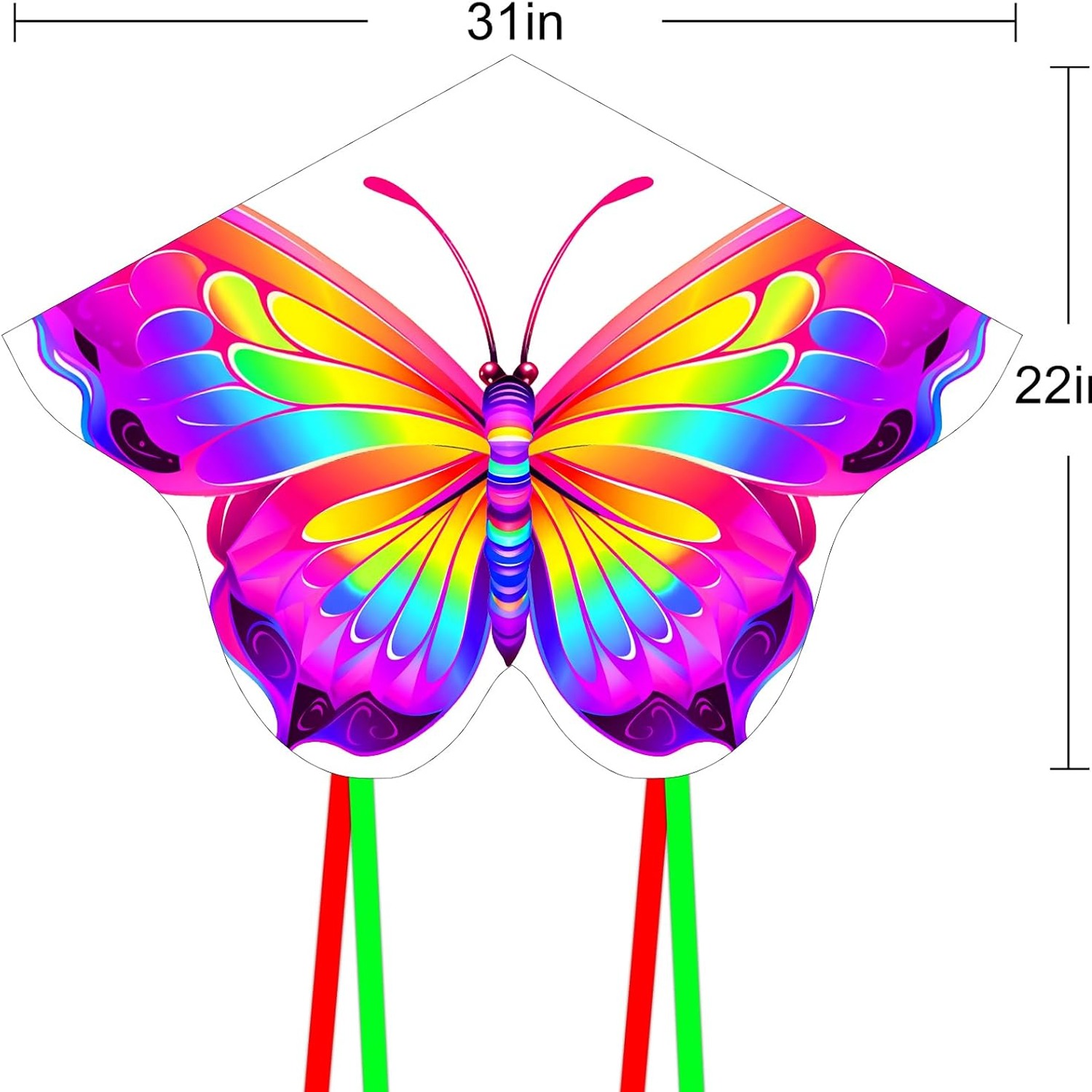
Kite Size55 cm x 78 cm
Item Dimensions (L x W)78 cm L x 55 cm W
Number Of Items2
Unit Count2 Count
Age Range DescriptionAdult
Shipping & returns

Tracked delivery anywhere in New Zealand. It is free on orders of $175 or more, and a flat $20 below that.

If it is not right for you, send it back within 14 days of delivery in resaleable condition and we refund the price you paid, including standard delivery. That is a voluntary policy we offer on top of your legal rights. You cover the cost of returning it unless the item is faulty.

If it arrives faulty, damaged or not as described, we put it right at no cost to you under the Consumer Guarantees Act 1993 and the Fair Trading Act 1986, return postage included.

Shipping details · Refunds and returns

Lifts In Light BreezeA large sail area helps it climb without a long run-up.
Complete Flying KitAccessories and assembly instructions are included in the pack.
Two Kites IncludedFly together, swap colours, or keep one as a spare.
Sharp Butterfly PrintHigh-definition butterfly artwork printed straight onto the sail.

A bright butterfly kite that lifts on the first run and keeps the whole family looking up.

Two nylon kites with polyester frames, a large lifting surface and a complete accessory pack, so even a first-timer gets airborne fast.

A beginner-friendly butterfly kite with a wide lifting surface that gets up and stays up without much wind.

Each kite measures 78 cm long by 55 cm wide, a size that handles breeze well while staying easy for small hands to control.

The sail is nylon and the frame rods are polyester, a light pairing that packs down small for the car or beach bag.

Two kites come in the pack, so nobody has to take turns and you always have a second one ready.

Instructions and the accessories needed to launch are in the box, so you can be flying within a few minutes of arriving.

Butterfly Kite 2-Pack

Most people who give up on kites gave up on the wrong kite. A sail that is too small, too heavy or too fiddly needs a steady wind and a confident flyer to work, and that is a hard first day out. This butterfly kite goes the other way. The sail is wide for its size, which means it catches whatever air is moving and converts it into lift early, often before you have finished jogging. For a first attempt, that difference is everything.

Butterfly Kite 2-Pack

Each kite measures 78 cm long and 55 cm wide. That is a useful middle ground. Big enough to pull and hold a line with real presence in the sky, small enough that a child can hold the handle without being dragged along the sand. The nylon sail is light and does not soak up spray the way heavier fabrics can, and the polyester rods flex rather than snap when a gust hits the frame side-on.

Butterfly Kite 2-Pack

Two kites arrive in the pack. That is quietly one of the best things about it. Siblings stop negotiating, parents get to fly one instead of supervising, and if a rod goes missing in long grass you still have a complete second kite in the bag. It also makes the set an easy gift, since you are handing over a shared activity rather than a single toy.

Butterfly Kite 2-Pack

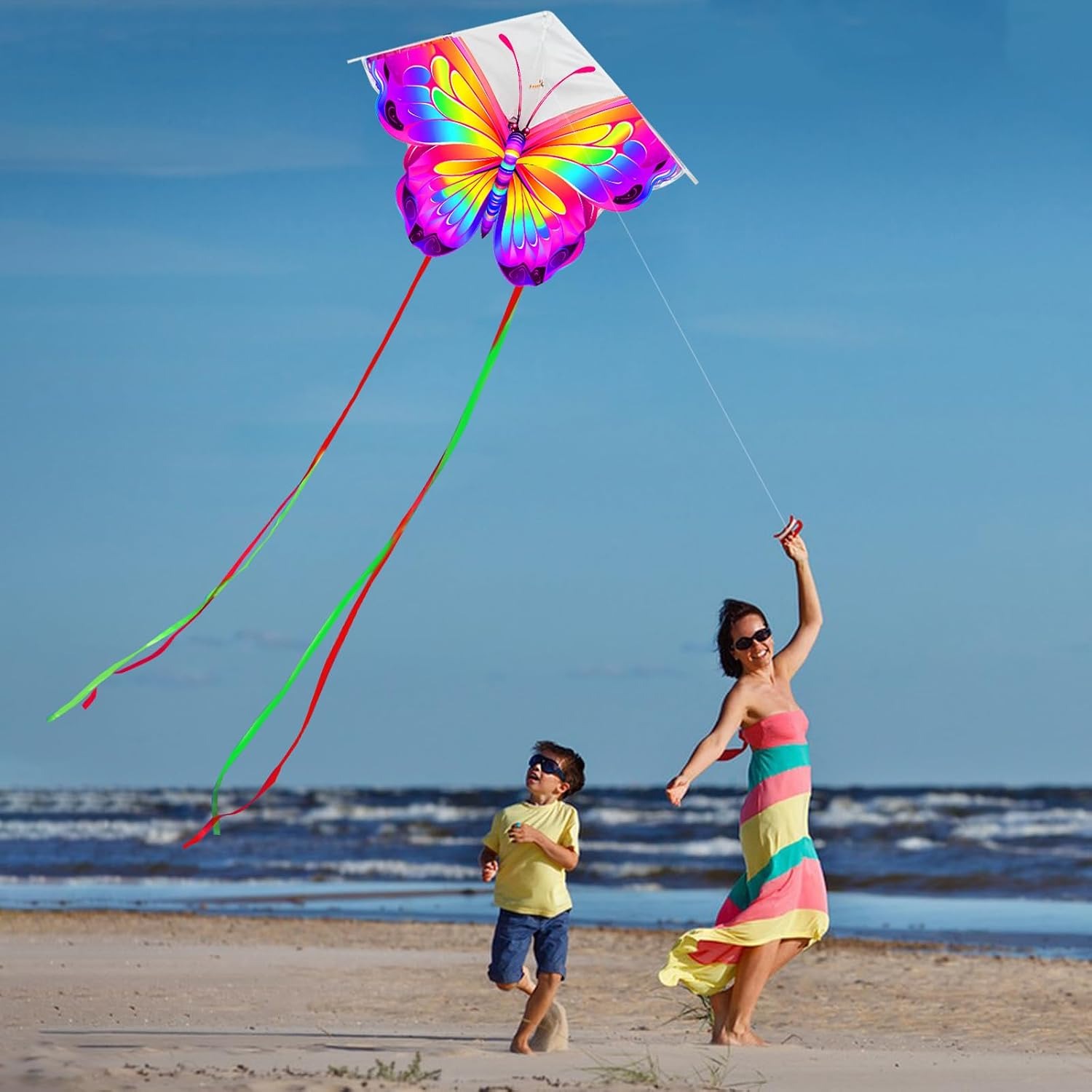
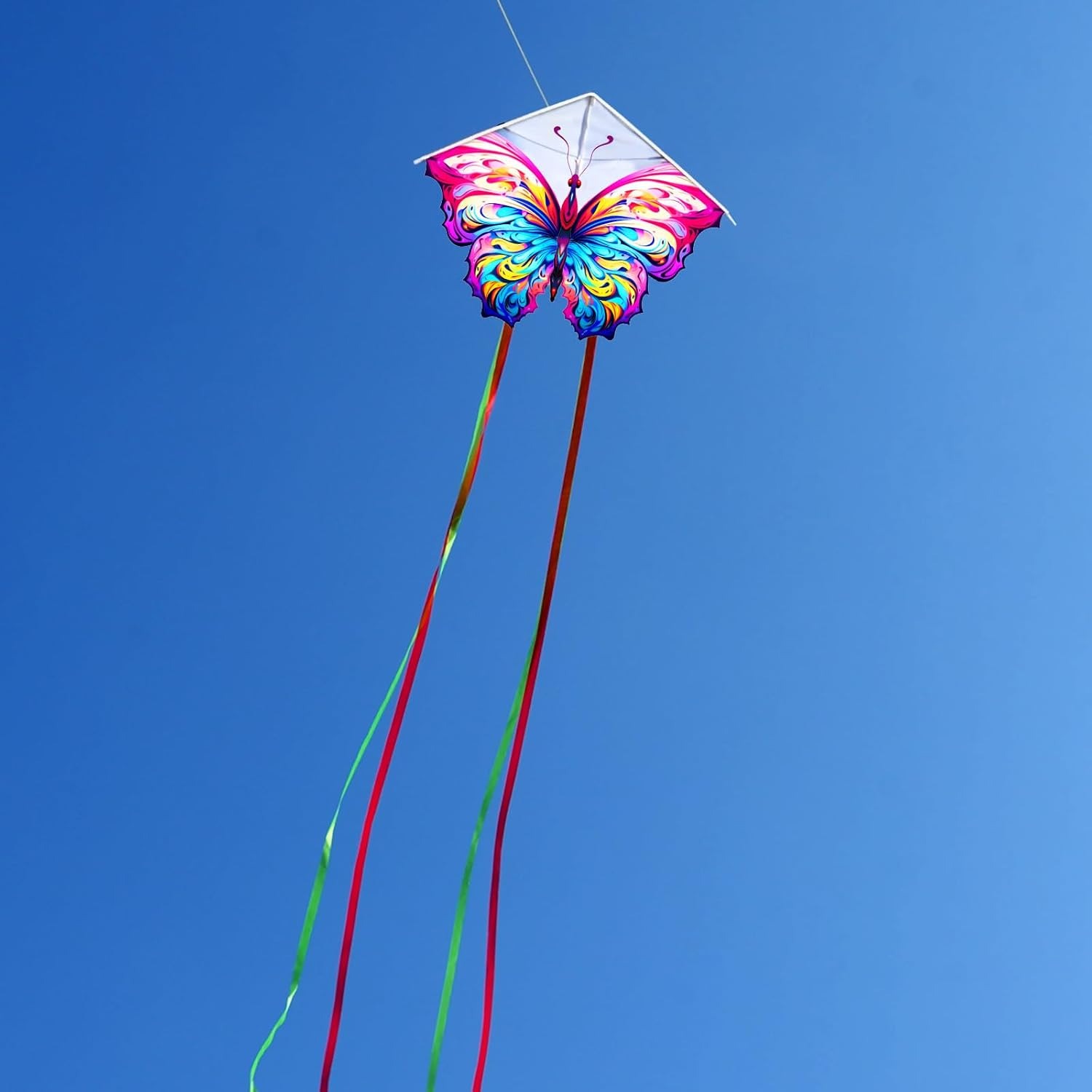
The butterfly artwork is printed directly onto the sail at high resolution, so the wing patterns read clearly from the ground even when the kite is well up. Colour matters more than people expect. A bright kite is easier to track against cloud, easier to find if it comes down in scrub, and simply more fun to watch loop and settle.

Everything needed to launch is included, along with instruction and assembly notes. Assembly is a matter of sliding the frame rods into their sleeves and attaching the line, which takes a few minutes the first time and under a minute once you have done it. Pack it down the same way, let it dry, and it lives happily in a car boot waiting for the next windy afternoon.

Not sure yet? That is fine.

A toy has to suit the child it is for, and you cannot always judge that from a photograph. If it is not right for you, send it back within 14 days of delivery in resaleable condition and we refund the price you paid, including standard delivery. That is a voluntary policy we offer on top of your legal rights.

If it turns up faulty, damaged or not as described, that is on us. The Consumer Guarantees Act 1993 and the Fair Trading Act 1986 covers you, and we pay the return postage. Read the full detail on our refunds and returns page, or ask us anything before you order.

Frequently Asked Questions

What exactly comes in the pack?

The pack contains two butterfly kites, each measuring 55 cm by 78 cm. Instructions and assembly notes are included, along with the accessories needed to get the kite into the air. You do not need to buy anything separately to fly it.

Is this a good first kite?

Yes, that is what it is built around. The sail has a large lifting area, which is the main reason a kite climbs easily instead of nosediving. If you are looking for the best beginner kite to start with, a wide single-line design like this one is the sensible choice.

How big is each kite?

Each kite is 78 cm long and 55 cm wide. That is a mid-size kite, large enough to pull properly in the air but still easy to hold and easy to pack into a bag or car boot.

What is the sail made from?

The sail is nylon. It is light, it does not hold water the way heavier fabrics do, and it dries quickly after a damp session at the beach or on wet grass.

What are the frame rods made from?

The frame rods are polyester. They flex under load rather than holding rigid, which helps the kite absorb gusts instead of taking the full force through one point.

How much wind do I need?

A light steady breeze is enough for a kite with this much sail area. If the leaves on trees are moving and you can feel air on your face, you have workable conditions. Very still days are hard work for any kite.

Can it handle stronger wind?

It copes with breeze well thanks to the flexible frame, but no light recreational kite enjoys genuinely strong wind. If the line is straining hard and the kite is diving sharply, bring it down and wait for things to settle.

Is it suitable for children?

The product details list the age range description as Adult, so treat this as a family kite flown with adult supervision rather than a toy handed to a small child alone. Older kids usually manage the handle well once an adult has launched it.

Why does the listing say Adult age range?

That is the maker's own age range description in the product details. It reflects how the item is classified rather than a comment on how fun it is for families. Adults should supervise younger flyers either way.

Where is the best place to fly it?

Open ground with nothing overhead. Beaches, large parks, sports fields and open paddocks all work. Stay well away from power lines, roads, trees and airports.

How long does assembly take?

The first assembly usually takes a few minutes while you work out which rod goes where. After that it is under a minute. The rods slide into their sleeves and the line attaches to the bridle point.

Do I need two people to launch it?

It helps but it is not required. One person can hold the kite up and let it go while the other walks the line out. Solo, you can usually hold the kite above your head, release and walk backwards with the breeze behind you.

Why are there two kites in the pack?

So more than one person can fly at once, which removes the waiting around that puts kids off. It also means you have a spare if a rod goes missing or a line gets badly tangled on a busy day.

Can I fly both kites at the same time?

Yes, as long as you have space between flyers. Keep a good distance apart so the lines do not cross, because crossed lines on single-line kites tangle quickly and are a nuisance to unpick.

Is it good for the beach?

Beaches are among the best places for it. Sea breeze tends to be steadier than inland wind and there is nothing to snag on. Shake the sand off and let everything dry before packing it away.

What is the best kite for light wind days?

A kite with a large sail relative to its weight, which is exactly the design approach here. Smaller or heavier kites need more air moving before they generate lift, so they stall on gentle days.

How do I stop the line tangling?

Wind it back onto the handle under light tension, in even turns, rather than bundling it on quickly. Two minutes of tidy winding at the end saves ten minutes of untangling next time.

What if a rod breaks?

Polyester rods are flexible and usually survive normal use, but any kite frame can fail in a hard crash. You still have the second complete kite in the pack, which is one of the practical advantages of a two-pack.

How do I clean it?

Wipe the nylon sail with a soft damp cloth. Do not use detergent, bleach or a washing machine. Let it dry fully in the air, away from direct heat, before folding it up.

Can I leave it set up between flights?

You can for a day of flying, but for storage it is better to take the frame out and roll the sail. Leaving the rods under tension for long stretches is not ideal, and a packed kite takes up far less room.

Does it pack down small?

Yes. The sail rolls and the rods come out, so the whole thing goes flat and slim. It fits easily into a beach bag, backpack or the side of a car boot.

What colour will I receive?

The kites are described as colourful with a butterfly theme and high-definition printed artwork. Specific colourways are not listed by the maker, so expect bright multi-colour butterfly designs.

Is this a stunt kite?

No. It is a single-line kite, which means it flies steadily and holds position rather than doing tricks. Stunt kites use two or four lines and need more skill, space and wind.

Is it a good gift?

It works well as one. Two kites in a pack means it suits siblings, cousins or a parent and child, and it gives people an activity rather than something that sits on a shelf. It is a solid choice for the best kite gift under a modest budget.

Can adults enjoy it too?

Absolutely. Plenty of adults fly these for the quiet of it, and the age range description in the product details is listed as Adult. The pull on the line in a steady breeze is genuinely satisfying.

How high will it go?

That depends on line length, wind strength and how much open space you have. In steady breeze it climbs readily and will hold altitude with only occasional adjustment from you.

Will it work in a backyard?

Only if the yard is large and clear. Most backyards have fences, trees, sheds and power lines close by, which create turbulent air and snag hazards. An open park gives a much better result.

How is it delivered?

It ships flat-packed with the sail rolled and the rods alongside. Check the parcel contents against the instruction sheet when it arrives so you know everything is there before heading out.

What is your returns policy?

Unused items in their original packaging can be returned within the standard returns window shown at checkout. Contact us first and we will walk you through it. Keep the packaging until you have flown it once.

What if it is not right for me?

Get in touch and tell us what went wrong, whether it is a damaged rod, a missing accessory or simply the wrong kite for your conditions. We will sort out a replacement, a return or point you toward something better suited to where you fly.

How To Choose And Fly A Butterfly Kite (Without The Frustration)

6 min read Toy Warehouse

The problem with most first kites

Plenty of people decide they are bad at kites after one afternoon. The real story is usually simpler than that. They had a kite that needed more wind than the day was offering, or one so small that it demanded constant hand input to stay up. Twenty minutes of sprinting across a field with a kite skidding along behind you is enough to put anybody off for a decade.

A kite flies because air moving across the sail creates lift. Sail area and weight decide how much wind you need to make that happen. A wide, light kite starts generating useful lift in a gentle breeze. A small or heavy one sits on the ground until the wind picks up properly. That one piece of physics explains almost every frustrating kite story you have ever heard.

This butterfly kite is built on the easy side of that equation. Each one measures 78 cm long and 55 cm wide, which is a generous sail for a kite this light. The nylon sail and polyester frame keep the overall weight down, so the air does not have to work hard to get it moving. For a first-time flyer, that means the kite often climbs before you have finished walking backwards.

How a single-line kite actually works

Single-line kites like this one are the simplest kind. One line runs from your hand to a bridle point on the kite. The kite sits at an angle to the oncoming wind, the air splits across the sail, and the resulting lift pushes it up and back. Your line tension stops it drifting away and holds that angle.

Because there is only one line, you are not steering. You are managing. Let line out and the kite climbs away from you. Pull line in and you increase the apparent wind over the sail, which can lift a sagging kite back up. That little pull-and-release rhythm is the whole skill, and most people have it figured out within half an hour.

The frame matters here too. The polyester rods flex under load rather than staying rigid. When a gust hits the sail, that flex spreads the force instead of concentrating it in one spot. It also means the kite rides out small bumps in the air rather than being knocked sideways by every one of them.

Who this one suits

Families are the obvious fit. Two kites in a pack means two people fly at once, which removes the taking-turns problem that ends most outings early. One adult and one child, or two kids, or two adults who have decided the kids can watch for a bit.

It also suits anyone starting from zero. If you have never flown a kite, or you tried once and it did not work, a wide-sail beginner kite is the right reset. You are giving yourself the best chance of the thing working on the first go, which is what builds the appetite to do it again.

And it suits the car boot. Rolled up, it is flat and slim, and it weighs very little. That matters more than people think. A kite you have to plan around tends to stay in the cupboard. A kite that already lives in the car gets flown whenever the wind shows up.

Picking the right day and the right spot

Conditions do most of the work. Look for steady breeze rather than strong gusts. If the leaves are moving and you can feel air on the back of your neck, you have enough. If branches are whipping and the sand is stinging your legs, you have too much for a light recreational kite.

Open ground is non-negotiable. Beaches are excellent because sea breeze arrives smooth and uninterrupted, with nothing overhead. Large parks and sports fields work well too. What you want to avoid is anywhere with obstacles upwind, because buildings and tree lines churn the air into turbulence that makes a kite dance and drop for no obvious reason.

Safety comes down to a short list. No power lines, ever. Stay well clear of roads, crowds and anywhere aircraft operate. And give other flyers plenty of room, because single-line kites tangle fast when lines cross and nobody enjoys unpicking that.

Getting it up on the first try

Stand with the wind at your back. Hold the kite up by its frame, sail facing you, and let the wind press against it. If you feel it pulling, you are pointed the right way. Release it and let the line run out gradually while stepping backwards.

If it climbs, let line out slowly and let it find its height. If it starts to drop, give the line two or three quick tugs. That pull speeds up the air over the sail and often brings it straight back. If it dives nose-first repeatedly, the wind is probably too light or you are in dirty air from something upwind, so try a different patch of ground.

Having a second person helps on the first few launches. They hold the kite above their head about ten or fifteen metres downwind while you take the line. On a count, they let go and you give a steady pull. It is the easiest method there is, and the two-pack means you can swap roles between flights.

Looking after it

Kites last years when they are packed properly and months when they are not. The habits are simple.

Let it dry before it goes away. Salt spray, dew and damp grass all end up on the sail, and rolling a wet kite into a bag is how you get musty fabric and corroded fittings. Air it out, then roll it.

Wipe sand off the nylon with a soft damp cloth. Skip detergents and never put it in a washing machine. The printed butterfly artwork sits on the sail surface and does not need scrubbing to stay sharp.

Wind the line back on neatly, under light tension, in even turns. The temptation at the end of a cold afternoon is to bundle it on and deal with it later. Later is always worse. Two minutes now saves a tangled mess next time.

Take the rods out for storage and keep them straight. Check them for cracks or splits before each flight, especially after a hard landing. Store the whole thing out of direct sun, since long-term UV exposure fades printed fabric over time.

Small things that make a big difference

Fly with the sun behind you where you can. Squinting into glare while tracking a kite is tiring and you lose track of where it is sitting.

Watch the line angle rather than the kite itself. A kite flying at a steep angle is working well. One sitting low and flat is telling you the wind has dropped or you are standing in turbulence.

Bring gloves if you expect real breeze. A kite with this much sail area can pull harder than people expect, and thin line across bare fingers gets uncomfortable fast.

Finally, stop while it is still fun. The best afternoons end with a kite coming down neatly and everyone wanting to go back out, not with somebody chasing a tangled line across a car park in fading light.

The short version

This is a beginner kite that is honest about being a beginner kite. Two butterfly kites, each 55 cm by 78 cm, nylon sail, polyester frame, instructions and launch accessories in the box. The wide sail is the whole point, because it is what gets you airborne in ordinary breeze instead of waiting for perfect conditions.

Take it somewhere open, stand with the wind behind you, and give it a pull. Dry it, roll it, and keep it in the car. That is genuinely all there is to it.

Browse the shop

Ready for a windy afternoon?

Order the two-pack today and have a kite in the car for the next time the breeze picks up.

Ask us a question

Page summary

The Butterfly Kite 2-Pack from Touch the sky is a beginner-friendly single-line kite sold two to a pack. Each kite measures 55 cm by 78 cm, with a nylon sail and polyester frame rods. The design is a colourful butterfly theme printed on the sail. The listing describes a large lifting area intended to help first-time flyers launch and stay airborne, and the package includes instructions, assembly notes and the accessories needed for take-off. The product details list the age range description as Adult. Weight, country of origin, packed dimensions, GTIN and MPN are not specified by the maker. Suitable for open spaces such as beaches, parks and fields. Supplied in new condition and currently in stock.