
The complete guide
How To Choose A Flower Garden Building Set That Kids Keep Coming Back To
The toy that gets built once
Most parents know the pattern. A building kit arrives, the child follows the picture on the box, the model gets finished in an hour, and then it sits on a shelf gathering dust because taking it apart feels like undoing the achievement. The box cost real money and bought one afternoon.
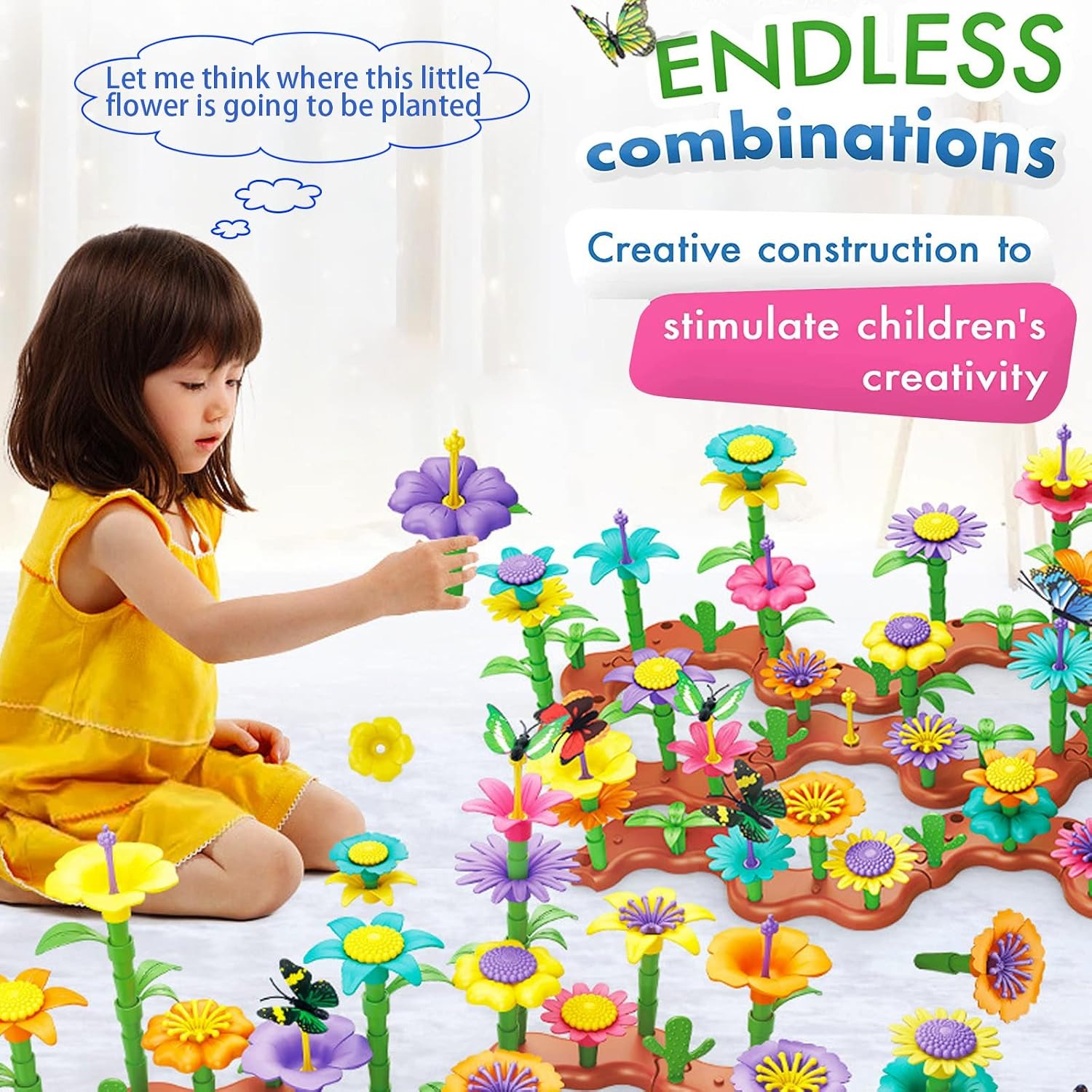
Open-ended sets work differently. There is no picture to match, so there is no finishing line. A flower garden building set is one of the clearer examples. You get a pile of petals, stems, leaves and butterflies, and the child decides what a flower looks like today. Tomorrow it looks like something else. That is the whole appeal, and it is why these sets tend to outlast the character-branded kit bought the same Christmas.
What is actually in the box
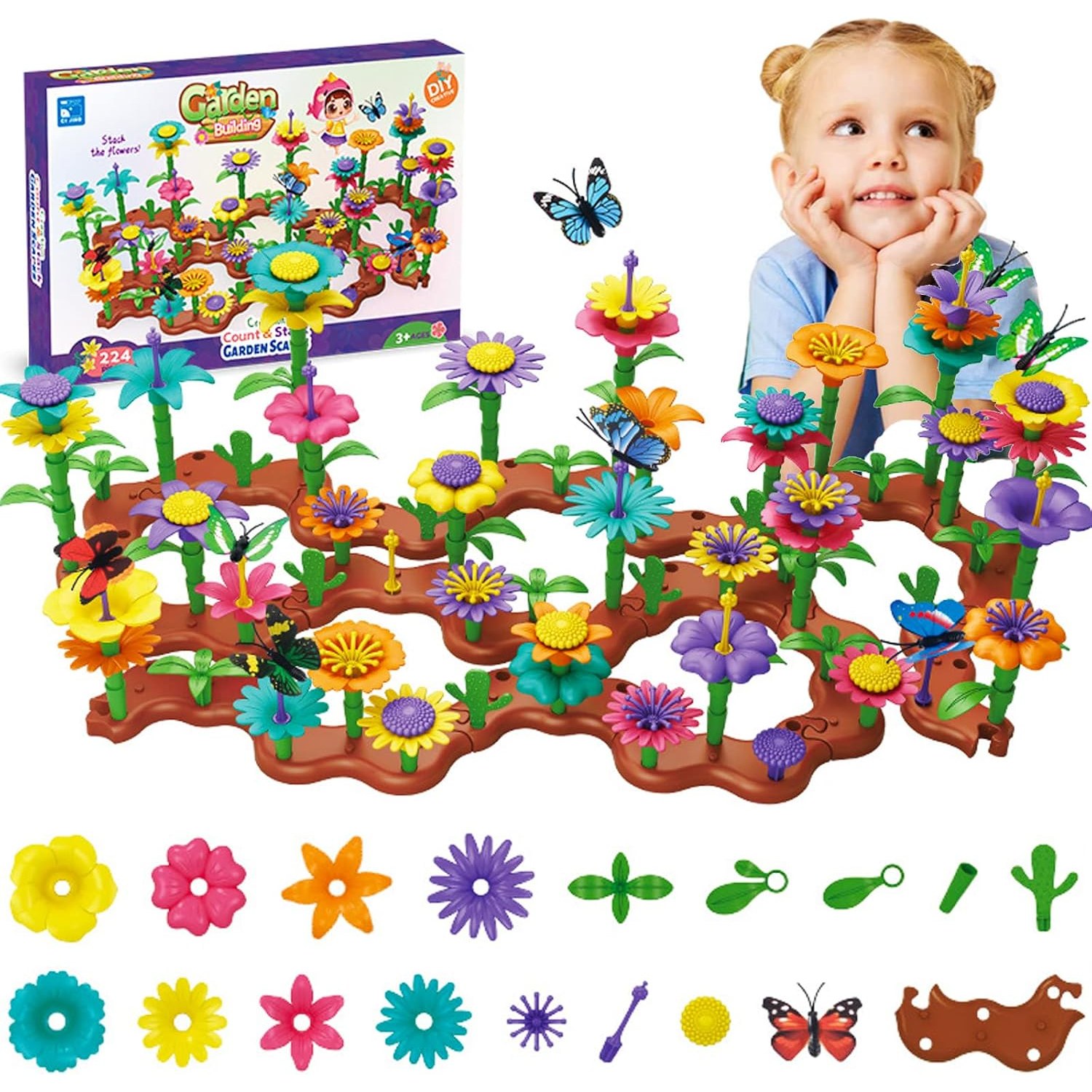
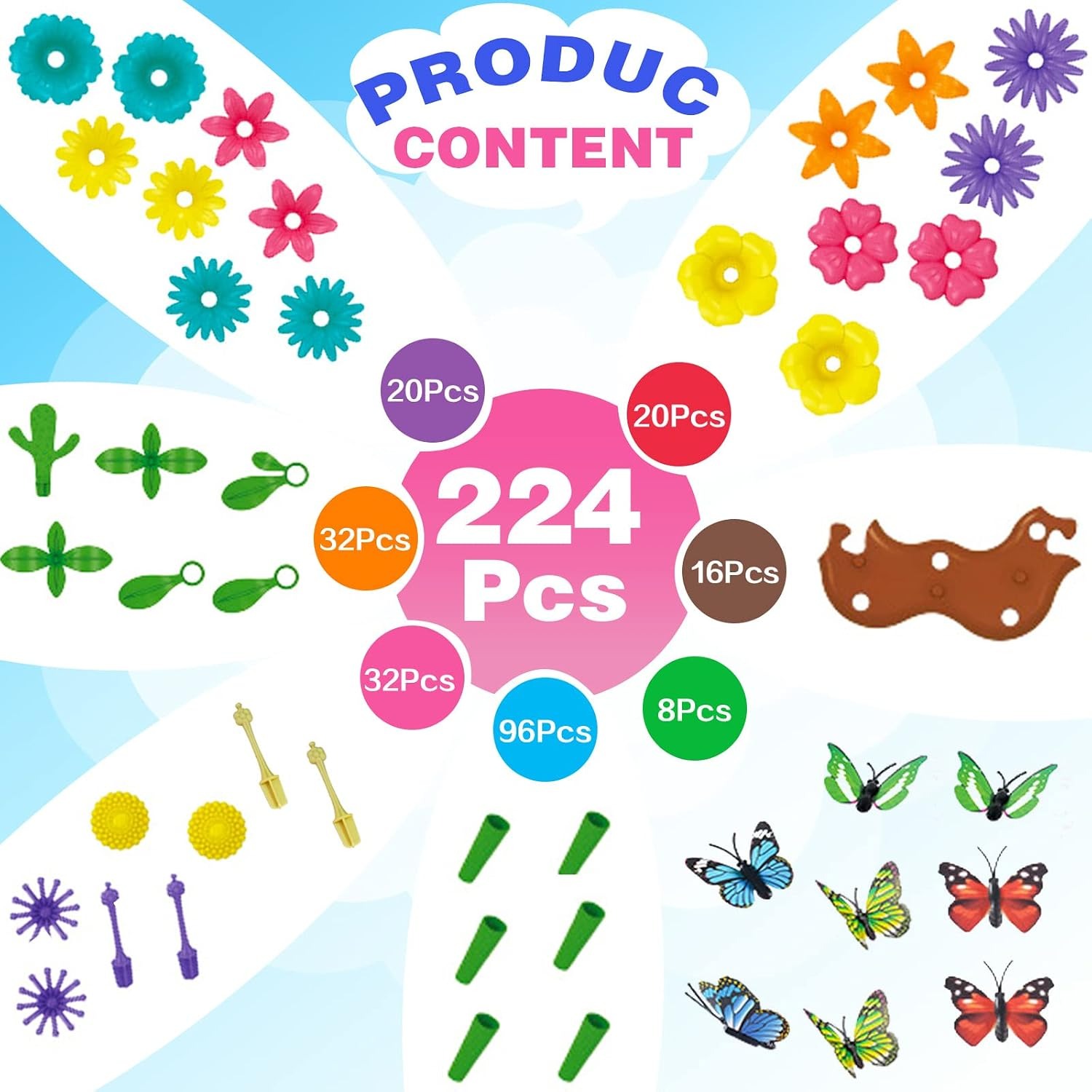
This set has 224 pieces. That number matters more than it first appears. Under about a hundred parts, a child builds one or two flowers and runs out of material just as they get interested. At 224, there is enough to build a cluster, leave it standing, and still have parts left to experiment with.
The pieces come in yellow, pink, purple, orange and blue. The stems include bent and forked shapes, so a single stalk can lean, split or curve rather than just going straight up. Butterfly pieces give a child something to add once the flower itself is done, which is a small detail that extends play by a surprising amount.
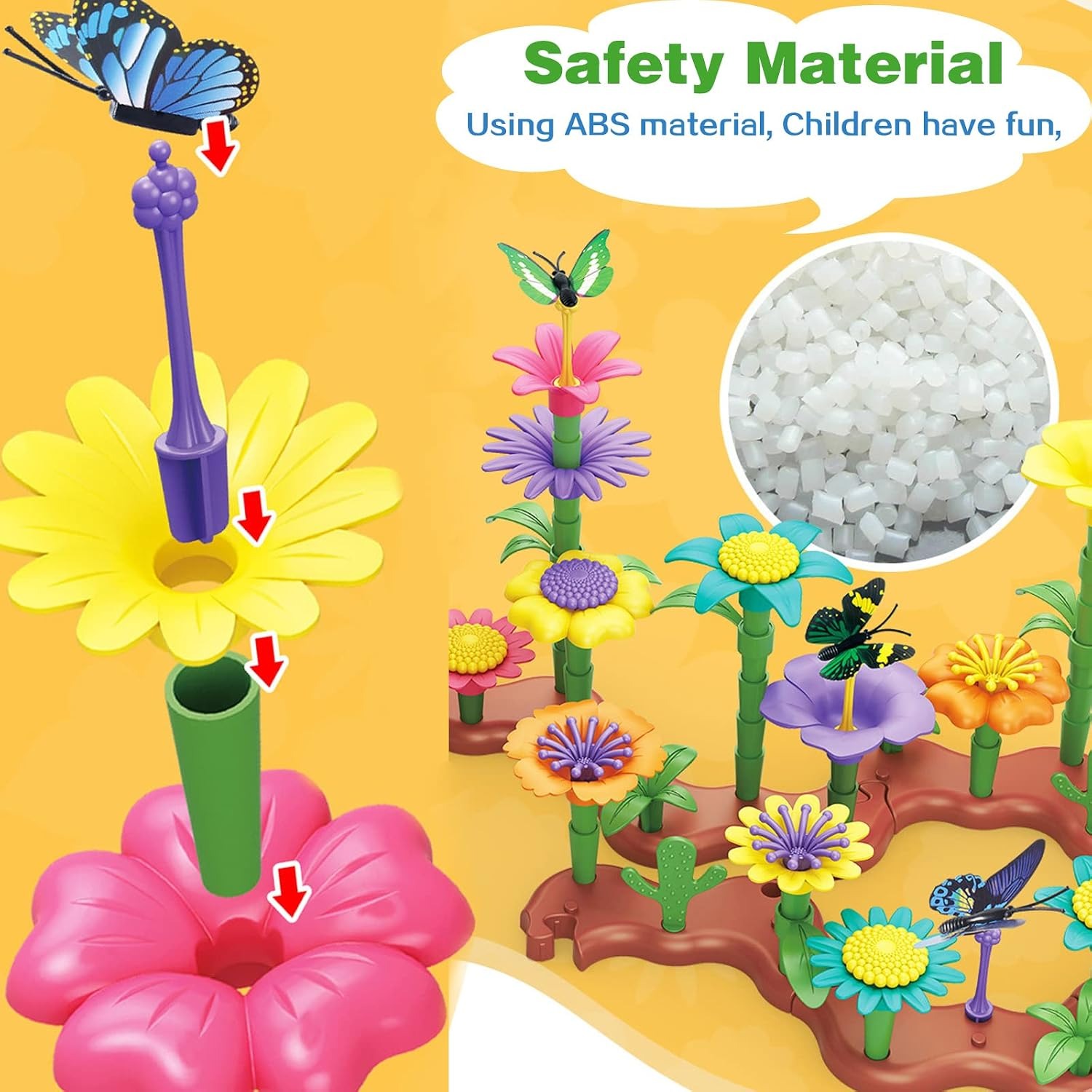
Everything is moulded plastic and pushes together by hand. No tools. No batteries. No app to download before anything happens.
How it works in practice
The first thing a child does is dump the whole lot on the floor. Let them. The second thing they do is press two pieces together and look up to check whether it worked. Once they see that it did, they usually stop looking up.
A three year old will build short, wide flowers with a lot of petals crammed onto one stem. The fit is forgiving enough that this works. A six or seven year old starts thinking about height and balance, which is where the quiet engineering begins. Build a stem too tall with too many petals on one side and the whole thing tips. Nobody has to explain why. The flower falls over and the child adjusts.
That loop (try, fail, adjust, succeed) is the part worth paying for. It is the same reason this set is marketed with STEM in its list of educational objectives, along with visual development, hand-eye coordination, creative thinking and patience. None of those feel like school to the child.
Who it suits
The manufacturer recommends ages 3 years and up, with a target audience of 3 to 8 year olds. Within that range, the way children use it shifts quite a bit.
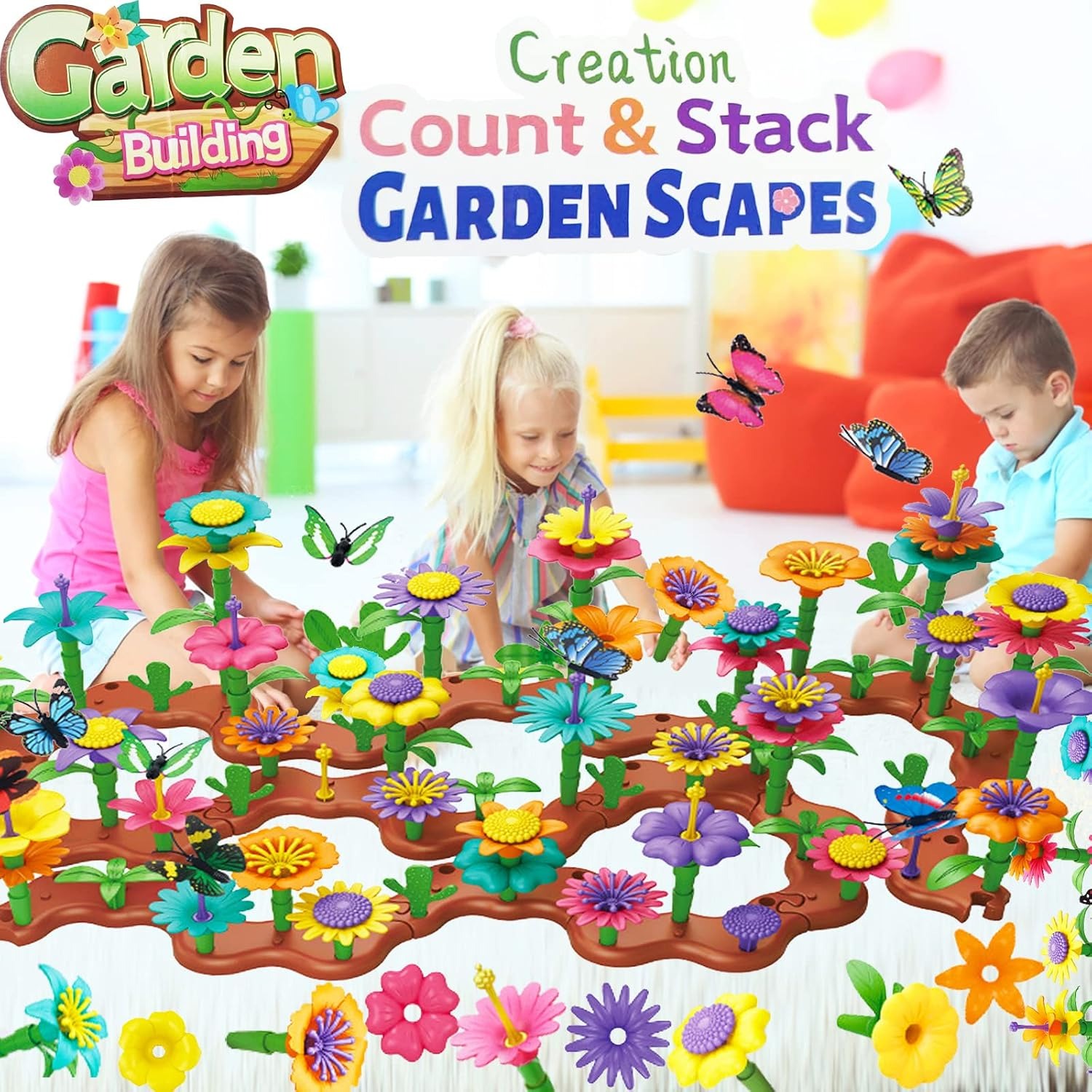
Three and four year olds treat it as a sorting and connecting activity. They will name colours, make piles, and build a flower that only they can see. Five and six year olds start telling stories about the garden. Seven and eight year olds often go structural, trying to build the tallest thing that still stands or making a symmetrical arrangement on purpose.
It also works for groups. The listing supports 1 to 6 players, which makes it one of the more reliable party toys because there is no single turn to wait for. Everyone pulls from the same pile.
One clear limit: this is not a toy for under threes. There are a lot of small pieces, and the age rating exists for a reason.
How to choose between sets like this
If you are comparing a few options, a short checklist helps more than reading every listing in full.
Piece count against price. Work out the cost per piece. A set with 60 parts at two thirds the price is not a bargain if the child runs out of material in ten minutes.
Connector style. Interlocking parts that push together by hand suit younger builders. Anything needing a twist, a screw or real force will frustrate a three year old and end with the adult doing the building.
Colour spread. Five distinct colours gives you enough variety for sorting games and colour naming. Two or three colours limits what the child can do with pattern making.
Pack-down. A toy that comes apart cleanly and fits back in a flat box gets used again. One that needs a special tray or a precise layout tends to stay in the cupboard.
Open-ended or model-based. If you want a toy for repeat play, open-ended wins. If you want a focused one-off project, a model kit is the better buy. They solve different problems.
Getting the most out of it
The set works fine with no adult input at all, but a little structure makes the first few sessions land better.
Start by sorting. Tip everything out and separate petals from stems from butterflies before building. This is calming, it teaches categorisation, and it means the child is not digging through a pile mid-build.
Then set a loose challenge. Build a flower for each person in the house. Build the tallest one that stands on its own. Build a garden where every flower has at least three colours. The challenge is not the point, it is just a starting push.
Resist the urge to correct the build. A flower with seven petals on one side and none on the other is not wrong. It falls over, the child notices, and they fix it. That is the lesson doing its work.
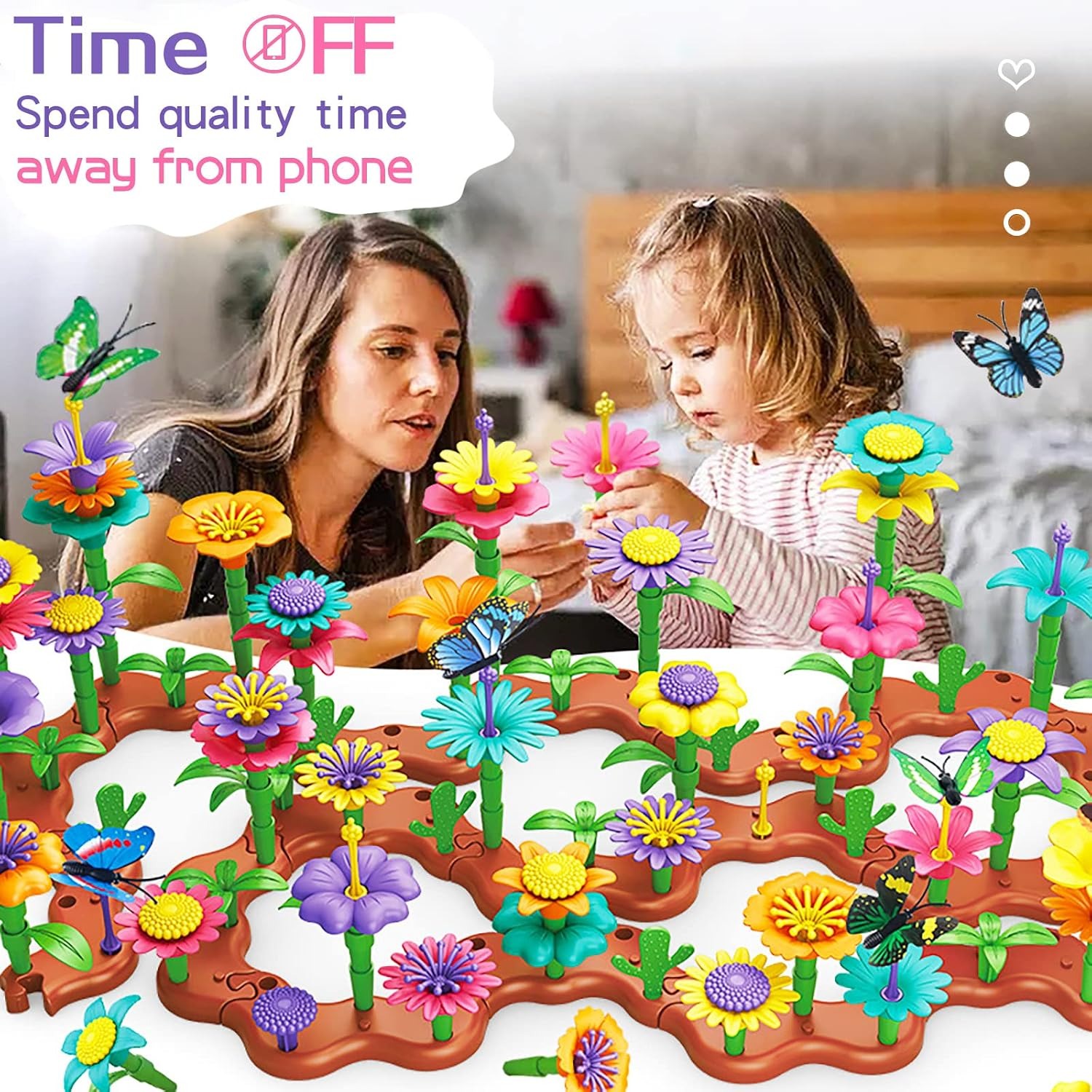
Finally, build alongside rather than supervising. This is one of the better parent and child building toys precisely because an adult can sit on the floor and make their own ugly flower without taking over the child's.
Care and storage
Plastic pieces need very little. Wipe them with a damp cloth and a drop of mild soap when they get sticky, then let them air dry fully before packing away. Do not soak them for long stretches, and keep them out of the dishwasher.
Store them somewhere with a lid. The box the set arrives in works, measuring 35 x 24 x 6 cm, but a shallow tub with a lid is easier for a child to manage independently. The main enemy of any multi-piece set is the sofa, so make a floor sweep part of pack-down.
Keep the set out of long direct sunlight and away from heaters. Coloured plastic holds up well indoors but can fade or warp given enough sun and heat.
Taking it out of the house
Because there is no power source and no delicate electronics, the set travels easily. It suits waiting rooms, long car trips, holiday houses and restaurant tables where a screen would otherwise come out.
For travel, do not take the whole box. Put thirty or forty pieces in a zip bag. The child gets the same activity, you get a much smaller cleanup, and the remaining pieces stay safe at home.
If it goes outdoors, rinse off sand and grit afterwards. Fine particles can stop the interlocking parts from seating properly, and a quick rinse prevents that.
What the maker does and does not say
Being straight about this is worth more than filling in blanks. The product details list the brand as YI XING LONG, the sub brand as Garden Toys, the model year as 2023, the material as plastic, and the set as non toxic. Piece count, colours, dimensions and age range are all stated.
What is not stated by the maker is the shipping weight, the country of origin and any warranty terms. We have left those fields empty rather than guess. If any of them matter for your decision, ask us before you order and we will check.
The short version
A 224 piece open-ended building set for ages three and up, in five colours, with no batteries and nothing to follow. It is the kind of toy that gets dumped on the floor a hundred times rather than built once and shelved.
If you want a gift for a child between three and eight that does not depend on them already liking a particular show or character, this is a safe bet. If you need something for a child under 3, look elsewhere, because the small parts make the age rating a real one.