
The complete guide
Friction Monster Trucks Buyer's Guide - Choosing Push And Go Toys That Last
The toy that still works three months after the birthday
Most parents have lived through the same small disappointment. A bright toy car arrives, it beeps and flashes for a fortnight, then the batteries die. The screwdriver goes missing. The car sits in a basket with a flat battery for a year until someone finally bins it.
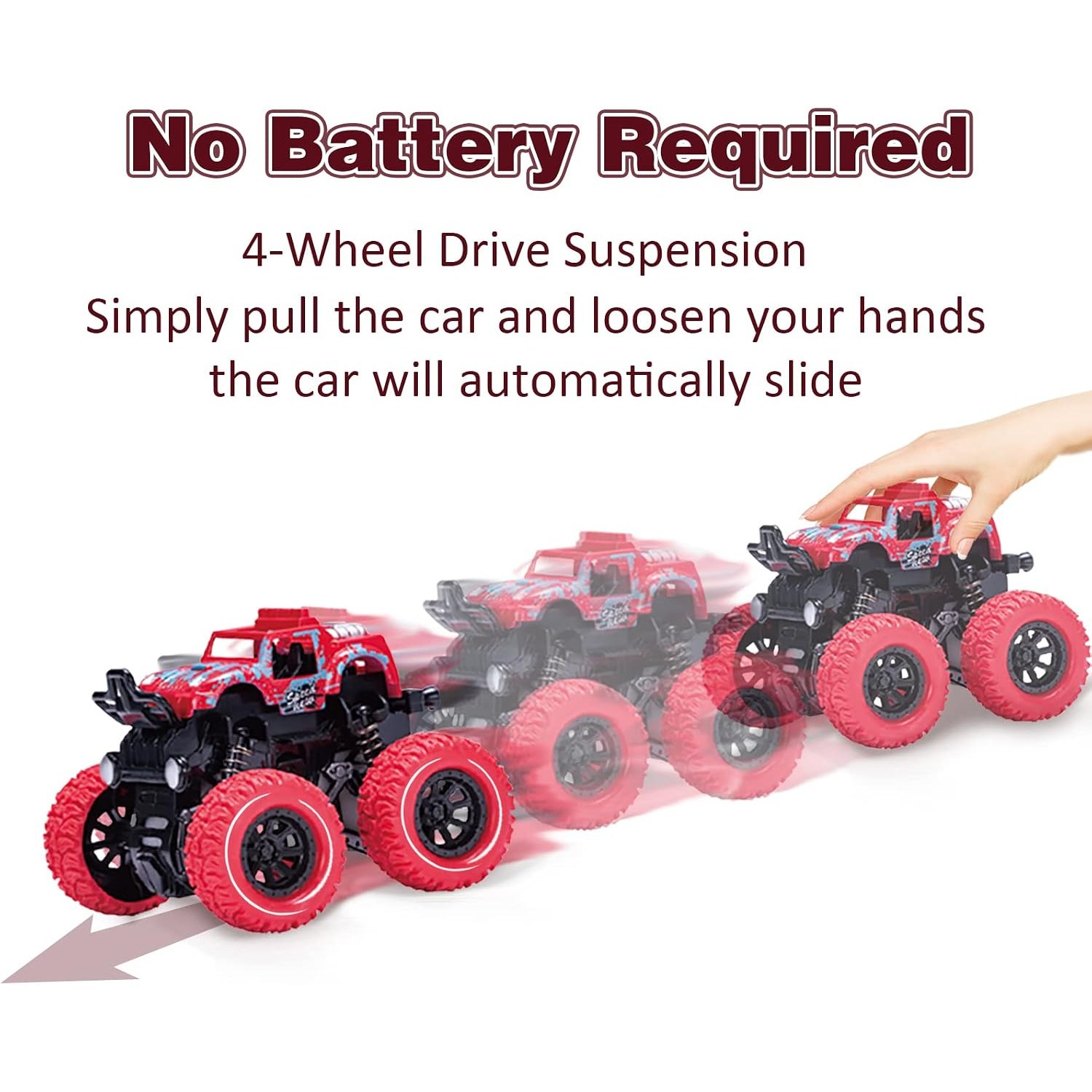
Friction toys sidestep all of that. There is no battery door, no charging cable, no app and no on switch. A child pushes the truck, the truck goes. When it stops, they push it again. That is the whole operating manual, and a three year old works it out in about four seconds.
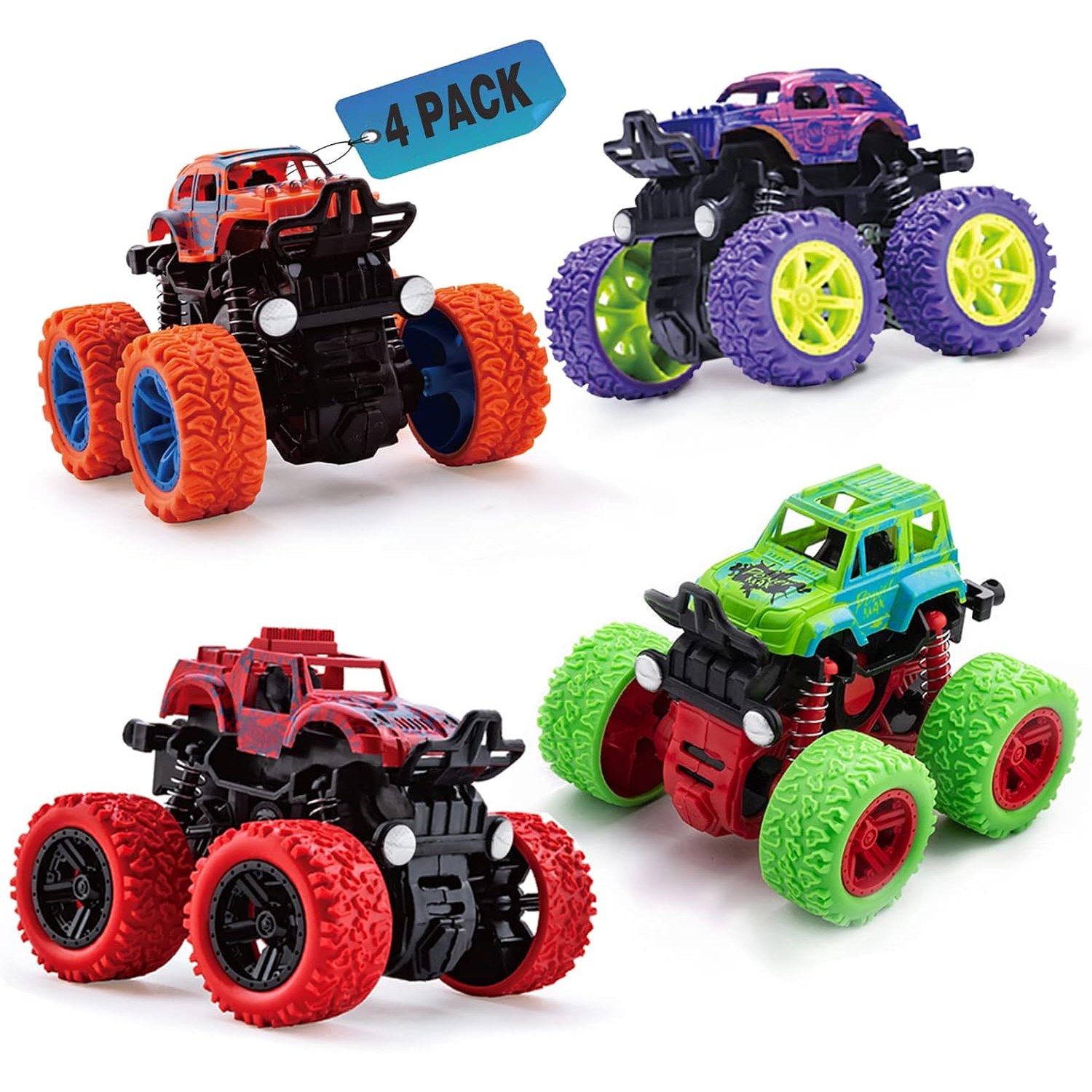
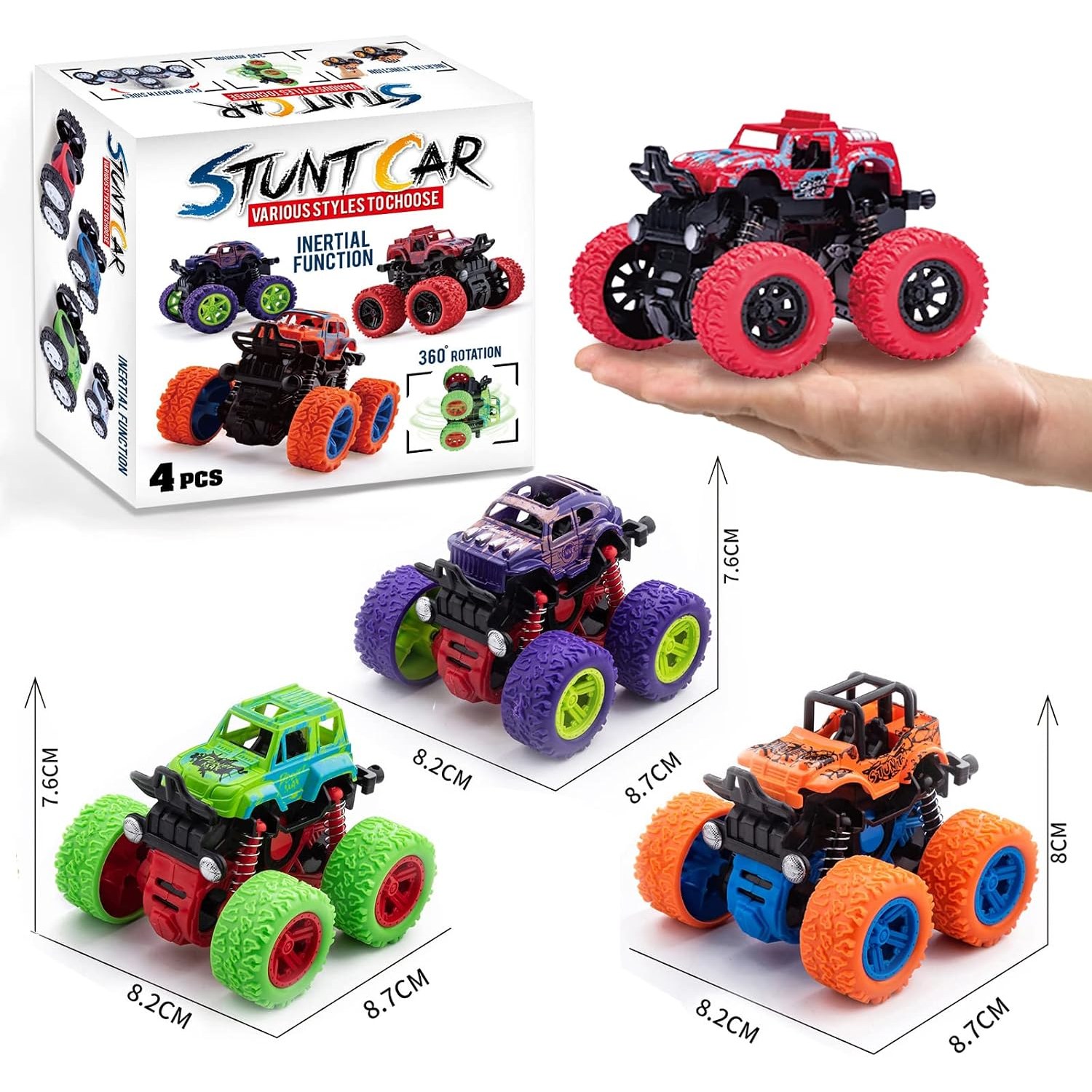
This set is four monster trucks in one box, in red, purple, green and orange. They run on a push, they are moulded from ABS plastic, and the manufacturer recommends them for ages 3 years and up.
How push and go trucks actually work
Inside each body is a small flywheel connected through gearing to the wheels. Rolling the truck forward across the floor spins that flywheel up to speed. The flywheel has mass, so once it is spinning it wants to keep spinning. Let go of the truck and that stored spin feeds back through the gears into the wheels, driving the truck forward until friction bleeds the energy away.
It is the same principle as a spinning top or a potter's wheel, scaled down and hidden under a plastic shell. Engineers call it inertia. Children call it making the car go really far.
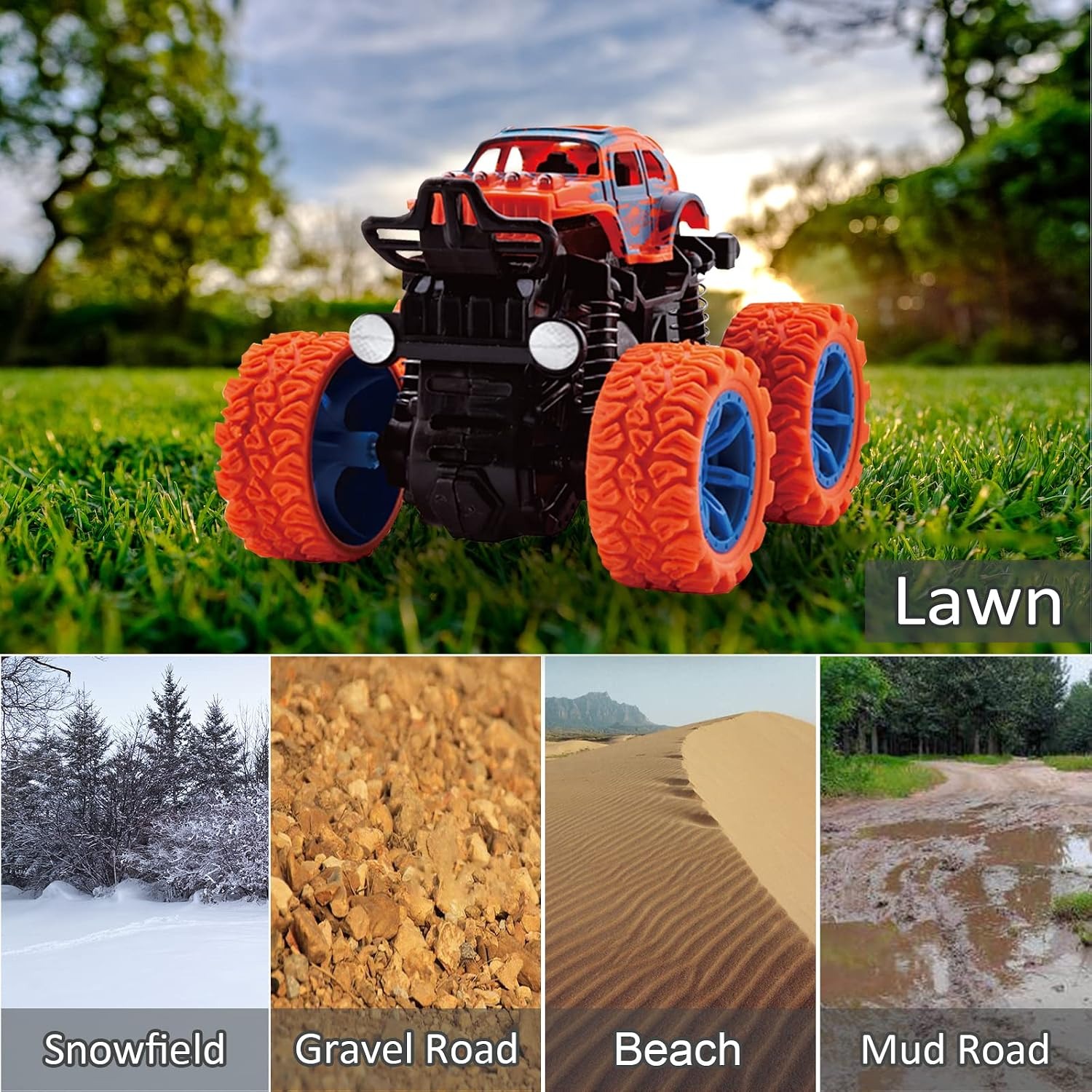
Two things follow from this. First, the harder and longer the push, the further the run, so children quickly learn cause and effect without anybody explaining it. Second, the surface matters enormously. A smooth hard floor lets the stored energy play out over several metres. Thick carpet eats it in half a metre. Neither is a fault in the toy, it is just physics, and kids figure out the good tracks in the house within a day.
Why four trucks beats one
Single toy cars create a queue. Four create a game.
With four trucks in four colours, each child picks a colour and keeps it. Siblings stop arguing about whose turn it is. Three friends can run a race and a fourth truck becomes the one that crashes into everybody. Grid starts, demolition derbies, timed runs down the hallway, ramp jumps off a stack of books, all of it opens up when there is more than one vehicle on the floor.
There is a practical angle too. Toy cars get lost. They go under the sofa, into the garden, into another child's bag. When you start with four, losing one is an inconvenience rather than the end of the toy.
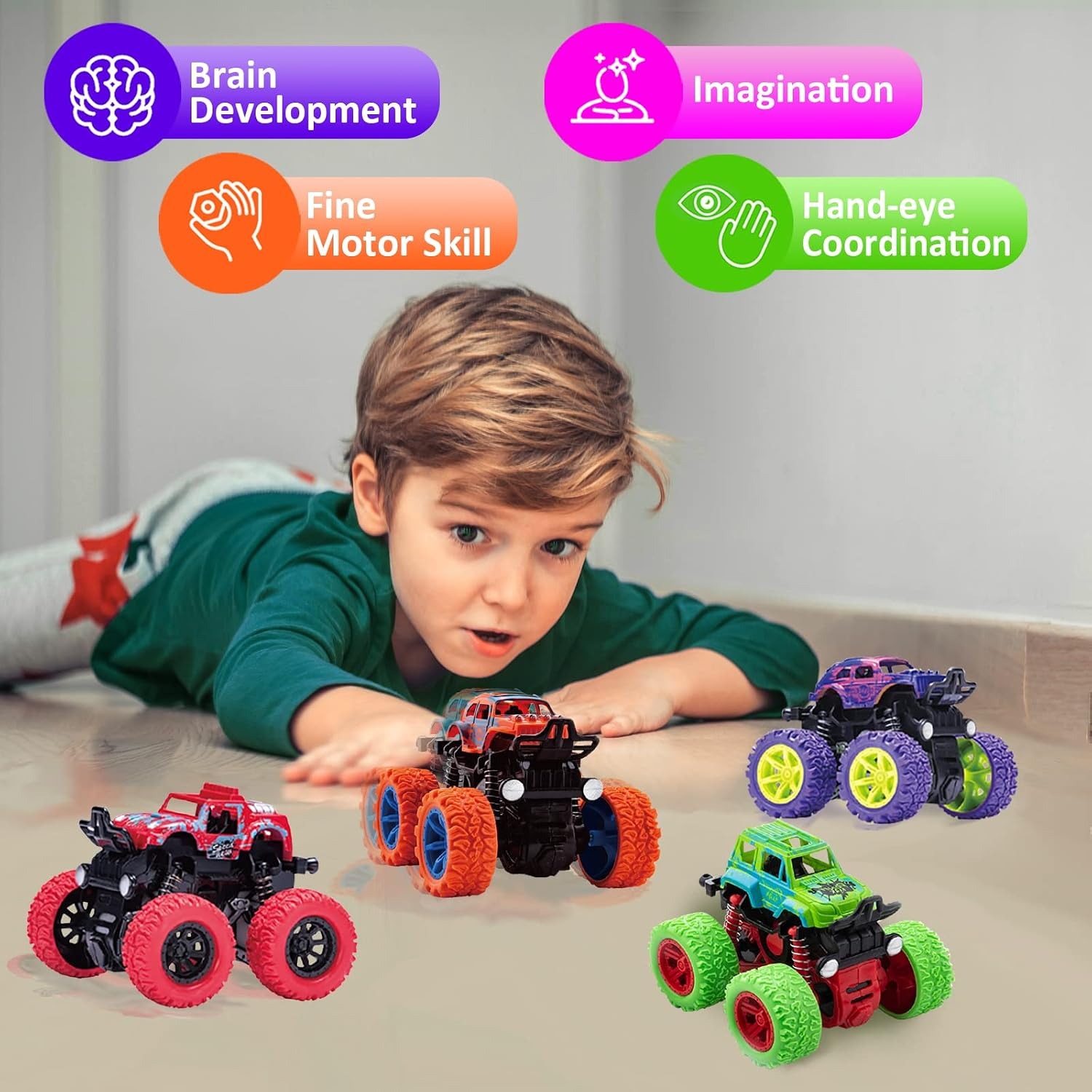
The manufacturer lists cooperation as one of the educational objectives alongside hand-eye coordination and observation skills, and that is not marketing fluff. Shared racing forces turn-taking, rule-making and a bit of negotiation, which is exactly the kind of play that is hard to get out of a solo screen.
Build and what to expect from it
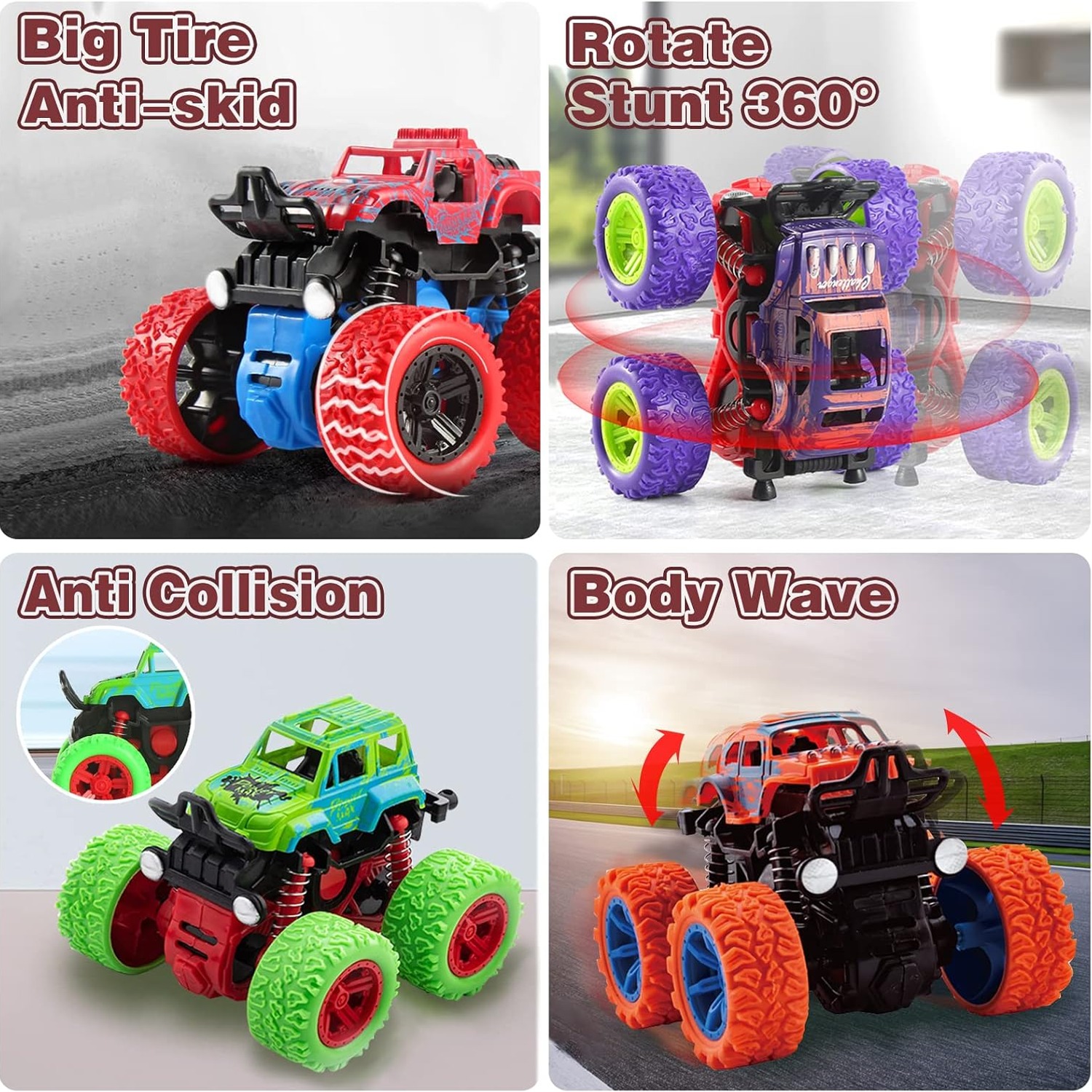
The bodies are ABS plastic, a rigid thermoplastic used widely in toy vehicles because it resists cracking better than cheaper brittle plastics. The chassis carries four shockproof springs, which soften landings and the inevitable drop off the edge of a step.
The wheels are oversized, which is the defining look of a monster truck but also does real work. Larger diameter wheels roll over bumps, cracks, door thresholds and tufts of grass that would stop a small-wheeled car dead. If you want toys that move between indoor floors and the garden path, big wheels are the single most useful feature to look for.
Listed additional features include a flashing light, portability and weather resistance. Weather resistance here means the trucks cope with being used outside on a damp path, not that they are waterproof. Keep them out of puddles, the bath and the pool. Water sitting inside a friction gearbox is the one thing likely to shorten the life of this kind of toy.
Pack dimensions, product weight and country of origin are not specified by the maker. If any of those matter for your order, ask us before you buy rather than guessing.
Who this set suits
It suits children from around three years old who have enough strength and coordination to give a proper shove and enough patience to chase a truck across a room. It suits households that are sick of buying AA batteries. It suits grandparents who want something in the cupboard that works every time a grandchild visits, without a charging routine.
It also suits specific moments. A birthday where you do not know the child well. A party where four guests each need a small gift. A long car journey, a hotel room, a waiting room. Anywhere with a smooth floor and a bit of space, a friction truck earns its place in the bag.
Where it is less ideal is a home with a baby crawling on the same floor. These are hard plastic vehicles that travel at speed, and the age guidance of 3 and up exists for a reason. Supervise mixed-age play and keep the trucks up high when the youngest is on the move.
How to choose between friction toys
If you are comparing this set against other push and go trucks, a few things separate the good from the forgettable.
Look at wheel size relative to the body. Tall wheels on a low body give the best surface range. Look at what the body is made from, since ABS is a step up from the thin, shiny plastic used on bargain-bin cars. Check whether springs or any kind of suspension are mentioned, because a rigid chassis transmits every knock straight into the shell.
Then ask how many are in the pack. For home use with more than one child, multipacks nearly always deliver better play value than a single larger vehicle. Four trucks in four colours covers siblings, friends and party bags from one purchase.
Finally, be realistic about noise. Friction mechanisms whirr, and plastic wheels on floorboards clatter. If you want silent, this is not it. If you want a toy that does not need a speaker to be interesting, it is.
Keeping them running
Maintenance is almost nothing, but the little bit that exists makes a real difference.
Wipe the bodies and wheels with a damp cloth after outdoor use and dry them properly. Never submerge them or run them through a dishwasher. Every few weeks, turn each truck over and look at the axles. Long hair, carpet fibre and dried grass wind around axles and are the number one cause of a truck that suddenly will not roll. Pick the debris out with your fingers or tweezers and the truck usually comes straight back to life.
Store them indoors. Leaving coloured plastic in strong direct sun for months will fade it. Beyond that, there is nothing to service and nothing to replace.
The short version
Four monster trucks, four colours, one push each and off they go. No batteries, no charging, no assembly, no screwdriver hunt on a birthday morning. ABS bodies with spring suspension and big wheels that handle floors, paths and short grass. Recommended by the maker for ages 3 and up.
Weight and dimensions are not listed by the maker, so ask if you need them. Otherwise, this is about as simple as a good toy gets, and simple is usually what survives a year in a toy box.