
The complete guide
How to Choose a Giant Capybara Plush That Actually Gets Used
The problem with most big soft toys
Oversized plush toys look great in a photo and then sit in a corner collecting dust. The usual reasons are boring but real. The toy is too stiff to cuddle. The fabric feels scratchy after five minutes. The shape is awkward, so there is nowhere comfortable to put your head. Or the thing is so enormous that the only place it fits is the floor, and nobody wants to put their face on the floor.
A giant capybara plush sidesteps most of that, mainly because of the animal itself. Capybaras are long, low and rounded. That body shape translates into a plush that works as a pillow, a backrest and a hugging target all at once. There is no long neck to flop over, no thin limbs to get bent out of shape, and no hard plastic face to bump into at night.
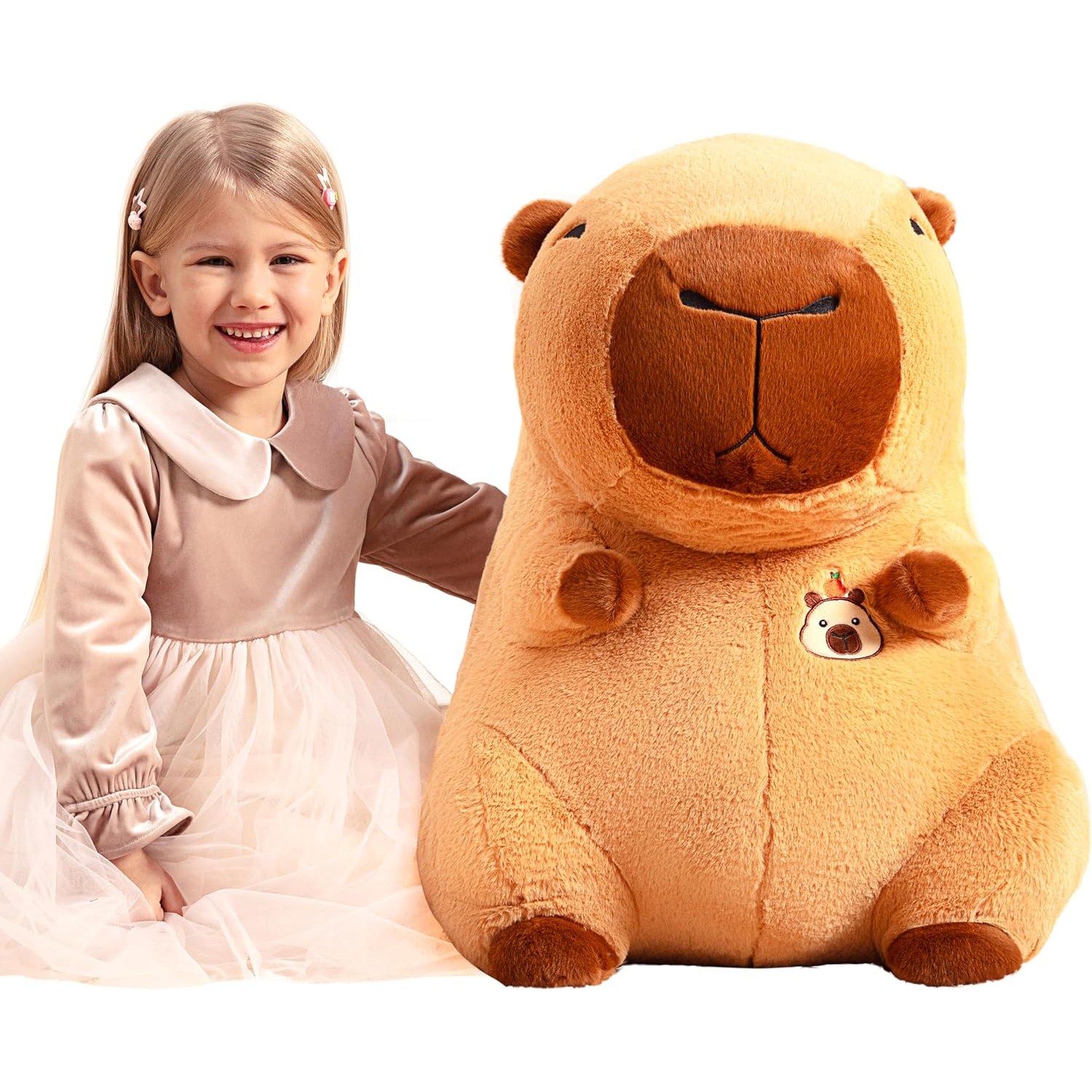
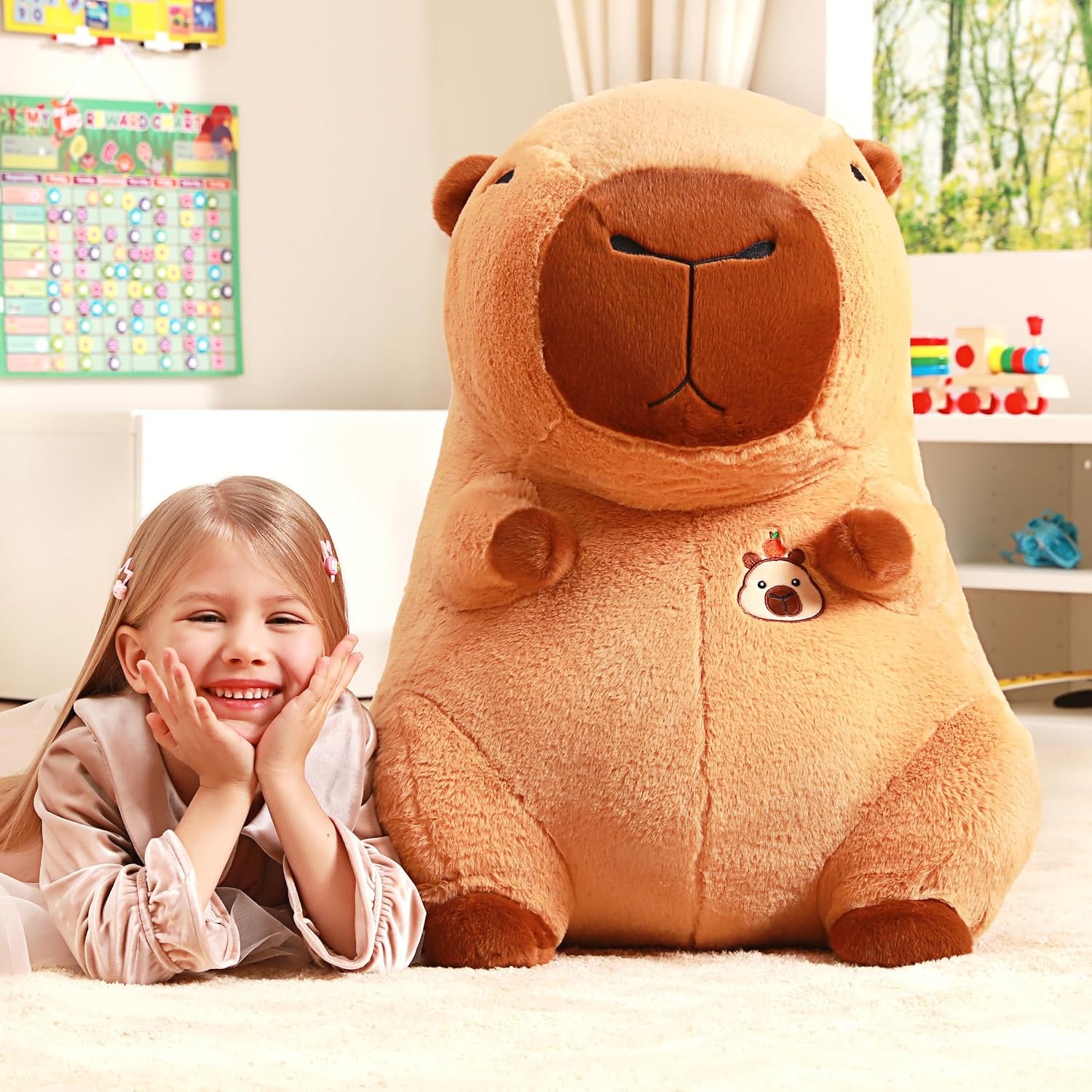
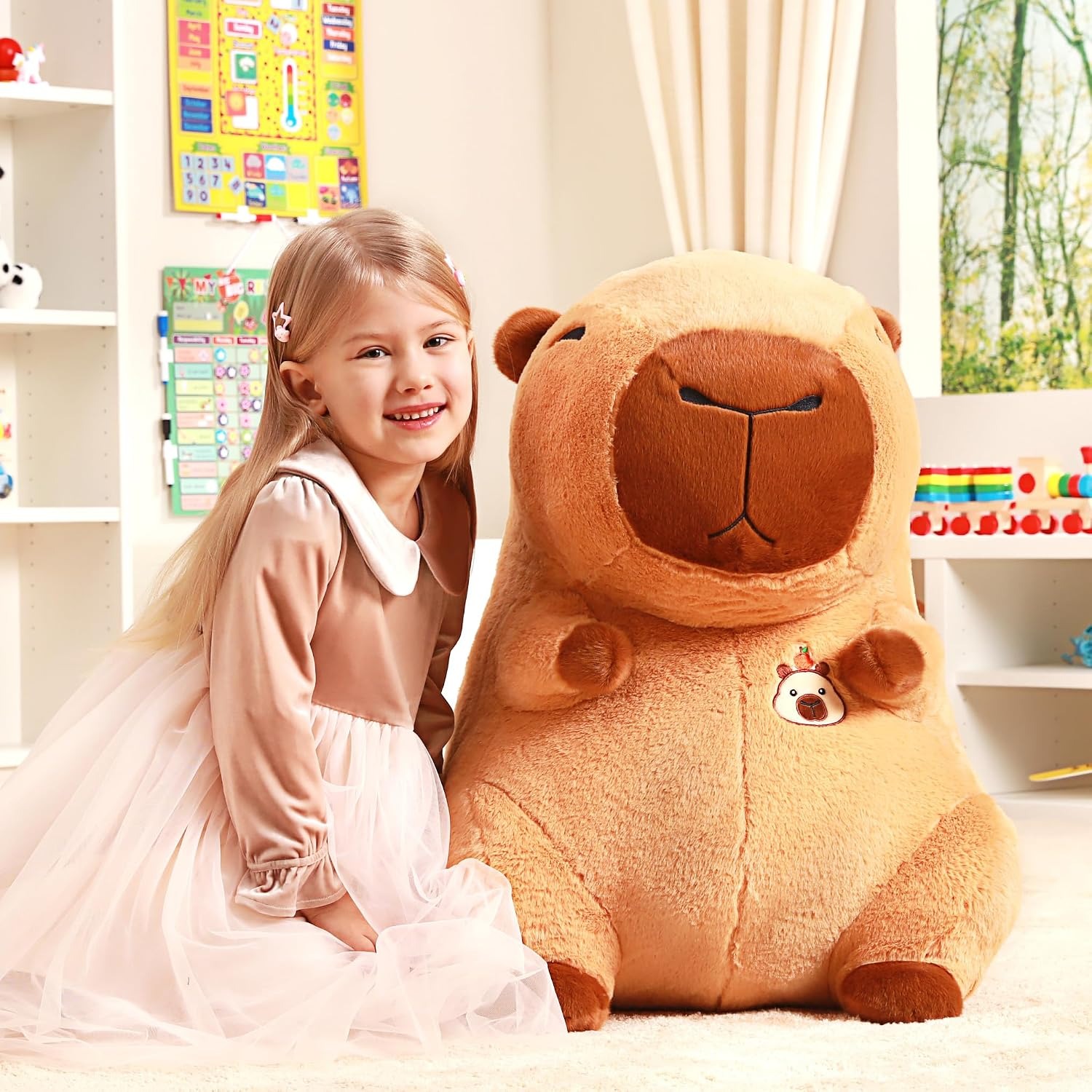
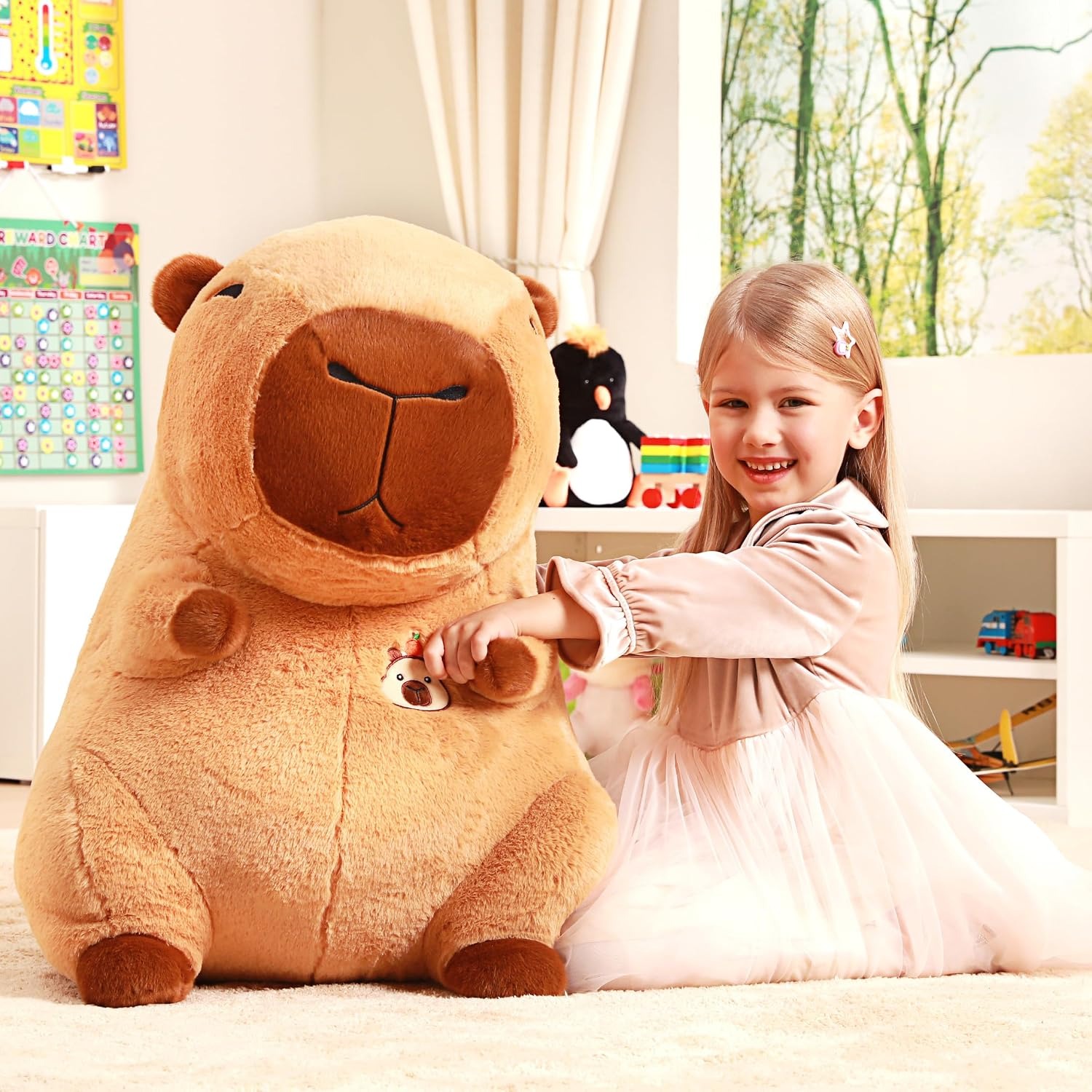
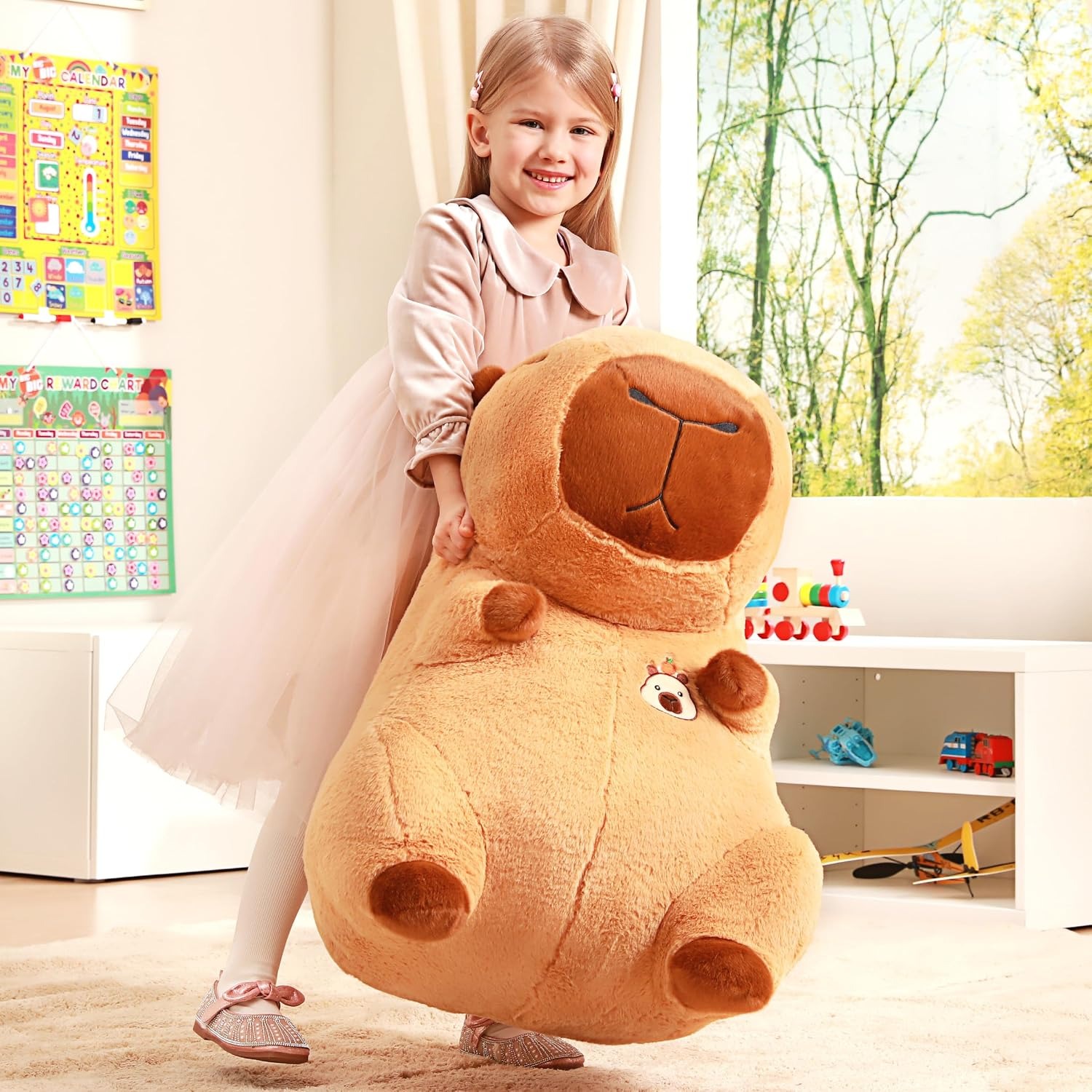
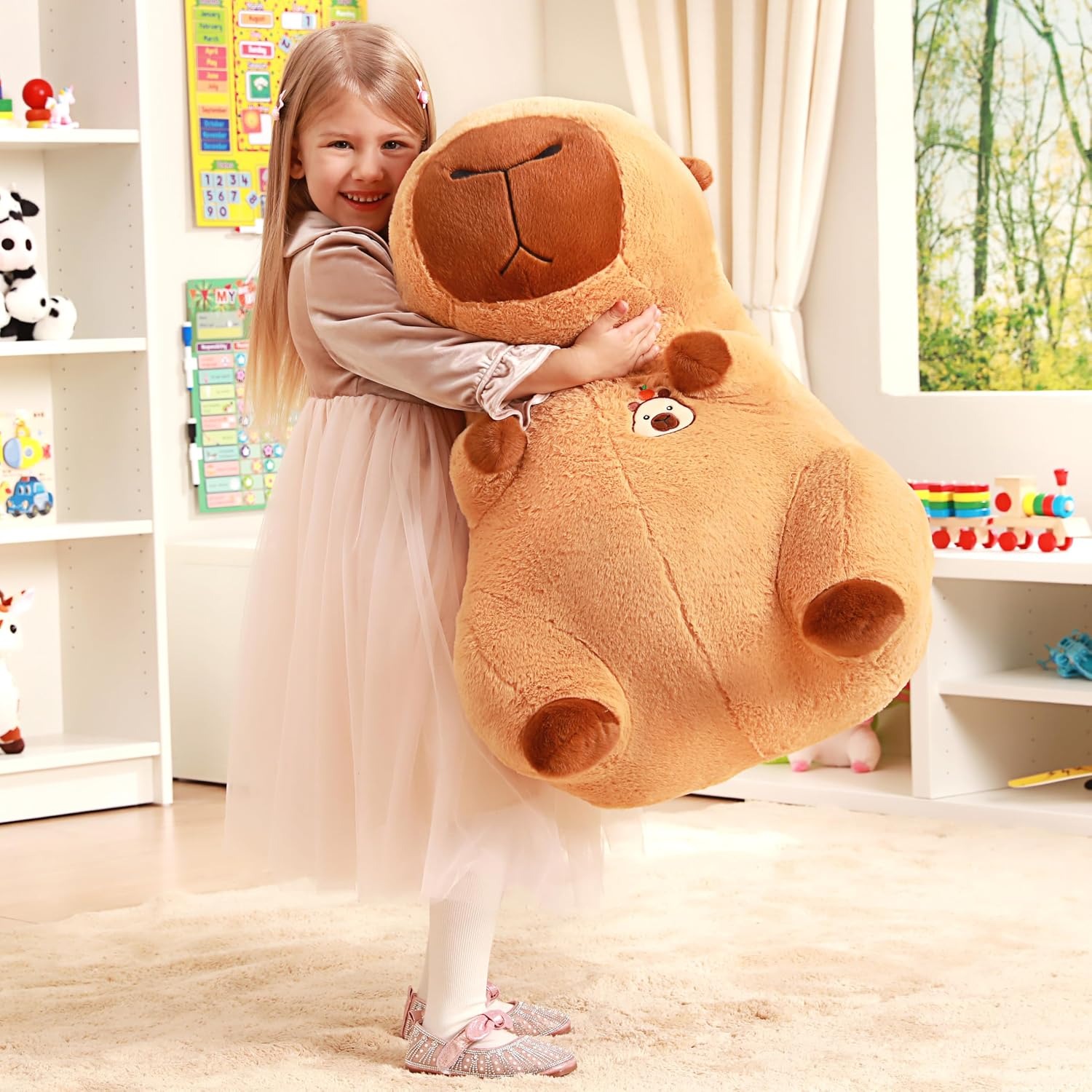
This one measures 60cm long, 45cm wide and 40cm high, and weighs 1.98kg. Those numbers matter more than any marketing word, so it is worth stopping on them for a second.
What 60cm actually looks like in a room
Sixty centimetres is about the length of a large sofa cushion, or roughly from a child's elbow to the floor when they are standing. On a single bed, it will take up most of the width if you lay it sideways. On a two-seat couch, it fills a seat. In a reading corner, it is a backrest rather than a decoration.
The 40cm height is the part people underestimate. That is about the height of a low ottoman. Sitting on the floor and leaning back against it puts your shoulder blades in roughly the right place, which is why so many families end up using a jumbo stuffed animal in a book corner rather than on the bed.
The weight is worth thinking about too. At just under two kilos, it has enough mass to stay where you put it. A lighter plush of the same size would slide off the bed every time someone rolled over. This one tends to stay put, and that heft is also part of why it feels good to hug.
How plush toys this size are built
Large stuffed animals are made from an outer fabric shell stitched into panels, then filled. The outer here is polyester, which is the standard choice for a reason. It takes dye well, it keeps a soft pile after a lot of handling, and it does not attract moths the way natural fibres can. It also tolerates spot cleaning without going stiff.
The fill material is not listed in the maker's details for this product, so we are not going to guess at it. What you can judge from the specs is the density. A 60cm body at 1.98kg is a moderate fill, which usually means squishy enough to squeeze but structured enough to hold the capybara shape when it sits on a bed. Very light large plush toys tend to look deflated within weeks. Very heavy ones get hard to move around.
There are no batteries, no electronics and no assembly. That sounds like a small thing until you have bought a toy that needs four AAs on Christmas morning.
Who this actually suits
The manufacturer recommends 3 years and up. In practice, the people who get the most out of a large capybara soft toy fall into a few groups.
Younger children, from around three to eight, use it as a floor toy and a cuddle companion. It is big enough to be an event when it comes out of the box, and simple enough that there is nothing to break.
Older kids and teenagers tend to use it as furniture. It goes at the end of the bed, props them up while they watch something, and doubles as a room feature. Capybara interest skews heavily toward this age group right now, which is part of why it works so well as a birthday plush gift for that bracket.
Adults buy it for themselves more often than you would expect. A big cuddly toy on a reading chair or behind the lower back on a couch is genuinely useful, and nobody has to justify it.
For children under three, choose something specifically rated for that age. The same goes for anything going into a cot. Large soft toys do not belong in an infant's sleeping space, regardless of how soft they are.
How to choose between sizes and styles
If you are comparing giant plush options, three questions sort most of it out.
First, where will it live? If the answer is a bed, measure the bed. A 60cm plush on a single bed is a strong presence. On a king bed it reads as a cushion. On a bunk, it may be more than the space can take.
Second, who is handling it? A three-year-old dragging a two-kilo toy around the house is fine. A preschooler is a different story. Match the weight to the person as much as the size.
Third, what is the room like? Brown is an easy colour to live with. It does not clash, it hides small marks better than a pale plush, and it reads as a real animal rather than a cartoon. If you want a statement piece in a bright room, a neutral tone is often the safer buy.
One more practical point. Think about the floor it will sit on. Any plush that lives on a floor picks up dust and pet hair. A quick vacuum over the surface once a month keeps the pile looking fresh and saves you from deep cleaning later.
Looking after it
The care routine for a large plush is simple, and the main rule is do not soak it.
Spot clean marks with a damp cloth and a small amount of mild detergent. Work the area gently rather than scrubbing, which can mat the pile. Blot with a dry towel, then let it air dry somewhere with moving air. Keep it away from radiators and direct sun, because heat is harder on polyester than people think.
Skip the washing machine and the dryer. A body this size holds water deep in the fill, and damp fill is how plush toys end up smelling musty. If the whole toy really needs freshening, a wipe-down of the full surface plus a day of air drying usually does more good than a wash.
Fluff it by hand every few weeks. Squeeze the body, work the fill back toward the corners, and brush the pile with your palm. That five-minute habit is the difference between a plush that still looks good in three years and one that looks tired in six months.
Keep it indoors. Grass stains, mud and damp are all much harder to remove from plush than from clothing.
The short version
This is a 60 x 45 x 40 cm capybara plush in brown polyester, weighing 1.98kg, rated for ages 3 and up, with no batteries and no assembly. The size is the point. It is large enough to lean on, hug properly and use as a bedroom feature, while the low capybara shape keeps it comfortable in a way that a lot of tall plush animals never manage.
Buy it if you want a big soft toy that gets used rather than displayed. Measure your space first, keep it indoors, spot clean rather than washing, and fluff it now and then. Do those few things and it will still be the favourite in the room a long time from now.