
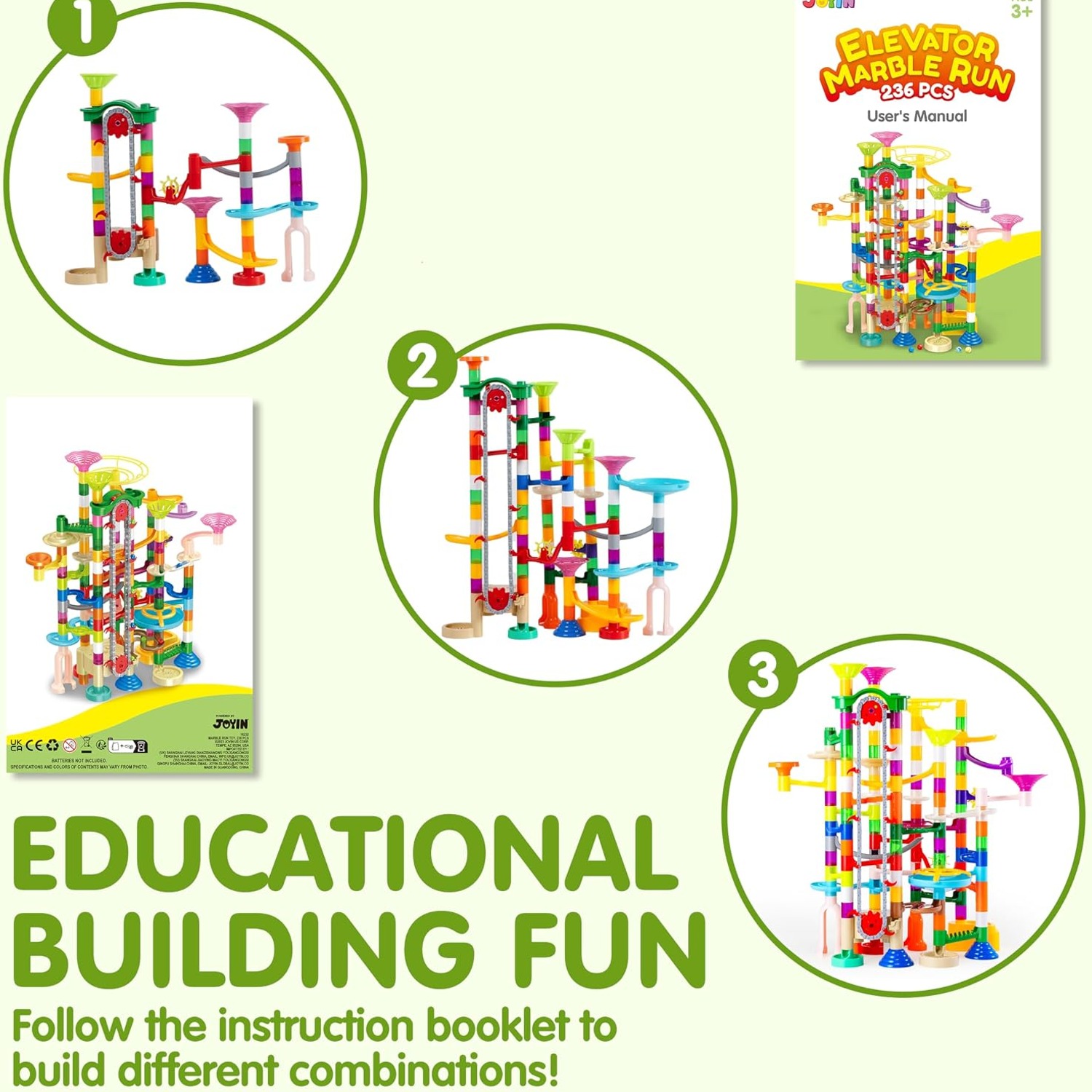
The complete guide
How to Choose a Marble Run That Kids Keep Coming Back To
The toy that gets built once and never again
Every house has one. A construction set that came out of the box, got assembled exactly as the picture showed, sat on a shelf for three weeks, and then went into the cupboard. The problem is almost never the child. It is the toy. If there is only one correct way to build something, there is only one build, and after that the fun is over.
Marble runs can fall into that trap easily. A small set with twelve pieces makes one shape. The marble goes down. You pick it up. The marble goes down again. Within ten minutes a child has seen everything the toy has to offer.
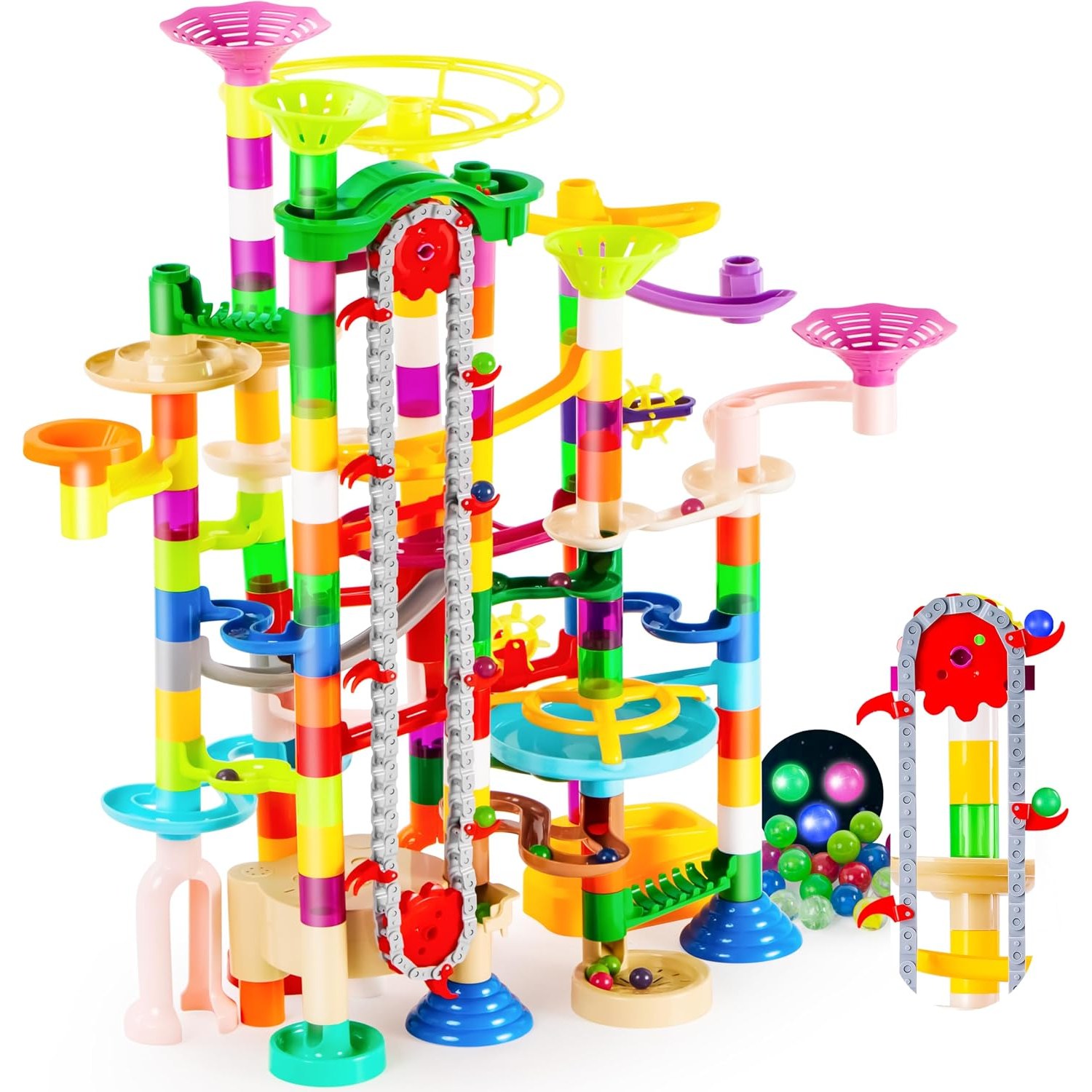
What changes the picture is quantity and motion. Enough pieces that the layout is a real decision rather than a foregone conclusion, and something that keeps the marbles moving without constant adult input. That is the gap this 236 piece set is built to fill.
How a marble run with an elevator actually works
The core idea is simple. Gravity does the downhill work. A marble enters at the top, travels through chutes, drops, spirals and turns, and arrives at the bottom. Then, normally, the game pauses while someone retrieves it.
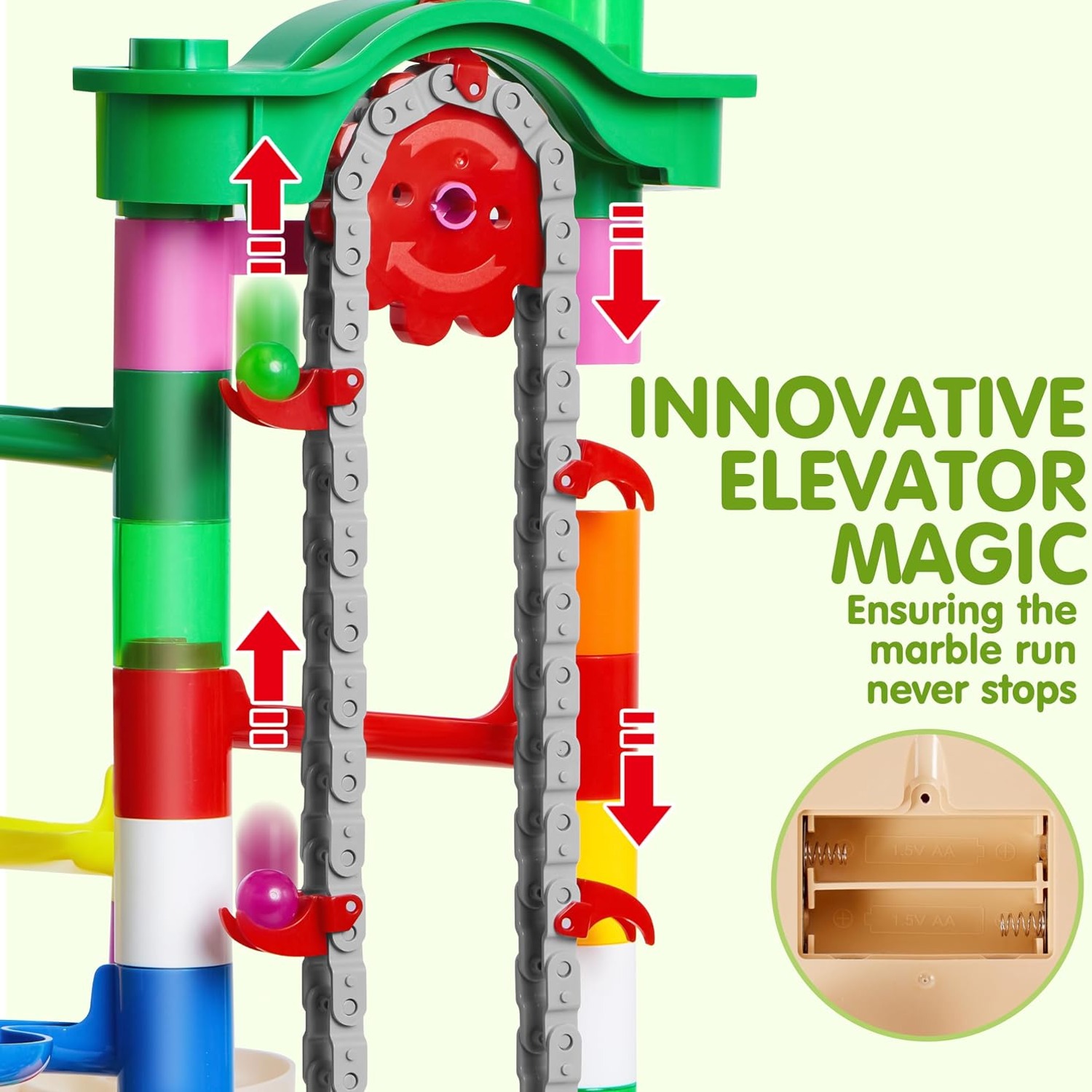
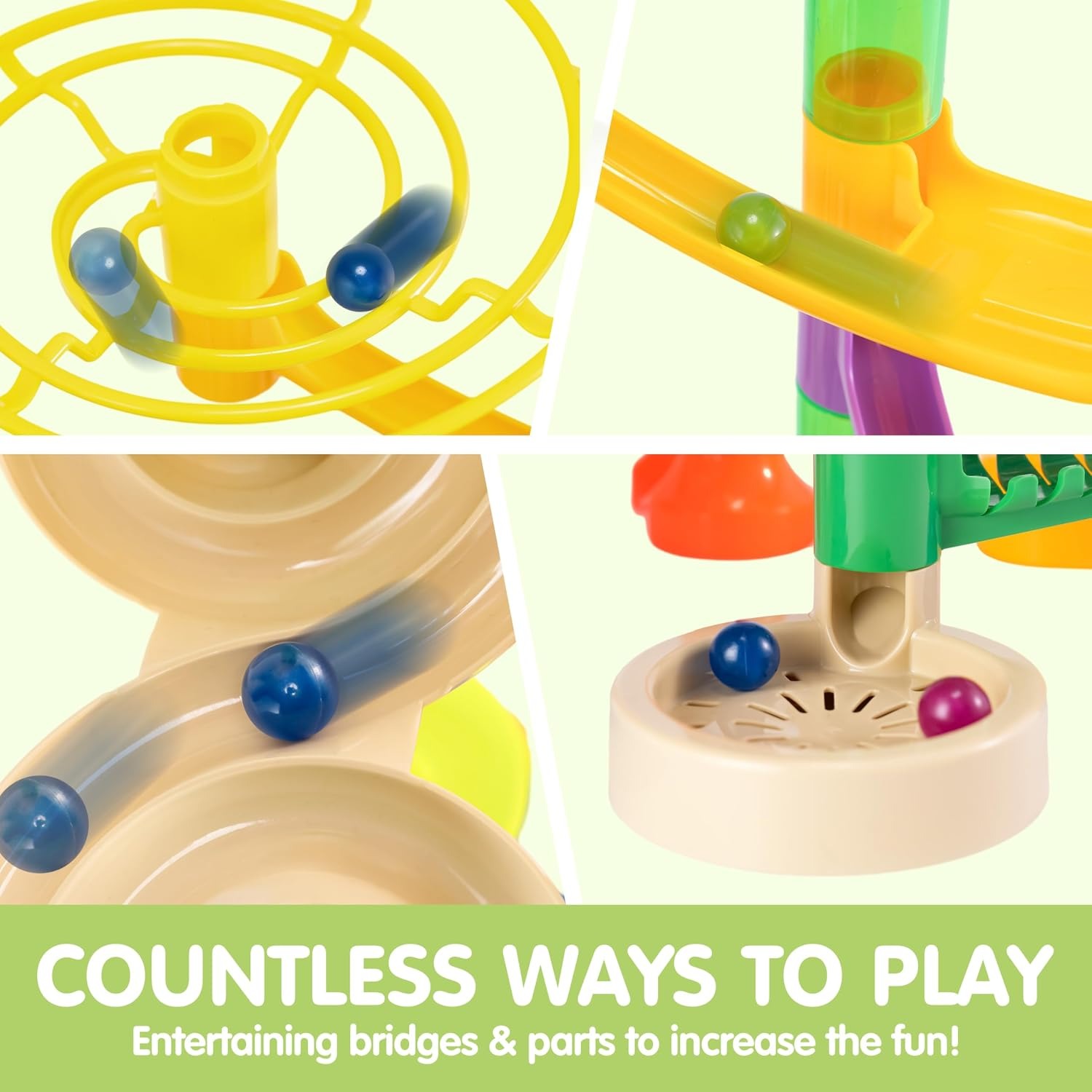
An elevator removes that pause. A powered lift sits at the base, catches arriving marbles, and carries them back up to the entry point. The marble re-enters the track and sets off again. What you get is a continuous loop rather than a series of short runs.
That one change has a bigger effect on play than it sounds. It means the track becomes something to watch, not just something to operate. Kids will build a layout and then sit and observe it for a surprisingly long time, noticing where marbles speed up and where they get stuck. That observation is where the thinking happens.
It also means a child can play alone. A lot of marble runs are quietly two-person toys, because one person builds while the other fetches marbles. With the lift doing the fetching, one kid is enough.
What 236 pieces actually gets you
Piece counts on toy boxes can be misleading, because some sets pad the number with tiny connectors. Here the split is clear. There are 176 track pieces and 60 marbles.
The marbles break down into three types. Fifteen are plastic, fifteen are glass, and thirty glow in the dark. The three types behave slightly differently, which is more interesting than it sounds. Glass marbles are heavier and carry more momentum through long runs. Plastic ones are lighter and more forgiving on steep drops. Racing one against the other is a genuinely good informal physics lesson.
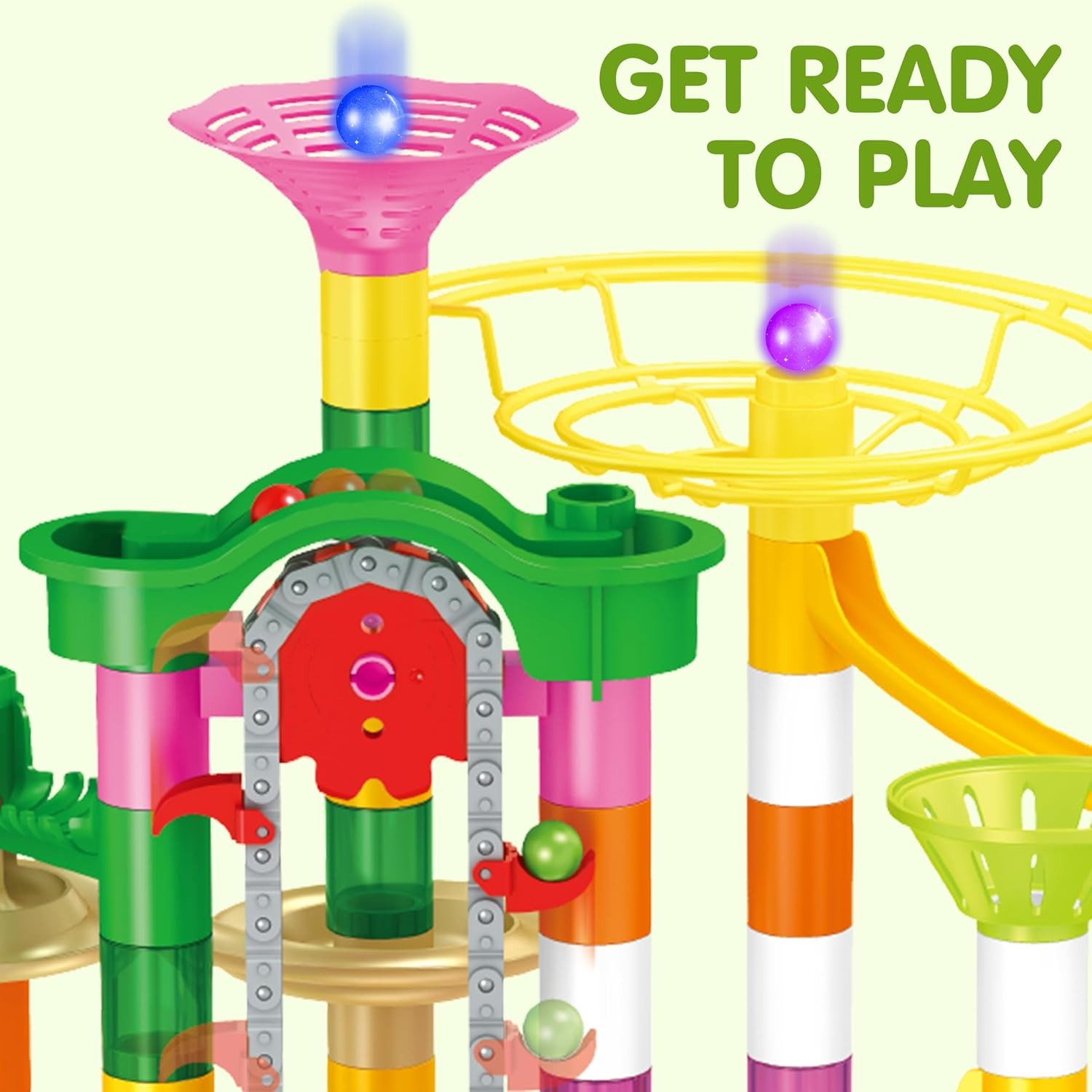
The glow marbles are the headline feature for most kids. Leave them under a lamp for a few minutes, switch off the room light, and the whole run turns into something else. A glow in the dark marble run is a different experience from the daytime version, and it extends the toy's life because it effectively gives you two toys.
176 track pieces is the number that matters for longevity. It is enough to build tall, enough to build wide, and enough to split into two separate tracks when there are two children and strong opinions about design.
Who it suits
The recommended age is 3 years and up. In practice the experience changes a lot across that range.
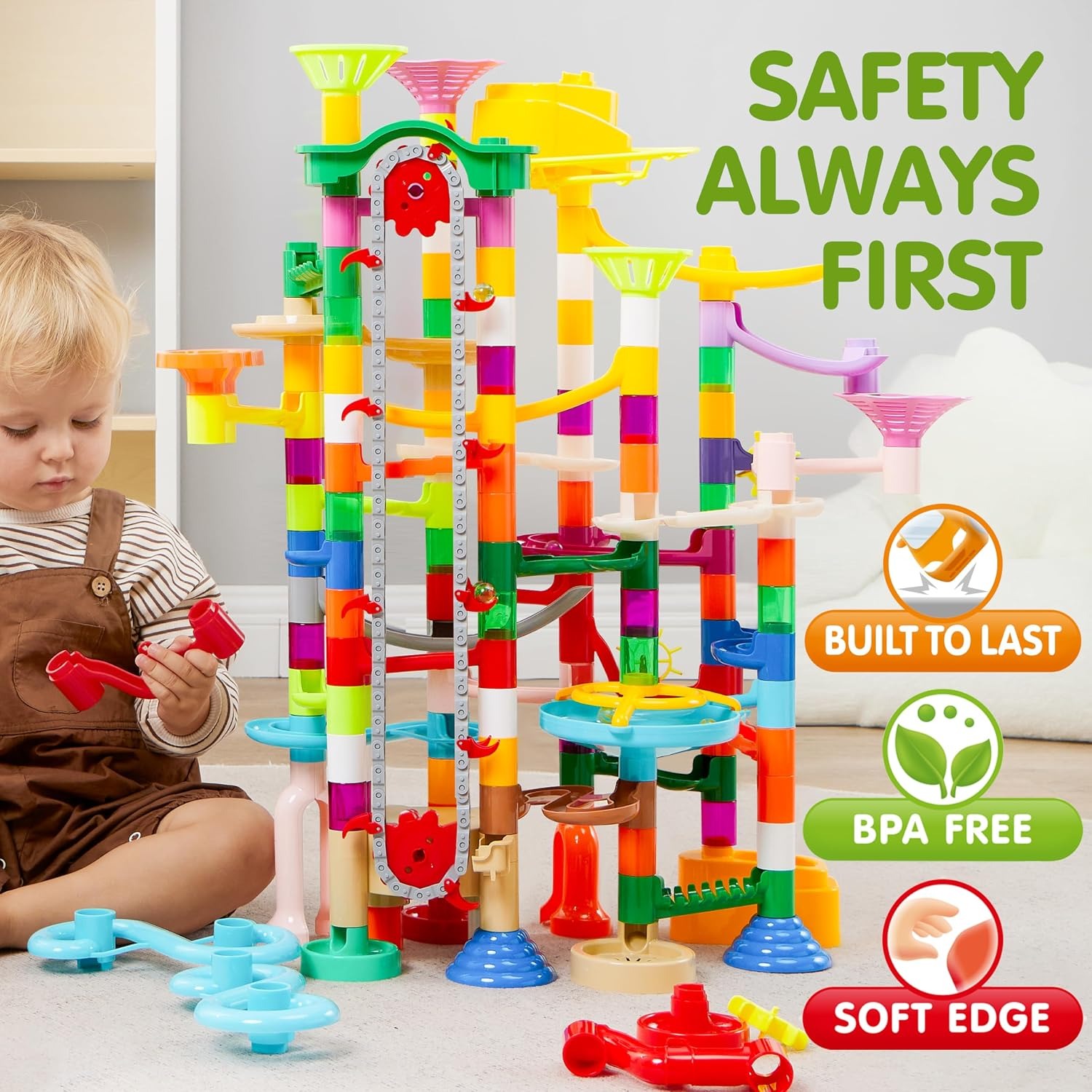
A three or four year old is mostly a passenger. They will love dropping marbles in and watching them travel, and they will want to help clip pieces together, but an adult will do most of the construction. That is fine. Supervision matters at this age anyway because marbles are a choking hazard.
From about five or six, something shifts. Kids start building independently, and more importantly they start redesigning. They will take a working track apart specifically to make it better. That is the age where a marble maze building set earns its keep.
Seven and up is where the challenges begin. Making the slowest possible run. Building the tallest tower that still works. Getting two marbles to arrive at the bottom at the same moment. These are self-set problems, and the set is open-ended enough to support them.
Adults get pulled in more often than they expect. It is one of the better family building toys for that reason, because the planning side is genuinely satisfying and the failures are entertaining rather than frustrating.
Choosing well: what to look at
If you are comparing marble runs, a few things separate the ones that last from the ones that do not.
Piece count comes first, but look at the breakdown. A hundred and seventy six track pieces gives real design freedom. Thirty does not.
Connection quality comes second. If pieces merely rest on each other, tall builds collapse and children give up. Pieces that clip hold their shape, and that confidence is what lets kids build upward.
Then ask whether anything moves on its own. A powered element like a lift changes the toy from an operated object into one that runs. That is the difference between ten minutes and an afternoon.
Finally, think about surface. A firm, level surface gives the best results. Thick carpet lets the base sink unevenly and the track angles shift, which causes marbles to derail for no obvious reason. A table, a hard floor or a large flat tray solves it.
Care and keeping it together
The practical enemy of any marble run is lost pieces. Not breakage. Loss.
Store everything in one lidded box, and keep the marbles in a separate bag inside it so they do not scatter the moment the box tips. Counting marbles back in after each session takes thirty seconds and saves a lot of under-sofa searching later.
Cleaning is straightforward. A damp cloth over the track pieces and marbles, then dry them properly before packing away. Keep water off the elevator unit entirely, since it houses the motor. If the set is going into storage for a season, take the batteries out so they cannot leak inside the housing.
Glass marbles will chip if they are thrown at hard floors. That is not a defect, it is just glass. If that worries you, use the plastic and glow marbles for everyday play and save the glass ones for races.
The short version
This is a big, open-ended marble run rather than a single-build model. The 176 track pieces give kids enough material to design their own layouts instead of copying one, and the motorised elevator keeps marbles cycling so the run does not stop every thirty seconds. Sixty marbles arrive in the box, including thirty that glow, which turns the same track into a different toy once the lights go off.
It suits ages 3 and up, with the sweet spot somewhere around 5 to 9 where kids build independently and start setting their own challenges. Supervise younger children because of the marbles, give it a flat surface to sit on, and store everything in one box.
If you want a construction toy that gets rebuilt rather than retired, this is the shape it should take.