
The complete guide
Choosing a Kids Craft Box That Actually Gets Used
The craft drawer problem
Nearly every family has one. A drawer or a plastic tub with a tangle of pipe cleaners, three colours of card, a dried-out glue stick and some stickers from a party bag. The intention was good. The reality is that when a child says they are bored on a wet Saturday, nobody wants to sort through it and work out what could be made from what is left.
That gap between having craft supplies and actually crafting is the thing a boxed kit solves. The materials are chosen to go together. The instructions are already written. Somebody has done the thinking, so the child can skip straight to the making.
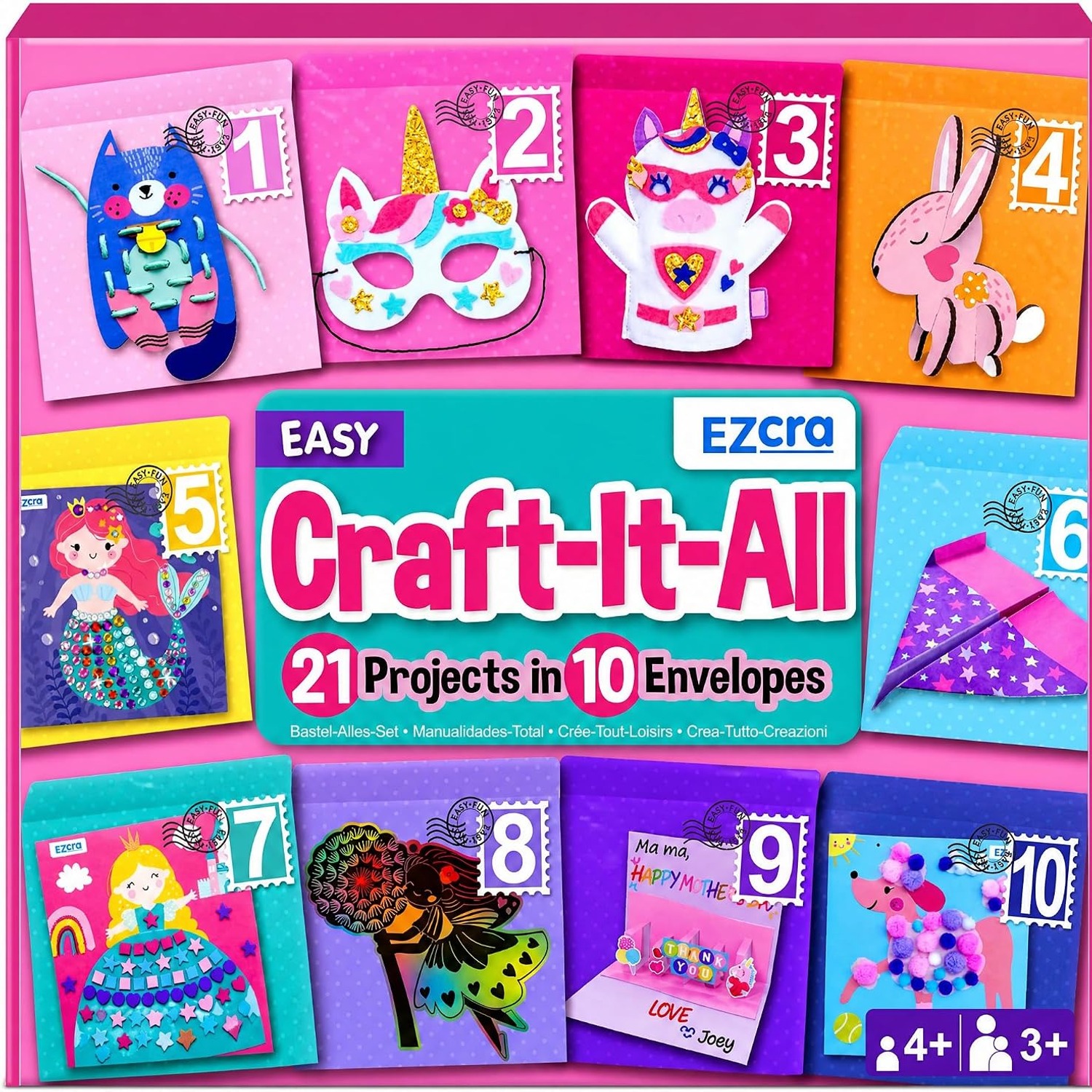
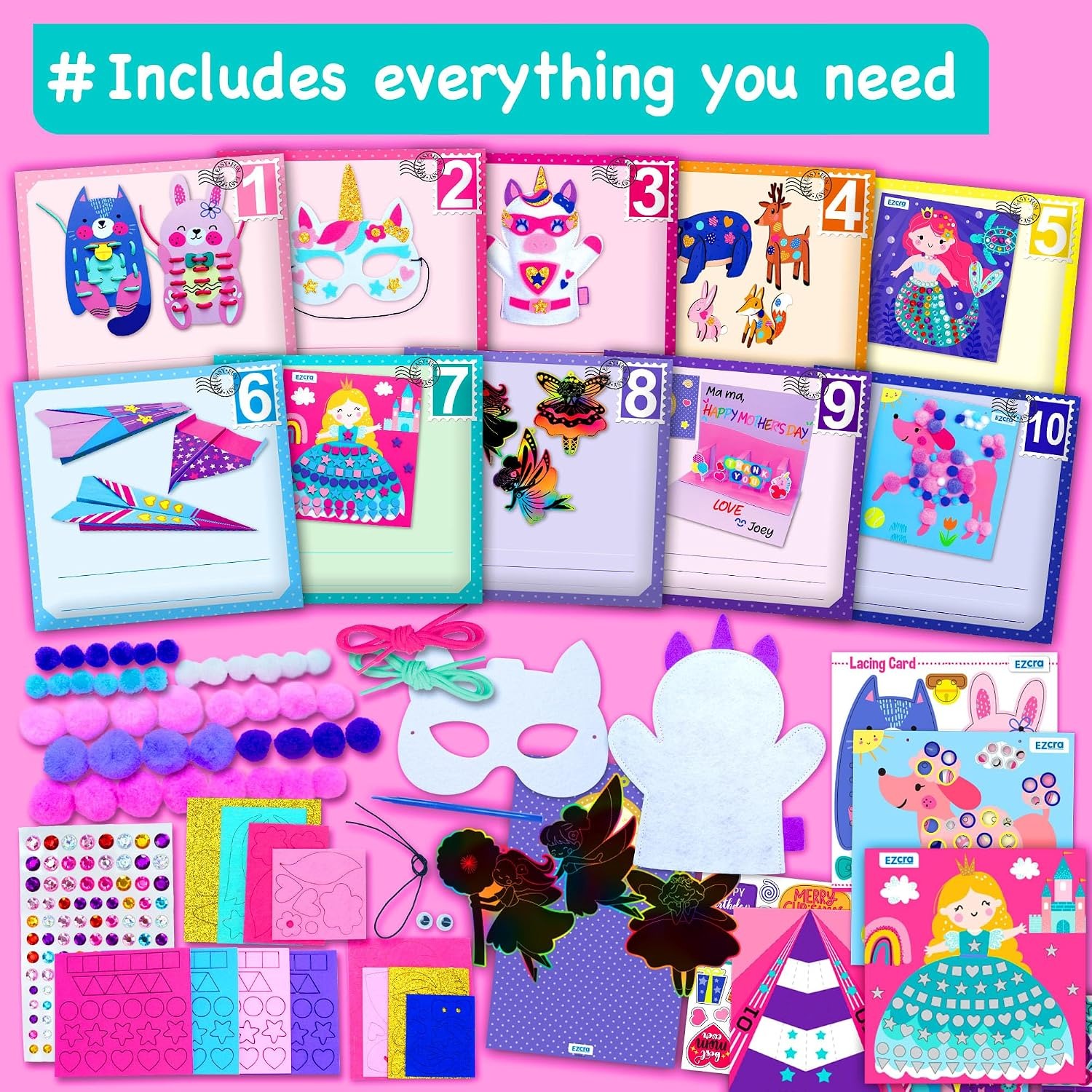
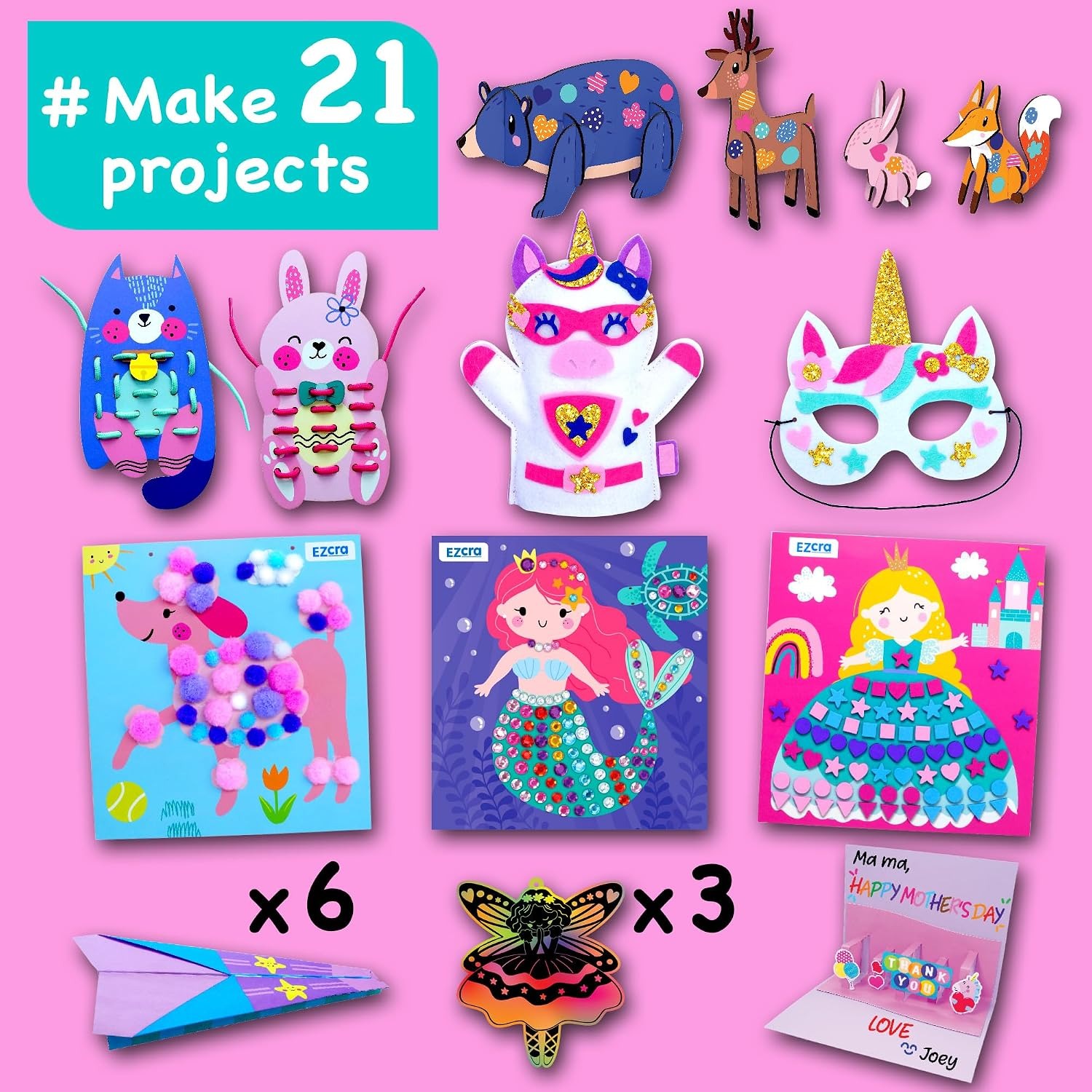
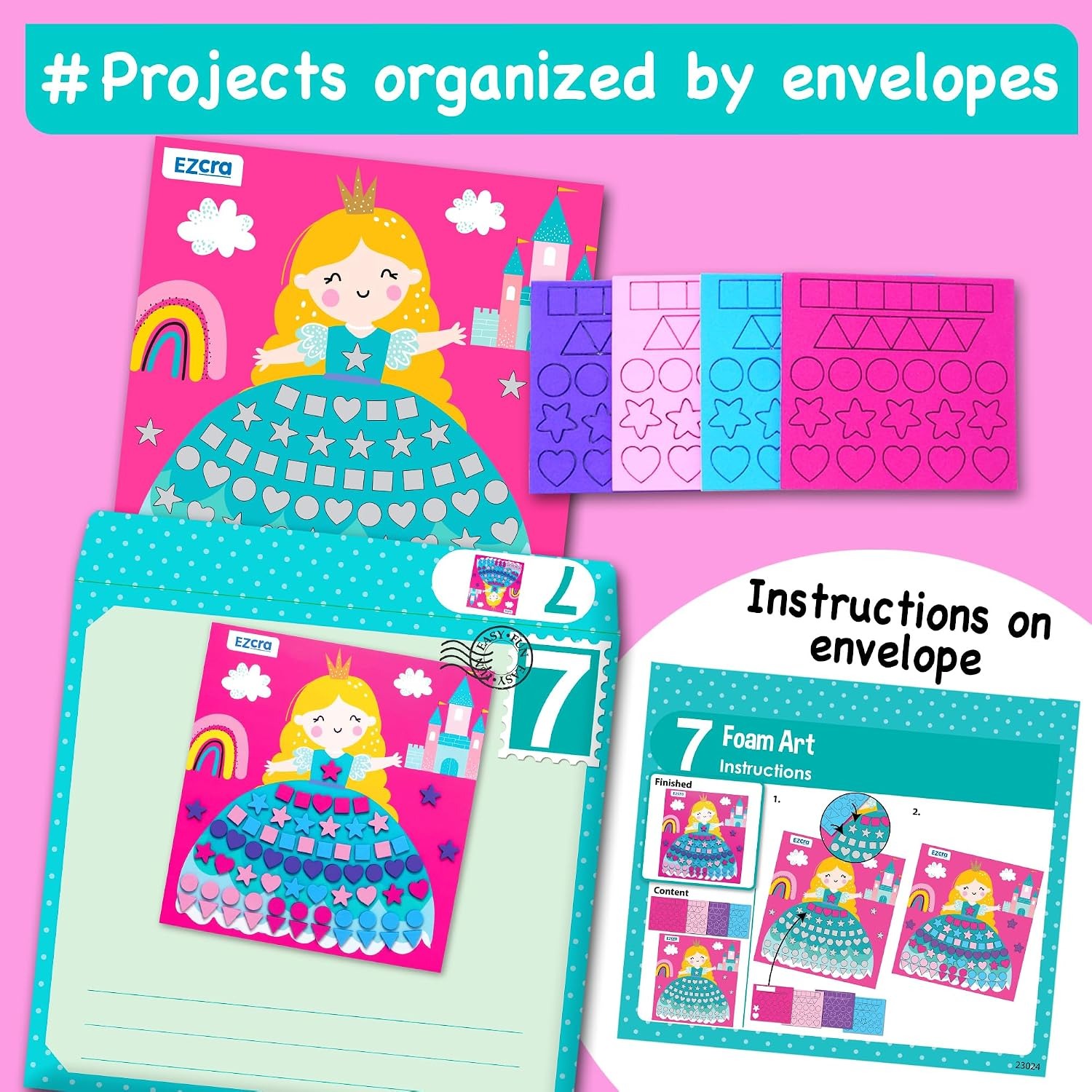
This particular box takes that a step further by splitting 21 projects across ten numbered, colour-coded envelopes. Each envelope is a self-contained session. Open one, do it, put the scraps back, close the box. That sounds like a small thing. In practice, it is the difference between a kit that gets used once and a kit that lasts a whole school holiday.
How the kit is put together
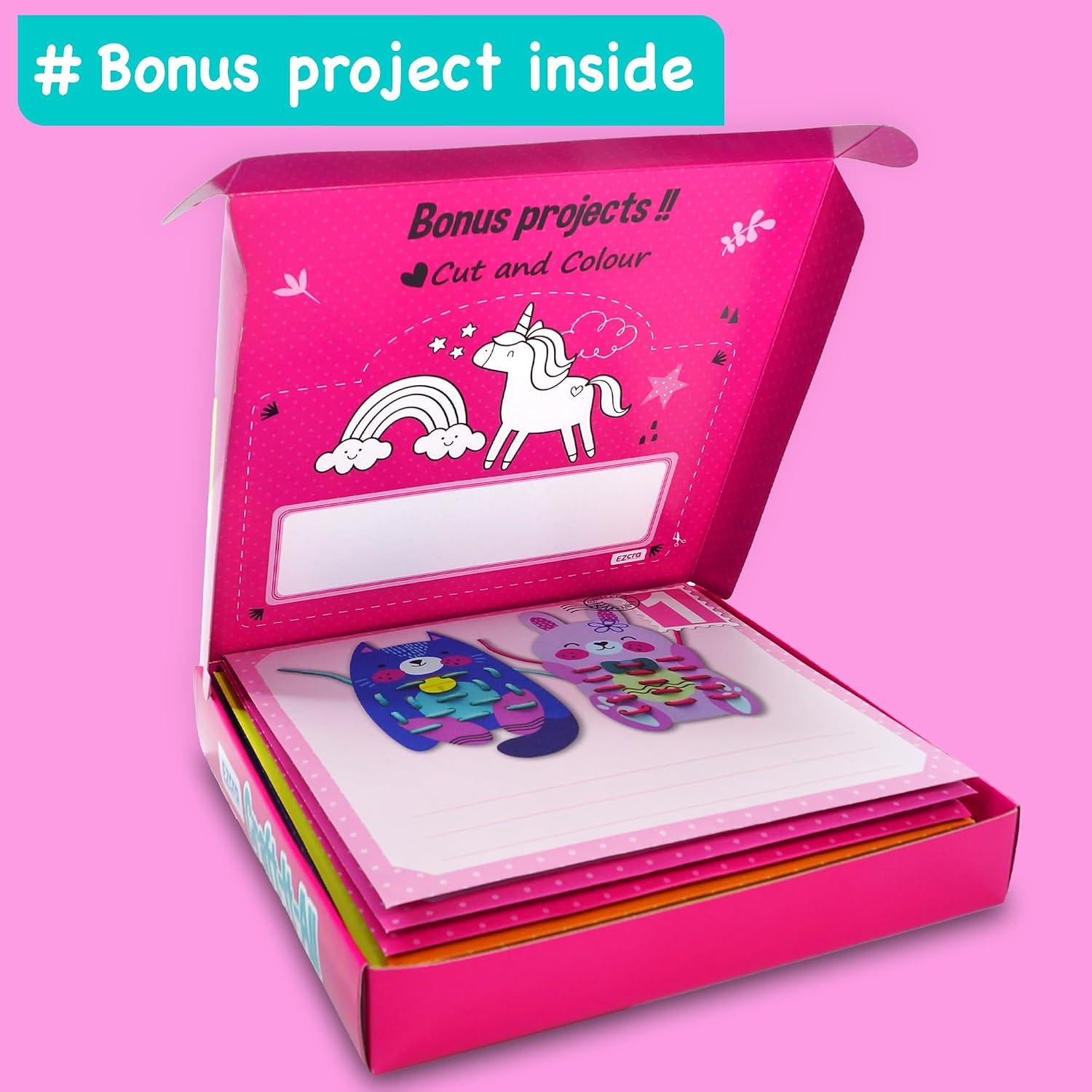
The 21 projects cover a spread of craft types rather than one idea repeated. The included components are listed as a child-safe plastic needle with pom poms, gem stickers, felt stickers and scratch art, a hand puppet with decorative stickers, lacing cards with pre-cut material and pre-punched holes, and paper crafts and card making material.
Those categories ask for different things from a child. Lacing is methodical and repetitive, good for a child who likes to settle in. Scratch art gives an instant visible result, which suits a child who needs quick feedback. Gem art is slow and sorting-based. A felt hand puppet turns into a toy at the end, so the making has a point beyond the making. Card making has a recipient in mind.
Pre-cut materials are doing more work than they get credit for. Cutting is one of the slowest skills to develop, and a project that opens with heavy scissors work can burn through a young child's willingness before anything fun happens. Pre-punched holes on the lacing cards remove another barrier. By the time the child opens the envelope, the frustrating part is already handled.
The kit type is listed as a paper craft kit and the material type as paper, with washable paint. The box measures 28 x 26 x 3.5 cm and weighs 0.67 kg.
Who this kind of kit suits
The manufacturer lists the age range simply as Kid, without a numeric range in the maker's details, so it is worth judging against the child you are buying for rather than a label. The design cues point toward younger primary-school children. The plastic needle, the pre-cut pieces and the step-by-step instructions all suggest a child who can follow simple written or picture instructions but who is still building hand control.
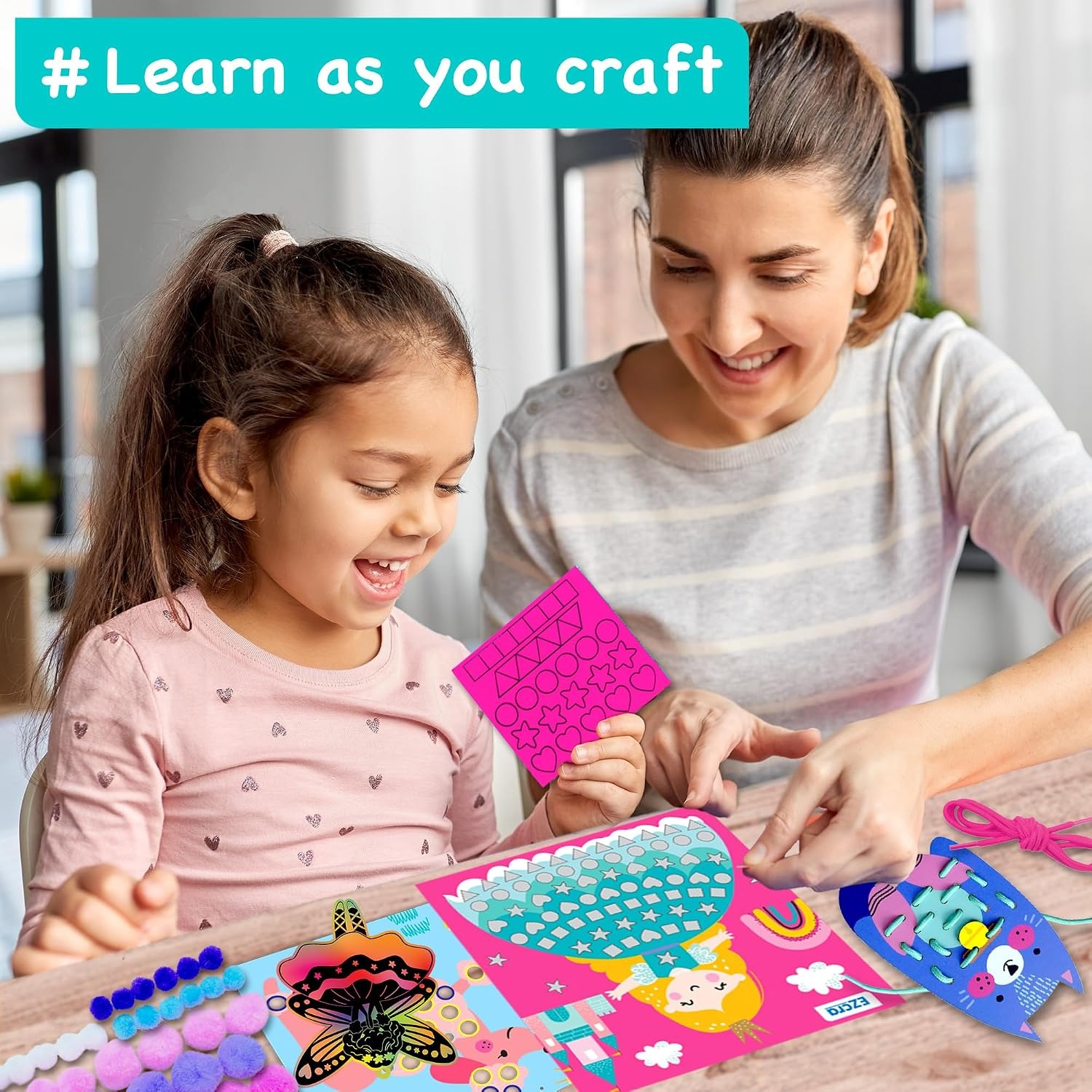
A child who already loves making things will tear through this quickly and want more. A child who says they are "not good at art" might actually do better here than with a blank page, because the structure removes the pressure to invent something from nothing. Following steps and ending up with a finished puppet feels like a win.
The theme and colour are listed as Girly with a Princess subject character, so that is worth knowing before gifting. The underlying activities are general craft skills, but the artwork has a clear look.
For classrooms and homeschool, the envelope system is the useful part. One envelope equals one planned session, with the instructions already attached. No photocopying, no hunting for supplies the night before.
Choosing between craft kits
A few questions sort most options quickly.
How many sessions do you want from it? A single-activity kit is fine for a specific afternoon. A multi-project box like this one is better value per hour if you want something to dip into repeatedly over weeks.
How much adult time are you prepared to give? Some craft kits assume a grown-up will cut, measure and set up. Pre-cut kits assume the child can start alone. If you are buying for a busy household, that difference matters more than the number of projects.
Where will it live? Bulky craft kits end up in the garage and never come out. A slim box at 3.5 cm tall sits on a bookshelf next to board games, where a child can see it and ask for it.
Is it travelling? If flights or long drives are the main use, you want projects that work on a tray table without wet glue or loose glitter. Lacing, stickers, gem art and scratch art all pass that test. Pack one or two envelopes rather than the whole box.
Does the theme fit? This is the easiest one to overlook when buying a gift. Check the style matches the child's taste before you wrap it.
Getting the most out of it
Set up before you hand it over. Clear a table, lay down a placemat, have a small bowl ready for offcuts and a bin bag nearby. Two minutes of prep saves ten minutes of fetching.
Let the child pick the envelope. Choice matters to a four or five year old more than adults expect, and a self-chosen project holds attention longer than an assigned one.
Resist taking over. Craft projects done by adults look better and teach the child nothing. Wonky gem placement and a slightly crooked puppet face are fine results. The point is the doing.
Ration it if you want it to last. One envelope per rainy day stretches the box across a season. Opening everything on day one is fun but short-lived.
Display or use the finished pieces. A card that gets posted, a puppet that appears in a show, a picture stuck on the fridge. Children who see their work valued come back to the table faster next time.
Care and storage
Keep the box dry and flat. Paper and felt both suffer in damp cupboards, and a warped box stops closing properly.
Make putting pieces back into the right numbered envelope part of the activity rather than a chore afterwards. Children are usually happy to do this if it is framed as part of the project, and it keeps the kit working through to the last envelope.
Wipe the outer box with a dry cloth if it collects dust on a shelf. The listed paint is washable, so marks on hands and most surfaces should come off with warm soapy water, though testing first on fabric is always wise.
Keep the kit out of reach of children under three. Pom poms, gem stickers and the plastic needle are all small enough to be a hazard for preschoolers.
The short version
This is a boxed craft set with 21 projects, sorted into ten numbered envelopes, with pre-cut materials and step-by-step instructions inside each one. It includes a child-safe plastic needle, pom poms, gem stickers, felt stickers, scratch art, a hand puppet, lacing cards with pre-punched holes, and paper and card making material. The paint is listed as washable and the kit type as paper craft.
The box is 28 x 26 x 3.5 cm and weighs 0.67 kg, so it stores flat and travels well. The theme is listed as Girly with a Princess character, which is worth checking against the child's taste before buying as a gift.
If you want a craft option that is ready to go without adult prep, that stays organised after the first use, and that keeps producing new activities over weeks rather than one afternoon, this is the shape of kit to look for. Buy it, put it on a shelf where it can be seen, and pull out an envelope the next time the weather turns.