
The complete guide
Choosing a Kids Gardening Set with Wheelbarrow That Actually Gets Used
The problem with gardening with kids
Anyone who has tried to garden with a small child knows the pattern. You kneel down to plant something, and within a minute your trowel is gone. Your gloves are being worn as puppets. Your bucket of soil has been tipped out somewhere you did not choose. The child is not being difficult. They just want to do what you are doing, and they have no equipment of their own.
Handing them an adult trowel does not fix it. The handle is too long for a small grip, the head is too heavy to control, and the sharp edge is more than you want in a four-year-old's hand while you are turned the other way. So the child drifts off, you finish the bed alone, and a chance to get them outside quietly disappears.
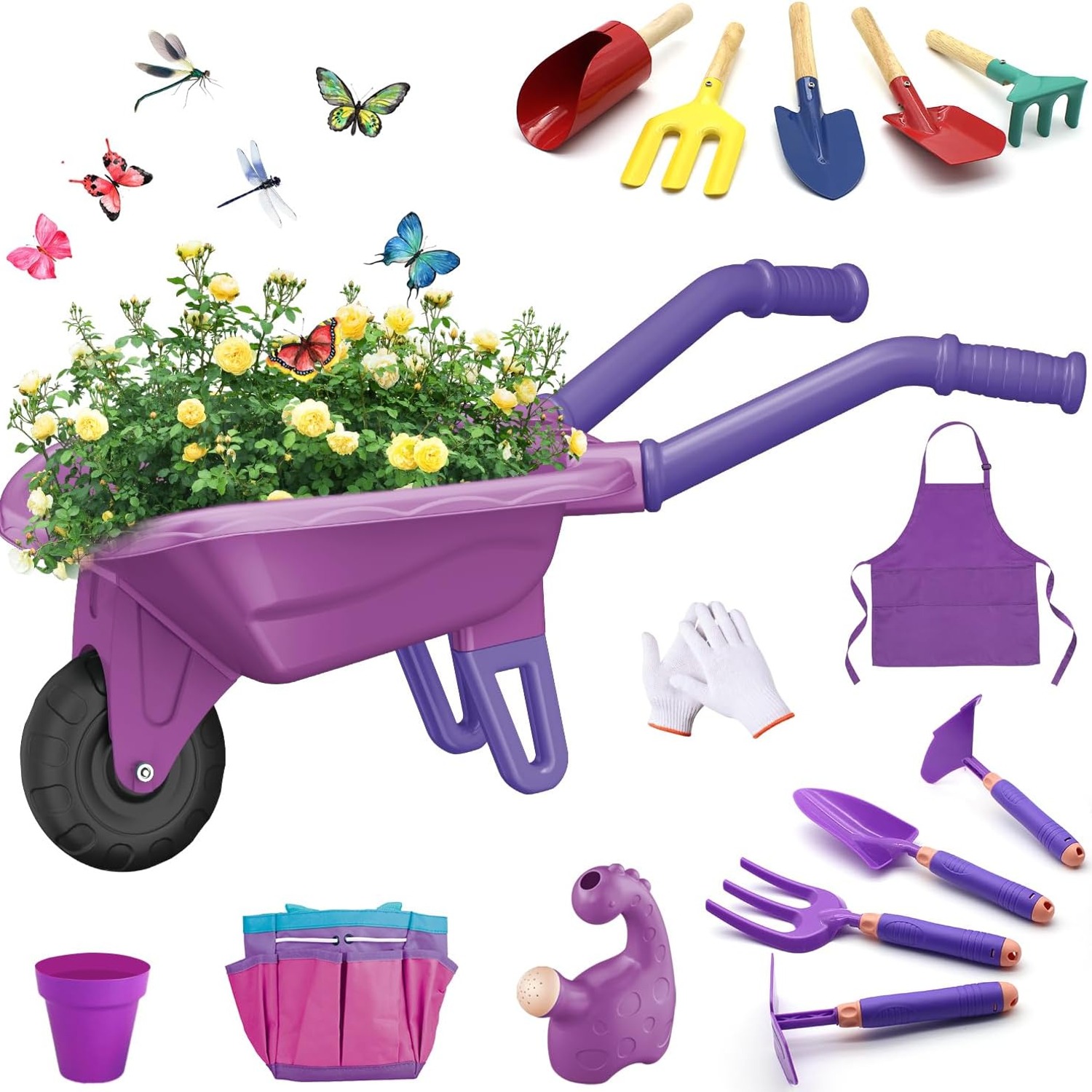
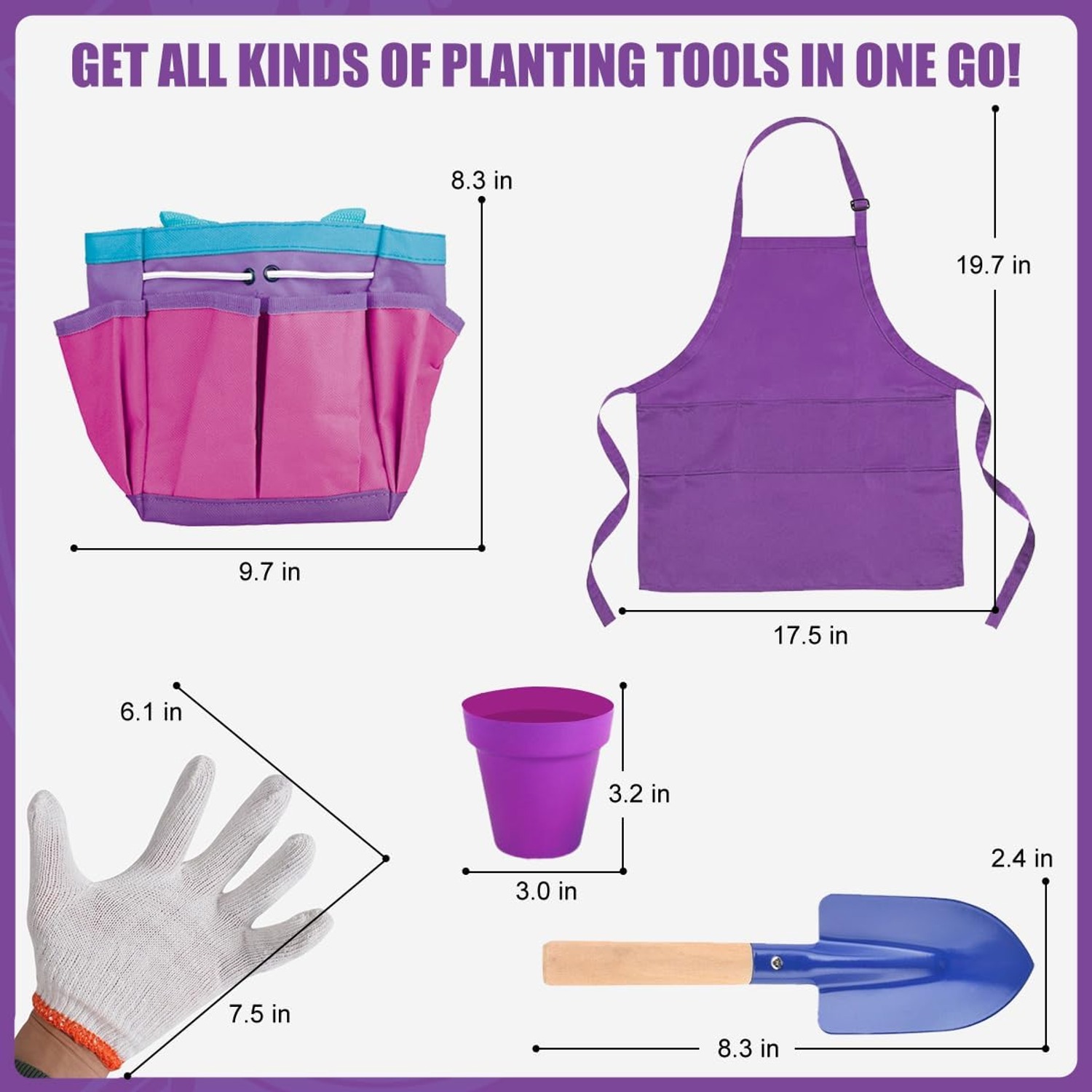
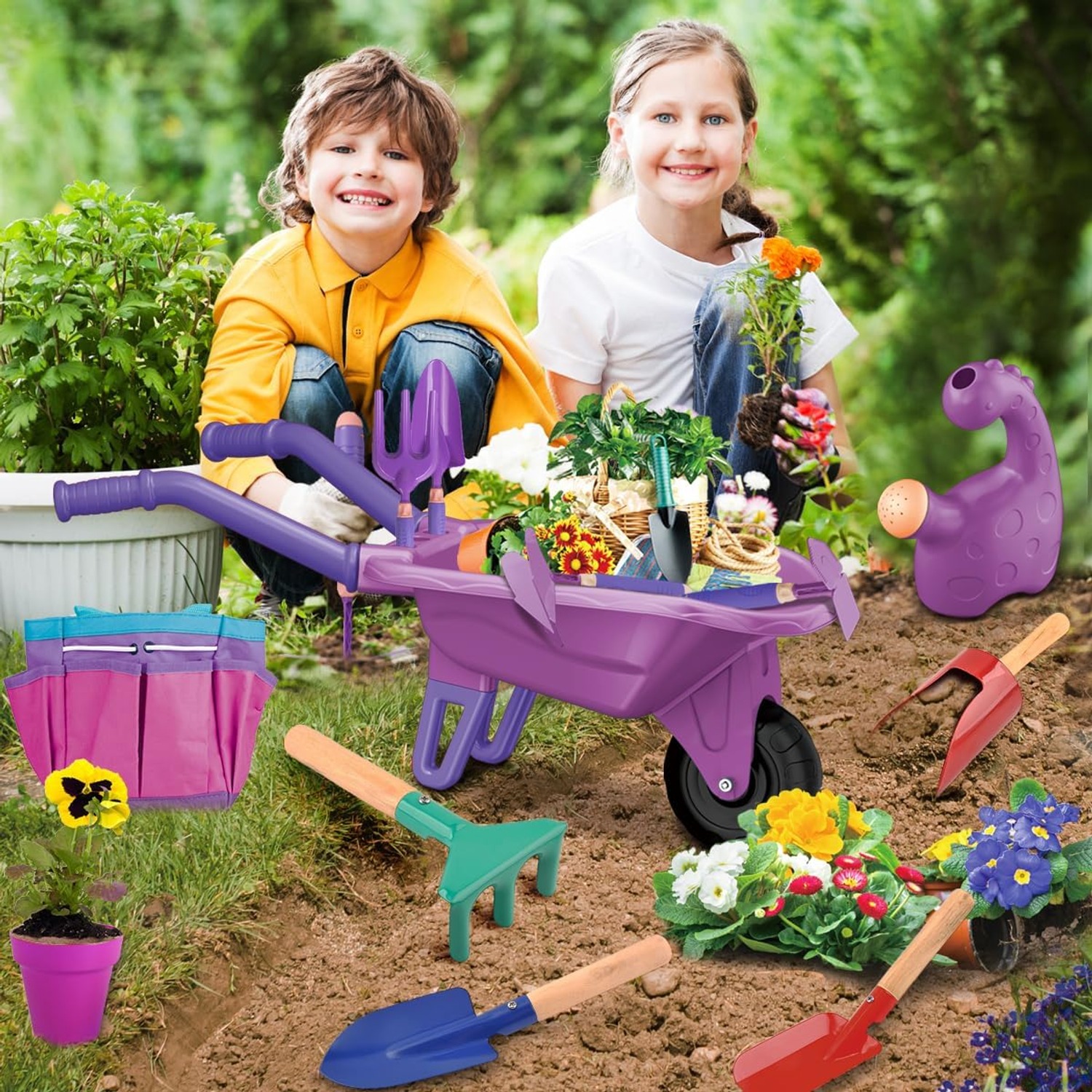
A proper kids gardening set with wheelbarrow solves this in the simplest way possible. The child gets their own gear, scaled to them, and a job they can own. In this set that means 15 pieces: a push-along wheelbarrow, five metal planting tools, four plastic ones, gloves, an apron, a flower pot, a water bottle and a bag to keep it all in.
Why the wheelbarrow matters more than the tools
If you only looked at the tool list you would think the digging pieces are the main event. In practice, the barrow is what keeps kids out there.
Digging is a short activity. A child digs a hole, looks at it, and moves on. Carting things is open-ended. A barrow gives them a reason to walk to the other end of the yard and back, over and over, carrying soil, sand, leaves, pine cones, weeds you have pulled, or just the rest of their tools. That loop of load, push, tip, return can occupy a child far longer than the hole they started with.
It is also genuinely good movement. Pushing a loaded barrow works arms, shoulders and core, and it forces a child to think about balance and steering. They learn quickly that overloading one side tips it. Nobody has to teach that lesson, the barrow does it.
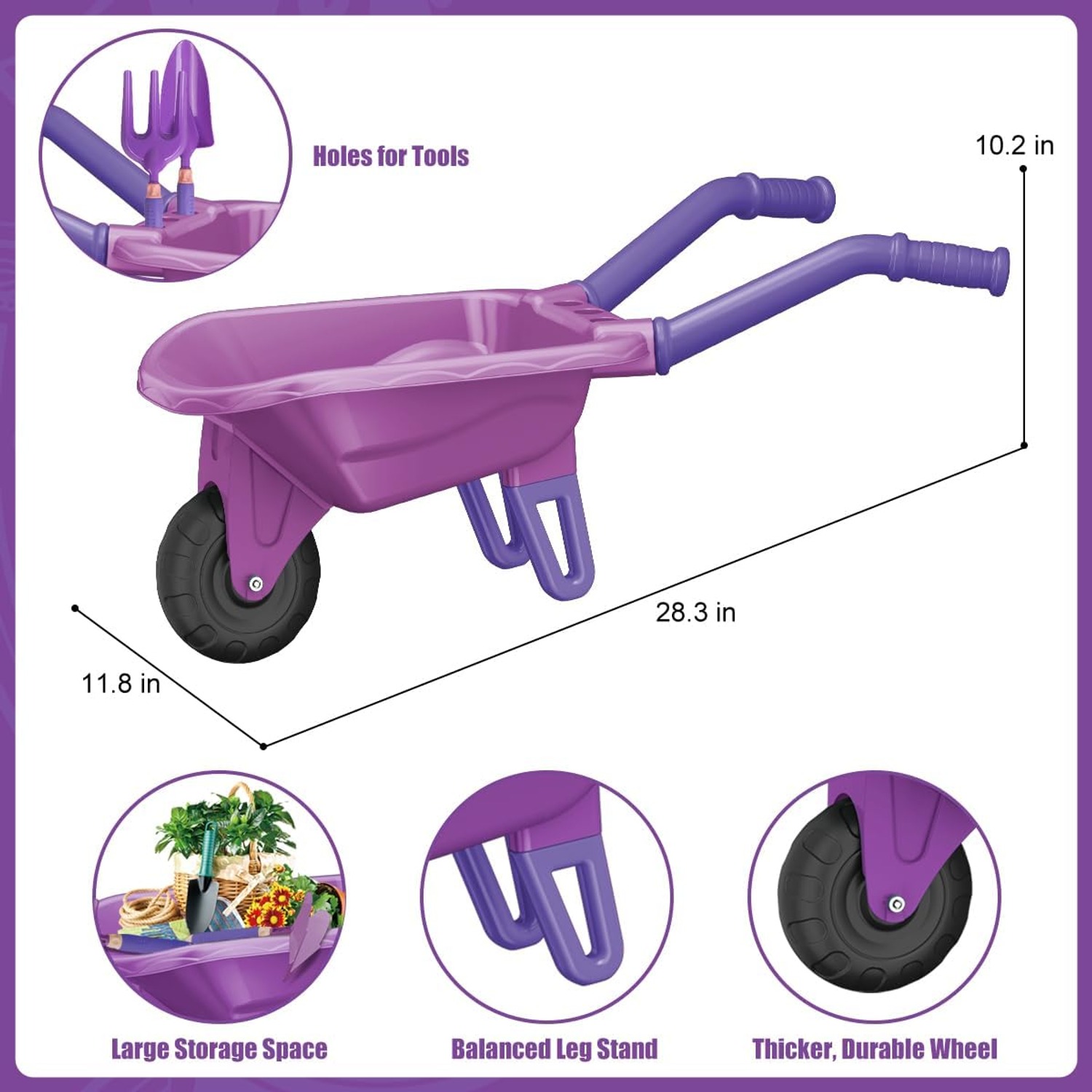
One wheel, two handles, a child-height tray. That is the whole design, and it is why toy wheelbarrow sets have been popular for generations.
Metal tools versus plastic tools
Plenty of kids garden tools are plastic from end to end. They are light, cheap and safe to leave outside. They are also close to useless in a real garden bed. A plastic trowel skates across firm soil, flexes when a child pushes, and eventually snaps at the neck.
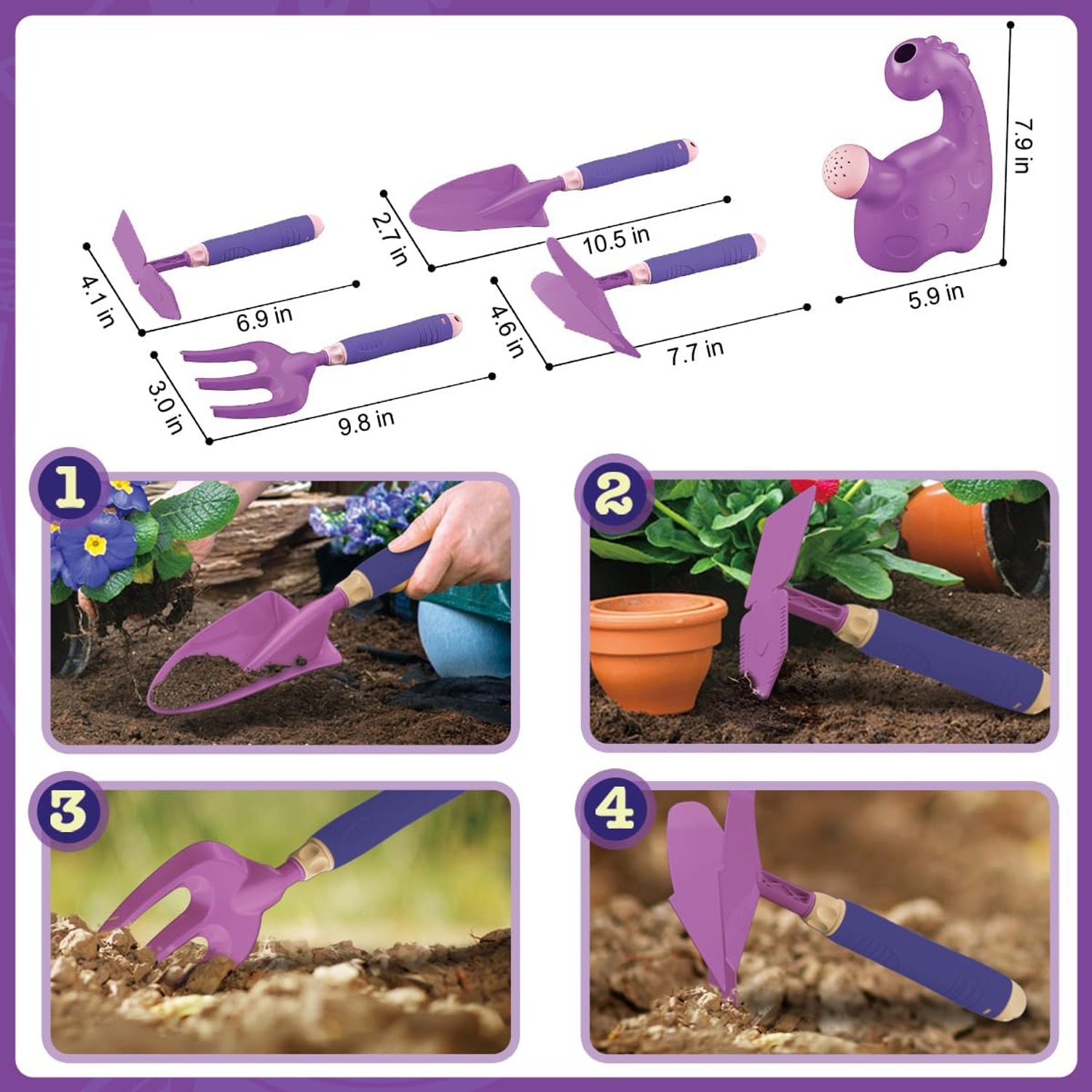
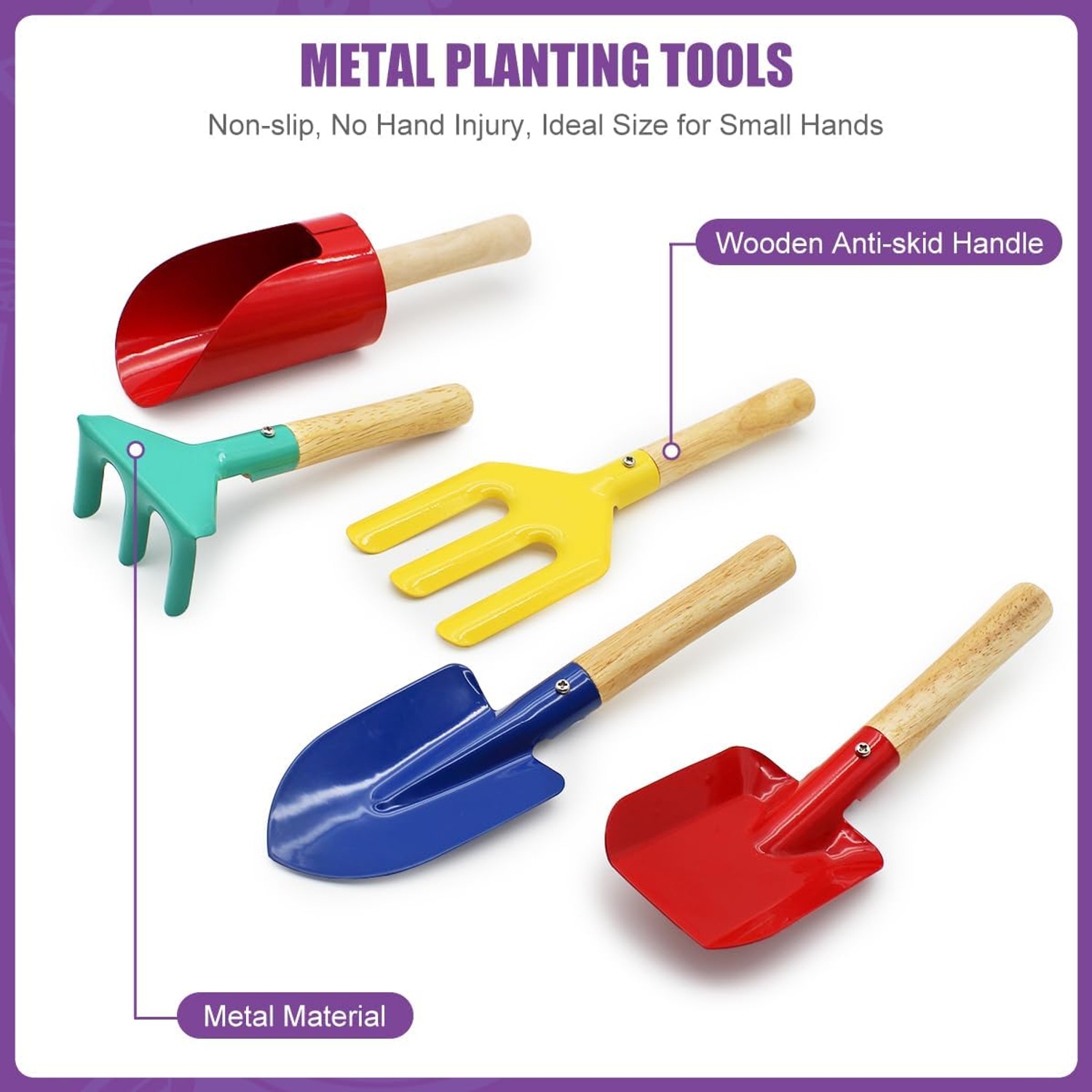
This set includes both. Five of the planting tools are metal and four are plastic, and the handles are wood.
The metal pieces are the ones that cut in. A child can actually make a planting hole with them, lift soil, rake a surface flat or break up a clump. That changes the whole experience, because the child is doing the same thing you are, not miming it.
The plastic pieces still earn their place. They are lighter for smaller children, they are ideal in a sandpit, and they are fine for potting mix and indoor pots where a metal edge is more than you need. If you have two kids of different ages, one can take the metal tools and the other the plastic ones.
A word on supervision. Any set with metal tools deserves an adult nearby, at least for the first few sessions. Set the rule early that tools stay low and point down, and most kids follow it without fuss.
Who this set suits
This kit works best for a child who wants to be involved rather than entertained. If your child already follows you outside, pulls at the hose, or asks what you are planting, they are ready.
It suits a few situations particularly well:
A family with a garden bed, even a small one. The child gets a corner that is theirs and tools that reach it.
A household with a sandpit and no garden at all. The barrow and scooping tools get constant use in sand, and the pot and bottle still allow a seedling on the balcony.
Grandparents who garden and want something for visits. Keeping the bag at their place means the kit is a reason to come over.
A gift situation where you want something physical rather than another screen or another box of plastic. A barrow has presence when it is unwrapped.
It is less suited to a child who wants a toy that performs on its own. This set needs a patch of dirt, a bit of sand, or a pot of soil to come alive. Give it nothing to work with and it is just handles in a bag.
How to choose, and what to check
If you are comparing a few options, a handful of things separate the sets that last from the ones that go in the bin by autumn.
Count the pieces, but look at what they are. Fifteen pieces sounds generous until you find twelve of them are near-identical plastic scoops. Here the count covers a barrow, nine tools, wearables, a pot, a bottle and a bag, which is a genuine spread.
Check the handle material. Wood handles, as used here, give a warmer grip than hollow plastic and tend to feel more solid in use.
Look for a storage solution. This is the quiet detail that decides whether a set survives. A bag means the pieces stay together, and a set that stays together gets used again. Loose tools scatter across a lawn and go missing within two weekends.
Think about where it will live. The pack measures 71.9 x 25.9 x 16 cm and the whole thing weighs 1.32 kg, so it is easy to shift and does not demand a shed of its own.
Finally, buy some seeds at the same time. The best kids gardening set in the world will not hold a child's interest if nothing grows. Fast sprouters like beans, sunflowers, radishes or nasturtiums give a visible result within a week, and that result is what turns a one-off afternoon into a habit.
Looking after the set
Care here is simple but it does matter, because metal and water do not get along.
After each session, knock the soil off the tools and wipe them with a damp cloth. Then dry them. Drying is the step people skip, and it is the one that prevents rust. Do not leave tools soaking in a bucket or lying on wet grass overnight.
Shake the soil out of the storage bag and let it air dry if it has got damp. Hand wash the gloves and apron in cool water, then air dry them rather than putting them through a dryer.
Give the wheelbarrow a check every few weeks. Fittings can work loose with enthusiastic use, and a quick tighten keeps it rolling straight.
Store the whole lot under cover. A shed, a garage, a laundry cupboard, anywhere out of rain and harsh sun. Sun fades and weakens plastic over time, and rain is what rusts metal. Indoors between uses, and the set will see several seasons.
The short version
A child who gardens alongside you with no tools of their own will borrow yours, then wander off. Give them a kit built to their size and the afternoon changes.
This 15 piece set covers it. A wheelbarrow they can push and load themselves, five metal tools that genuinely dig, four plastic tools for sand and pots, gloves and an apron so they look the part, a pot and a water bottle so they can plant and tend something of their own, and a bag so none of it disappears.
Pair it with a packet of quick-growing seeds, show them once, then let them get on with it. The dirt will end up everywhere. That is usually the sign it worked.