
The complete guide
Choosing a Kids Shopping Trolley Play Set, A Buyer's Guide
The toy that solves the "I want to help" problem
Anyone who has taken a three year old to the supermarket knows the pattern. They want to push. They want to hold things. They want to put things in the trolley, and quite often they want to take things back out again. It is not naughtiness, it is a child trying to join in with an adult job they have watched dozens of times.
A kids shopping trolley play set gives that urge somewhere useful to go. Instead of wrestling over the real trolley at the shops, your child gets one of their own at home that works the way they expect. They load it, push it, park it, unload it, and start over. The game is already familiar, so there is no learning curve and no instruction sheet for them to ignore.
That familiarity is why this type of toy tends to outlast the novelty phase. A toy with one trick gets five good days. A pretend grocery shopping toy gets replayed because the story changes every time, even when the props do not.
What you actually get
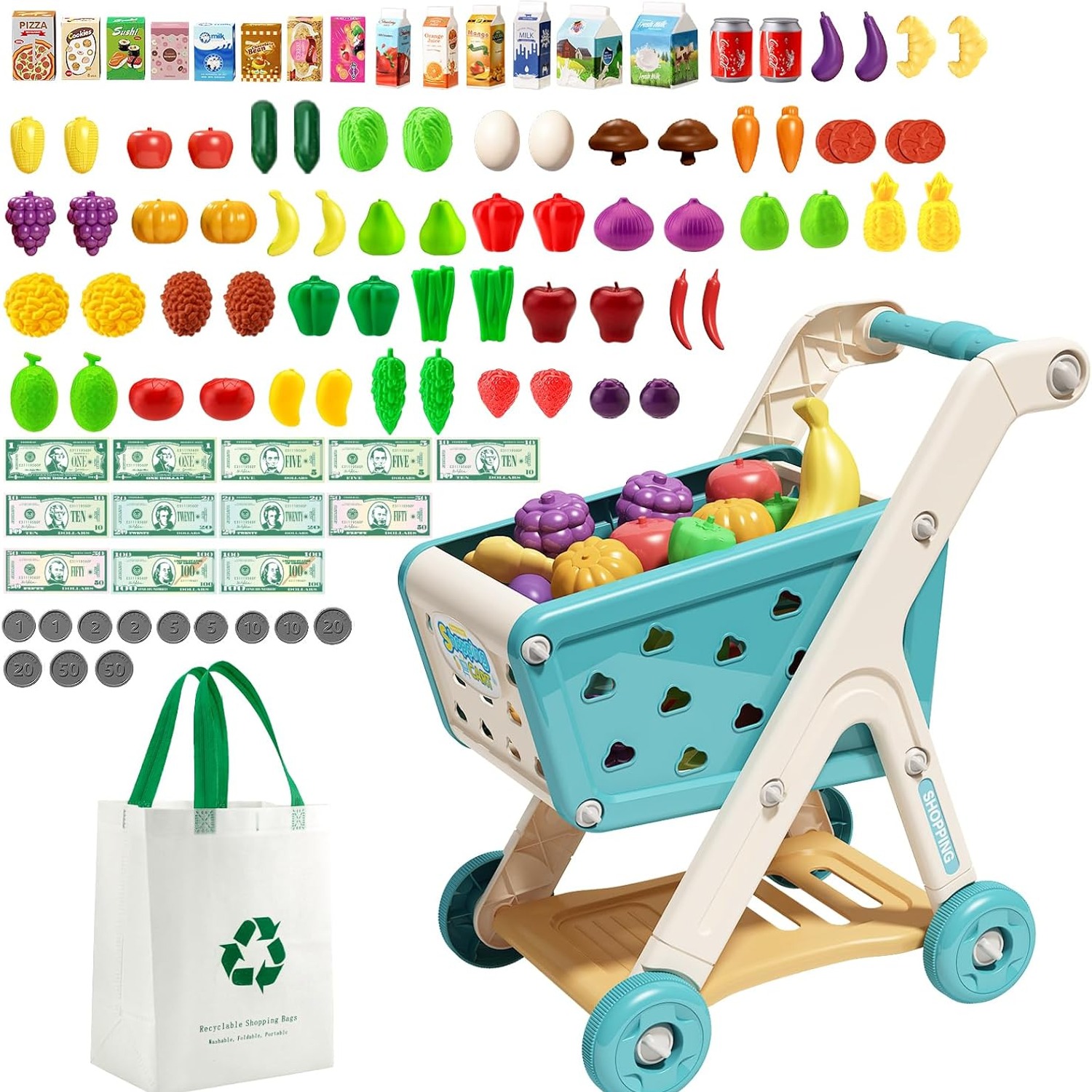
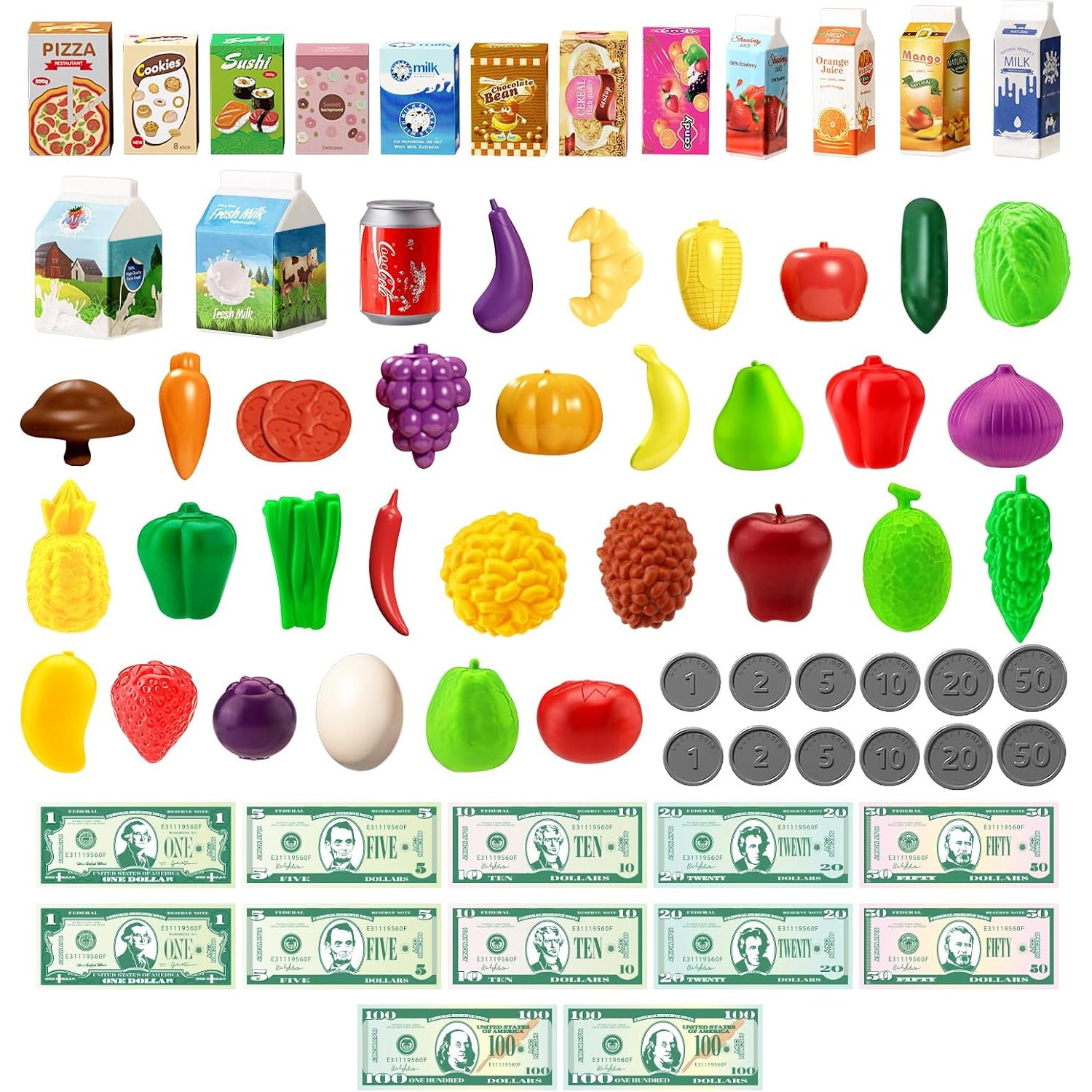
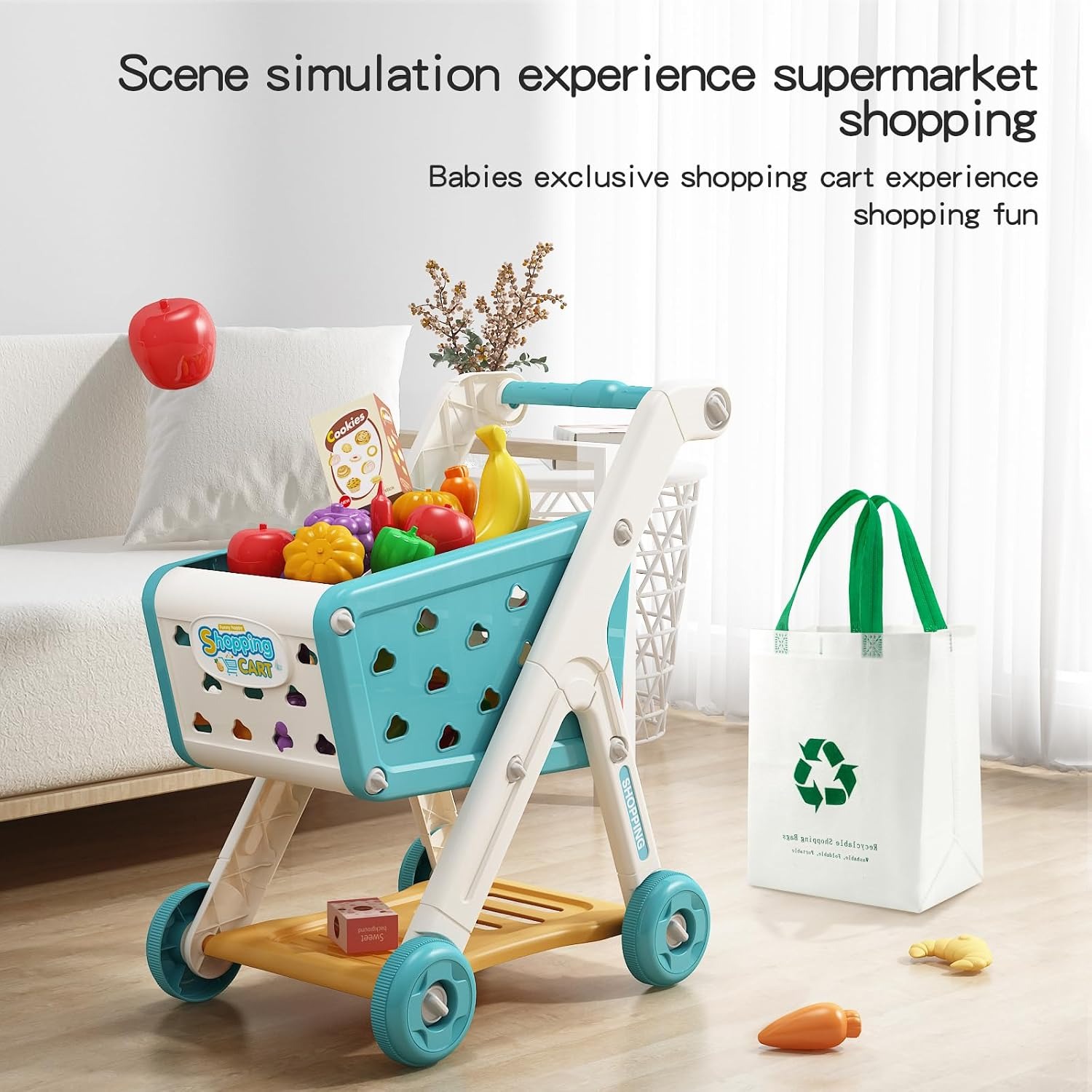
This set is built around a child-size trolley made from ABS plastic in green, with a kitchen theme. It arrives with a shopping bag and a bundle of pretend food that covers fruit, vegetables and fast food style pieces. The manufacturer lists it as a 102 piece set, counting the cart, bag and all the food together.
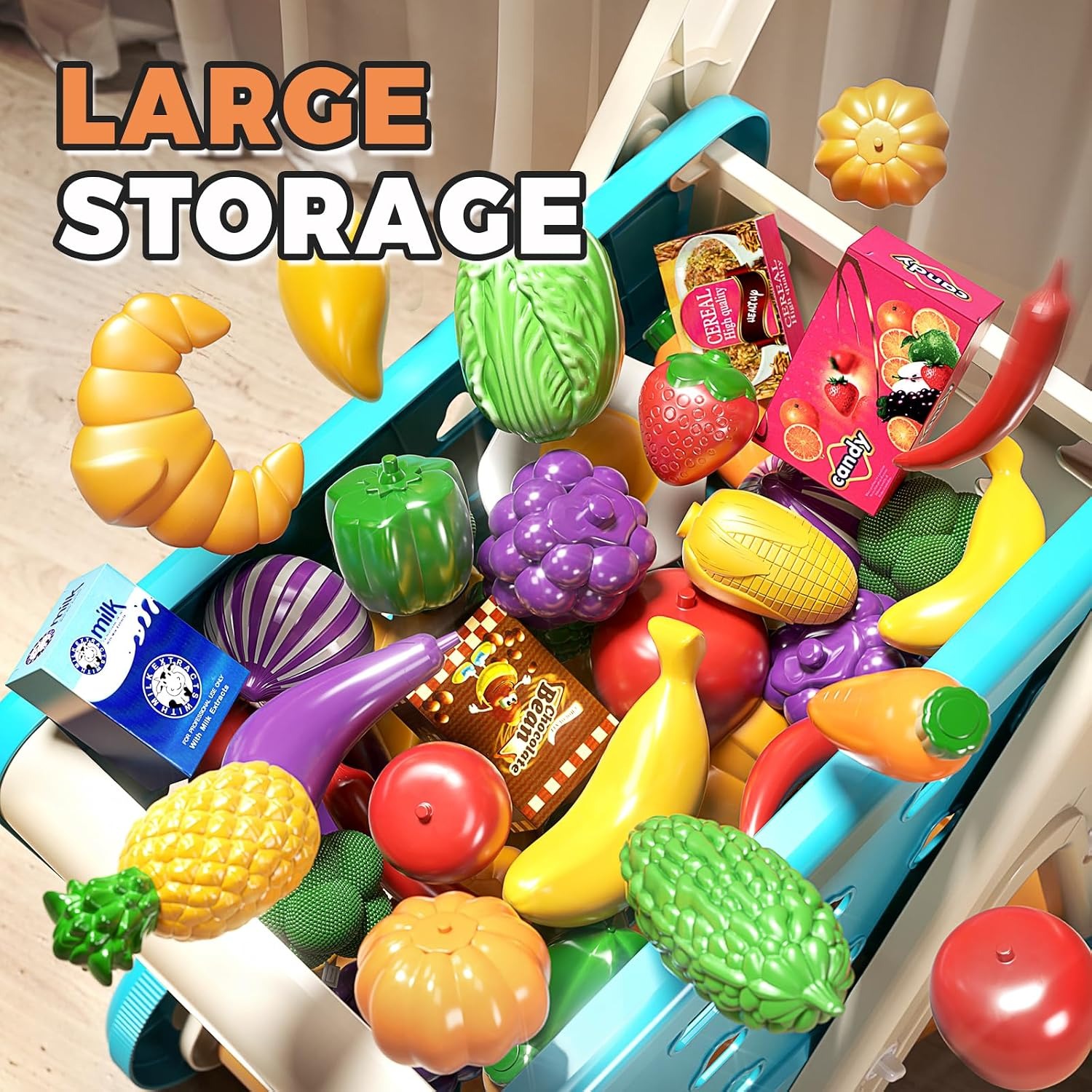
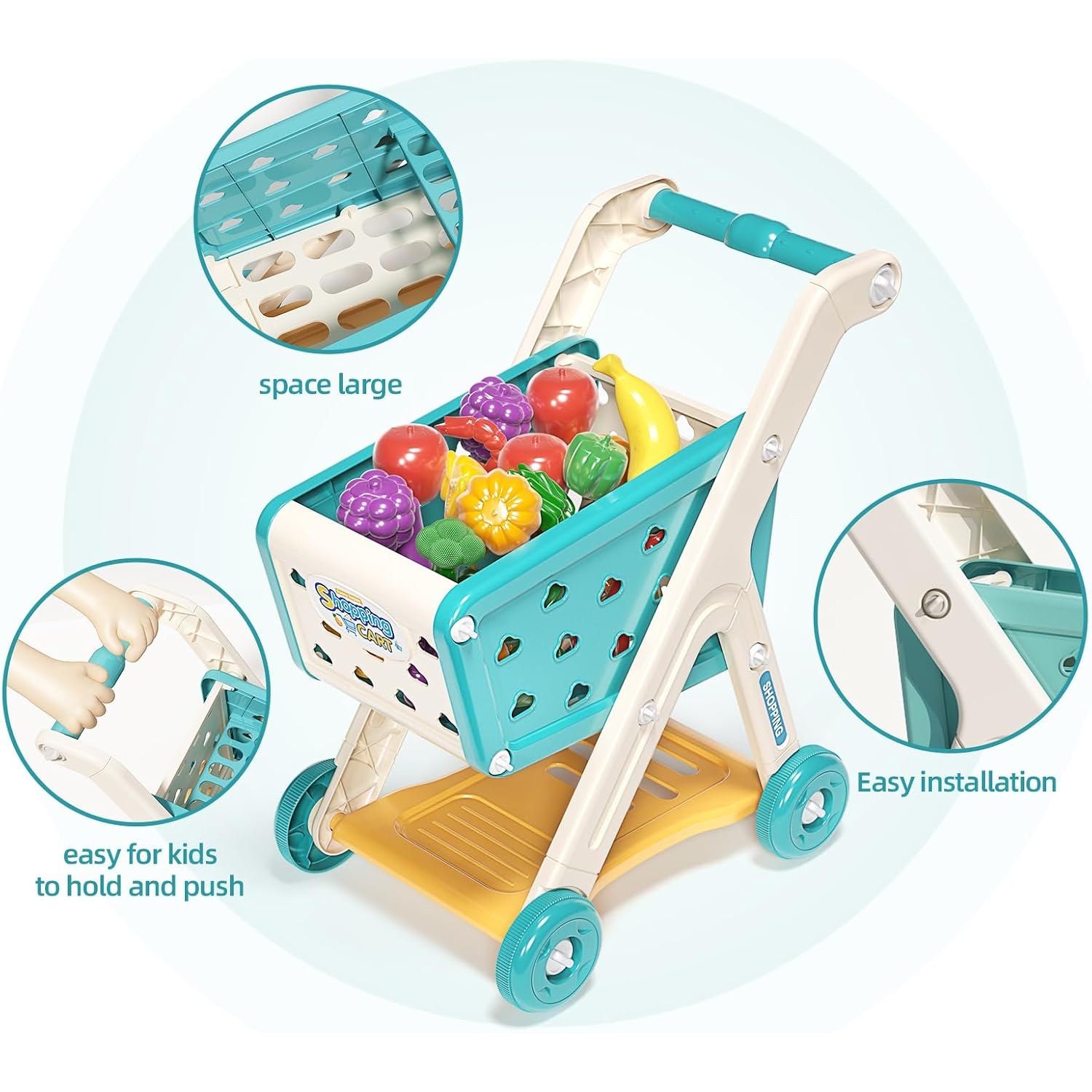
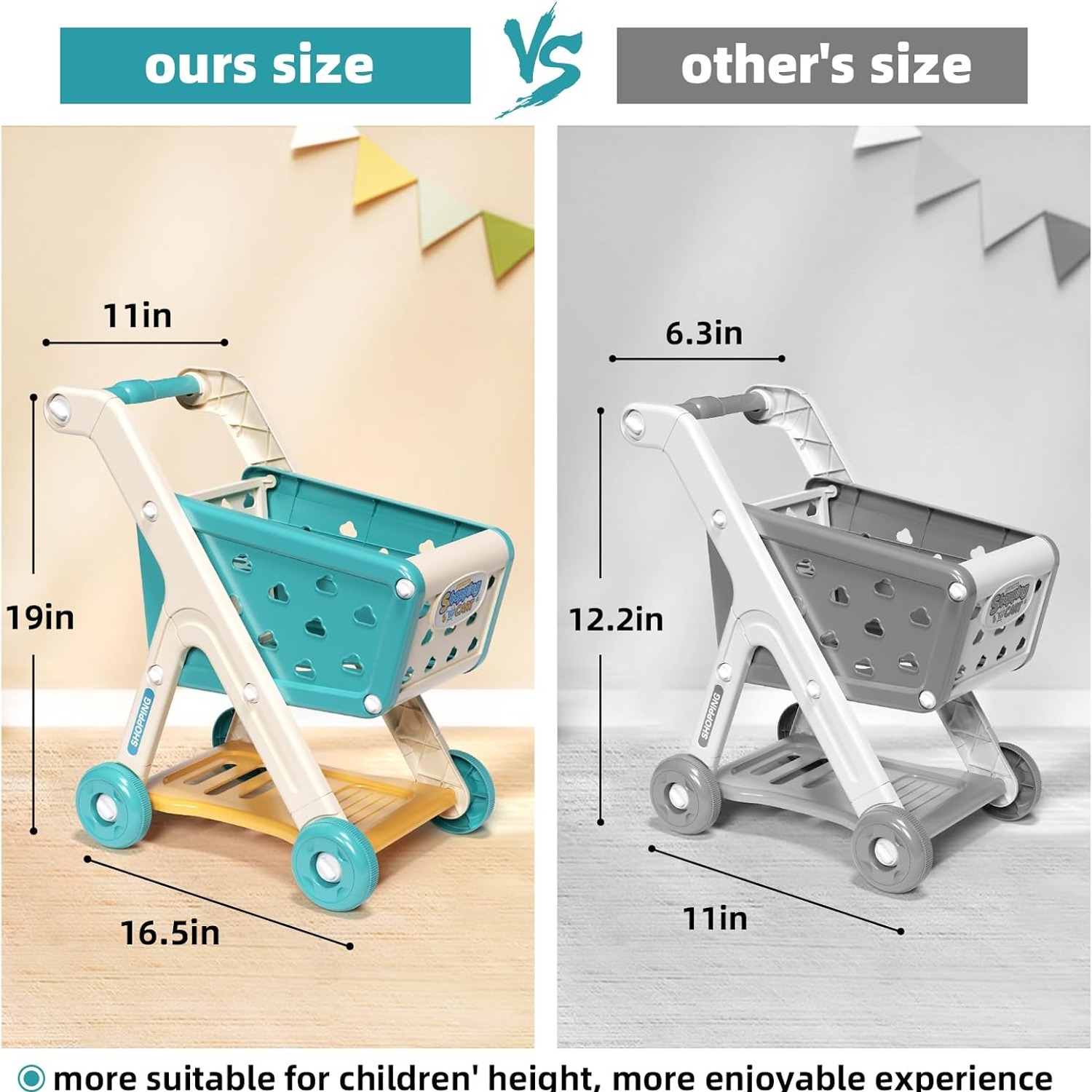
The trolley has three levels of storage. The main basket carries the bulk of the shopping, and the smaller tiers give children places to separate items. Edges are rounded, the wheels are round and intended to roll across a range of surfaces without scratching floors, and the whole item weighs 1.09 kg. The item dimensions supplied are 32.3 x 25.4 x 16.8 cm.
Simple assembly is needed before the first play session. It is an adult job, it is quick, and it is worth doing properly so the wheels sit square and the frame does not wobble when the trolley is loaded.
How children actually use it
Watch a younger child first and you will see pure transport. Everything goes in, nothing comes out, and the trolley does laps of the hallway. That stage is doing more than it looks. They are practising steering, judging distance around furniture, and working out how much the basket holds before things start falling off the top.
Somewhere around four, the sorting starts. Fruit goes in one level, the fast food toys go in another, and there are rules about what belongs where. The rules will not make sense to you. They do not need to. That is early categorising, and it is the same skill they will use later for tidying by type or grouping numbers.
By five or six, the shop opens properly. There is a shopkeeper, there are prices made up on the spot, there is a queue, and there may be a strict policy about returns. Role play at that age is partly social rehearsal, which is why a shared toy shopping cart often produces more conversation than a toy played with alone.
Learning that does not feel like learning
The stated educational objectives for this set are creative thinking and imagination development, and that is a fair description of what it does. The useful extras come from how you join in.
Vocabulary is the easiest win. Name things as they go into the cart, and ask your child to name them back. A fruit and vegetable play set gives you twenty or thirty concrete nouns to work through, and children pick them up fast because they are holding the object while they say the word.
Counting follows naturally. Ask for three apples. Ask how many things are in the top level. Ask who has more. None of this needs to be formal, and it works better when it is folded into the game rather than paused for a quiz.
Then there is the planning side. Making a short shopping list before the trip, even a drawn one, gives the play a shape. Children who are old enough to write a few words love ticking things off, and it turns a loose activity into a small project with a beginning and an end.
Who it suits
The recommended age runs from 36 months to 14 years, which is a wide span. Realistically the busiest window is three to seven. Below three, the small food pieces are not appropriate, and the age guidance exists for a reason. Above seven, the trolley often stays in use as a prop rather than the main event, turning up in shop games, restaurant games and whatever else is running that week.
It suits homes that already have a play kitchen especially well. The food moves between the two, the trolley becomes the delivery service, and the two toys together cover far more ground than either does alone. If you do not have a kitchen, the set still stands on its own, since a sofa makes a perfectly good shop counter.
It also suits children who prefer active play to sitting down. This is a toy that involves walking, pushing and carrying, which makes it a reasonable indoor option on a wet day when energy needs burning.
How to choose between sets
If you are comparing a few options, a handful of things matter more than the piece count.
Check the height and weight first. A trolley that is too tall is awkward to steer, and a heavy one is hard for a three year old to turn. At 1.09 kg this one sits at the light end, which is what you want for the youngest users.
Look at the storage layout next. A single bin is fine, but multiple levels give children more to organise, and organising is a big part of why they keep coming back. Three levels is generous for a cart this size.
Think about the food mix too. A set with only fruit gets repetitive. Having vegetables and fast food items in the same box means children can build different meals and different shops, which keeps the play from settling into one loop.
Finally, consider the floors in your home. Hard floors are ideal for any toy grocery cart with wheels. Low pile carpet is workable. If your main play space is thick carpet, expect more dragging than rolling, whatever brand you buy.
Keeping it in good shape
Care is simple. Wipe the frame and the food with a damp cloth and a little mild soap, then dry everything before it goes away. Skip the dishwasher and avoid soaking, because heat and long immersion are what warp moulded plastic.
Keep the pieces together. The shopping bag works as storage, and a lidded tub works even better if your household loses things. Counting the food back in at pack-up time is a genuinely useful habit, and children are usually happy to do it because it feels like part of the game.
Check the wheels and frame joints occasionally. Screws on assembled toys loosen with use, and a quick tighten keeps the trolley rolling straight. Wipe grit off the wheels when it builds up, since that is what causes marks on floors rather than the wheels themselves.
Store it indoors. Short spells on a smooth patio are fine, but sun and rain will fade and weaken plastic over time.
The short version
This is a child-size ABS trolley with three storage levels, round floor-friendly wheels and a bundle of pretend fruit, vegetables and fast food, plus a shopping bag. It weighs 1.09 kg, measures 32.3 x 25.4 x 16.8 cm, and the manufacturer recommends it from 36 months to 14 years. Simple assembly is needed up front.
What you get for that is a toy children already know how to play with. It builds food vocabulary, encourages counting and sorting, and gives two children an easy way to play together. If you have a preschooler who wants to push the trolley at the shops, this is the straightforward fix, and it tends to stay in rotation long after the wrapping paper is gone.