
The complete guide
Choosing a Kids Tool Set That Actually Gets Played With
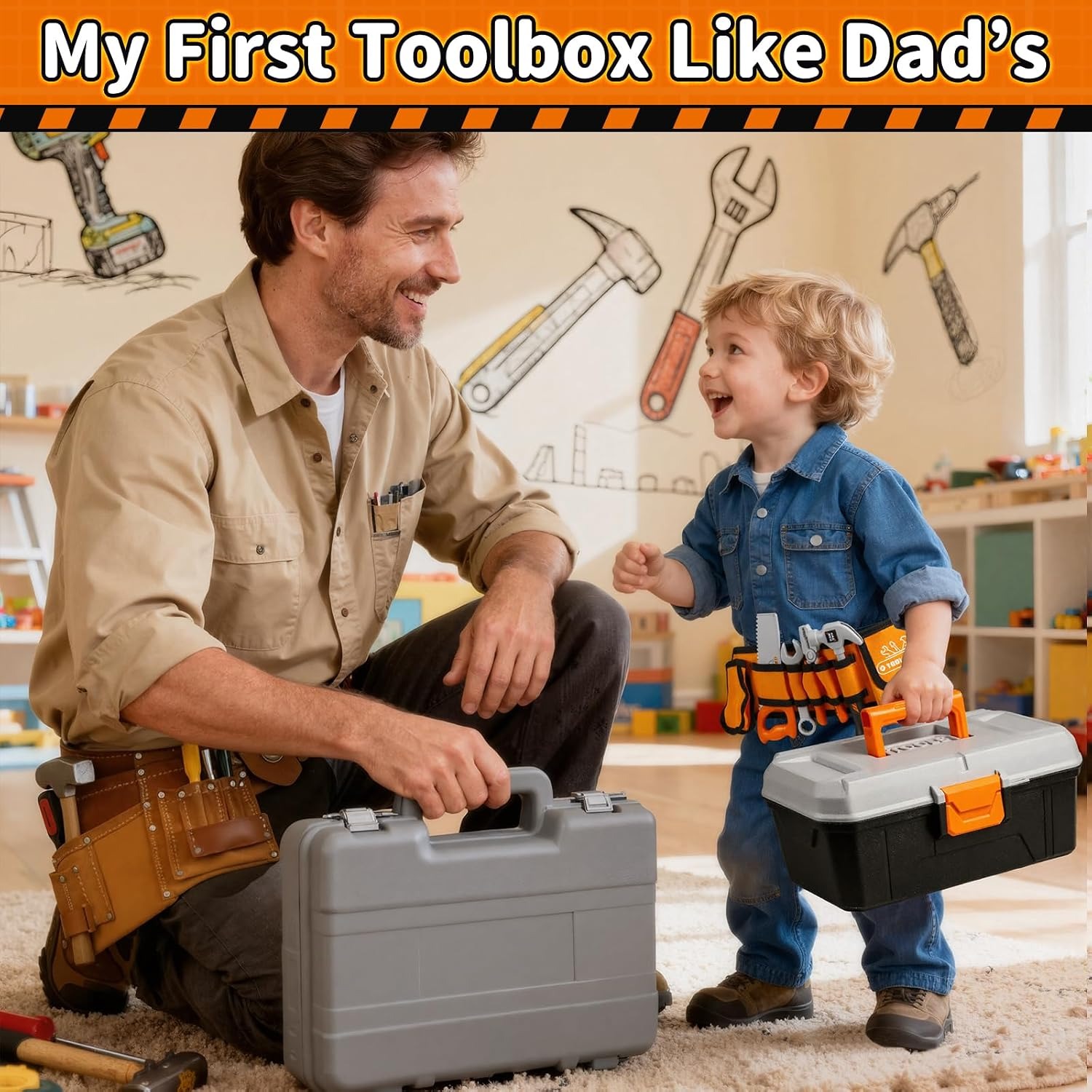
The toy that solves the "I want to help" problem
Every parent knows the moment. You are fixing a cupboard door or putting together a flat-pack shelf, and a small person appears at your elbow asking to help. You hand them something harmless to hold. Thirty seconds later they want the screwdriver, and now you are negotiating with a four year old over a sharp object.
A kids tool set exists for exactly this. It gives a child their own version of the job so they can work next to you instead of reaching for your tools. The good ones do more than look the part. They give kids something they can actually fasten, tighten and take apart again.
That is the main thing to look for. A plastic hammer on its own is a prop. A hammer plus screws, nuts, strips that bolt together and a drill that spins is a project.
How this set works
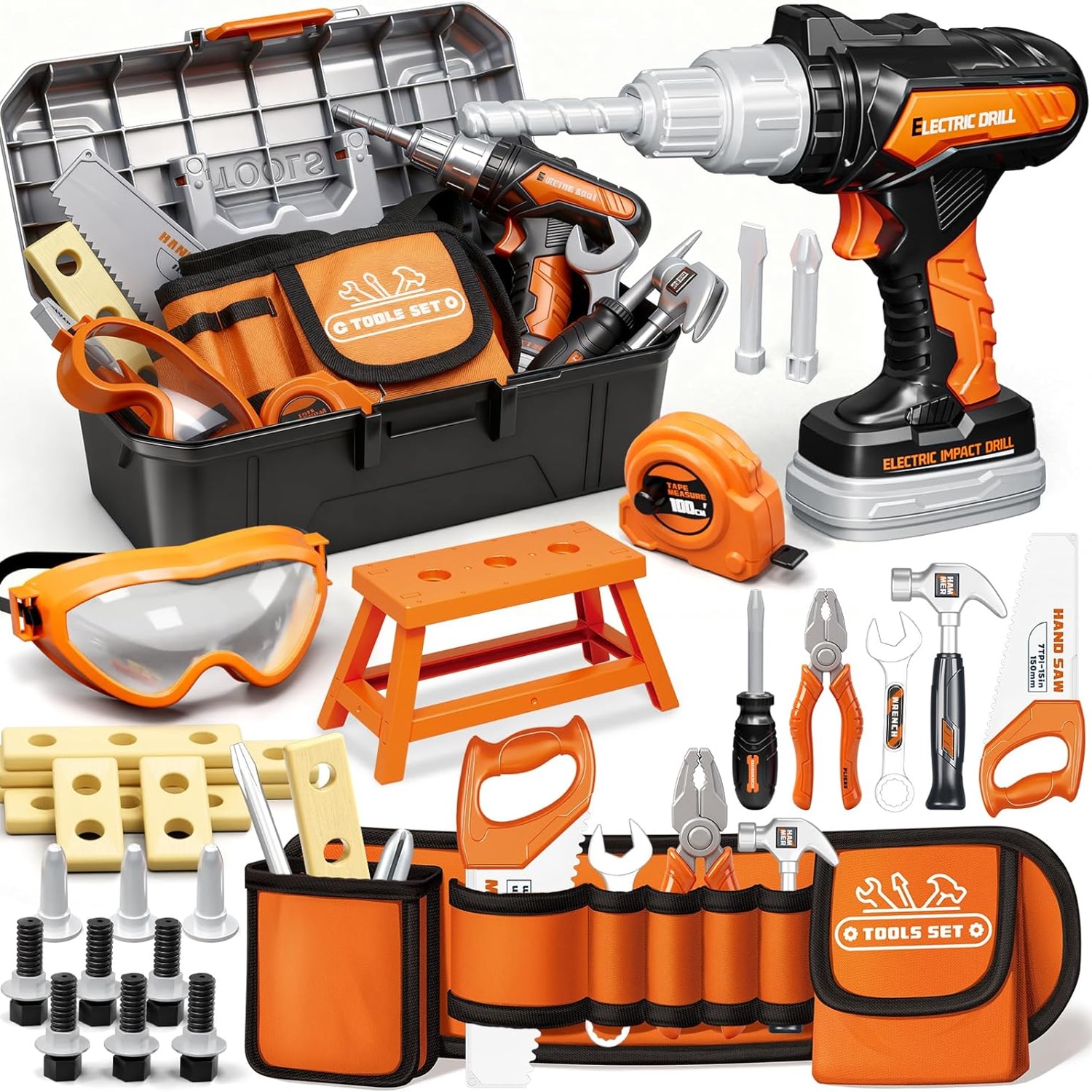
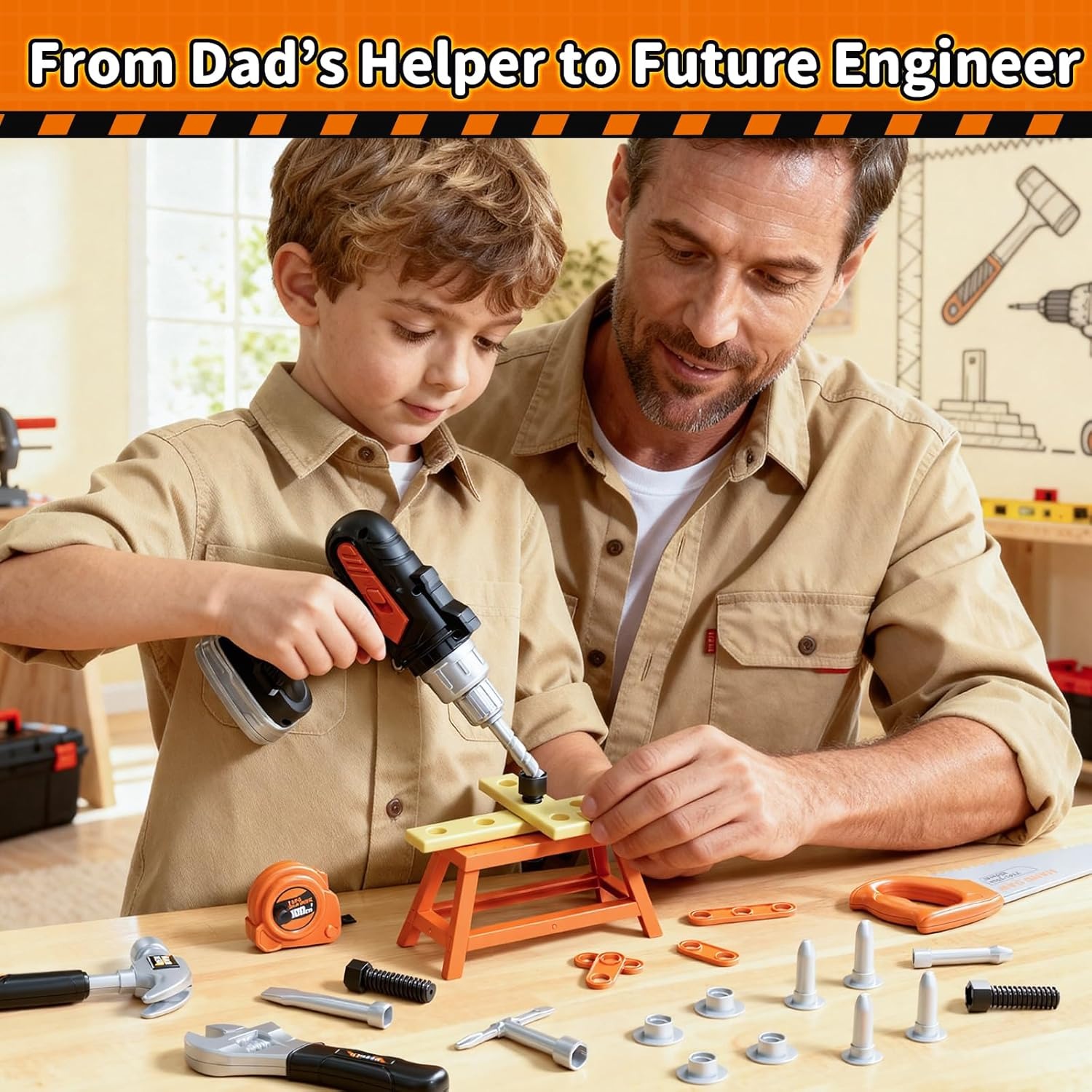
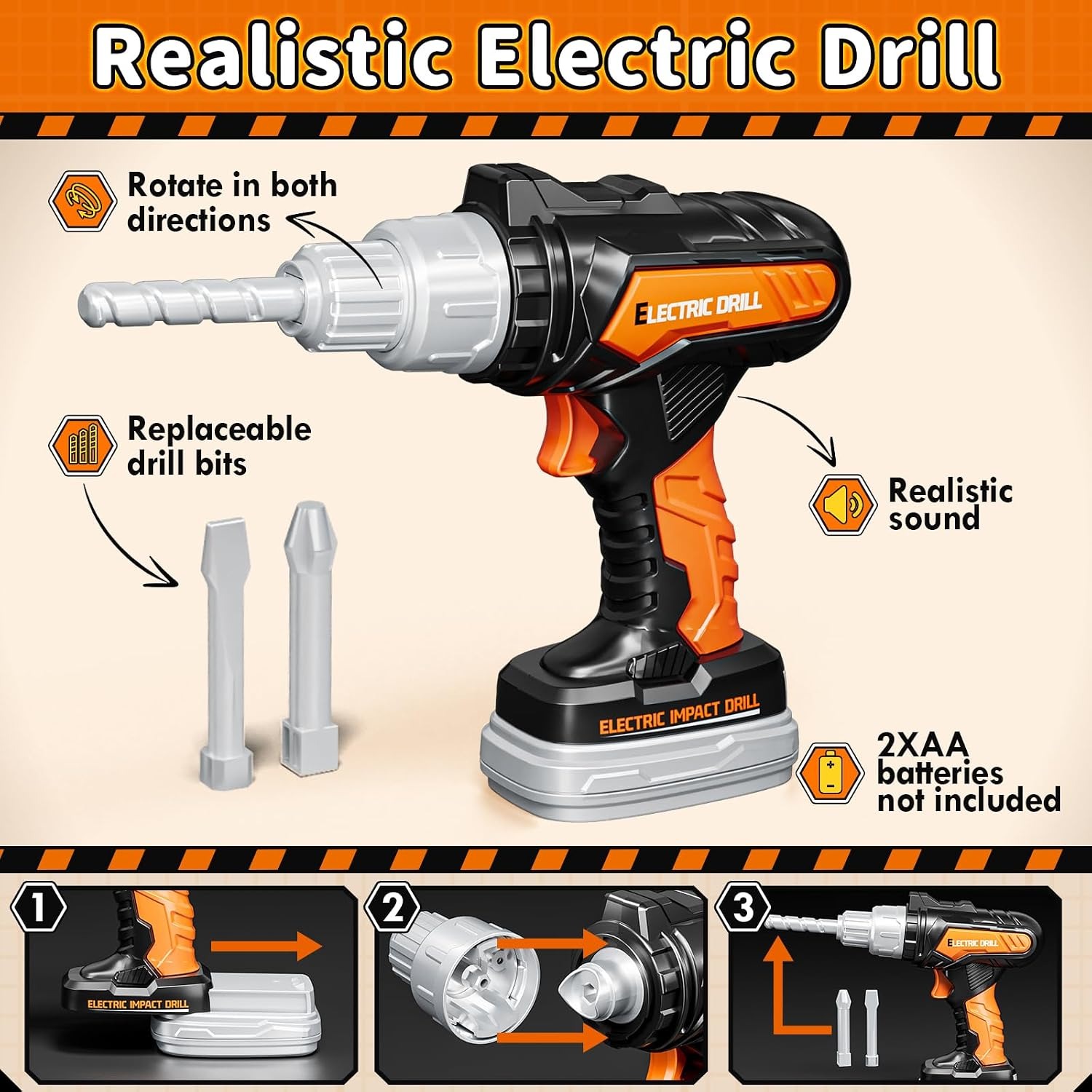
The heart of it is the toy drill. Two AA batteries (not supplied) power a motor that turns the bit when the trigger is pressed. Children line the bit up with a screw in one of the plastic strips and drive it in. It is slow and it is a toy, but the action is real enough that kids treat it seriously.
Around the drill sit the manual tools. A hand saw, a hammer, a wrench, pliers, a screwdriver, a tape measure and a pair of protective goggles. These cover the roles a child recognises from watching an adult work. The goggles in particular are a favourite, because putting on safety gear is half the fun of a job.
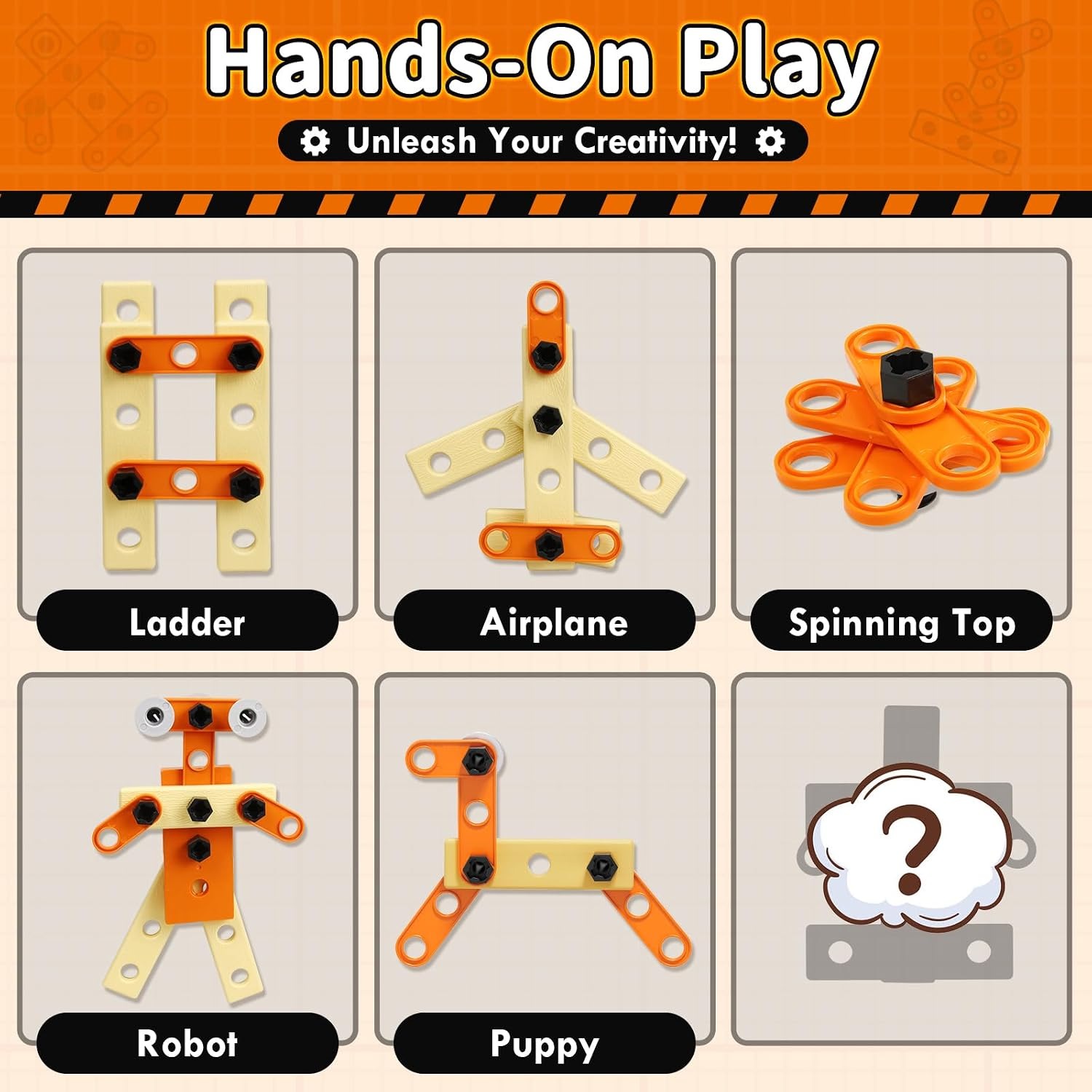
The building parts are six plastic strips and six accessory hole strips, plus six screws, six nuts and three iron nails. The strips have holes along them so pieces can be joined in different arrangements. A small chair is included as a ready-made project, which gives a child a clear first goal rather than a pile of parts and no plan.
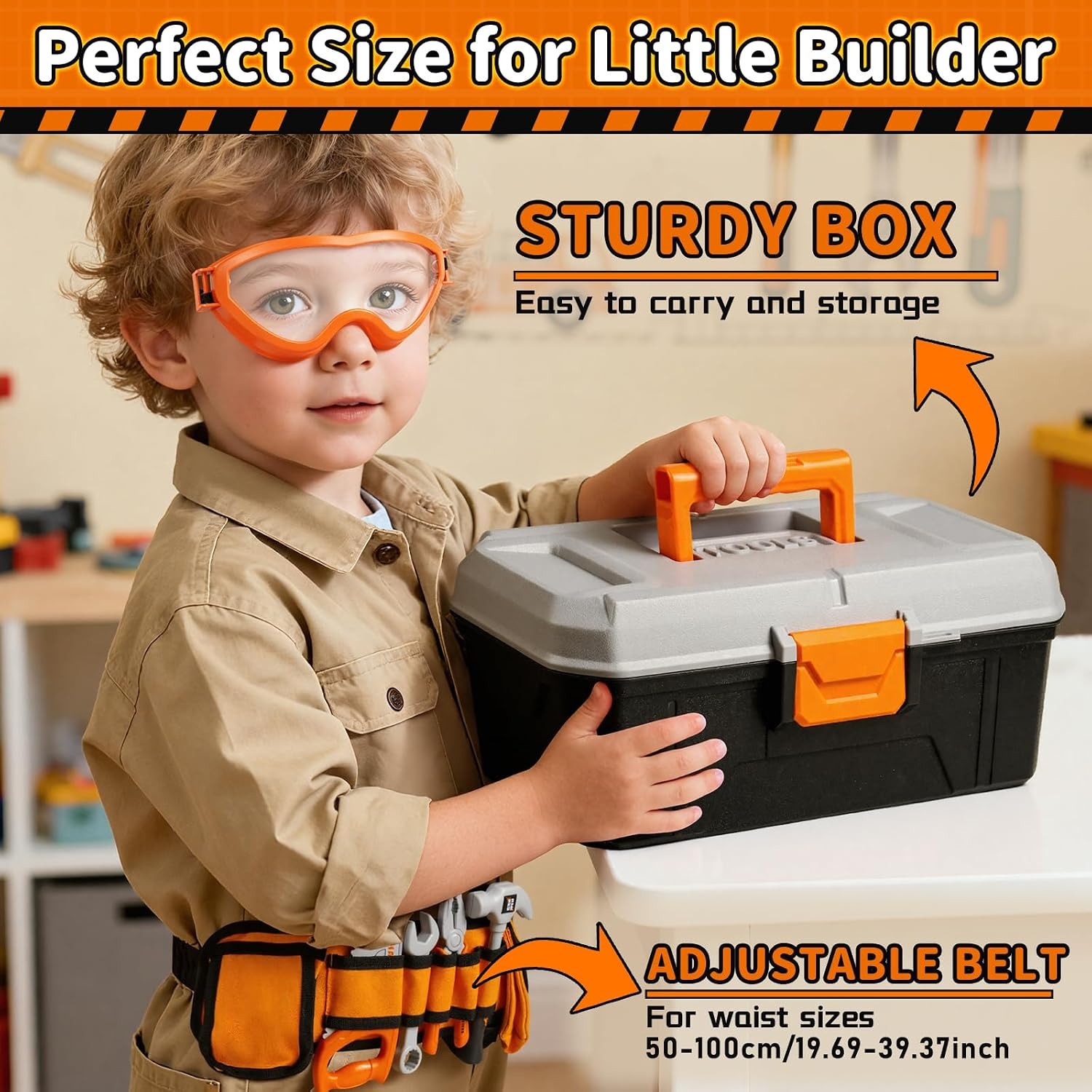
Then there is the belt. It fits waists from roughly 50 to 100 cm and holds tools while the child moves. This sounds minor until you see how much it changes play. A child with a tool belt walks differently. They patrol. They find jobs. The belt turns a box of toys into a character.
Everything stores in the tool box, which measures 30 x 15 x 12 cm and weighs 0.9 kg packed. Small enough for a child to carry, big enough to hold all fifty pieces.
Who it suits
The set is rated for three years and up, with a manufacturer recommended range of 36 months to twelve years. In practice, the heart of that range is three to seven.
A three year old will love the drill and the belt and need help with the screws. That is fine. Lining up a screw is a genuinely hard fine motor task for a child that age, and doing it with an adult holding the strip steady is exactly how the skill develops.
A five or six year old can usually work through the chair build on their own, with a bit of trial and error. This is where the set earns its keep. They get the satisfaction of finishing something, which is rarer in toys than you would think.
Older children tend to fold the tools into wider games. The kit becomes the props for a repair shop or a building site rather than the main event. Still useful, just used differently.
The set contains small parts, so it is not for children under three who still put things in their mouths. Keep it on a shelf if there is a younger sibling in the house, and bring it down for supervised sessions.
What to look at before you buy
Piece count versus usable pieces. Big numbers on a box are easy to inflate with identical bits. Here the fifty is made up of distinct tools, fasteners and strips, so most pieces do a different job. Check the included components list rather than the headline number on any set you compare.
Whether the fasteners work together. A tool kit where the screws do not fit anything is just a costume. Look for sets where the screws, nuts and strips are a matched system, as they are here.
Storage. This matters more than people expect. A set without a case ends up scattered within a week, and a scattered set stops getting played with. The tool box here is part of the toy as well as the storage, which helps, because packing up becomes part of the game.
Belt fit. A belt that is too big slides down and gets abandoned. The adjustable range here covers a wide span, so it should work from preschool into early primary.
Battery needs. Only the drill needs power, and it takes two AA batteries that you supply. Grab a pack at the same time if this is a gift, because handing a child a drill that does not spin on Christmas morning is a small tragedy.
Getting the most out of it
Start with the chair build. Having one clear project gives a child a reason to use each tool in turn, and the instruction manual walks through the steps.
After that, open it up. Cardboard boxes are the best partner for a construction play set. A child with a tool belt and an empty box will invent jobs for an hour. Old appliance boxes, egg cartons and offcuts of thick card all work.
Set up a job list. Some parents write three "repairs" on a sheet of paper in the morning: the wobbly chair leg, the squeaky door, the broken spaceship. The child works through them with their own tools while you get on with something. It buys time and it feels like real work to them.
Build alongside them when you can. The set is designed for shared play, and a grandparent sitting on the floor turning a wrench is often the part a child remembers longer than the toy itself.
Looking after it
Wipe the tools, belt and case with a damp cloth and a little mild soap, then dry them off. Nothing goes in the dishwasher, the washing machine or the microwave. Heat warps plastic and ruins the fit of the fasteners.
Take the batteries out of the drill if it is going into storage for a while. Leaking batteries are the most common way a toy like this dies.
Check the pieces every so often for cracks or rough edges, especially after a set has been through a few children. Retire anything that has split.
Make packing up part of the routine. If the fifty pieces always go back in the box, the set stays complete, and a complete set keeps getting played with. A half-lost set does not.
The short version
This is a pretend play construction kit built around a drill that actually spins. Fifty pieces, a wearable belt, a carry case and enough screws, nuts and strips that a child can build something rather than only mime it. Made from plastic with rounded edges, rated from three years, 0.9 kg packed into a 30 x 15 x 12 cm box.
If you have a child who follows you around during household jobs, this gives them their own version of the work. Add two AA batteries and you are set.