
The complete guide
Choosing a Kids Tool Box with Vest - A Buyer's Guide
The problem with most toy tool sets
Walk into any toy aisle and you will find a dozen plastic hammers. Most of them end up in the bottom of a toy box within a fortnight. It is not that children dislike tools. It is that a single hammer does not give them anything to do.
Pretend play needs three things to actually take hold. The child needs props, a role, and somewhere for the game to go. A lone hammer gives you one prop and nothing else. That is why it stops being interesting so quickly.
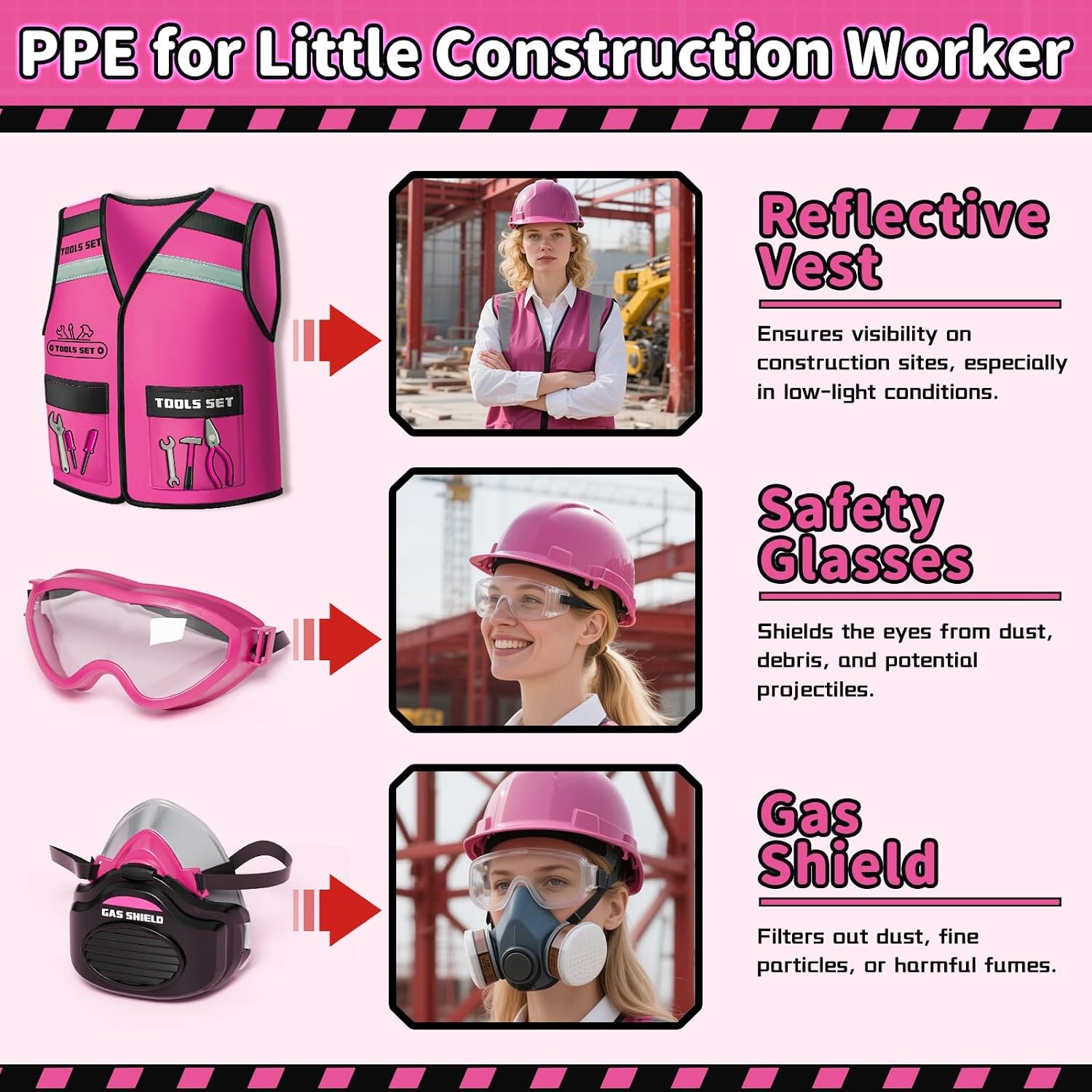
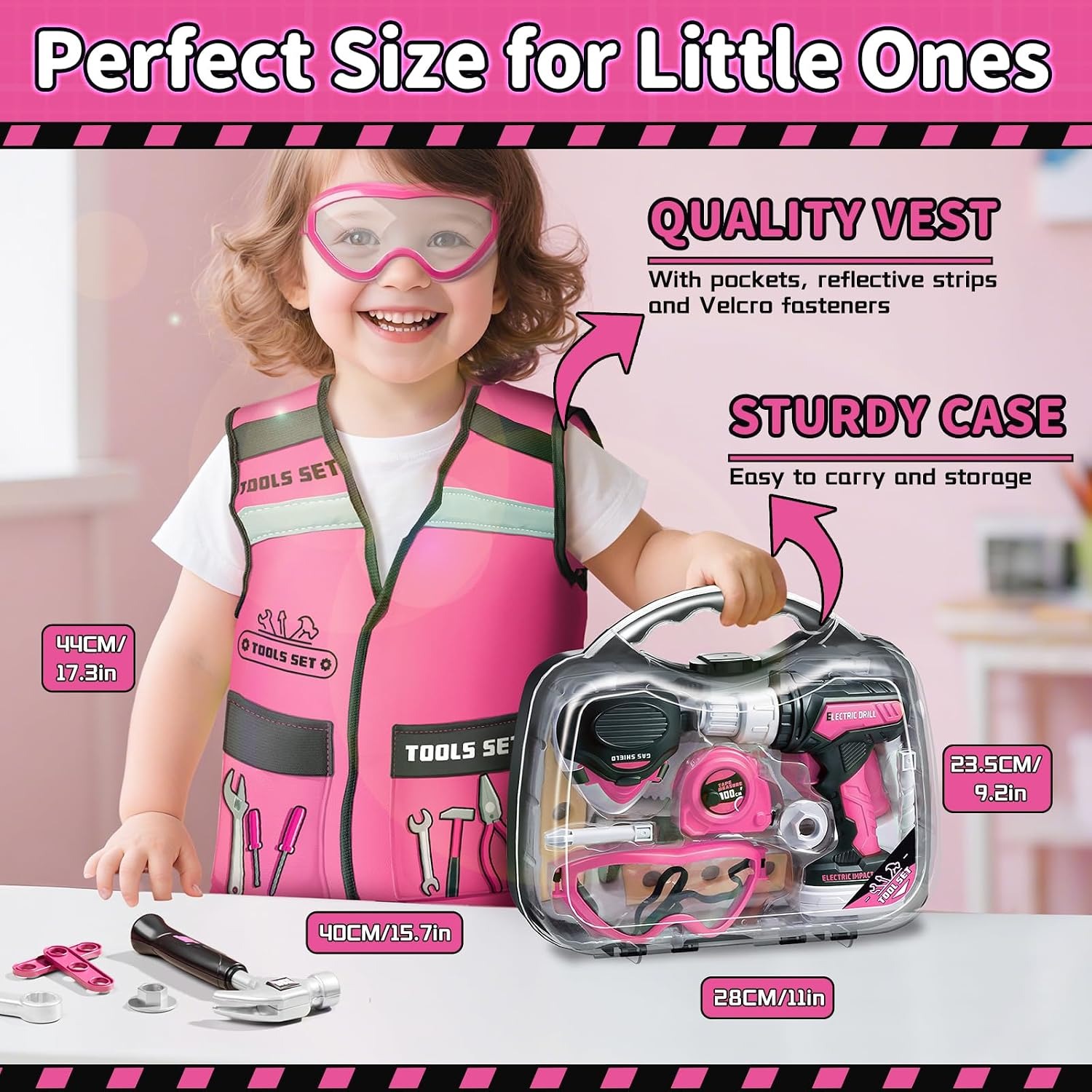
A kids tool box with vest covers all three. The tools are the props. The vest, mask and goggles give the child a role to step into. The carry case gives the game a home, which sounds minor until you watch how differently children treat a toy that has an obvious place to live.
How this set works in practice
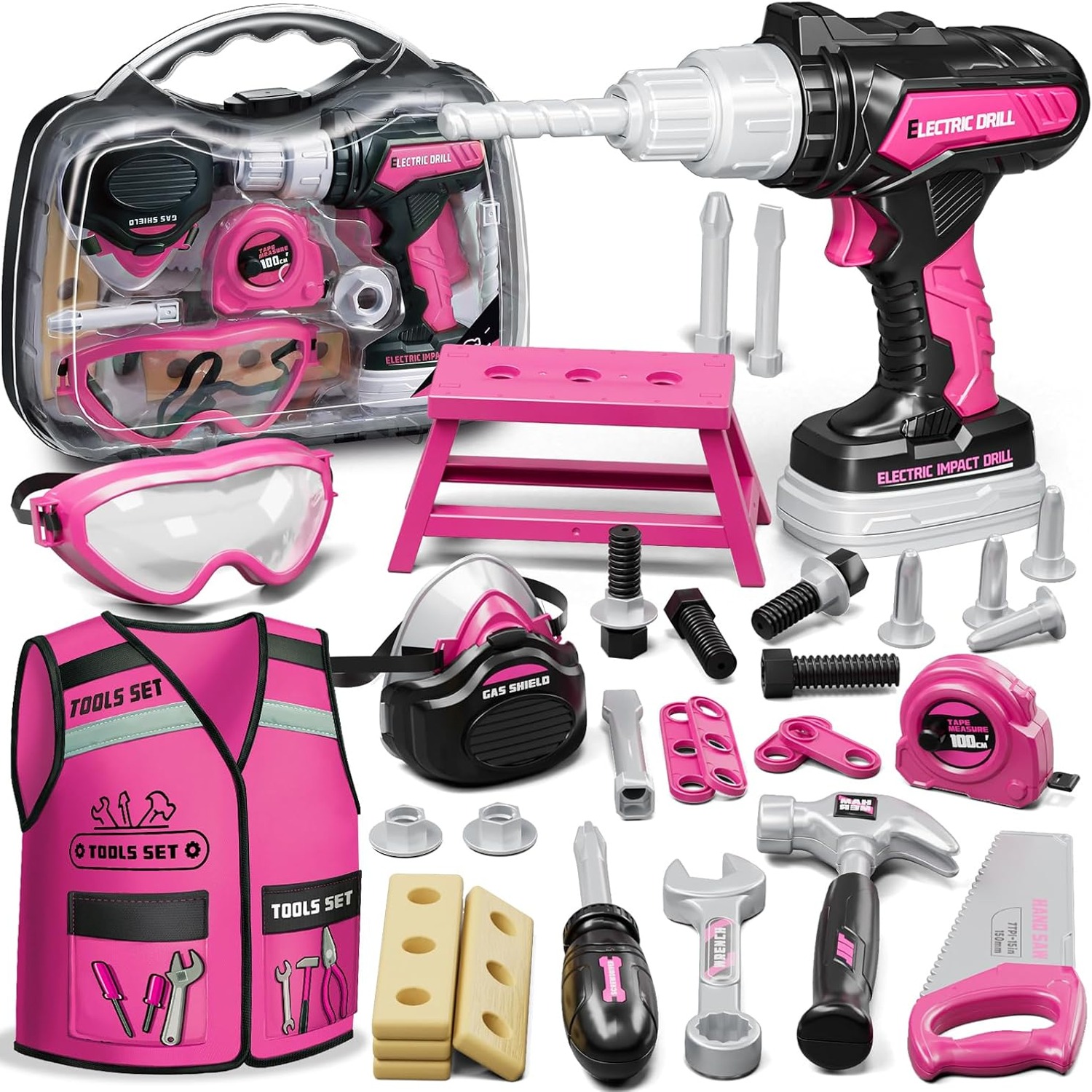
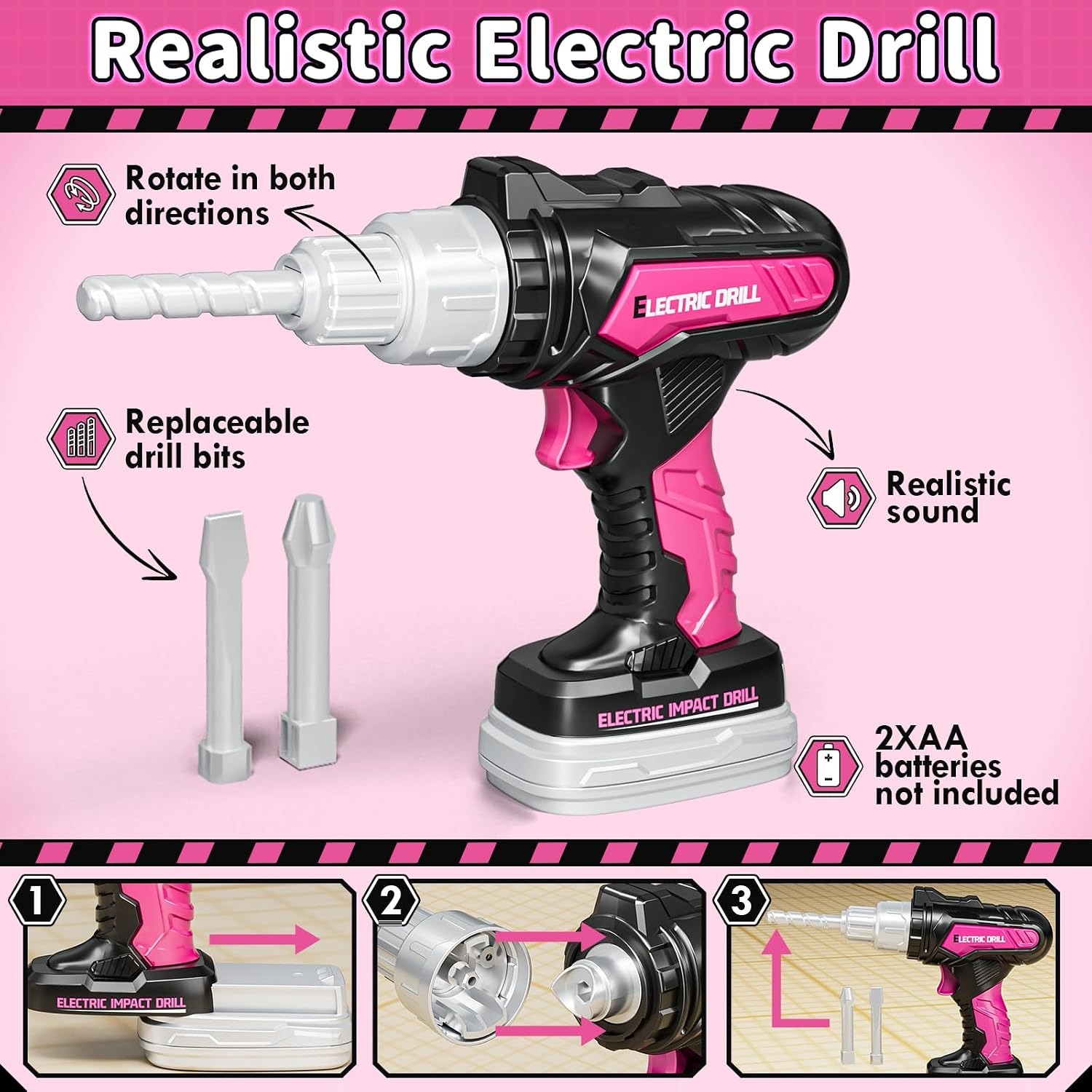
The KidBloom set has 16 pieces built around a construction theme. There is a drill with a bit, plus the hand tools you would expect in a children's tool kit toy. All of it packs into a case measuring 27.5 x 8.5 x 23.5 cm, and the whole thing weighs 400 g.
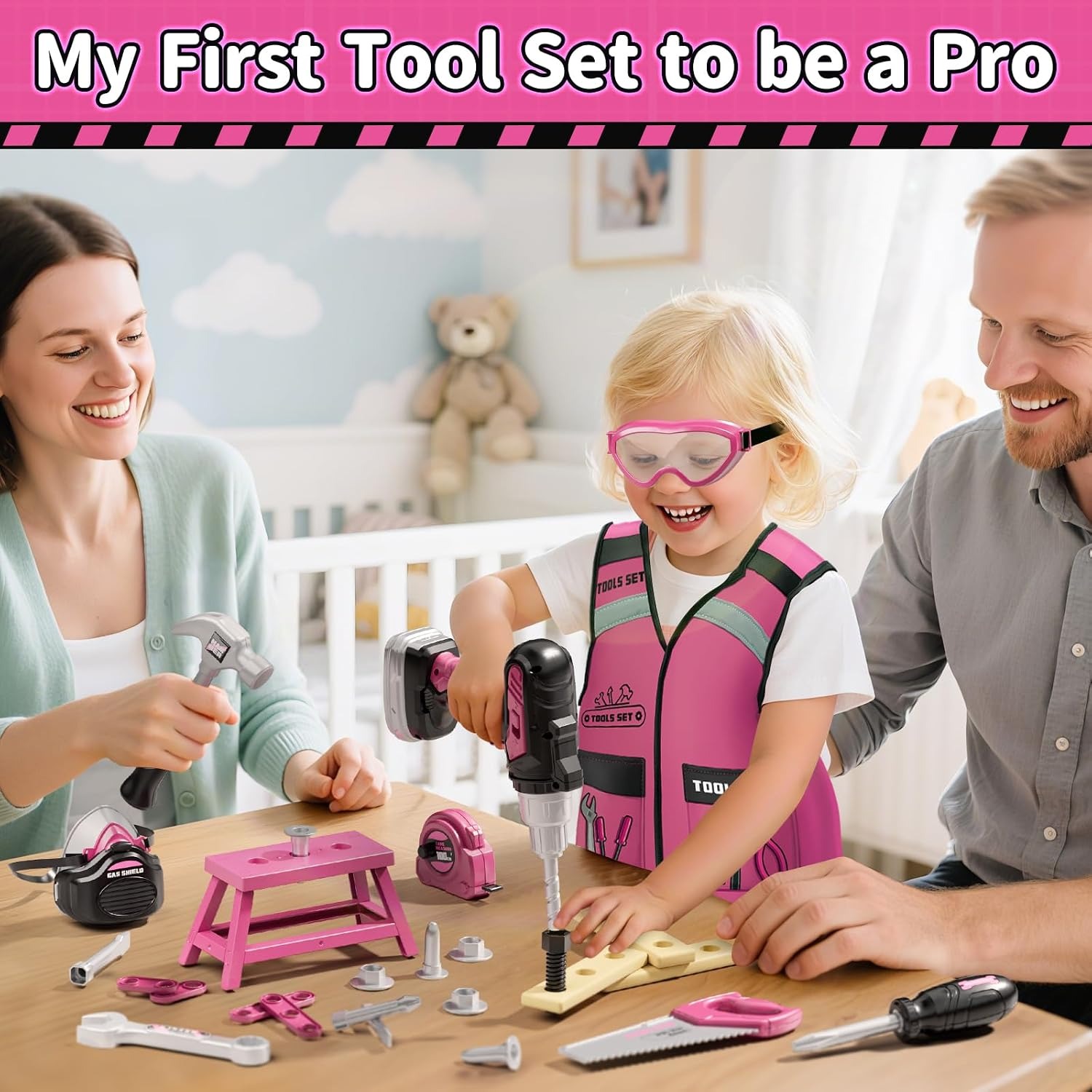
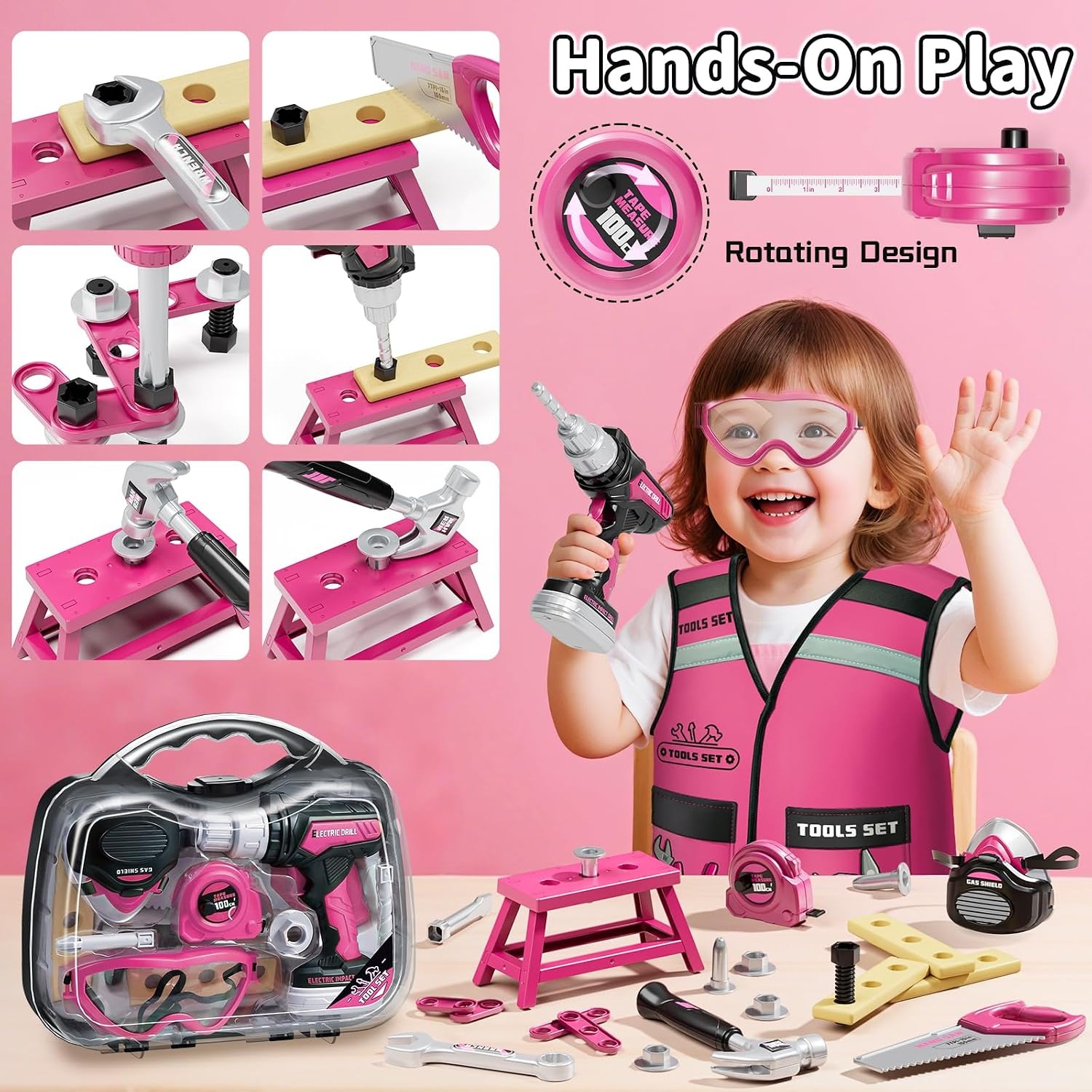
The dress-up part is the piece that surprises most parents. You hand a child a toy drill and they poke at it for five minutes. You hand them a vest, goggles and a face mask first, and something shifts. They are not holding a toy anymore, they are a person with a job. The talking starts. The pretend problems appear. A chair leg needs fixing, the wall needs a hole, it will take about ten minutes and could you please move out of the way.
That is the whole mechanism. Costume changes behaviour. Anyone who has watched a child put on a cape knows this already.
What children actually learn
The manufacturer lists hand-eye coordination as the educational focus, and that is honest rather than overblown. Fitting a bit into a drill takes two hands doing different jobs at the same time. Lining up a screw head takes aim. Holding one object steady while the other hand works takes a kind of control that small children are still building.
None of this feels like learning. That is the useful part. A child doing twenty repetitions of a fiddly fitting task because they are pretending to fix a bookshelf will out-practise a child doing five repetitions because an adult asked them to.
There is a language side too. Role play drives talking. A child in a vest narrates what they are doing, invents problems, asks you for help, explains the plan. Solitary toys rarely produce that volume of speech.
Who this suits
The listed age is 3 years and up, with a manufacturer recommended range of 36 months to 12 years. In reality the sweet spot sits somewhere around three to seven. That is the age where pretend play runs hottest and where a toy drill still carries real excitement.
It suits a child who already copies what adults do. If you have one who follows you around while you assemble furniture, or who wants to hold the screwdriver, this is a straightforward win. It also suits households where the adult wants to join in. A toy tool set for girls or boys that invites a parent to sit on the floor and be handed instructions is worth more than one that occupies a child alone.
It does not suit under-threes. Small parts are the reason, and that line is not flexible. If you are shopping for a two year old, look for chunky single-piece toys with no detachable components.
How to choose between tool sets
A few things separate a set that lasts from one that does not.
Does it include storage? This is the biggest predictor. A set with a case stays together. A set in a cardboard box becomes loose pieces under the couch within a month. The carry case here is part of the product, not packaging.
Does it include the costume? Tools without a vest and goggles are just objects. The dress-up gear is what gives a child permission to become someone else, and that is where the longer play sessions come from.
Is the piece count sensible? Sixteen is a good number. Enough variety to keep a job interesting, few enough that a three year old can pack them all away without losing heart.
Are the edges rounded? These are moulded plastic with rounded edges, which matters when a small person is swinging a wrench near your shins.
Does it fit your storage? At 8.5 cm deep the case slides onto a normal shelf. Bulky plastic workbenches look great in photos and then dominate a lounge room for three years.
Looking after it
Care is simple. Wipe the tools with a damp cloth and a little mild soap, then dry them properly before they go back in the case. Do not soak them and do not put them through a dishwasher, since hot water and plastic toys are not friends.
The vest should be hand washed in cool water and dried flat. Heat can warp or shrink dress-up fabrics, so skip the tumble dryer.
Every month or so, give the pieces a quick look for cracks. Plastic that has been dropped on tile repeatedly can split, and a cracked edge is worth retiring rather than repairing.
The one habit worth building is the pack-up. Count the pieces back into the case at the end of play. If you make it part of the game, the end of the shift, the tools go away, children take to it far better than if you treat it as a chore you impose afterwards.
Making it last longer
A couple of small tricks stretch the life of any pretend play tool kit.
Give the child real jobs to shadow. When you are tightening a cupboard handle, hand them their drill and let them work on the cupboard next to yours. The parallel play is where the best sessions happen.
Rotate it out. Put the case away for a few weeks and bring it back. Toys that disappear and return feel new again, and this works better than buying something else.
Add a context. A cardboard box with holes drawn on it becomes a wall that needs repairs. A broken-down toy car becomes a vehicle in the shop. Children supply most of the imagination, they just need a starting point.
The short version
This is a 16-piece pink construction toy set with a drill, hand tools, a vest, a face mask and goggles, packed into a 27.5 x 8.5 x 23.5 cm carry case weighing 400 g. It is made for ages three and up.
The reason it holds attention better than a loose bag of plastic tools is the combination of costume plus storage. The costume starts the game. The case keeps the game available. Everything else follows from those two things.
If you have a three to seven year old who likes copying what grown-ups do with their hands, this lands well. If you are buying for a child under three, pick something chunkier with no small parts instead.