
Toy Warehouse
Company
Shop By Category
T&Cs
Shop Online
  • Box contents listed
  • Free tracked NZ-wide delivery over $175
  • 14-day returns

Kids Wooden Tool Set | Wooden toy tool kit | Pretend play tool box

Kids Wooden Tool Set with Carry Toolbox

$98.99 $118.99 Save $20
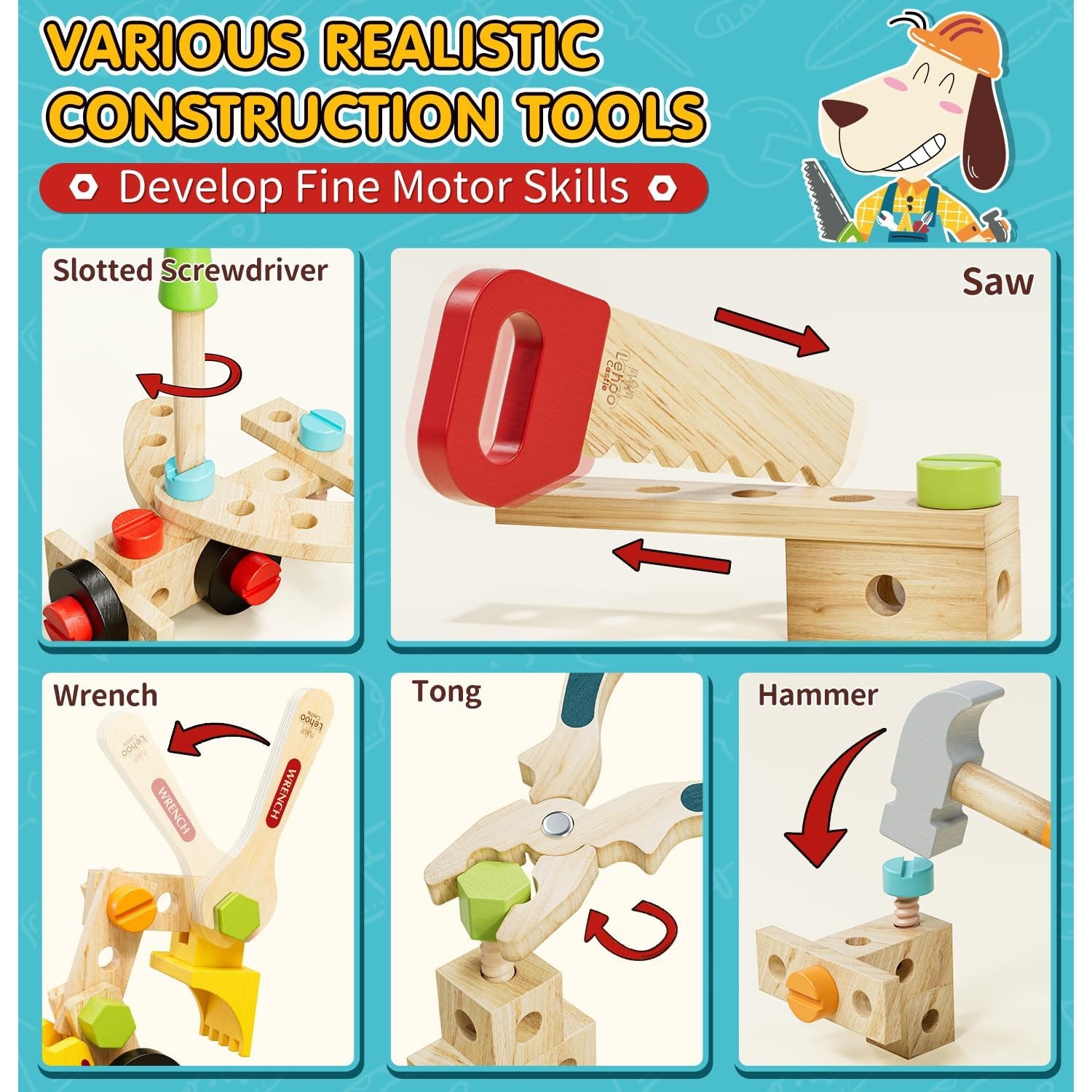
  • Real Tool Actions
  • Carry Toolbox
  • Skill Building
  • No Batteries

Price: $98.99 $118.99

  • Free tracked NZ-wide delivery on orders $175+, otherwise a flat $20
  • Pay by card or PayPal, handled by the payment provider
  • 14 days to change your mind, plus your statutory rights
Product specifications
BrandLehoo Castle
Set NameCastle Kids Wooden Tool Set
Model NumberTT-004
MaterialWood
ColourPrimary colours
ThemeTools
Age Range36 months to 6 years
Age DescriptionPreschooler
SizeChild-size
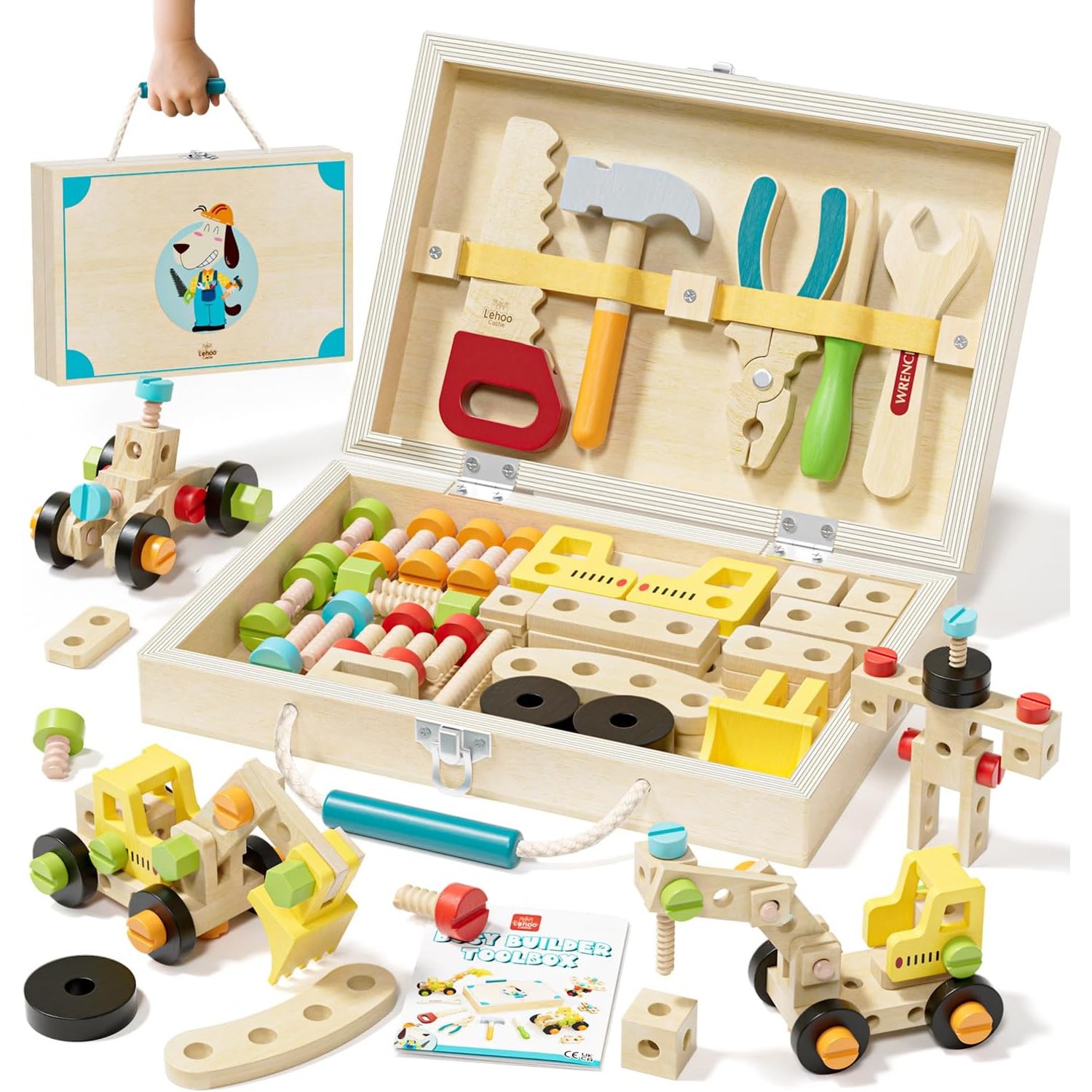
Included ComponentsWooden tools
Number Of Players1
Educational ObjectivesFine motor skills, problem solving, STEM, imagination, social skills
Power SourceManual
BatteriesNo batteries required
Assembly RequiredNo
Packs1
Item Weight680 g
Item Dimensions28.5 x 21 x 5.8 cm
Manufacturershantoushi lebokeji youxiangongsi
Weight680 g
Shipping & returns

Tracked delivery anywhere in New Zealand. It is free on orders of $175 or more, and a flat $20 below that.

If it is not right for you, send it back within 14 days of delivery in resaleable condition and we refund the price you paid, including standard delivery. That is a voluntary policy we offer on top of your legal rights. You cover the cost of returning it unless the item is faulty.

If it arrives faulty, damaged or not as described, we put it right at no cost to you under the Consumer Guarantees Act 1993 and the Fair Trading Act 1986, return postage included.

Shipping details · Refunds and returns

Real Tool ActionsHammering, twisting and sawing motions that small hands can actually do.
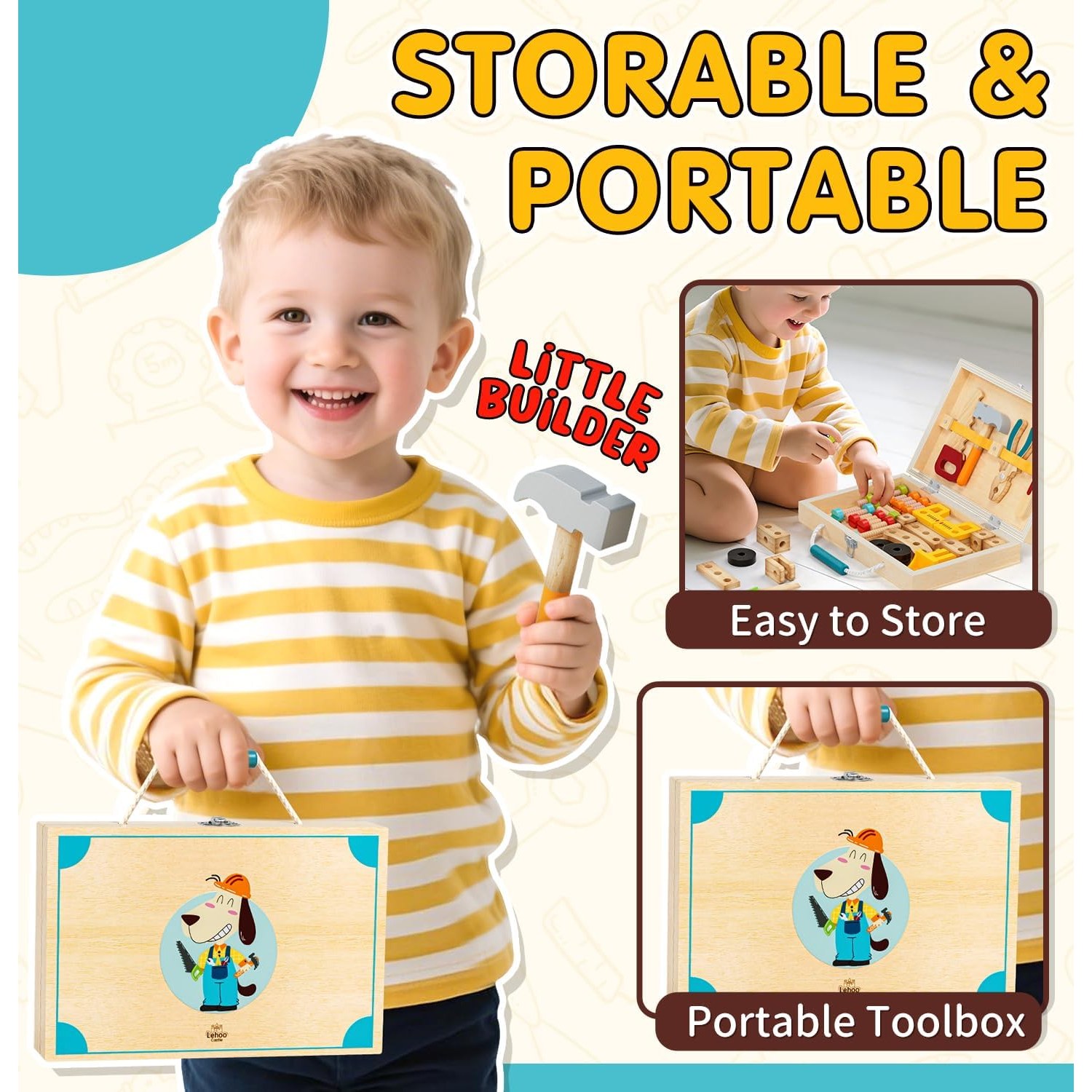
Carry ToolboxEvery piece packs back into one wooden box with a handle.
Skill BuildingWorks on fine motor control, problem solving and early STEM thinking.
No BatteriesManual play only, so it never beeps, flashes or runs flat.

A kids wooden tool set that turns the lounge-room floor into a workshop where little hands build, fix and figure things out.

Hammer, screwdriver, saw and more in a wooden carry box, built for small hands aged three and up, with no batteries and nothing to assemble.

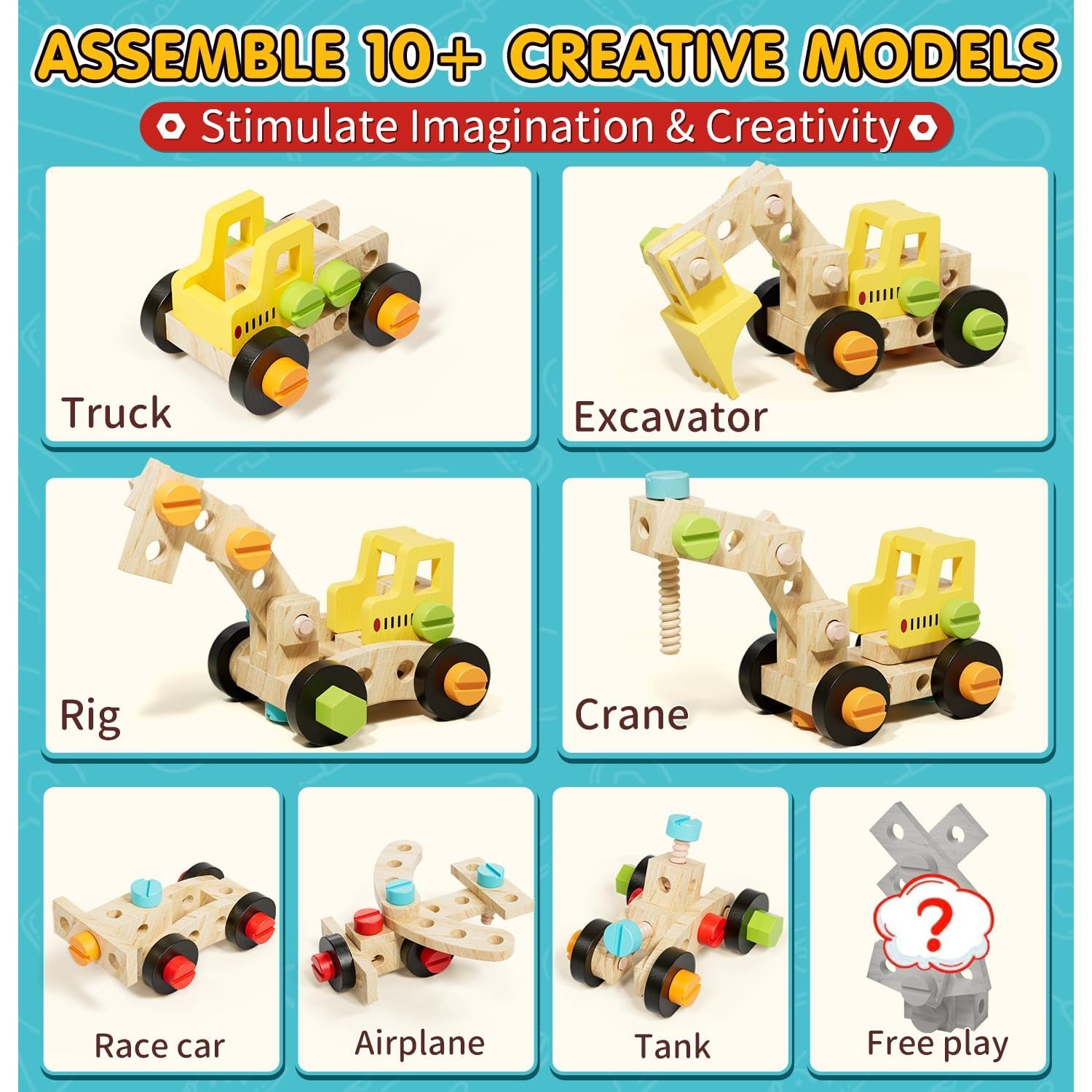
A wooden tool kit built for pretend play, with child-size tools and parts that fit together in more than one way.

The included wooden toolbox holds the whole set and has a handle, so it travels to Grandma's house or the park without pieces going missing.

Twisting bolts, lining up pieces and tapping with the hammer all build fine motor control and patience.

Recommended by the manufacturer for ages 36 months to 6 years, with no assembly needed out of the box.

Completely manual play with no batteries required, which means quiet building and nothing to charge.

Kids Wooden Tool Set with Carry Toolbox

Most preschoolers go through a stage where they want the real thing. The screwdriver in the kitchen drawer, the hammer on the shelf, the cordless drill that makes the interesting noise. This kids wooden tool set gives them a safe version of that, sized for hands that are still learning how to grip, aim and turn. The tools are wooden, the actions are manual, and the whole thing is built to take the kind of enthusiastic tapping that a three year old brings to a job.

Kids Wooden Tool Set with Carry Toolbox

The set arrives with its own wooden toolbox. That sounds like a small thing, but anyone who has lost half a toy set under the couch knows it is not. The box has a carry handle, which means the whole kit becomes portable. It goes in the car, into a hotel room, over to a cousin's place. It also gives the pack-up a clear finish line, because a box with a lid is much easier for a small child to understand than a vague instruction to tidy up.

Kids Wooden Tool Set with Carry Toolbox

Underneath the play there is a fair bit of learning going on. Lining a bolt up with a hole takes hand-eye coordination. Turning a screwdriver takes wrist rotation, which is the same movement needed later for door handles, taps and eventually handwriting. Deciding which piece goes where is early problem solving. The manufacturer lists fine motor skills, problem solving, STEM, imagination development and social skills as the educational aims, and all of those show up naturally once a child starts building rather than just banging.

Kids Wooden Tool Set with Carry Toolbox

Everything is manual. There are no batteries, no speakers and no lights, so the noise level is whatever the child brings. That matters more than people expect. Battery toys tend to lead the play, prompting and rewarding on their own schedule. A quiet wooden set waits for the child to decide what is being built, which is where the longer and more inventive play sessions come from.

Kids Wooden Tool Set with Carry Toolbox

The listed age range is 36 months to 6 years, and the size reflects that. Child-size tools, a box that one small person can carry, and no assembly needed before the first play. Out of the carton, into the hands, straight to work. It makes an easy birthday or Christmas present for a kid who already follows a parent around the house asking what every tool does.

Not sure yet? That is fine.

A toy has to suit the child it is for, and you cannot always judge that from a photograph. If it is not right for you, send it back within 14 days of delivery in resaleable condition and we refund the price you paid, including standard delivery. That is a voluntary policy we offer on top of your legal rights.

If it turns up faulty, damaged or not as described, that is on us. The Consumer Guarantees Act 1993 and the Fair Trading Act 1986 covers you, and we pay the return postage. Read the full detail on our refunds and returns page, or ask us anything before you order.

Frequently Asked Questions

What exactly is in this kids wooden tool set?

The set is listed as including wooden tools packed in a wooden toolbox. The maker description lists a hammer, screwdriver and saw among the components, along with additional parts for building. The exact piece count is not specified by the maker.

What age is this tool set made for?

The manufacturer recommends it for ages 36 months to 6 years, and the age range description is preschooler. That lines up with the child-size tool handles and the weight of the box. Younger children should always be supervised.

Does it need batteries?

No. The power source is manual and the listing states no batteries are required. Every action comes from the child, which keeps the play quiet and means nothing ever runs flat.

Is there any assembly before first use?

No assembly is required. The set comes ready to play straight out of the packaging, so you can hand it over as soon as the wrapping is off.

What is it made from?

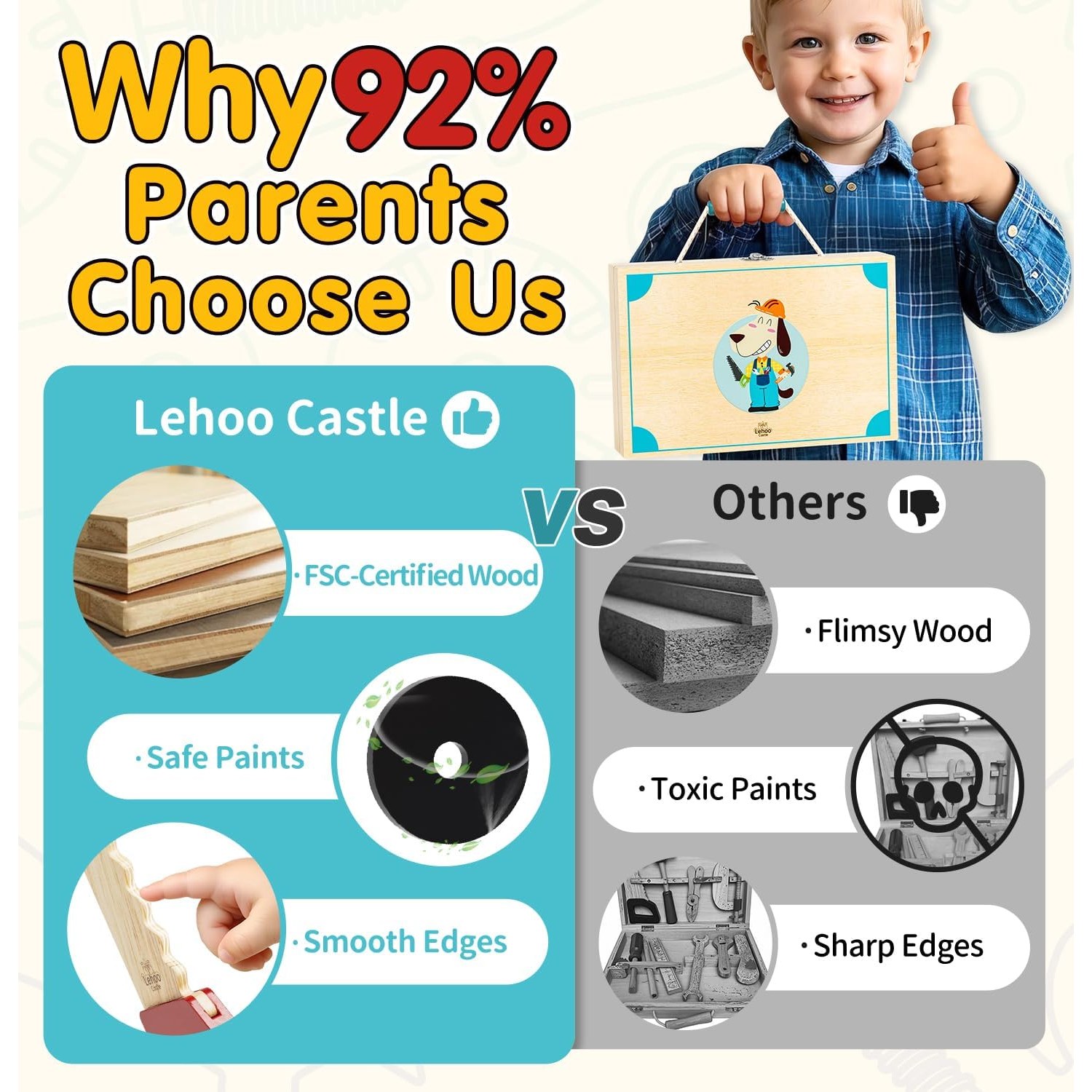
The material type is listed as wood. The maker describes sanded hardwood pieces with non-toxic paint, though specific timber species and paint certifications are not detailed in the maker's details.

How big is the toolbox?

The item dimensions are 28.5 x 21 x 5.8 cm. That is small enough for a child to carry with the handle and small enough to tuck onto a shelf or into a cupboard when playtime is over.

How heavy is the whole set?

The item weight is 680 g. Most children in the recommended age range can lift and carry it, though a full box will feel like a real job to a three year old, which is part of the appeal.

Is this a good first wooden tool bench toy?

It is a tool kit in a box rather than a standing bench, so it works well as a first step. Children can build on the floor, a coffee table or a rug, and the box keeps everything together between sessions.

Will it suit both girls and boys?

Yes. Nothing about building, fixing or problem solving is gendered, and the primary colour scheme is not aimed at one group. It is simply a good role play toy for any child curious about tools.

What skills does it actually help with?

The educational objectives listed are fine motor skills, problem solving, STEM, imagination development and social skills. In practice that means gripping, twisting, aiming, planning and talking through what is being built.

Is this a Montessori style toy?

It fits many Montessori principles, since it is wooden, manual and mirrors a real adult activity in child-size form. The maker describes it as Montessori approved. Formal certification is not confirmed by the maker.

Can two children play with it together?

The listing says one player, which reflects the number of tool kits in the box. In reality two children often share, with one holding and one turning, and that sharing is part of the social skill side of the play.

How do I clean the wooden pieces?

Wipe them with a slightly damp cloth and dry them straight away. Do not soak the pieces, run them under a tap or put them in a dishwasher, since water sitting on timber can lift paint and swell joints.

Where should I store it?

Put everything back in the wooden toolbox and keep it somewhere dry and out of direct sun. A cupboard, toy shelf or under a bed all work. Avoid damp garages and bathrooms.

Will the pieces fit back in the box easily?

Yes, the box is designed to hold the full set. Packing up becomes part of the game, and a defined container is one of the best ways to teach a small child to finish a job.

Is it safe for a child who still mouths toys?

The recommended minimum age is 36 months, which usually puts it past the mouthing stage. Children who still put things in their mouths, and any younger siblings in the room, need close supervision around small parts.

Can a three year old use it without help?

Most three year olds can hammer and line pieces up on their own but will want help with tighter bolts at first. Sitting with them for the first few sessions makes a big difference, then they usually take over.

Is it louder than a plastic tool toy?

Wood on wood makes a duller, softer sound than hard plastic or an electronic toy with a speaker. There is still tapping, but there are no sirens, songs or drill noises on repeat.

Does it work as a travel toy?

It does. The carry handle and closed box make it one of the better travel toys for kids, since the pieces stay contained in a car boot or a bag rather than scattering.

How does it compare to a plastic tool set?

Timber tends to hold up better to real force and feels more substantial in the hand. The maker notes the wood is sanded smooth and not easily broken during forceful play, which is a common weak point in lighter plastic sets.

Can the tools damage furniture or walls?

A wooden hammer swung hard can mark soft surfaces, so set a rule about where the tools get used. A rug, playmat or outdoor table is a good building zone.

What makes it a good birthday gift for a 4 year old?

It is open-ended, needs no setup and arrives in its own box, so it presents well without extra wrapping. Four is right in the middle of the recommended range, when pretend play really takes off.

Is it suitable as a Christmas present?

Yes. It is a self-contained gift that works straight away on the day, with nothing to charge and no batteries to hunt for in a drawer on Christmas morning.

Does it encourage imaginative play or just building?

Both. Children copy what they see adults do, so the set often becomes a repair shop, a building site or a job list around the house. The tools are the prop, the story is theirs.

How long will a child stay interested in it?

Interest usually runs from around three through to school age, which matches the listed range to 6 years. The play changes over that time, from simple hammering to building specific things and inventing jobs.

Are there any small parts to watch out for?

Any set with bolts and fasteners will include smaller components. Keep the box away from children under 3, and do a quick count at pack-up time so nothing is left on the floor.

Can I buy replacement pieces?

Spare parts are not listed as a separate item in the maker's details. Keeping everything in the toolbox after each session is the simplest way to avoid needing them.

How is it delivered?

It ships in its retail packaging to the address you enter at checkout. Delivery timing depends on your country and is shown during checkout and in your confirmation email.

What if the box arrives damaged?

Contact us with your order number and a photo of the damage as soon as you can. We will sort out a replacement or a refund so you are not left with a gift that cannot be given.

What if it is not right for my child once it arrives?

If the set is not a fit, get in touch within the returns window with your order number and tell us what the issue is. Unused items in their original packaging can be returned, and we will walk you through the steps and the options.

Choosing a Kids Wooden Tool Set, A Practical Buyer's Guide

6 min read Toy Warehouse

The stage every parent recognises

There is a point, usually somewhere after a child's third birthday, when helping becomes the main event. They want to hold the screwdriver. They want to carry the toolbox. They push a chair across the kitchen so they can see what you are doing on the bench. It is sweet and it is also slightly terrifying, because the real tools are sharp and heavy and absolutely not for them.

A wooden tool kit solves that standoff. It hands a child their own version of the job, at their own scale, with nothing that can cut or pinch badly. They get to be the one doing the work instead of watching. For a lot of kids that shift is the whole point, and it buys you the twenty quiet minutes you were trying to find.

This guide walks through what matters when you pick a set, who it suits, and how to get more than a week of use out of it.

What a wooden tool set actually does

On the surface it is pretend play. Underneath there is a steady workout for a set of skills that are tricky to teach any other way.

Turning a screwdriver uses wrist rotation. That one movement shows up again in door handles, taps, jar lids and, further down the track, the pen grip a child needs at school. Lining a bolt up with a hole takes hand-eye coordination and a bit of patience, because the first three attempts usually miss. Swinging a hammer at a specific spot teaches a child to aim and to control force, which sounds obvious until you watch a three year old learn it.

Then there is the thinking. A child with loose pieces and a few tools has to decide what they are making before they can make it. That is planning. When a piece will not fit, they have to work out why, which is problem solving in its most basic and most useful form. The manufacturer lists fine motor skills, problem solving, STEM, imagination development and social skills as the educational objectives for this set, and those are not marketing words. They are what you will actually see happening on the floor.

Social skills come in once a second child or an adult joins. One holds, one turns. One asks for the hammer, the other decides whether to hand it over. There is a lot of negotiation in a two-person building job.

Why wood over plastic

Both materials make perfectly good toys, but they behave differently.

Timber has weight to it. A wooden hammer feels like a tool in the hand rather than a hollow shell, and that weight is part of why children take the play seriously. It also tends to survive force better. Small children do not tap gently when they are excited, and lightweight plastic handles are a common failure point. The maker for this set describes sanded hardwood pieces with non-toxic paint that hold up when a child really leans into a job.

Sound is the other difference. Wood on wood is a dull knock rather than a sharp crack. Add in the fact that this set has no batteries, no speaker and no lights, and the noise level stays wherever the child puts it. Battery toys tend to drive the play with their own prompts and reward sounds. A quiet set waits, which is why children often invent more with it.

The trade-off is that timber does not love water. You cannot run it under the tap or throw it in a wash. That is a small price for something that will still be in one piece in two years.

Who this set suits

The recommended age range is 36 months to 6 years. Three is a sensible floor. By then most children are past putting everything in their mouths, their grip is strong enough to hold a tool properly, and they have the attention span to see a small build through.

Four and five are probably the sweet spot. At that age children build specific things rather than just hammering, they invent jobs around the house, and they will happily set up a repair shop on the rug for an afternoon.

Six is roughly where it starts to taper, though plenty of older kids keep using the tools as props in bigger games or hand them down to a younger sibling. If you are buying for a two year old, wait. The small fasteners are not right for that stage, and a child that age will get more out of simple stacking.

It also suits a particular kind of household. If you are trying to cut down on screen time or on toys that make noise, a manual wooden kit is an easy swap. And if you have a child who shadows you around the house asking what every tool is called, this is close to a guaranteed hit.

How to choose

A few things worth checking when you compare sets.

Storage. A set that comes with its own box is worth more than the same set loose in a bag. The toolbox here measures 28.5 x 21 x 5.8 cm, holds everything and has a handle. That handle matters. It turns the kit into something a child can carry themselves, and it makes pack-up a clear task with an obvious end point. Loose pieces in a toy bin become lost pieces within a month.

Weight. The whole set comes in at 680 g. Heavy enough to feel real, light enough for a small person to lug across the lounge room.

Variety of actions. The best sets ask for more than one movement. Hammering alone gets dull. A mix of tapping, twisting and fitting keeps a child coming back, because there is always a different part of the job to try.

Open-ended build options. Pieces that can only go together one way lose their shine once the puzzle is solved. Parts that combine in several ways stretch the play out for months.

Finish quality. Run your hand over everything when it arrives. Pieces should be sanded smooth with no splinters or rough edges. Paint should be firmly on the wood, not flaking.

Getting the most out of it

Start with company. Sit on the floor for the first couple of sessions and build something simple together. Children copy before they invent, so showing them a finished thing gives them a target.

Give the play a home. A rug, a playmat or an outdoor table works well. A wooden hammer can mark a soft timber coffee table, so set the boundary early and the problem never comes up.

Give them real jobs. Ask them to tighten the leg on a toy chair or check the wobbly shelf alongside you while you work. Pretend play grows fastest when it connects to something actual happening in the house.

Pack up every time. Put the tools back in the box at the end of each session. It takes two minutes, it keeps the set complete, and it teaches a habit that will serve them well beyond toys.

Care that keeps it going

Wipe the wooden parts with a slightly damp cloth and dry them straight away. Never soak the pieces and never put anything in a dishwasher, since water sitting in the grain lifts paint and swells joints.

Store the box somewhere dry and out of direct sun. Cupboards and shelves are fine. Damp garages, bathrooms and sunny windowsills are not, because timber warps and painted surfaces fade.

Every month or so, run your hands over the pieces. Look for rough spots, loose fasteners or chipped paint. A light sand with fine paper fixes a rough edge in seconds. Catching small issues early is how a set like this lasts through more than one child.

Gifting notes

This works well as a present because it needs nothing from the recipient on the day. No assembly, no batteries, no setup. Hand it over, open the box, start building. On a Christmas morning when half the other gifts need a screwdriver and four AAs, that counts for a lot.

The wooden toolbox also presents nicely without much wrapping, which is handy if gift wrap is not your strength. For a four or five year old birthday it is a solid, generous-looking gift at a reasonable price.

The short version

A kids wooden tool set earns its place because it meets a real urge. Children want to do what adults do, and this gives them a safe, sized-down way to do it. The timber build handles enthusiastic use, the carry box keeps the set together and makes it portable, and the manual play means no batteries, no noise from a speaker and no fixed script.

Aim for ages three to six, expect to join in for the first few sessions, keep it dry, and pack it back in the box each time. Do that and one toolbox will cover a couple of years of building, fixing and inventing jobs that need doing.

Browse the shop

Ready to hand over the hammer?

Order the kids wooden tool set today and give a small builder a job of their own.

Ask us a question

Page summary

The Lehoo Castle Kids Wooden Tool Set (model TT-004) is a wooden pretend-play tool kit for children aged 36 months to 6 years. It includes child-size wooden tools stored in a wooden toolbox with a carry handle. Play is entirely manual, with no batteries required and no assembly needed. The set is made of wood in primary colours on a tools theme, and the manufacturer lists fine motor skills, problem solving, STEM, imagination development and social skills as the educational objectives. It is sold as a single pack for one player. The item weighs 680 g and measures 28.5 x 21 x 5.8 cm. UPC is 860015105547. Colour of individual pieces, country of origin and warranty are not specified by the maker.