
The complete guide
The Complete Buyer's Guide to Loom Bands Kits
The problem a loom bands kit actually solves
Ask most parents what they need on a wet Saturday and the answer is rarely "another toy". It is something that holds attention for more than nine minutes, costs nothing extra once it is open, and does not involve a screen. That is a narrow brief, and surprisingly few things hit it.
Loom banding hits it because the feedback is fast. A child loops bands, pulls a hook through, and a bracelet appears. Then they want a different colour. Then they want one for their friend. Then they want to try the pattern with four colours instead of two. The activity builds its own momentum, which is the thing a craft kit really has to do.
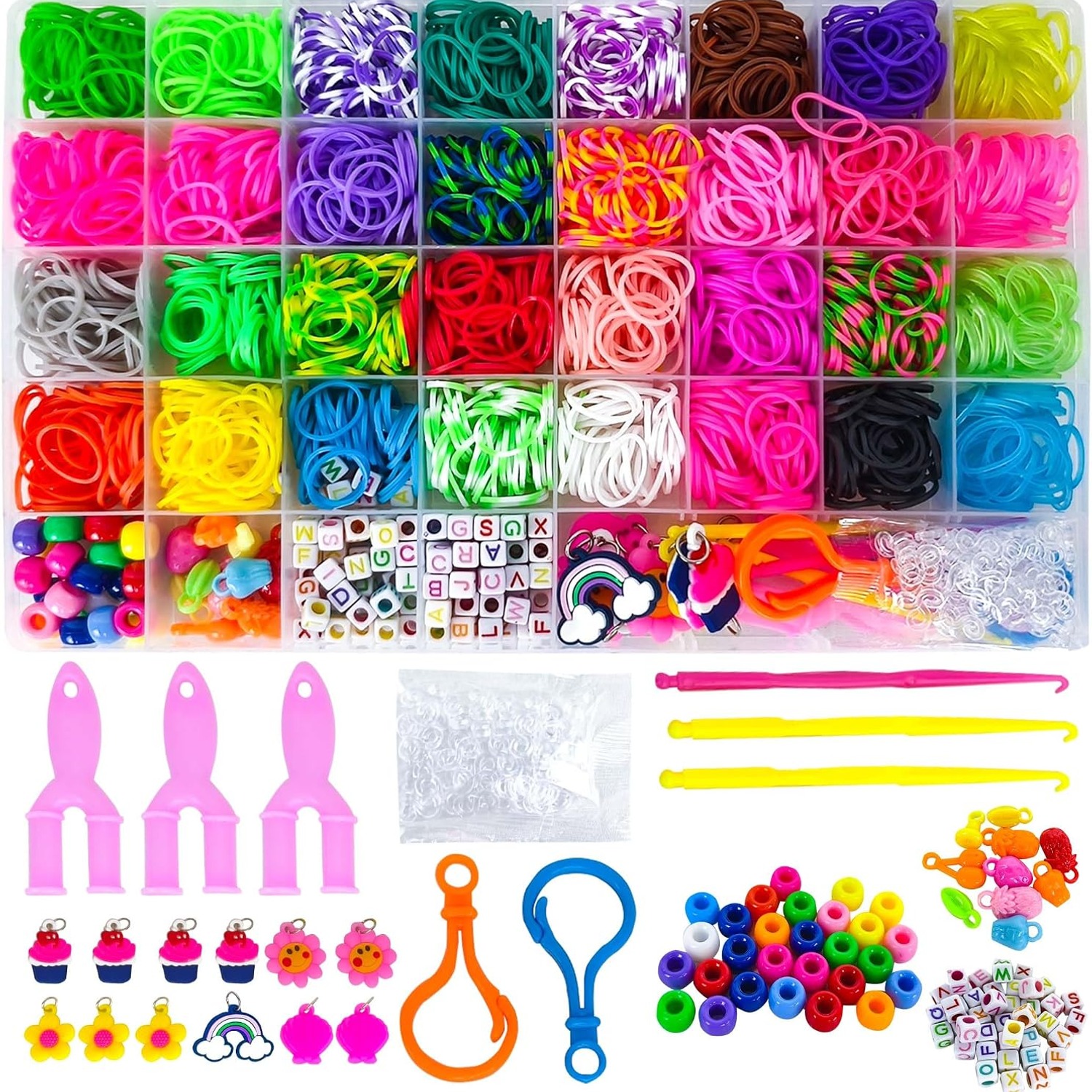
The other problem it solves is mess. Buy bands loose and they end up in three drawers, a shoe and the vacuum. A kit like this one arrives sorted in a compartment case, and that single detail is the difference between a craft that gets used weekly and a craft that gets used once.
How loom banding works
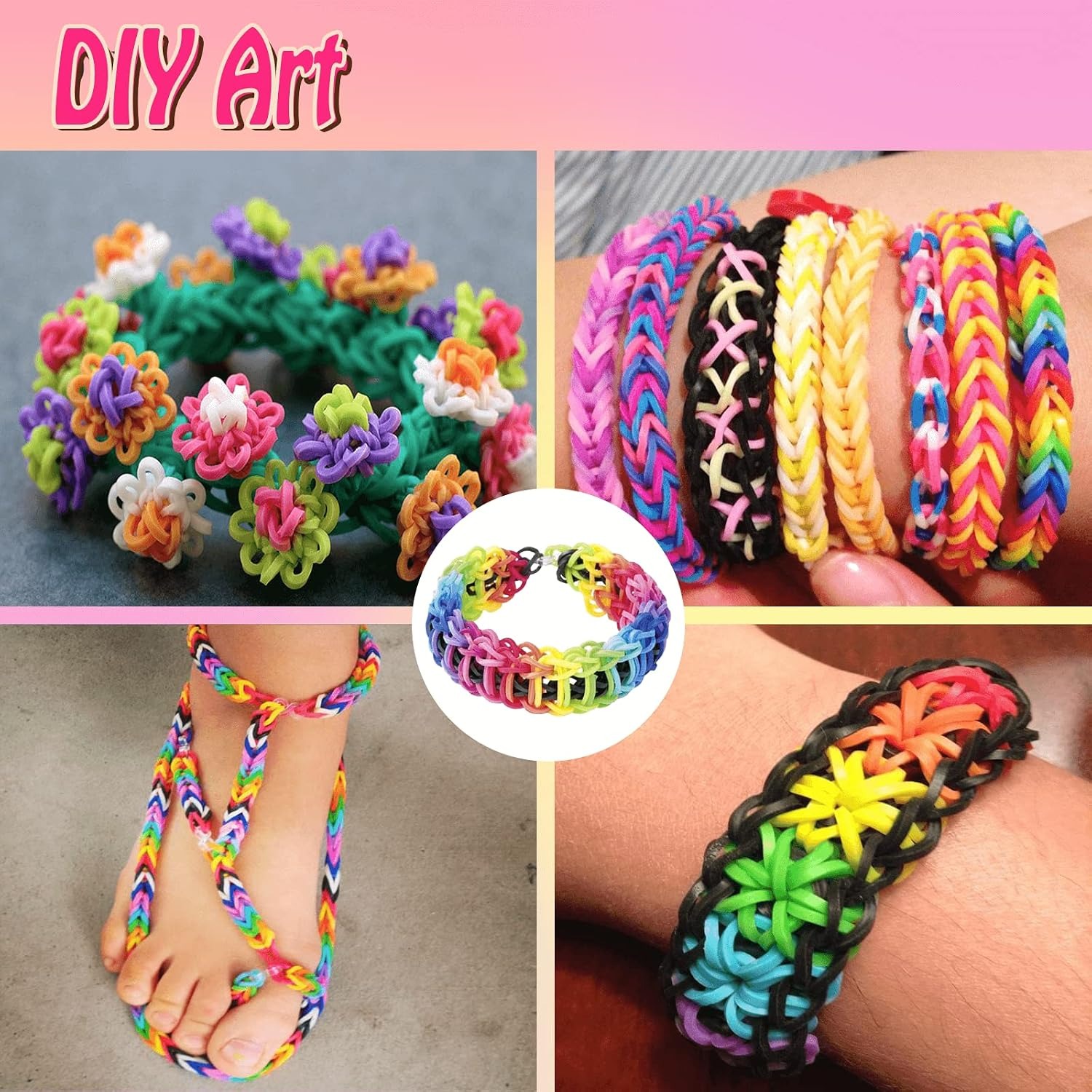
The principle is simple. Small rubber bands are stretched between pegs or held on a hook, then looped over each other in a repeating order. Each loop locks the one beneath it. Keep going and you get a chain. Fasten the two ends with a clip and you have a bracelet.
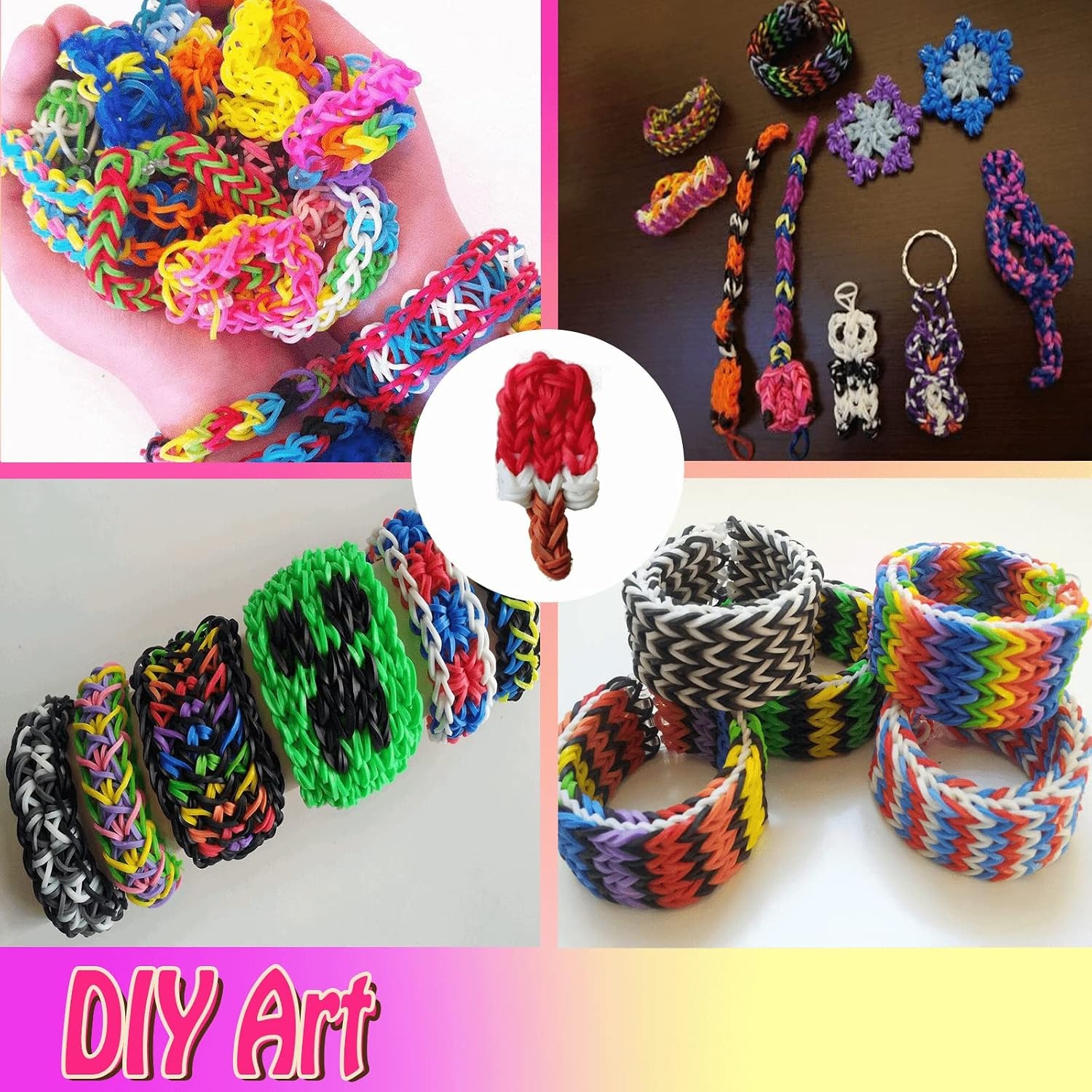
The pattern name tells you the complexity. A single chain is the easiest: one band through another, over and over. A fishtail uses two pegs and three bands at a time, producing a flatter, denser band. From there patterns branch out into ladders, hexafish and wide woven designs that use a full peg board.
This kit supplies three slingshot looms, which are the small two-peg tools most people learn on. They are easier for small hands than a large board, they travel better, and they cover the majority of popular patterns. The two crochet hooks do the fiddly work of pulling a band through a tight row, which is the part that stops a child giving up halfway.
Finishing is where the beads come in. Thread a letter bead onto a band before you loop it and the name sits inside the weave. Clip a soft pendant to the end and the bracelet becomes a keyring or a bag charm instead. These small additions are what move a set from "bands" to a proper bracelet making kit.
What is in this particular kit
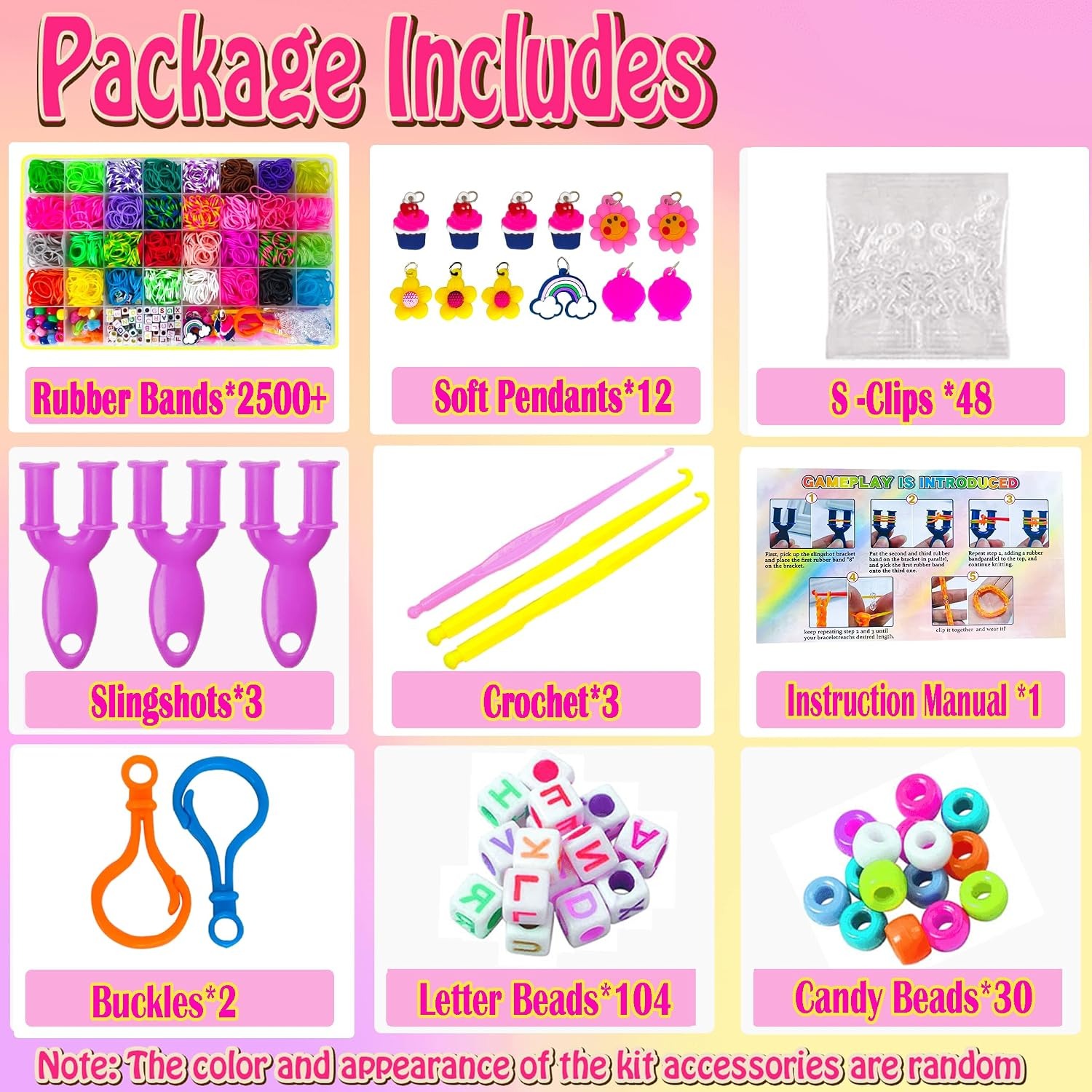
The headline number is 2500 pieces. Broken down, that is rubber bands across 32 colours, 48 S-clips, 12 soft pendants, 104 letter beads, 30 candy beads, 2 crochet hooks, 3 slingshot looms, 2 buckles and one instruction manual.
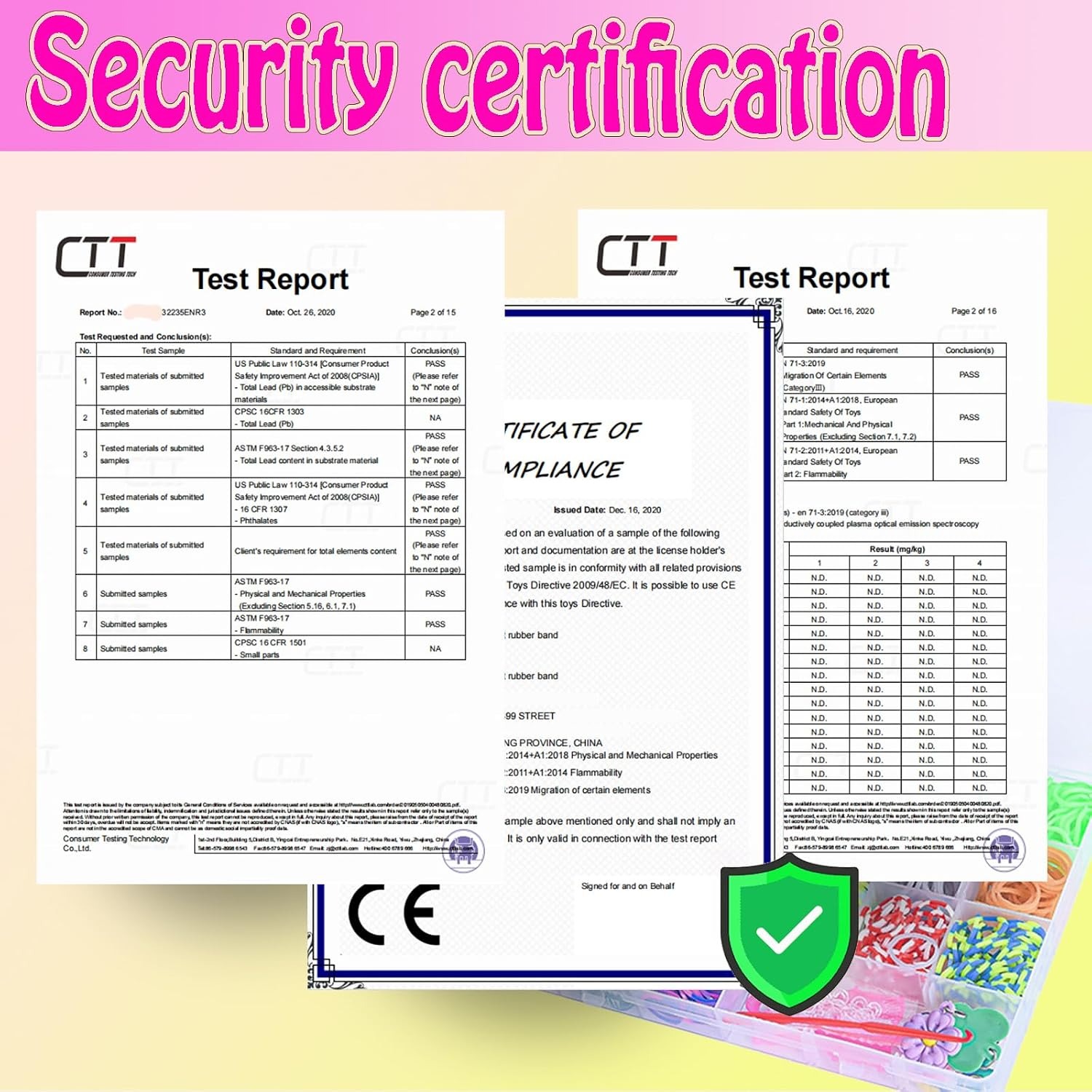
Two things are worth knowing before you order. First, the accessory shapes and colours arrive at random, so the pendants and bead colours may not match the product photos. The quantities do not change. Second, this is a kit with a lot of small parts, and it carries a choking hazard warning for children under three.
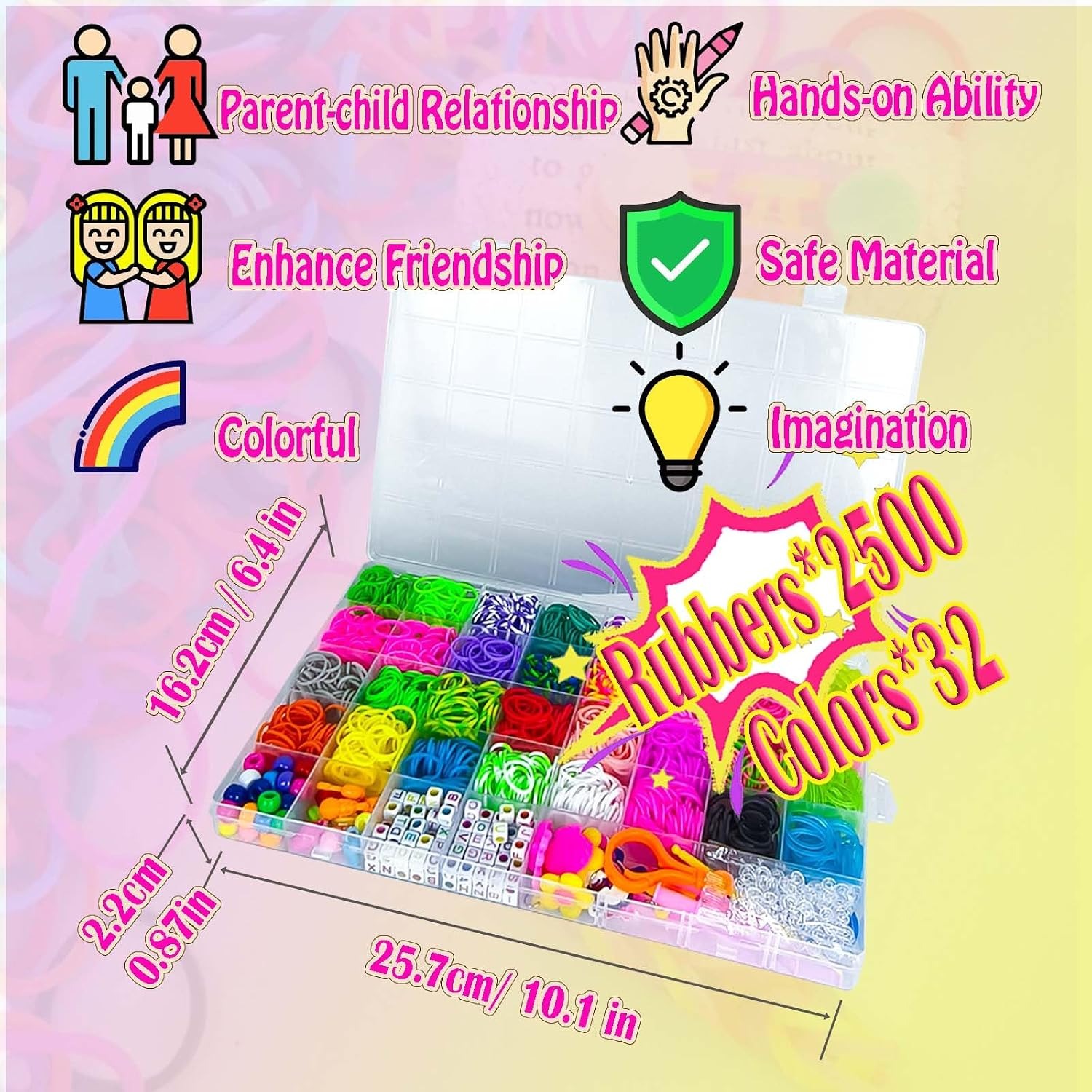
The case itself measures 26 x 16 x 2.3 cm and the whole thing weighs 0.38 kg. Flat, light and closed, it is one of the easier craft kits to pack. The listed set name is Flowers and Rainbow and the listed theme is Christmas, though in practice the bands are plain colours and children decide the theme themselves.
Who it suits
Primary school age children are the obvious fit. At that age the fine motor control is usually there, patience is improving, and the social side matters. Making a bracelet for a specific friend is half the point, which is why this style of set works so well as a friendship bracelet kit.
It also suits classrooms and groups. A teacher or a party host can spread one kit across a table, hand out colours and have a quiet twenty minutes. Three looms and two hooks means two or three children can work at the same time without waiting.
Travelling families get good value from it too. There is nothing to charge, nothing to lose signal, and the case closes. On a long drive or a flight, a compact craft kit for kids that does not need a power point is worth its weight.
And plenty of adults quietly enjoy it. The repetition is calming in the same way knitting is. If you are the parent who ends up finishing the tricky row, do not be surprised if you keep going.
How to choose a loom bands kit
A few things separate a kit that lasts from one that disappoints.
Piece count versus usable pieces. Big numbers look good on a box, but what matters is the mix. A kit with 2500 pieces that includes enough clips, hooks and looms is more useful than a bigger number made up almost entirely of bands you cannot fasten. Check the clip count, because running out of S-clips stops production completely.
Colour range. Two or three colours gets boring quickly. Thirty-two gives children room to plan, match and personalise. Colour choice is where most of the creative decision-making happens, so it is not a trivial spec.
Storage. A sorted case is not a luxury. Loose bands in a bag turn into a single tangled lump within a week. If a kit does not come with compartments, factor in buying a tackle box, because you will need one.
Tools included. Look for at least one crochet hook and a loom. Hooks make the difference between a frustrated child and a finished bracelet. Slingshot looms are the practical choice for beginners and travel; large peg boards are better once someone is hooked and wants wide patterns.
Extras that personalise. Letter beads are the single most requested add-on, because named bracelets are what children actually want to give away. Charms and buckles extend the kit beyond wrists to bags and keys.
Looking after the kit and the bracelets
Rubber does not last forever, and heat is its main enemy. Store the closed case somewhere cool and dry, out of direct sun and away from heaters. Bands kept in a hot car for a summer will go brittle and start snapping.
Make packing up part of the activity. Two minutes of putting beads back into their compartments at the end saves half an hour of sorting later, and it keeps small parts off the floor where younger siblings and pets find them.
Finished bracelets need very little. A wipe with a damp cloth and air drying is enough. Avoid soaking them, skip the washing machine, and keep them away from strong cleaners and solvents, which break rubber down and can loosen beads. If a bracelet stretches out of shape after months of wear, that is normal, and the usual fix is to make another one.
Count the small parts back in when a session ends, especially if there is a preschooler in the house. Keep the case stored up high between uses.
The short version
This is a 2500 piece loom bands kit with 32 band colours, 48 clips, 104 letter beads, 30 candy beads, 12 soft pendants, 2 crochet hooks, 3 slingshot looms, 2 buckles and a manual, all in a 26 x 16 x 2.3 cm case weighing 0.38 kg.
It suits primary school children, group activities and travel. It is not suitable for under threes. Accessory colours and shapes arrive at random, though the counts are fixed.
If you want a craft that children start on their own, keep returning to, and end up giving away as presents, this is a sensible place to put your money.