
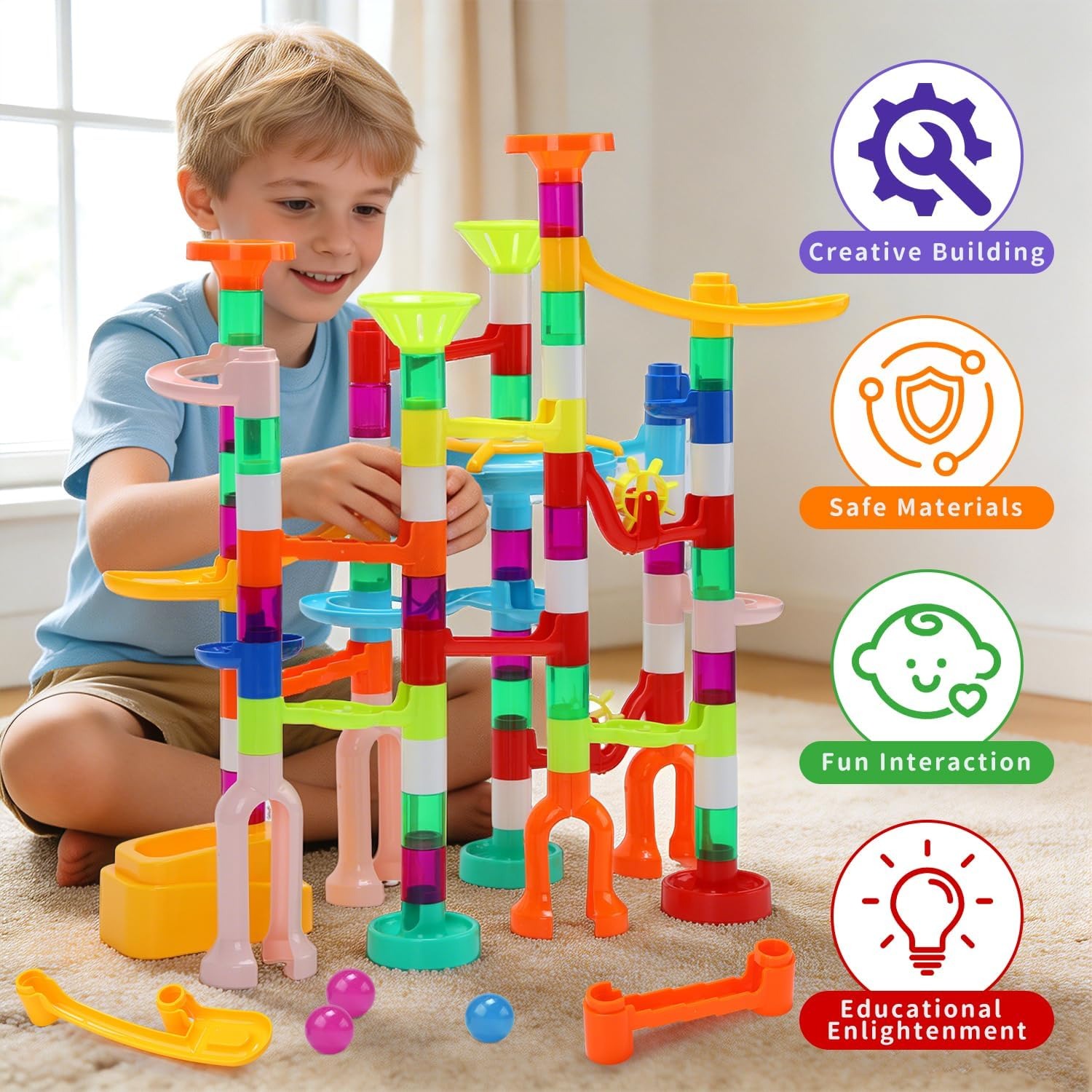
The complete guide
Marble Run Buying Guide, How To Choose A Set Kids Keep Coming Back To
The toy problem this actually solves
Most toy cupboards have the same issue. There is a lot in there, and almost none of it gets used twice. A toy gets opened, played with hard for two days, then it sits.
The reason is usually that the toy only does one thing. Once a child has seen that thing, there is nothing left to discover. Marble runs sidestep that problem because the toy does not come with a single correct shape. A child builds the shape, and the shape can be different every day.
That is the honest case for a marble run kit. It is not that it is educational, although it is. It is that the thing stays interesting long after the novelty of a new box has worn off.
How a gravity track works
There is no mystery here, and that is part of the appeal. Pieces clip together to make a tower. Marbles go in at the top. Gravity does the rest.
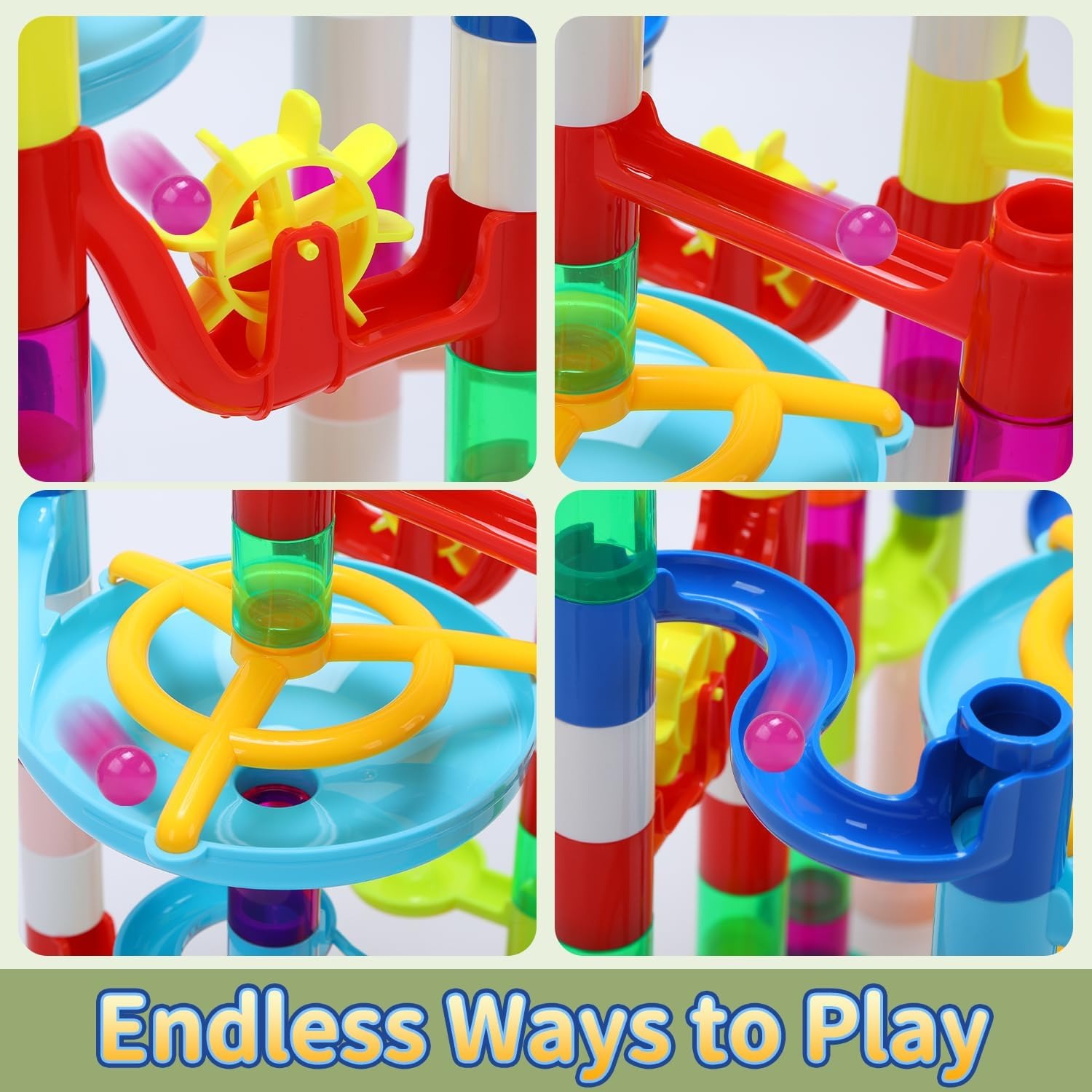
What makes it interesting is everything that happens between the top and the bottom. A steep straight section makes a marble go fast. A curve bleeds off some of that speed. A funnel spirals the marble inward and drops it through a hole, and a spinning track part slows it right down and changes direction.
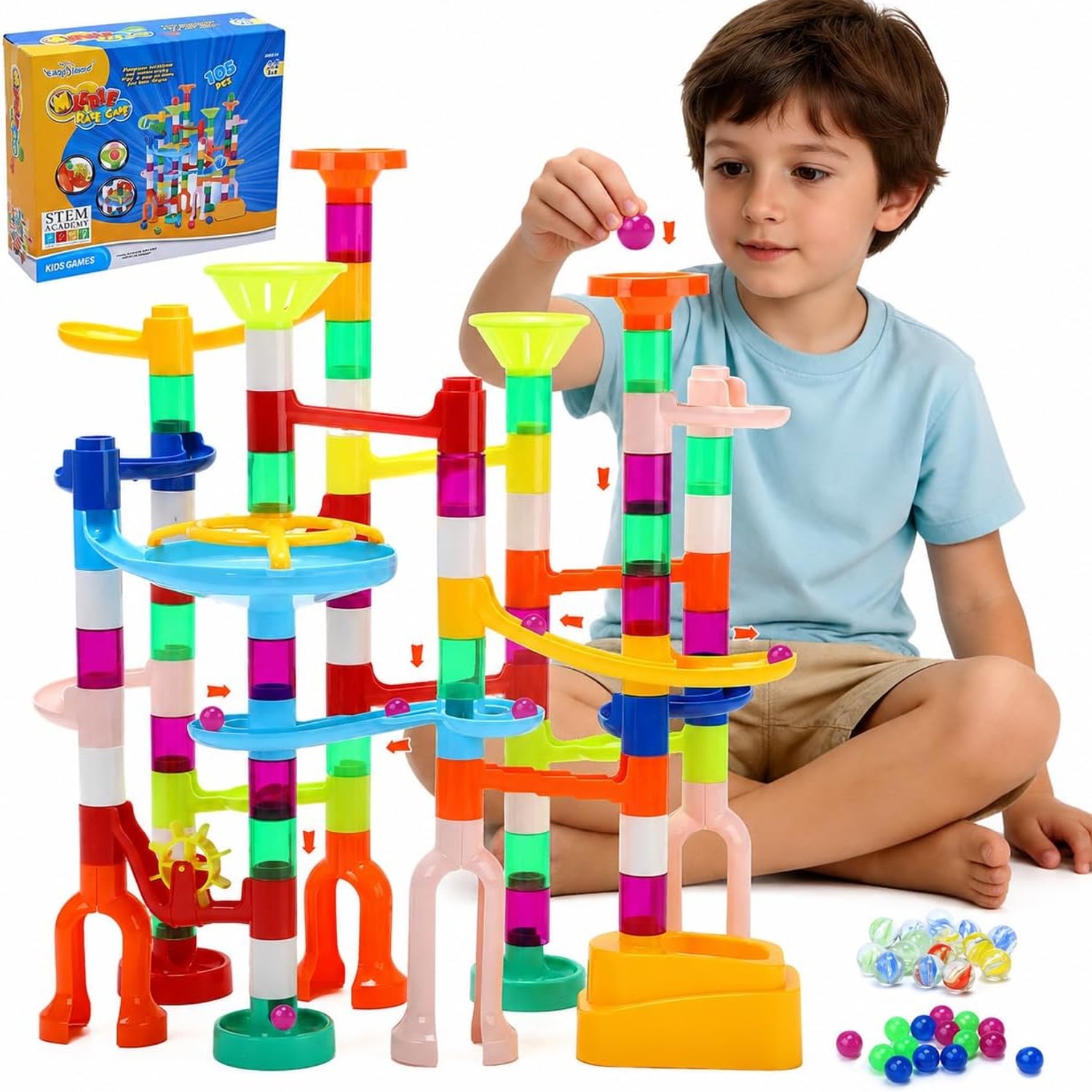
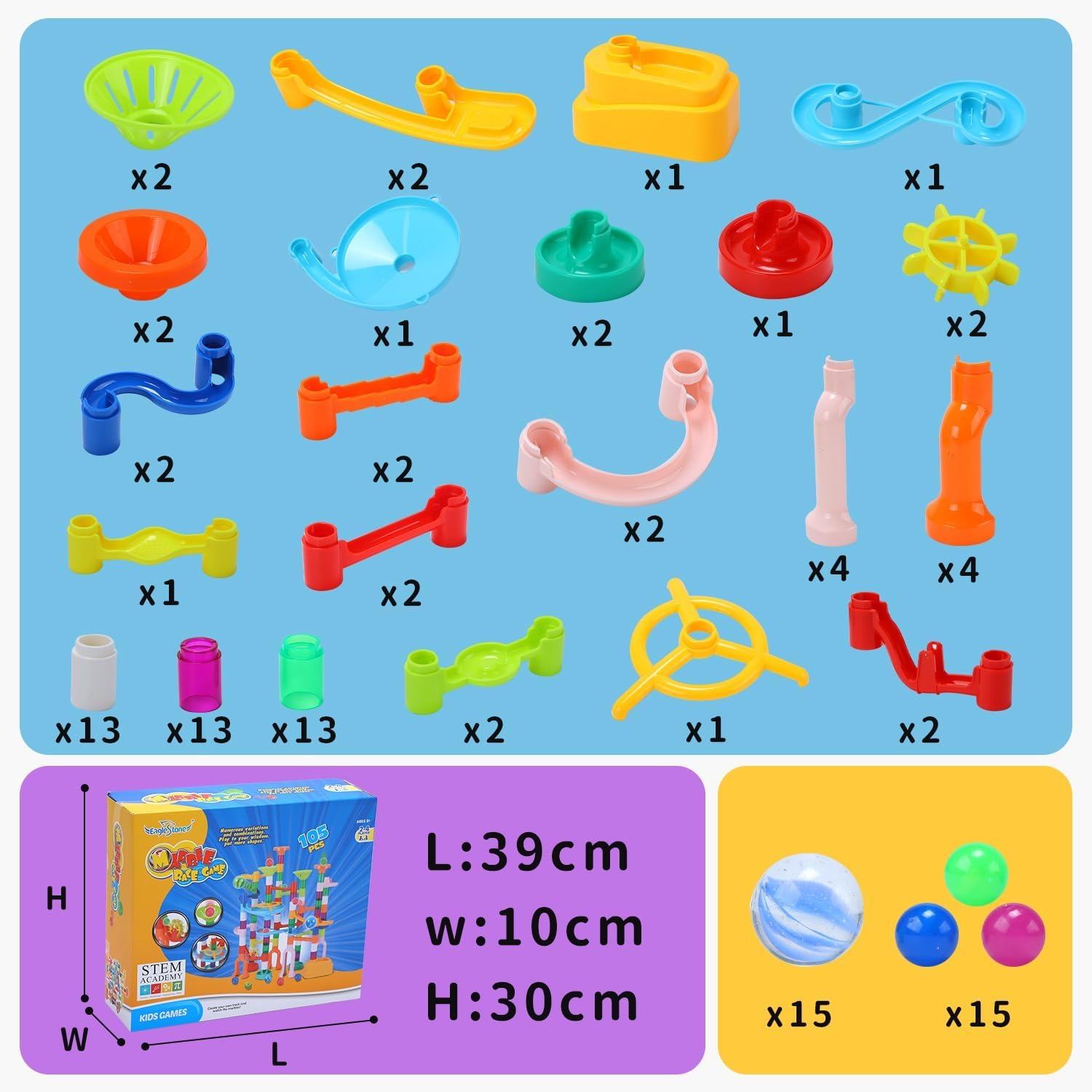
This set includes all of those behaviours across its 105 pieces. That variety is what turns building into a real decision. Put a funnel too early and the marble loses momentum before it reaches the bottom. Put a long drop before a tight corner and the marble flies off entirely.
Children work this out by failing. They build something, run a marble, watch it shoot off the side, and try again with a gentler slope. Nobody has to explain momentum. The marble explains it.
Four entrances change the play
A lot of marble runs have one entry at the top. You drop a marble, it goes down, you pick it up, you do it again. Fine for a while, but it is a solo loop.
This kit has four entrances and four collection zones at the base. That small design choice opens up racing. Two kids can each take a starting point, drop at the same time and see which route is faster. Then they argue about whether the route or the marble was responsible, and rebuild to settle it.
Racing also gives the building a purpose. Instead of building until the pieces run out, kids build to win. A child who is trying to beat their sibling will happily redesign the same section five times, which is a lot more engineering practice than they would do if you asked them to.
Who it suits
The manufacturer recommends this for ages 3 and up, and that range is honest if you read it correctly.
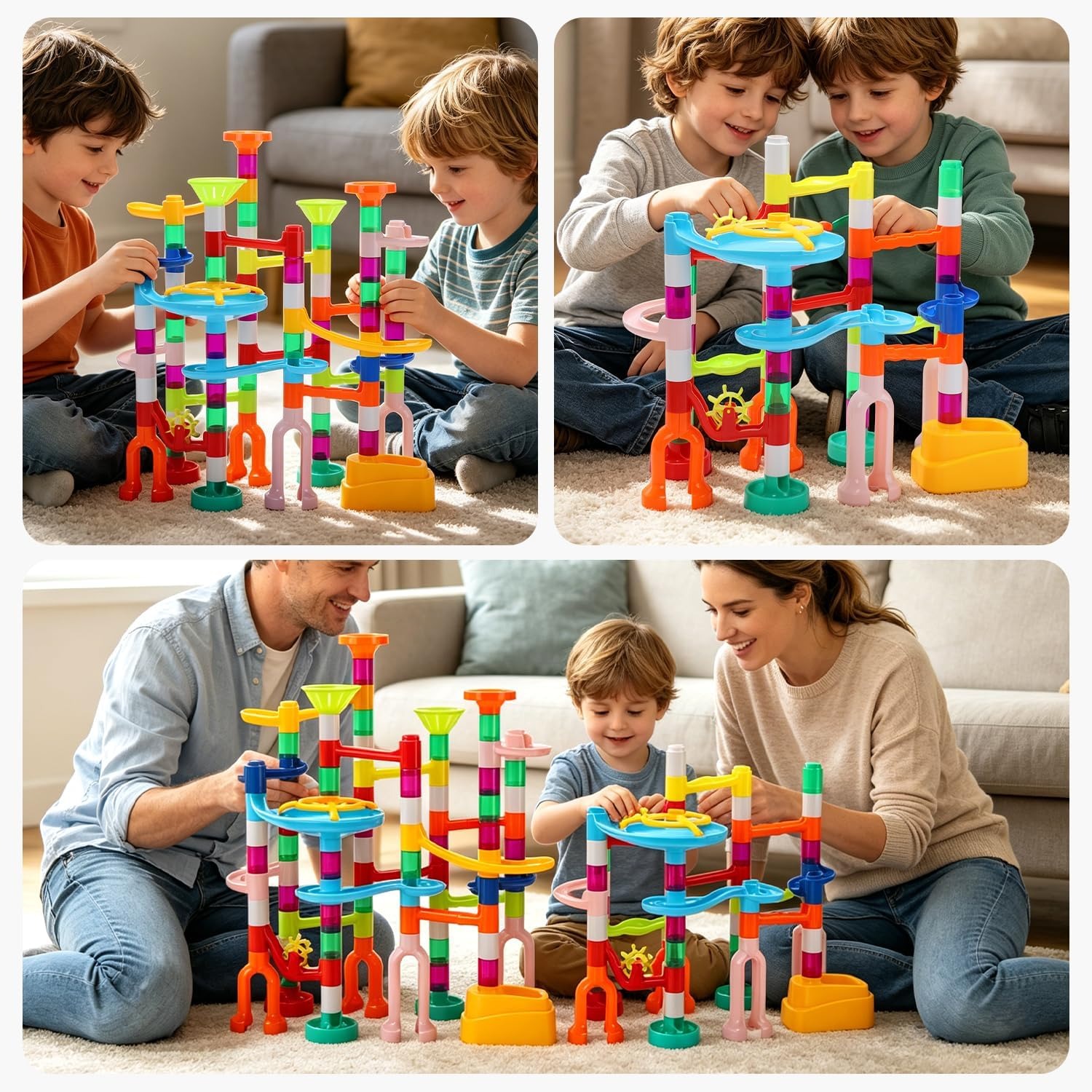
A three year old is not going to design a four-route tower. What they will do is help place pieces, then drop marbles through a build an adult made. That is still good play and good for hand control, and it is a nice shared activity. Just remember marbles are small parts and supervision is needed at that age.
From about five, most children can connect pieces and plan simple routes themselves. This is where the set starts earning its keep, because you can hand it over and get on with something else.
From around seven upward, kids start doing the clever stuff. They build in branches, time races, stack height deliberately and troubleshoot a specific corner that keeps failing. Some of the best construction toy sessions happen in this bracket, and they can run for an hour or more.
Adults are not exempt. Working out how to use all 105 pieces in one connected structure is a genuine puzzle, and plenty of parents finish the tower after bedtime.
What to look for when choosing a marble run
If you are comparing sets, a few things matter more than the headline piece count.
Piece variety beats piece quantity. A hundred identical straight sections is worse than sixty mixed pieces. You want curves, funnels, slides and something that changes the marble's behaviour, which is what this set provides.
Connector strength matters next. A run that collapses under its own weight gets abandoned fast. Secure connecting pieces are what let a child build and play without an adult propping things up every few minutes.
Base width is worth thinking about too. Tall and narrow looks impressive and falls over. Sets that encourage a wide base give more stable builds, and kids figure this out on their own after the second collapse.
Finally, think about storage before you buy. A 105 piece set needs somewhere to live. A box with a lid is enough, but having one ready on day one saves you finding pieces under the sofa for a month.
Getting the most out of the first few builds
The first build is usually a disappointment, and that is normal. A child grabs pieces at random, makes something tall, and the marble falls out halfway down.
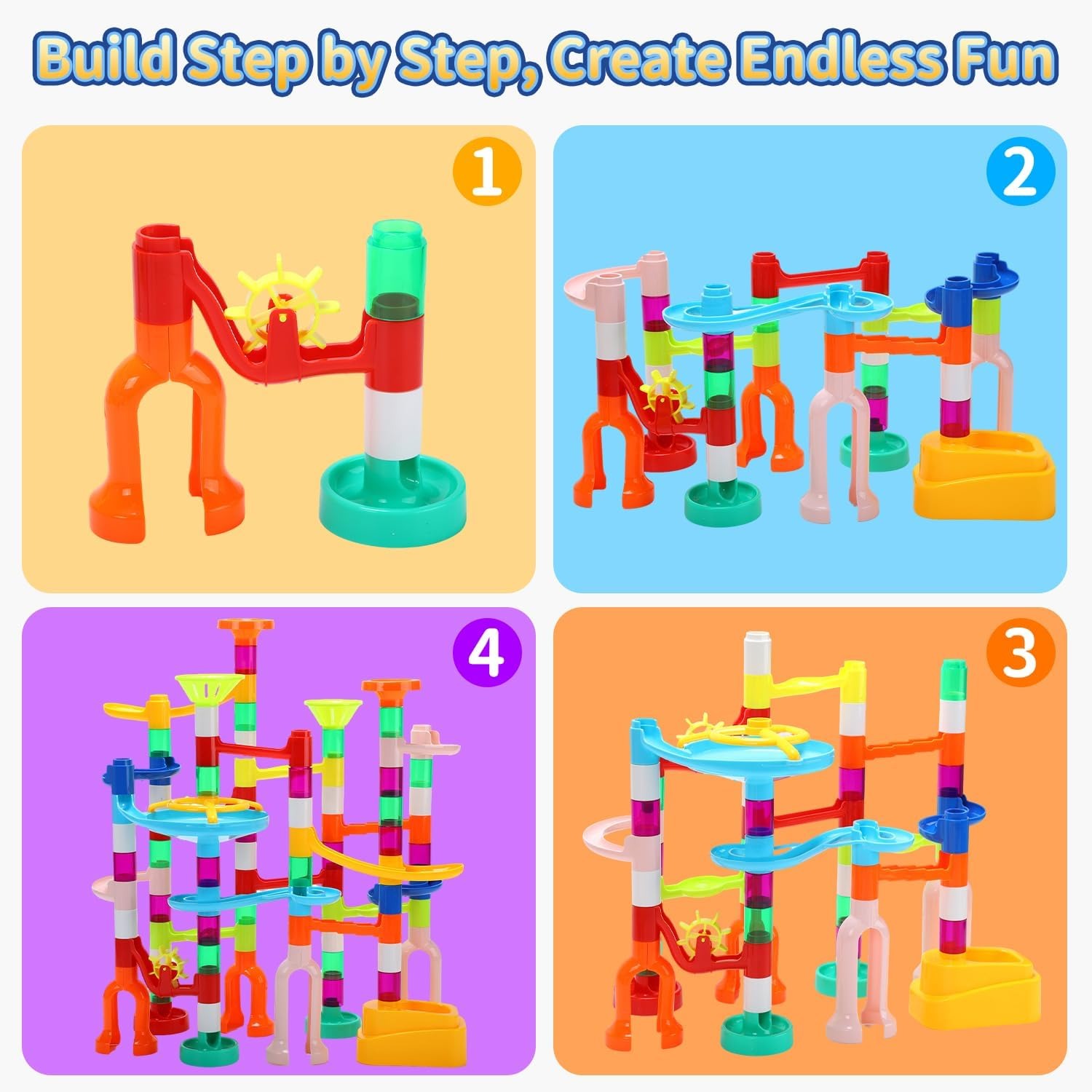
A couple of small nudges help. Suggest starting from the bottom and working up, rather than building a tower and hoping the track fits. Suggest testing each section with a marble before adding the next piece, which catches problems early instead of at the end.
Build on a hard, flat surface if you can. Carpet tilts the base and throws angles off. A large tray or a sheet of board works well, and it also stops marbles escaping across the room.
After that, step back. The learning happens when the child fixes the problem, not when you fix it for them.
Looking after it
Plastic track pieces are easy to maintain. Wipe them with a damp cloth and a little mild soap when they get dusty or sticky, then dry them before putting them away. Skip the dishwasher and keep them away from radiators and direct sun, because heat warps plastic and a warped connector never clips properly again.
Check connectors occasionally. If one is cracked, take it out of circulation. A weak connector is the usual cause of a mid-race collapse, and sharp plastic is not worth keeping.
Keep marbles in their own small container inside the main storage box. They roll, they hide, and they are the part most likely to go missing. Keeping them contained also helps if there is a preschooler or a pet in the house.
The short version
This is a 105 piece plastic marble run kit, model 8104 from EagleStone, recommended for ages 3 and up. It includes curves, funnels, slides and spinning parts, with four entrances at the top and four collection zones at the base so marbles can race. Packed dimensions are 10 x 30 x 39 centimetres.
What you are really buying is a toy with no fixed ending. The build changes, the races change, and a child who has used it twenty times is still making it harder for themselves. That is rare, and it is why a marble track building set tends to outlast most of what else is in the cupboard.