
The complete guide
Choosing a Percussion Instrument Set for Kids, A Practical Buyer's Guide
The problem with most "musical" toys
Walk down any toy aisle and you will find a shelf of plastic things that play music at a child. Press the duck, get a song. Press it again, get the same song. The child is an audience, not a player. That is why those toys burn out so fast, usually somewhere between the second week and the first flat battery.
A rhythm instrument set does the opposite. Nothing happens until the child does something. If they shake harder, it gets louder. If they stop, it stops. That feedback loop is the whole reason percussion has been the starting point for children's music education for about as long as children's music education has existed. It is also why a box of simple wooden instruments tends to survive in a house far longer than the singing dinosaur.
The catch is that a lot of sets sold online are thin. Four pieces, a cardboard box, and two of the four are the same thing in different colours. A set only earns its place if it has enough variety to keep a child exploring and enough pieces for more than one child to join in.
What is actually in this set
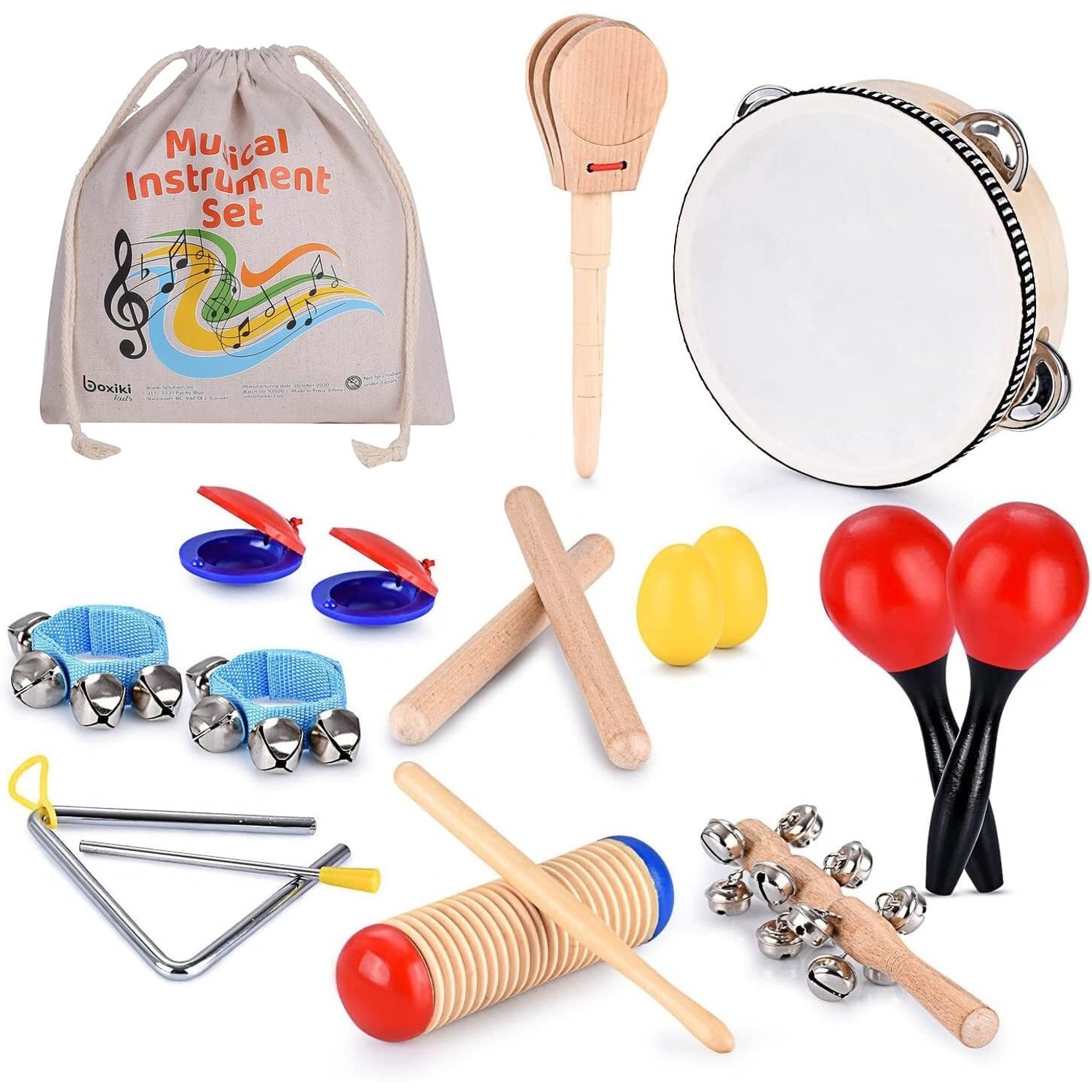
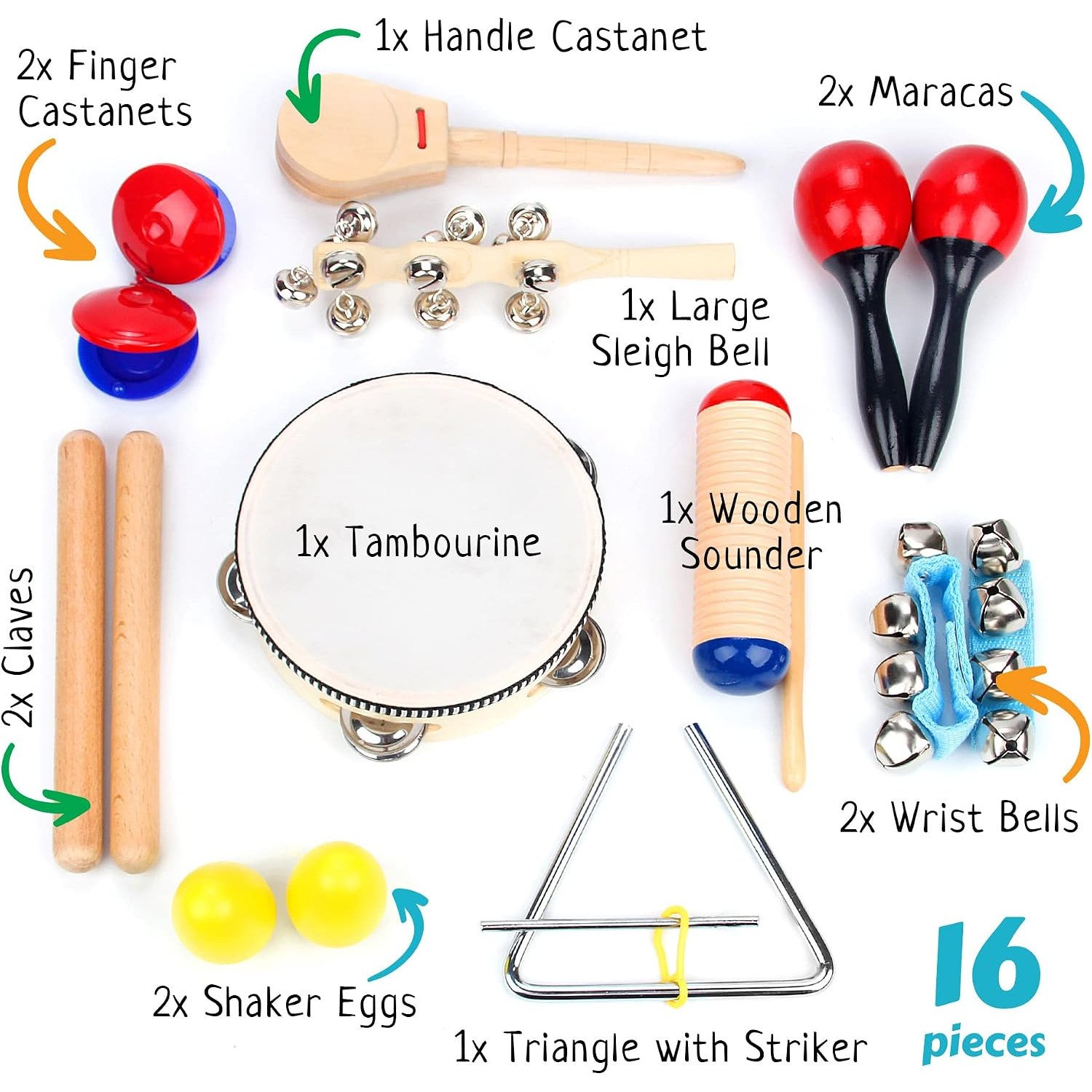
This 16 piece percussion instrument set from Boxiki kids covers the three families of percussion sound a young child needs.
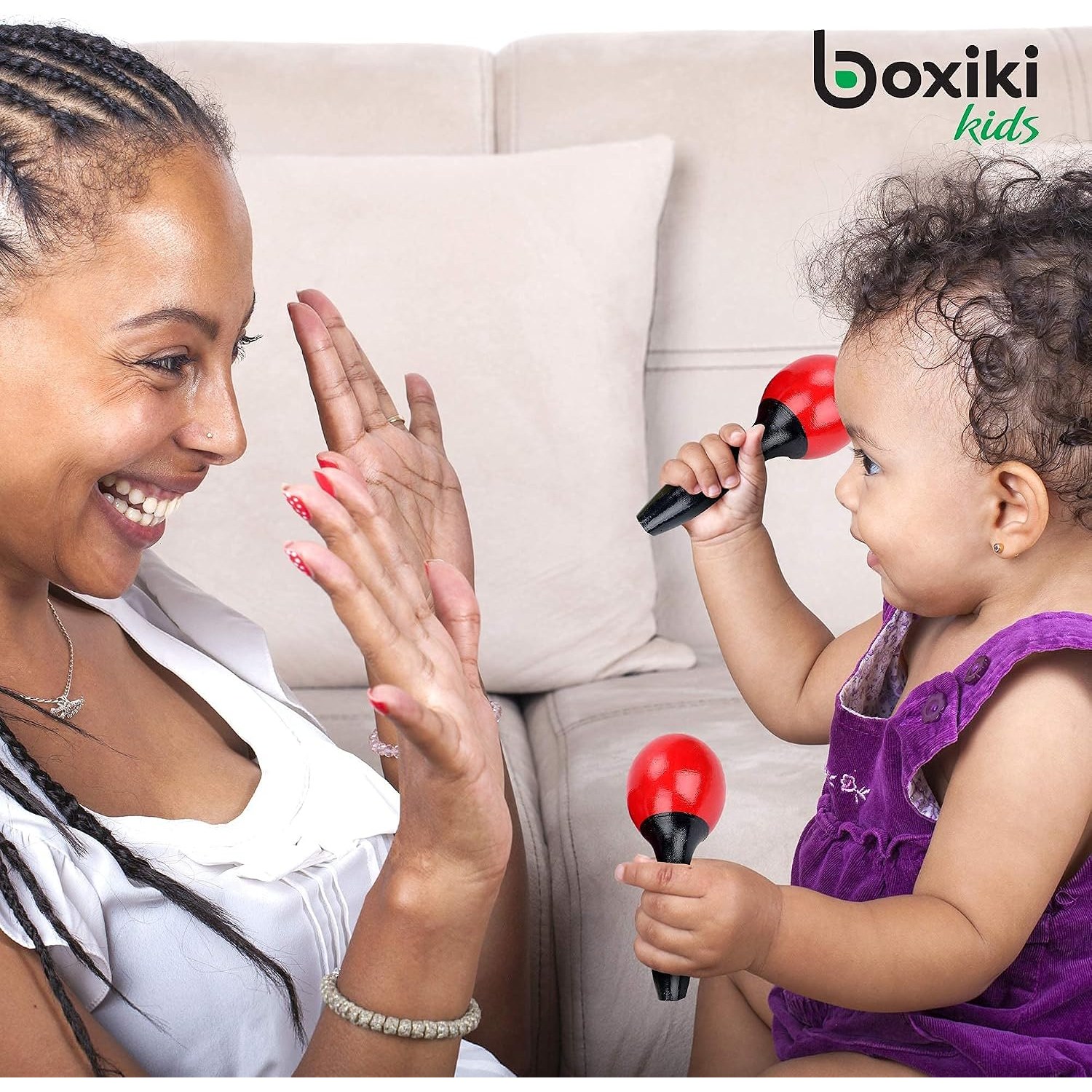
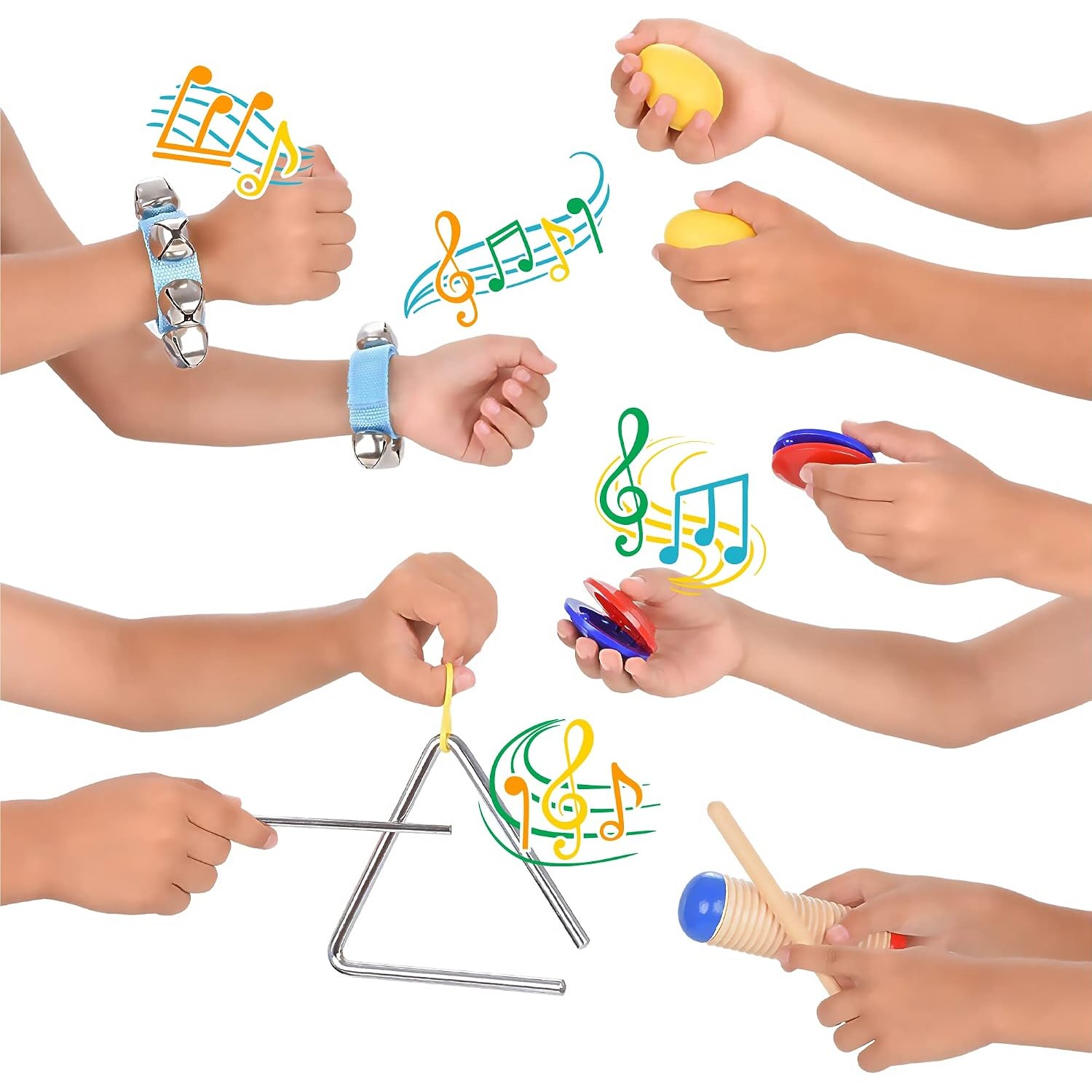
Shakers come first because they are the easiest. The percussion eggs sit in a closed fist and make sound with almost no effort, which matters when a child is three and still working out what their hands do. The wood maracas are a step up, with a handle that teaches a proper wrist flick. Wrist bells belong in this group too, except they are worn rather than held, so a child who would rather dance than hold anything still gets to be in the band.
Then come the struck instruments. Rhythm sticks, sometimes called claves, are two pieces of wood you tap together. They sound simple and they are, but they are the single best tool in the box for teaching a steady beat, because the click is sharp and stops immediately. There is no ring to confuse the timing. The tambourine, the wooden sounder and the triangle with striker round this group out, each with a different tail of sound after the hit.
Last are the castanets, both the finger pairs and the handle version. These need the most coordination, which makes them a good target for a five or six year old who has outgrown shaking things.
The whole lot is wood, multi-coloured, and packs into a zippered carrying case. Total weight is 0.99 kg.
Who it suits
The recommended age is 36 months to 6 years. That is a sensible range. At three, a child can hold a maraca, shake it, and understand that they caused the noise. By six, they can keep time with claves while a song plays and tell you when they are ahead of the beat.
Below three, the set still works with an adult involved. Hand over a shaker egg, keep the small bells aside, and supervise. The 36 month floor exists because several pieces are small by nature.
It suits a few situations particularly well. Families with more than one child get the most value, because sixteen pieces split comfortably between two or three kids and nobody is left holding nothing. Preschool and daycare rooms use sets like this for circle time. Grandparents who want something at their house that works without a screen or a charger do well with it too.
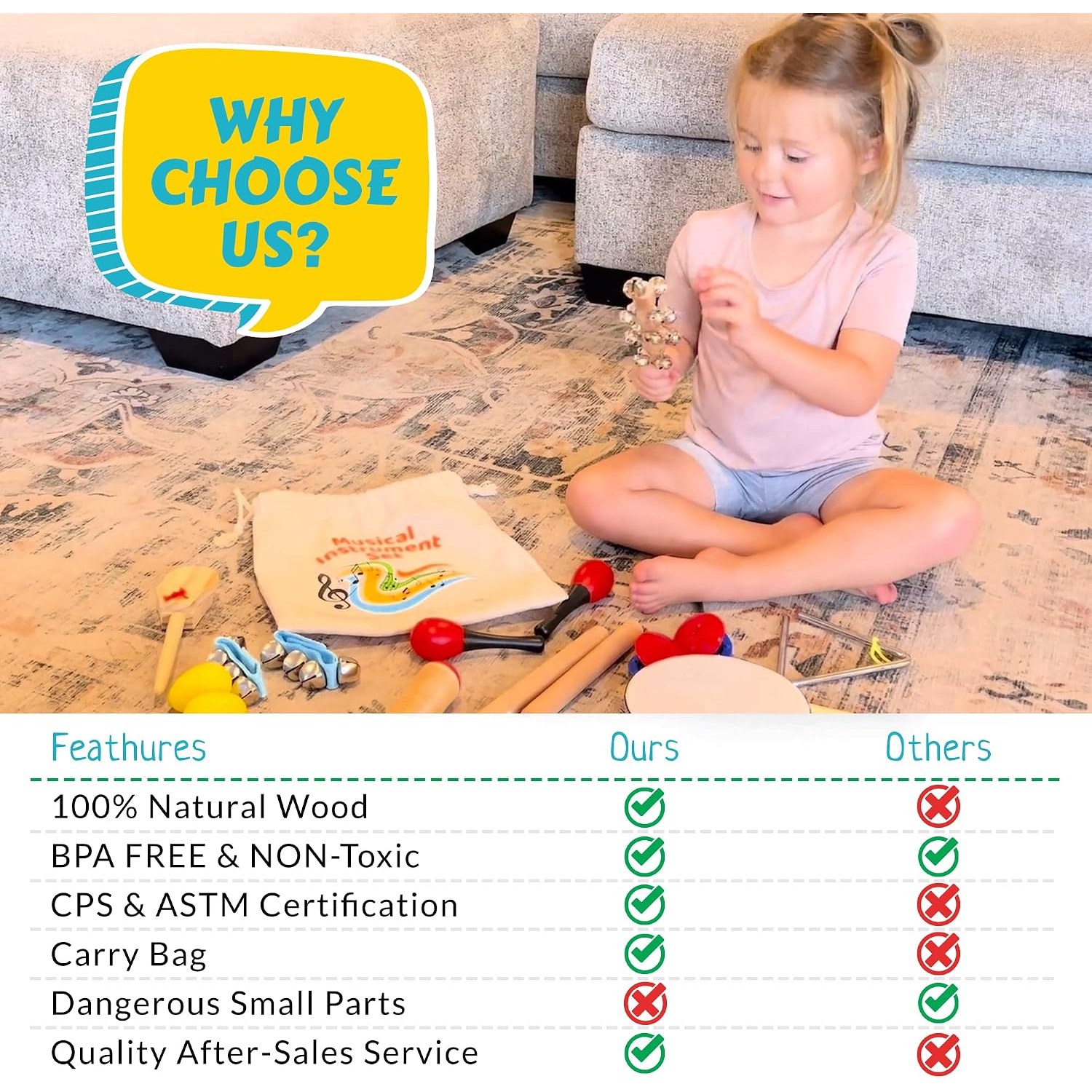
One note for institutional buyers. Specific safety certification details are not listed by the maker. If your childcare licence requires documented compliance for toys on the floor, confirm that before you order.
How to choose between sets
A few things separate a set worth owning from one that ends up in the op shop bag.
Piece count matters, but variety matters more. Sixteen pieces where twelve are different sounds beats twenty pieces where sixteen are identical shakers. Look at the component list rather than the headline number.
Material is the second thing. Wood holds up better than thin plastic, sounds warmer, and does not go brittle. It also handles the one thing all children's instruments go through, which is being dropped on a hard floor repeatedly.
Storage is the one most people forget until it is too late. Sixteen small objects with no container will be scattered across three rooms by the end of the first month, and a set missing half its pieces does not get played with. A zippered case solves that, and it also means the set can go to a friend's house or on holiday.
Weight and size per piece matter for the youngest users. Heavy instruments get dropped, and an instrument on the floor makes no music. Light wooden pieces sized for small hands stay up where they belong.
Getting the most out of it
Do not hand over all sixteen pieces on day one. It sounds generous and it mostly produces chaos. Give a child two or three pieces, let them get to know those sounds, then swap in something new a week later. The set lasts longer and the child listens more carefully.
Play along rather than watching. If you clap a slow steady beat and the child tries to match it with claves, you have just run a music lesson without calling it one. Switch roles and copy their rhythm back to them. Children love being the one who sets the pattern.
Use music they already know. Anything with a clear beat works, and nursery songs work best because the words give the child something to anchor to. Stop the music halfway through and see if they keep the beat on their own. Most four year olds can, for a few bars at least.
Try loud and quiet as a game. Ask for the quietest possible maraca, then the loudest. Dynamic control is a real musical skill and it is also, conveniently, a way to get a quieter afternoon.
Looking after it
Wood is forgiving if you keep it dry. Wipe pieces with a dry cloth, or a barely damp one if something sticky has happened, and let them air dry completely before they go back in the case. Never soak wooden instruments and never put them near a dishwasher. Water is what warps and splits them.
Keep the set out of direct sun for long stretches and away from damp spots like a bathroom shelf. Check bells, strikers and any small fittings every so often to make sure nothing has worked loose, and retire a piece if it has.
Store everything in the zippered case. It takes about a minute to gather sixteen pieces and zip them away, and that minute is what keeps the set complete six months from now.
As a gift
This is an easy gift to get right. It needs no batteries, no assembly, and no app. A child can open it and make a sound within ten seconds, which is the bar for a good present at that age. The bright colours help on the unwrapping front too.
It also works as a shared gift for siblings, which saves you buying two things that will be fought over anyway. For a birthday party present it is a safe bet, though you might warn the parents first. Some will thank you. Some will laugh.
The short version
Sixteen real instruments, wood, sized for small hands, no batteries, all packed in a zippered case. Recommended for ages three to six. It teaches beat and listening, it works for one child or a small group, and it keeps working for years rather than weeks because the child is the one making the sound. If you want one music purchase that earns its shelf space, a full rhythm instrument set is the one to make.