


The complete guide
Choosing a Pirate Treasure Dig Kit, A Practical Buyer's Guide
The problem with most toys bought for curious kids
You buy something that looks educational. It arrives. The child opens it, works out what it does in under a minute, and goes back to whatever they were doing before. The box ends up under the bed by Thursday.
The reason is usually the same. There is nothing to find out. Everything is visible on contact, so there is no reason to stick with it.
A dig kit flips that. The whole point is that you cannot see what is inside. A solid gypsum block sits on the table, and the only route to the contents is slow, careful work. That is an unusual thing to ask of a child in a world of instant anything, and it is exactly why it holds attention. The payoff is delayed, so it means something when it arrives.
How a coin excavation kit works
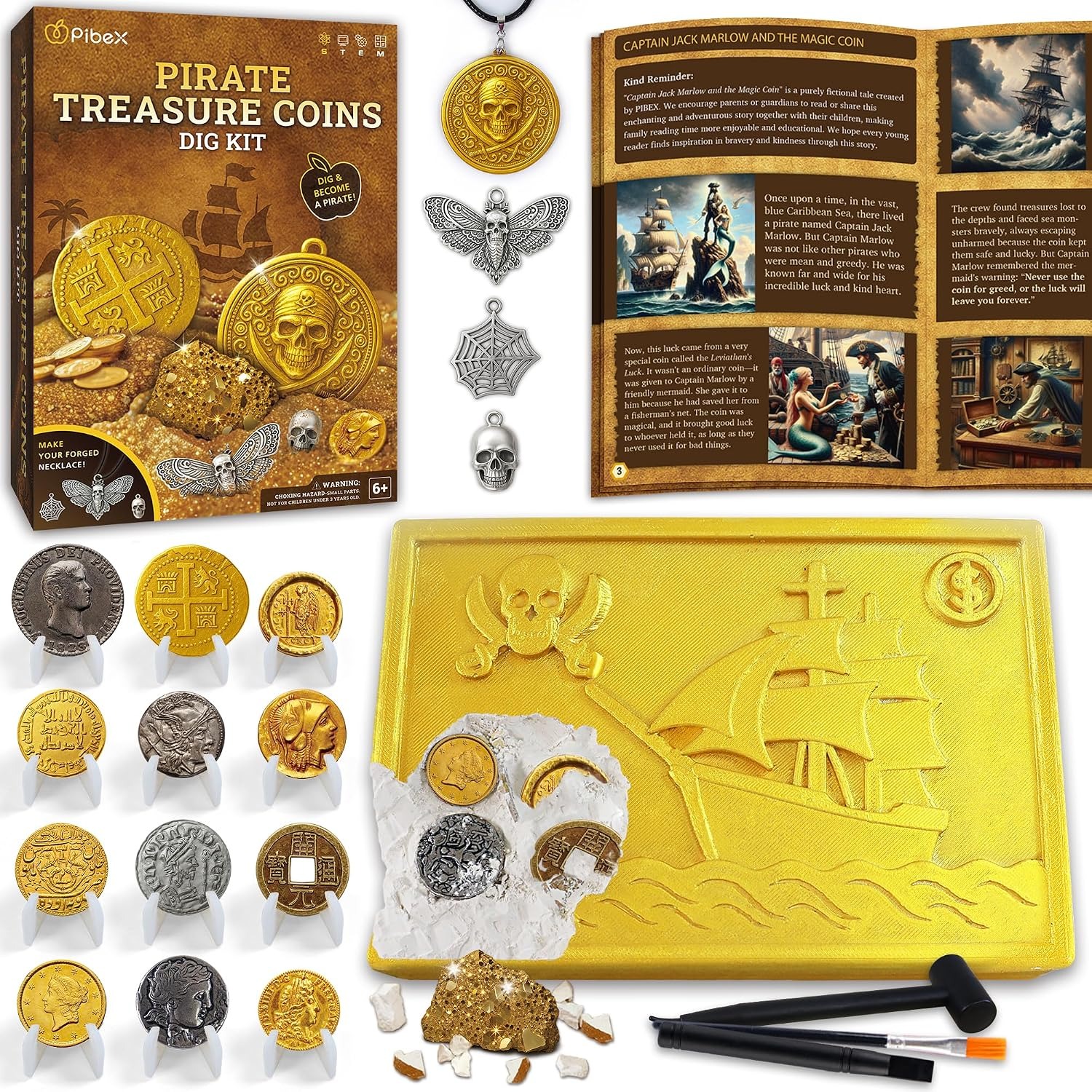
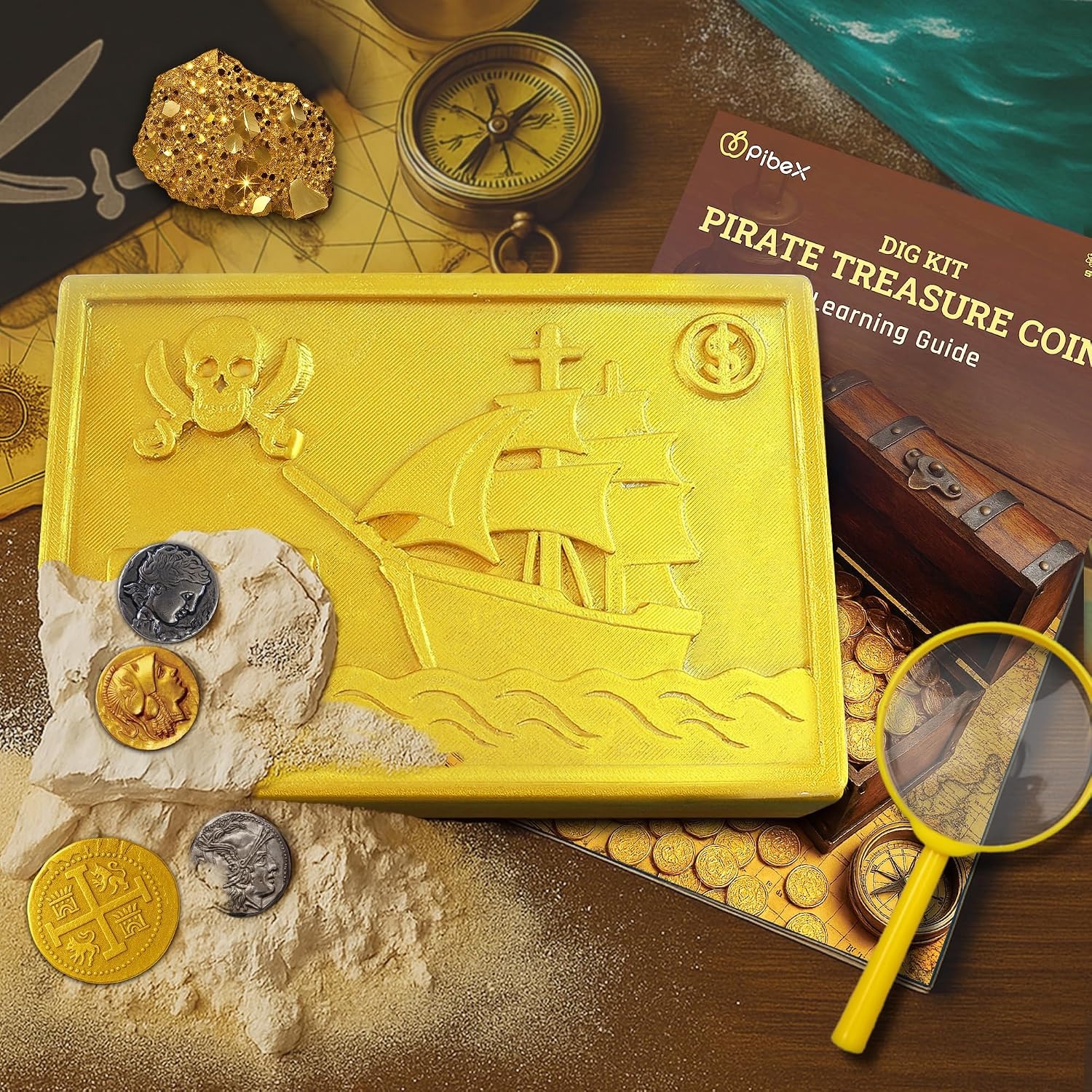
The centrepiece is a golden gypsum dig block with a Caribbean theme. Gypsum is a soft mineral, which is why it is the standard material for this kind of toy. It is firm enough to resist casual poking and soft enough that a child with patience can break it down without force.
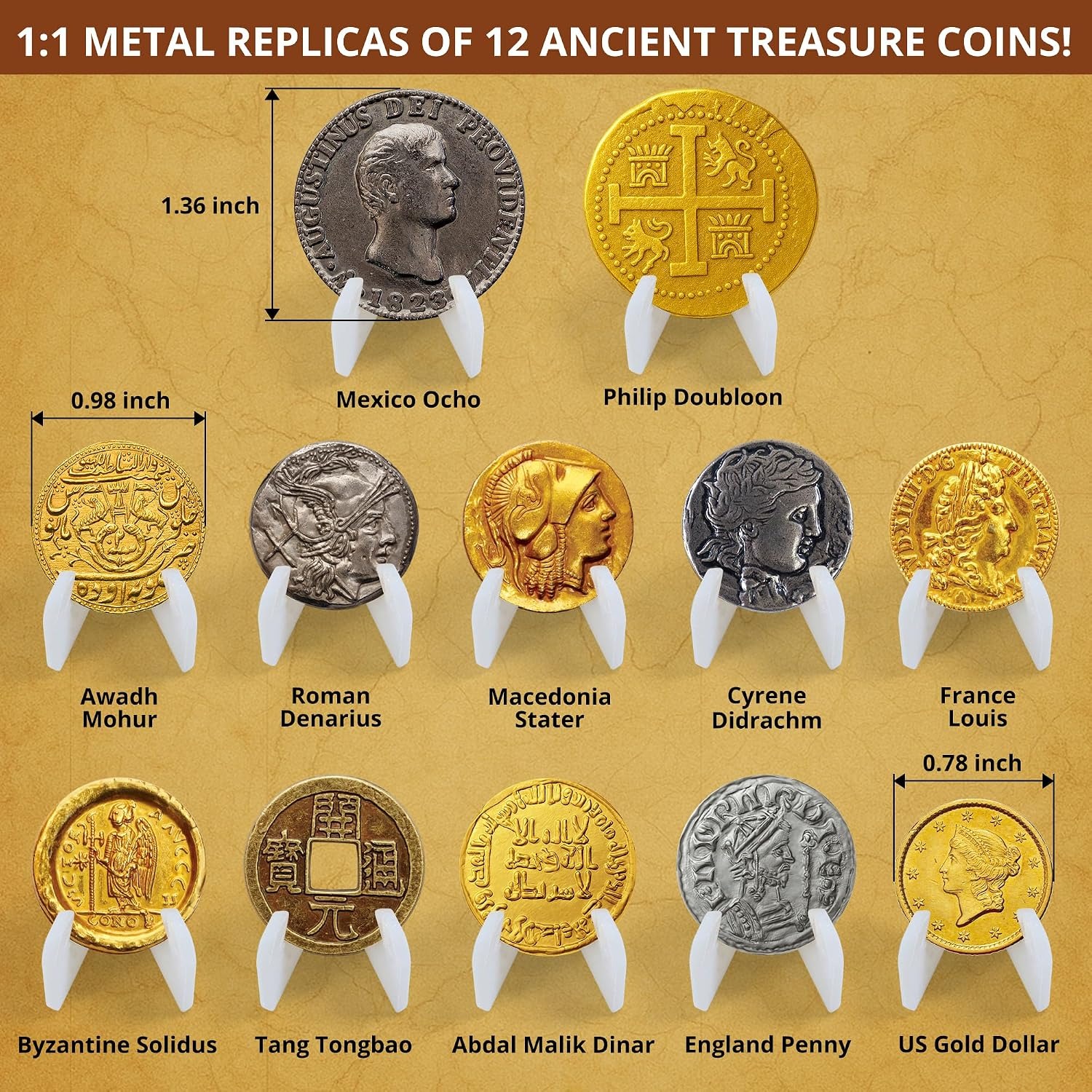
Buried inside are 12 metal coin replicas in gold, silver and bronze styles, plus Captain Jack Marlow's Magic Coin, a PIBEX-exclusive piece. Three silver-tone pirate charms are in there too, shaped as a skull, a spider and a butterfly.
The technique is simple enough to learn in a minute. Chip at the block, work around the edges of anything you can feel, then brush away the dust to see what you have got. Rushing cracks things. Steady hands win. Most children work this out themselves after one impatient swing, which is a better lesson than being told.
Once the finds are out, they get cleaned up and set into the 12 included coin stands. That turns a pile of dusty objects into a small display, and a lot of kids discover the pleasure of arranging a collection for the first time here.
Who it actually suits
The manufacturer recommends ages 6 and up, and that is a fair call. Below six, most children do not have the fine motor control or the patience for sustained chipping, and they tend to lose interest before the first coin surfaces.
Six to twelve is the strong range. That covers kids who like dinosaurs, kids who like pirates, kids who ask where things come from, and kids who already hoard interesting rocks and bottle caps in their bedroom. If you have a child who picks things up off the pavement to inspect them, this is for them.
It also works well for a child who struggles to settle. The activity has a clear goal, a visible rate of progress and a tangible result. That combination keeps restless hands busy in a way a worksheet never will.
Parents hunting for a junior archaeologist kit for a classroom or holiday club will find this scales reasonably, as long as every child has their own block. Sharing one block between several children leads to arguments about who found what.
What makes one kit better than another
Not all dig sets are equal, and a few things are worth checking before you buy anything in this category.
Look at what is actually inside. Some kits bury a handful of plastic trinkets, which feels thin once the digging is over. This one contains metal coin replicas, which have weight and detail that plastic cannot match. The difference is obvious the moment a child picks one up.
Check whether there is anything to do afterwards. A dig that ends when the block is gone has a short life. Here the coin stands give the finds a purpose, and the necklace chain plus three charms means part of the haul can be worn. A treasure hunt toy for kids that produces a wearable item tends to stay relevant far longer.
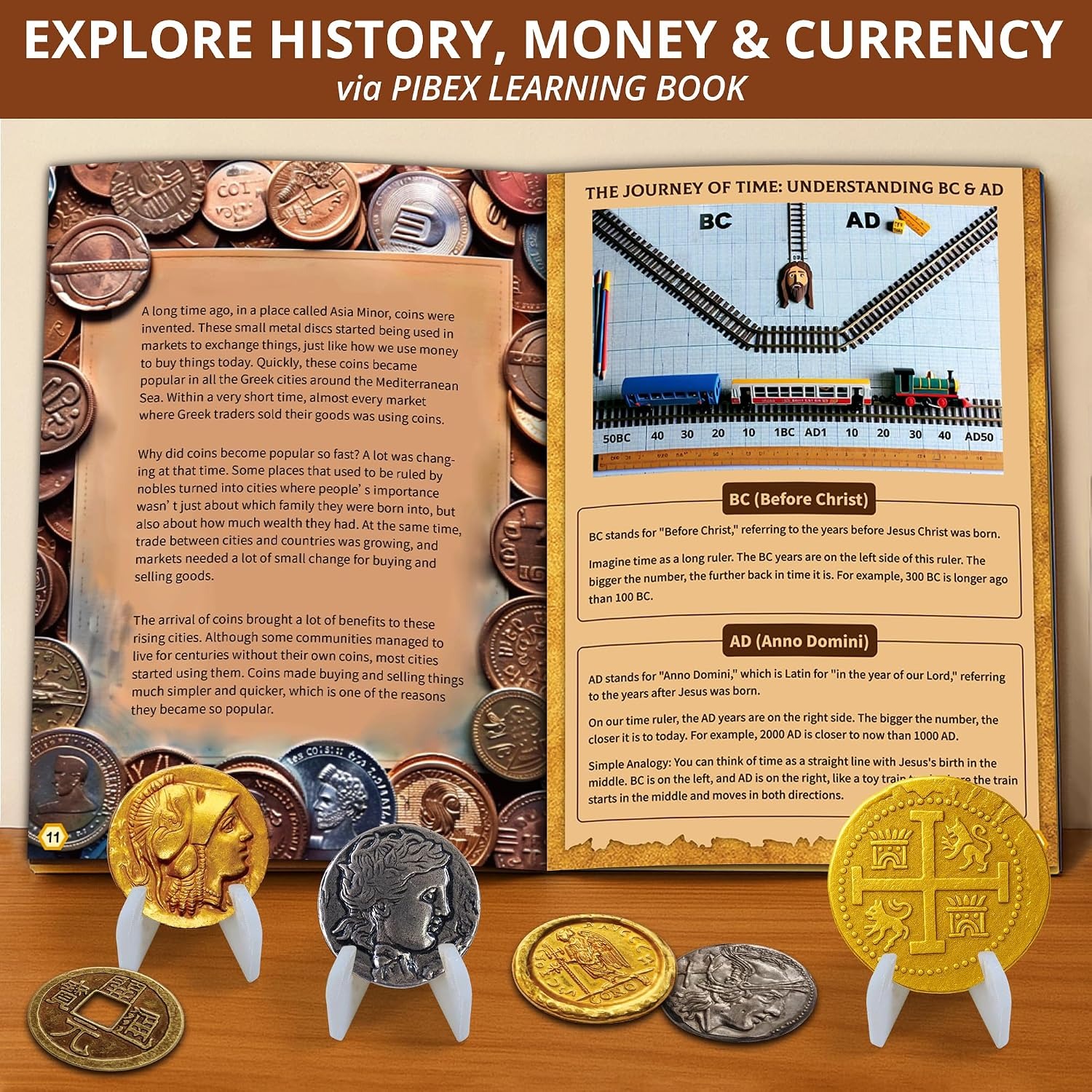
Look for the context. The full-colour learning booklet here includes historical facts about the coins, which turns a sensory activity into a short lesson about money and history. That is the difference between a good coin collecting starter kit and a bag of shiny discs.
Think about the item count. This set lists 16 items in total. That gives enough finds to sustain interest without the block being so dense that it falls apart at a touch.
Finally, check assembly. This set requires none, which is worth more than it sounds when you are wrapping a present at eleven at night.
Setting up for a dig that goes well
Pick your surface first. Outdoors on a step, a patio table or a picnic bench is the easiest option. Indoors, put the block in a baking tray, a large plastic tub or on a flattened cardboard box, with a bin within reach.
Light matters. The coins are detailed, and a lot of that detail disappears in a dim corner. A window seat or a desk lamp makes the finds look far more impressive.
Set expectations before the first hit. Tell the child this is meant to take a while, and that going slowly gets better results. A child who expects five minutes will be frustrated at twenty. A child who expects an afternoon will be delighted at twenty.
Supervise the early stages, particularly with younger children and small parts. Eye protection is sensible with any gypsum excavation, and an adult nearby keeps the energy on the careful side.
Let them stop and come back. There is no rule that the block must be finished in one go. Spreading a kids gypsum dig block across two or three sittings often produces more enjoyment than one marathon session.
Looking after the finds
Keep the block dry and in its packaging until the day you use it. Damp gypsum softens and can crumble before you want it to.
After digging, brush loose dust off the coins and charms with a dry cloth or soft brush. Do not soak metal pieces, and dry them straight away if they do get wet.
Bin the spent gypsum rather than washing it away. It can settle in pipes and cause problems you really do not want.
Store the coins in their stands on a shelf, or in a small box or pouch so the edges do not scuff against each other. The charms live happily on the necklace chain.
The short version
This is a dig kit that gives a child something to work for and something to keep. The gypsum block hides 12 metal coin replicas plus the PIBEX-exclusive Captain Jack Marlow's Magic Coin, three pirate charms and a necklace chain, with 12 stands for display and a full-colour booklet explaining the history behind the designs. Sixteen items in total, no assembly, recommended for ages 6 and up.
It suits the kind of child who likes finding things out slowly, and it suits a parent who wants an hour of focused quiet that does not involve a screen. Set it up on a tray, give them good light, and let them take their time.