
The complete guide
The Practical Buyer's Guide to Pull Back Cars in Bulk
The problem a tub of mini cars quietly solves
There is a particular kind of panic that hits the night before a child's birthday party. The cake is handled, the games are sorted, and then you count the guest list and realise you have nothing to put in the party bags. Or it is a Wednesday in a classroom and the prize box is down to three stickers and a pencil sharpener. Or you are boarding a flight with a four year old and the tablet has eight percent battery.
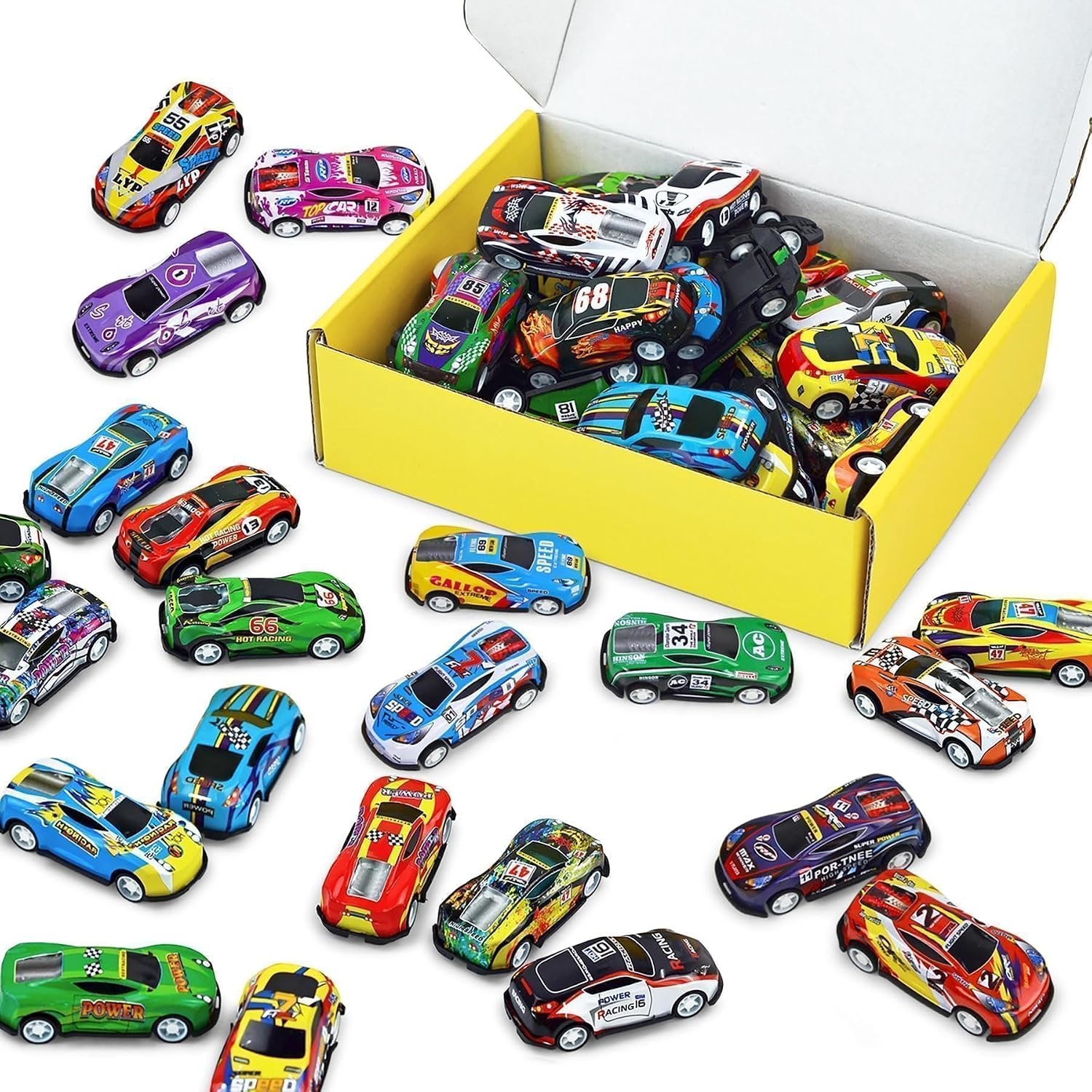
A bulk pack of pull back cars is the boring, reliable answer to all three. Thirty cars, no batteries, no setup, nothing to charge. You open the box and you have solved a problem that would otherwise cost you an evening and a trip to the shops.
What makes them work is that children already know how to use them. Nobody has to explain a pull back car. A three year old will drag it backwards on instinct, let go, and then chase it. That is the whole learning curve.
How a pull back car works
Inside each little body is a spring and a set of gears connected to the rear axle. When the car is pushed backwards across a firm surface, the wheels turn the gears and wind the spring tight. Lift your hand and the spring unwinds, driving the wheels forward and sending the car off on its own.
It is sometimes called a friction motor, and it has barely changed in design for a very long time because there is nothing to improve. There is no on switch, no circuit board, no charging port and no battery compartment with a screw that always goes missing. The energy comes entirely from the child's own hand.
That has a practical upside for parents. The best no battery toy cars never die halfway through a long afternoon. They do not need a cable, they do not need a replacement AA, and they cannot be left switched on in a toy box overnight.
Who this set suits
Vileafy lists the recommended age as 36 months to 10 years, which is a wide window, and the way children use the cars changes across it.
At three and four, the attraction is cause and effect. Pull, release, watch it go. The listed educational objective is improving fine motor skills and hand-eye coordination, and that is a fair description of what pulling back and releasing a small object repeatedly actually trains.
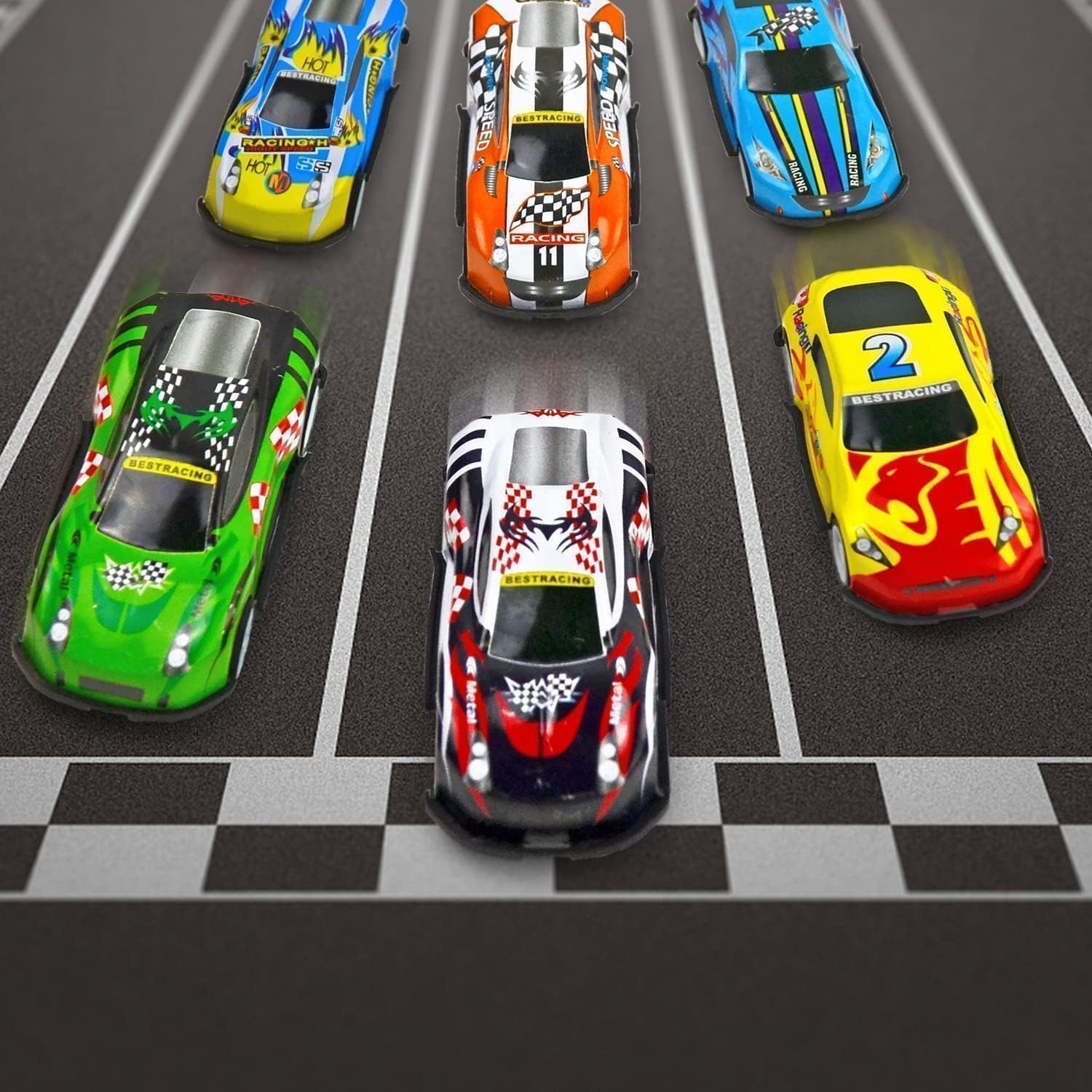
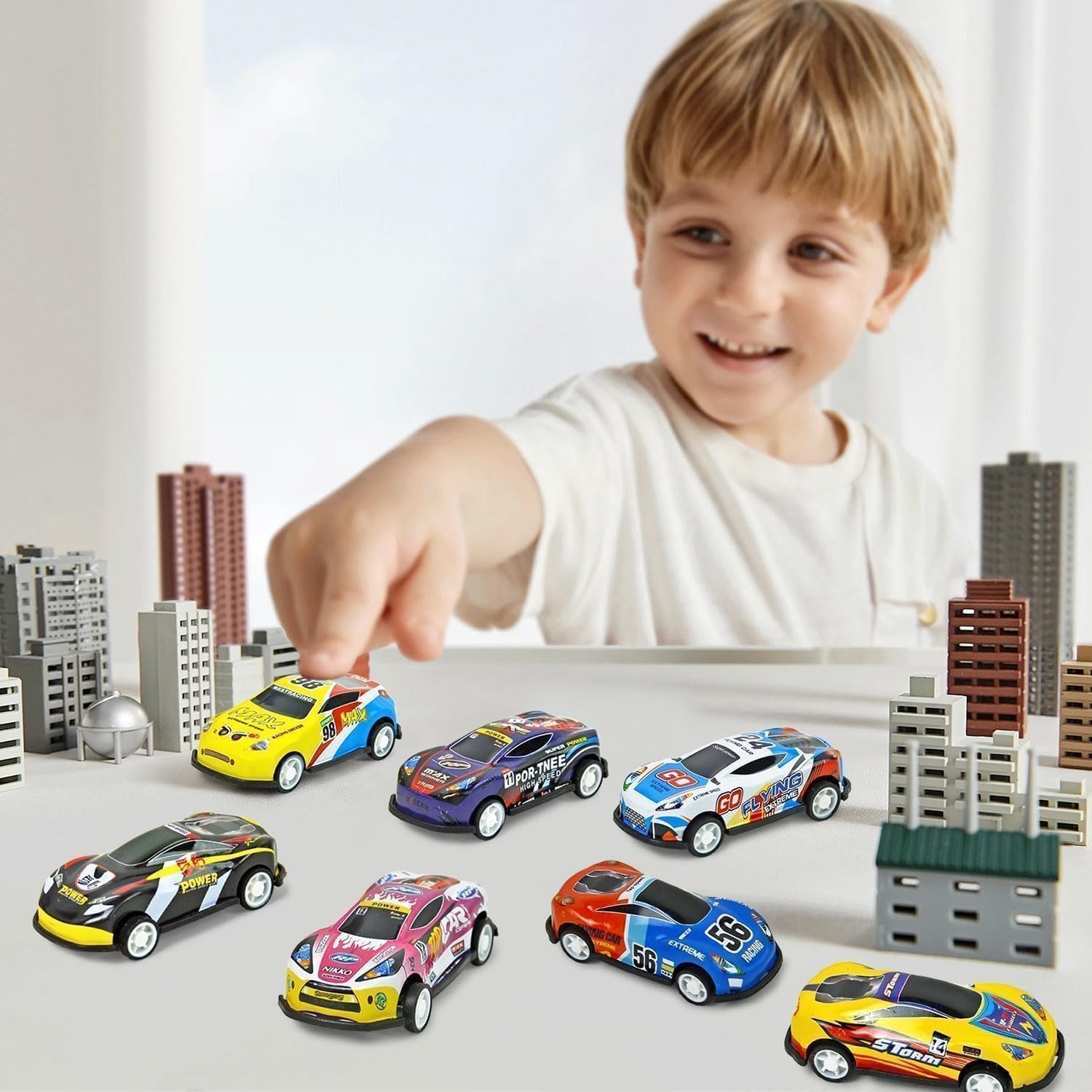
By five or six, the play gets more structured. Children line the cars up, hold races, build ramps out of books and cardboard, and sort the fleet by colour. Having thirty cars rather than three is what makes all of that possible.
Older children, up to about ten, tend to use them in bigger builds. Block tracks, chalk roads on a hard floor, jumps and tunnels. They also make excellent prizes, because a child of that age still likes winning something tangible.
The set is listed for indoor use. On smooth floorboards, tiles or a kitchen table the cars run properly. On thick carpet, grass or gravel they will stall almost straight away, so set expectations accordingly.
Why thirty is the useful number
Buying mini cars individually is expensive and slow. Buying them in a pack of thirty changes the maths completely, and it changes how you use them.
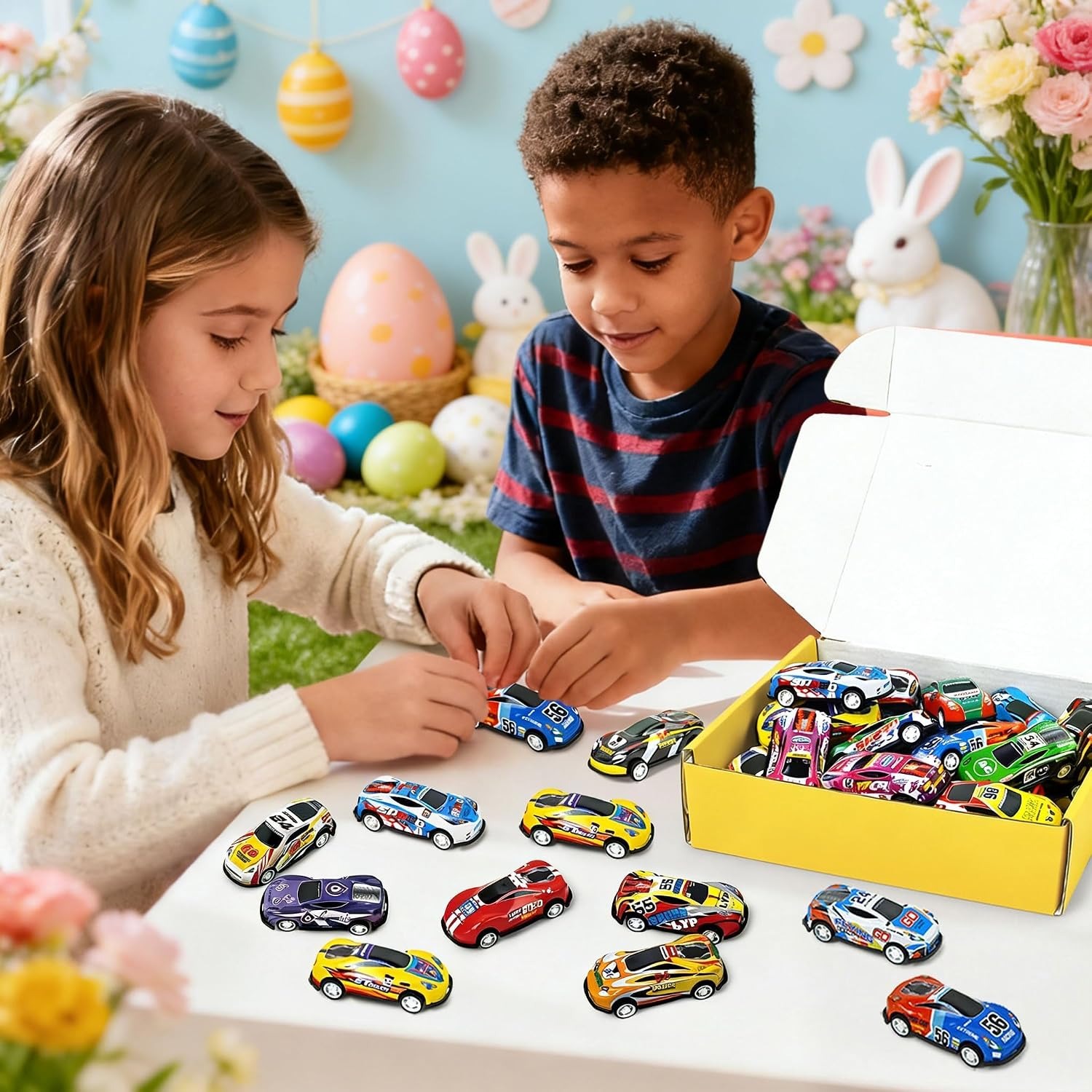
For a birthday party, thirty covers a typical guest list with spares for the siblings who inevitably turn up. For a classroom, it covers a prize box for most of a term. For a household, it means there are enough for two or three children to play together without a fight over the red one.
There is also a quiet benefit to volume. Small toys get lost. They go under the couch, down the side of a car seat, into the vacuum cleaner. With thirty in the tub, losing one is a shrug rather than a crisis. That resilience is a real part of why bulk packs suit high traffic places like childcare rooms and waiting areas.
Choosing a pull back car set
If you are comparing packs, a few things actually matter and a few do not.
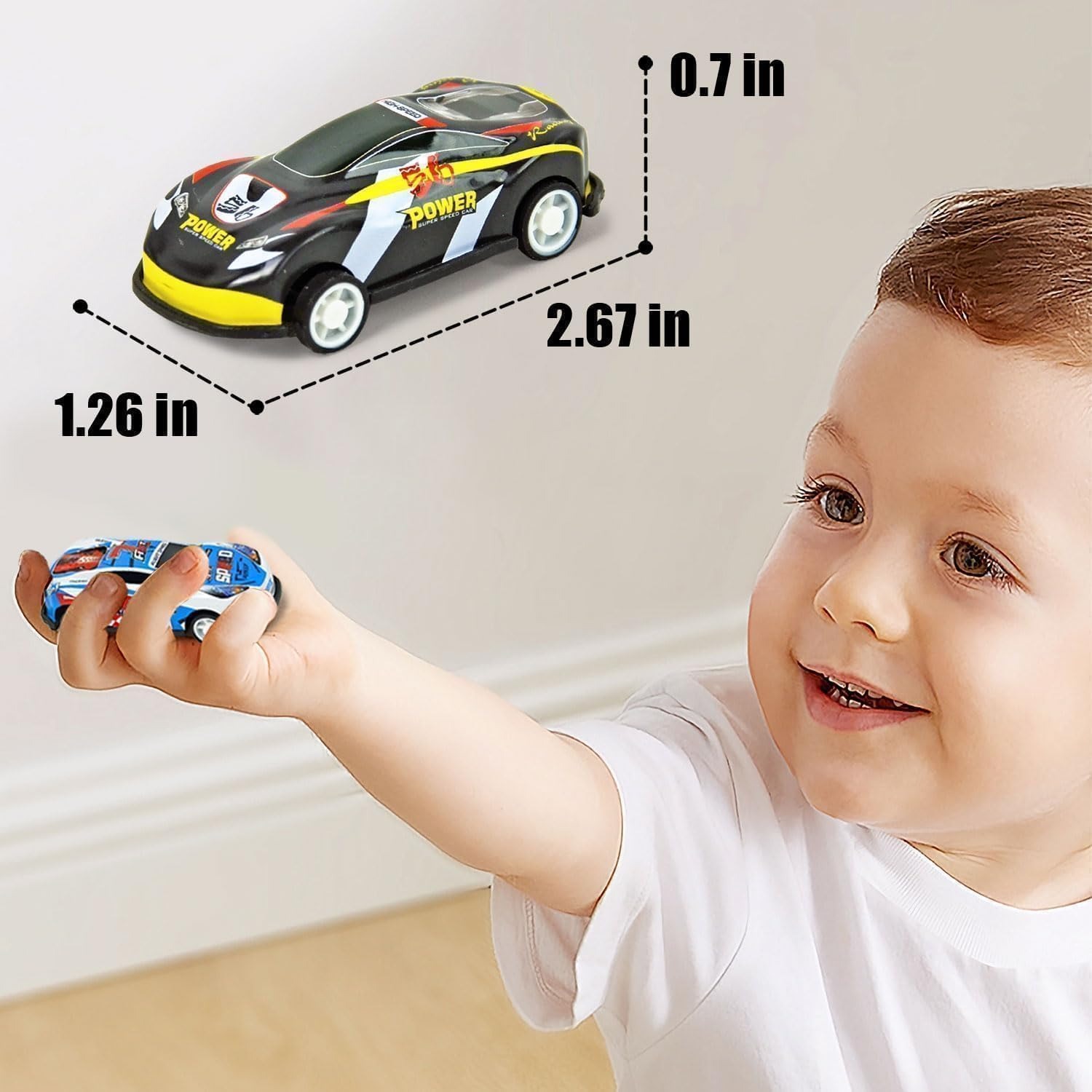
Size is worth checking first. These measure about 6.7 x 3.2 x 2.5 cm per car, roughly 2.6 x 1.3 x 1 inches. That is deliberately small, which is what makes them pocket friendly and good for travel, but it also means they are not suitable for children under three who still put things in their mouths.
Power source is the next question. Friction pull back means no batteries, no noise and no electronics. If you want lights and sirens, this is not the set. If you want something you can hand to thirty children without thinking about it, it is.
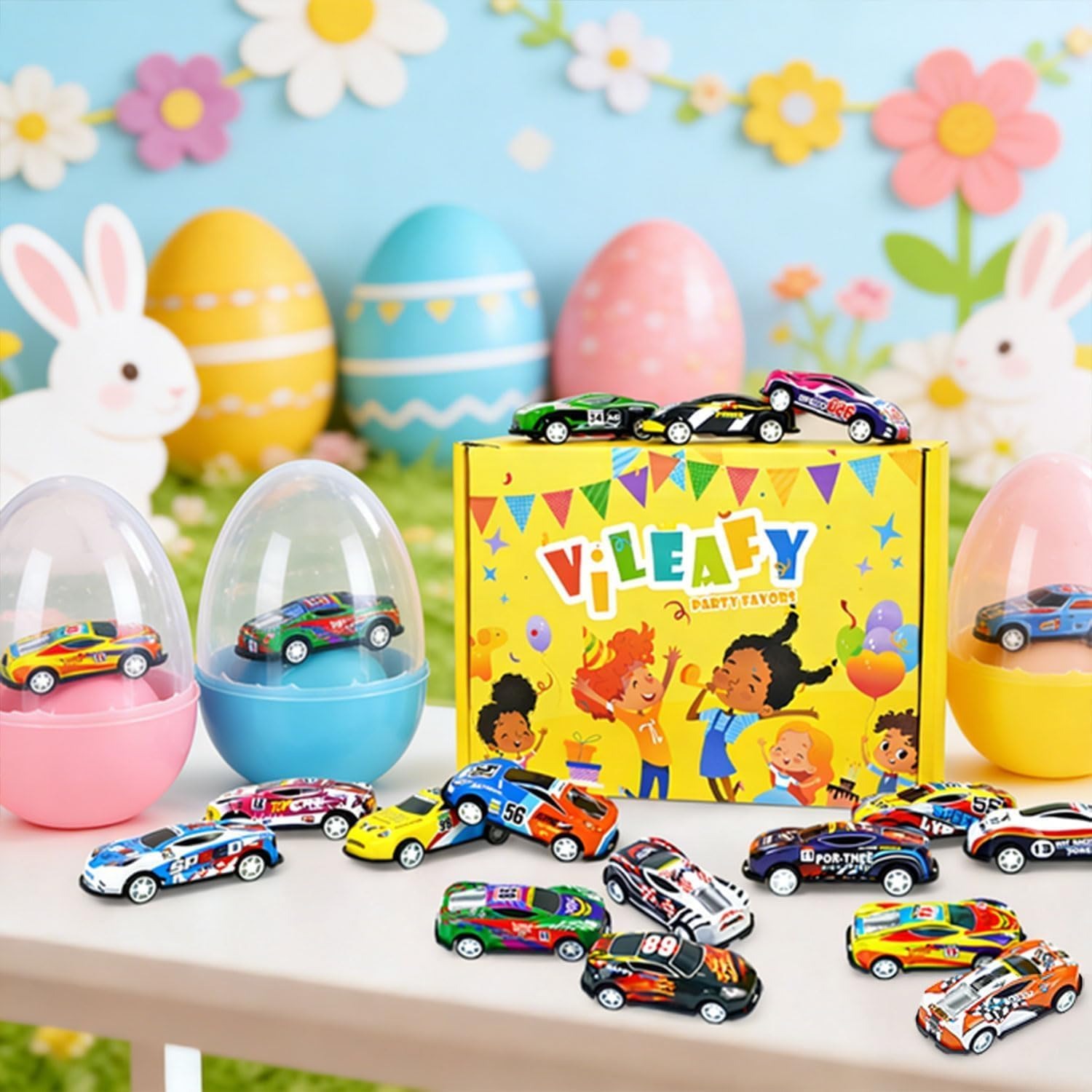
Colour choice is worth understanding before you buy. The assortment here is random. You cannot request all blue or a specific vehicle mix. In practice children like the variety, and at a party a random mix stops anyone claiming the special one, but if you need a matched set for a themed event, a random pack is the wrong tool.
Finally, consider what you are really buying for. Party bag fillers, prize boxes and travel distraction are three different jobs, and a bulk pack happens to do all of them. A single premium die cast model does one of them beautifully and none of the others.
Care, storage and keeping them running
Cleaning is simple. Wipe each car with a damp cloth and dry it. Do not soak them, do not put them in the dishwasher, and keep them out of the washing machine. Water can reach the spring mechanism inside and that is usually the end of that car.
The most common failure is not the spring at all. It is long hair, carpet fluff or a loose thread wound tightly around an axle. Turn the car over and you will usually see it. Tweezers or fingernails get it out in a few seconds and the car runs again.
Grit is the other enemy. If the cars have been outside on a path or in sand, give the wheels a wipe before they go back in the tub. Sand in the gearing makes a pull back car feel sticky and slow.
For storage, anything with a lid works. A plastic tub, a drawstring bag, an old shoe box. Keeping the fleet together means clean up takes a minute instead of a treasure hunt, and it keeps them out of the path of a vacuum cleaner.
Ideas beyond the obvious
A few uses that come up again and again. Advent calendars, where one car fills a pocket nicely. Reward charts, where a car is the prize at the end of a row of stickers. Waiting bags for medical appointments, where quiet matters. Colour sorting and counting activities for younger children, since thirty is a good number to count, group and share out.
They also travel well as a handover gift. A couple of cars in a small bag works as a thank you for a party guest, a classmate or a cousin, and it costs almost nothing per child.
The short version
This is thirty mini pull back race cars from Vileafy, model VL-HLC-Race30. Each car is about 6.7 x 3.2 x 2.5 cm, made from metal and plastic, with colours and styles supplied at random. No batteries are needed or included, and nothing requires assembly. The recommended age is 36 months to 10 years and the stated aim is better fine motor skills and hand-eye coordination. Usage is listed as indoor.
Buy it if you need volume, quiet and reliability: party bags, prize boxes, travel bags, a shared toy tub. Skip it if you need a specific colour set, a toy for a child under three, or something with lights and sound. Pack weight and country of origin are not specified by the maker, so we have not stated them.