
The complete guide
Choosing a Safari Animal Figures Set, A Parent's Buying Guide
The problem with most animal toys
Here is how it usually goes. Someone buys a bag of plastic animals. The child is thrilled for a day. Within a week the lion is behind the bookshelf, the giraffe has lost a leg, and the rest are scattered through three different rooms. Nobody knows how many there were to begin with, so nobody notices when half of them vanish.
The toy was never the problem. The problem was that it was just a pile of animals with nowhere to live and nowhere to go at the end of the day.
A proper safari animal figures set fixes both of those at once. It gives children the animals and the world those animals move through, and it gives parents a lid. That sounds small. It is not. A set that packs itself away is a set that is still complete at Christmas next year.
What you actually get in this set
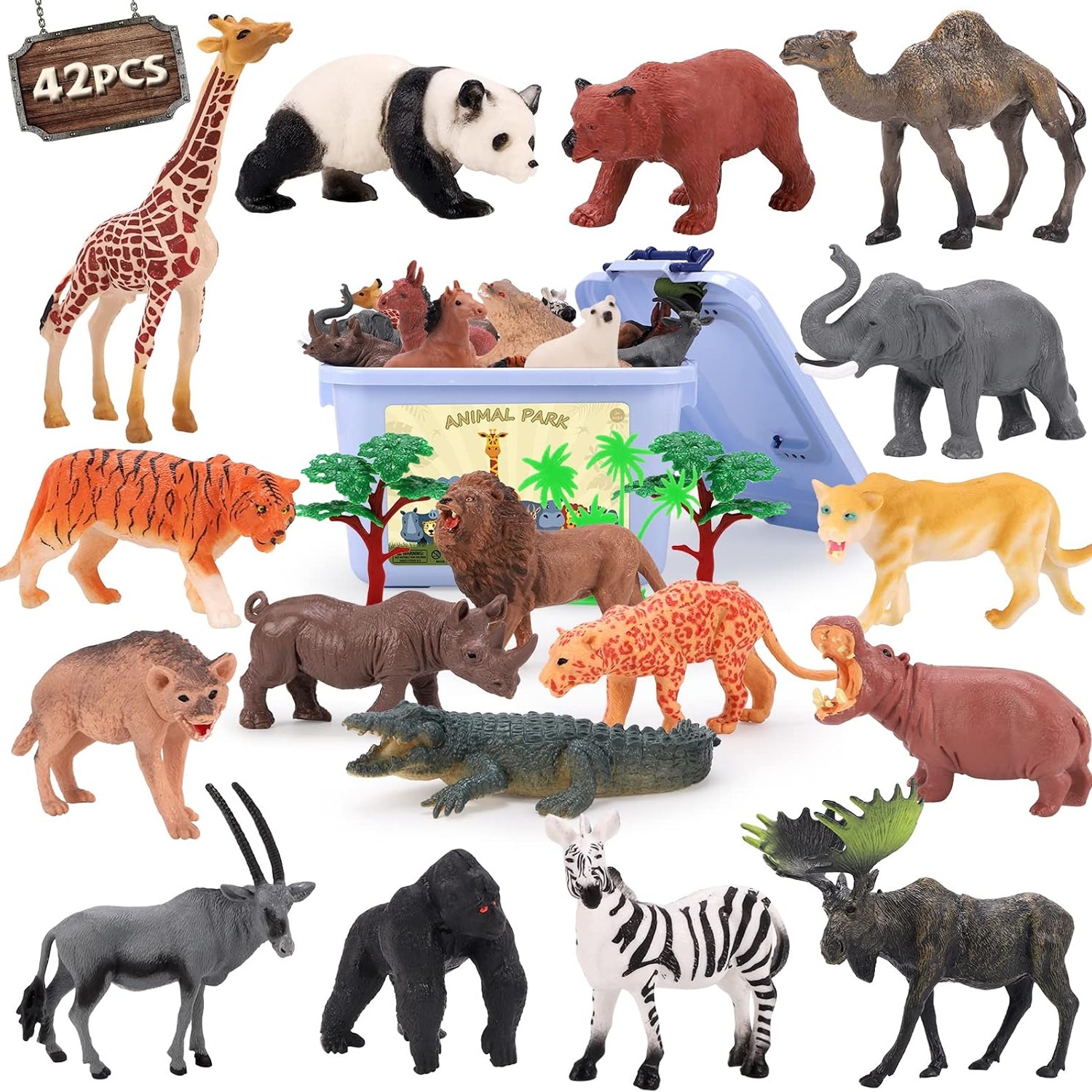
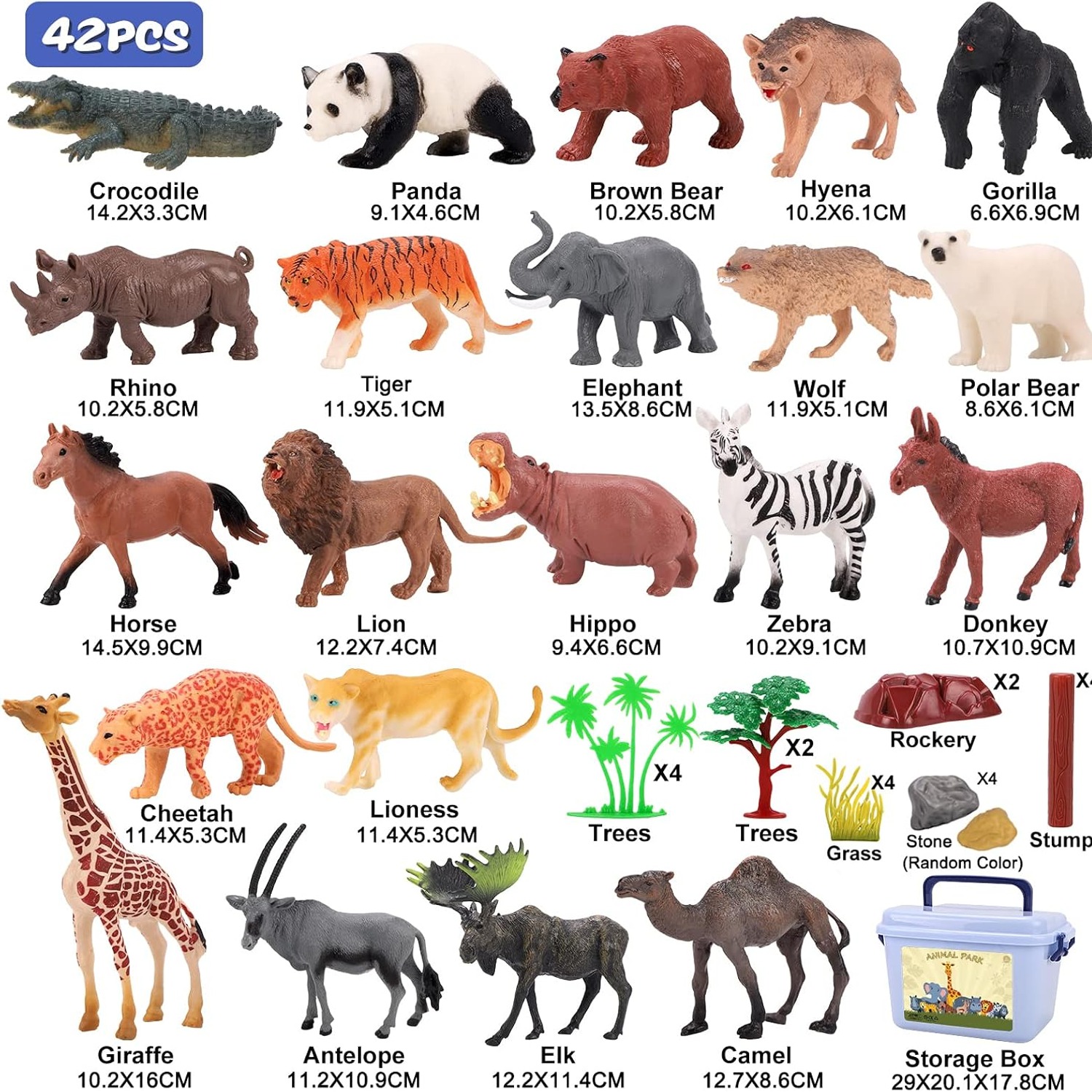
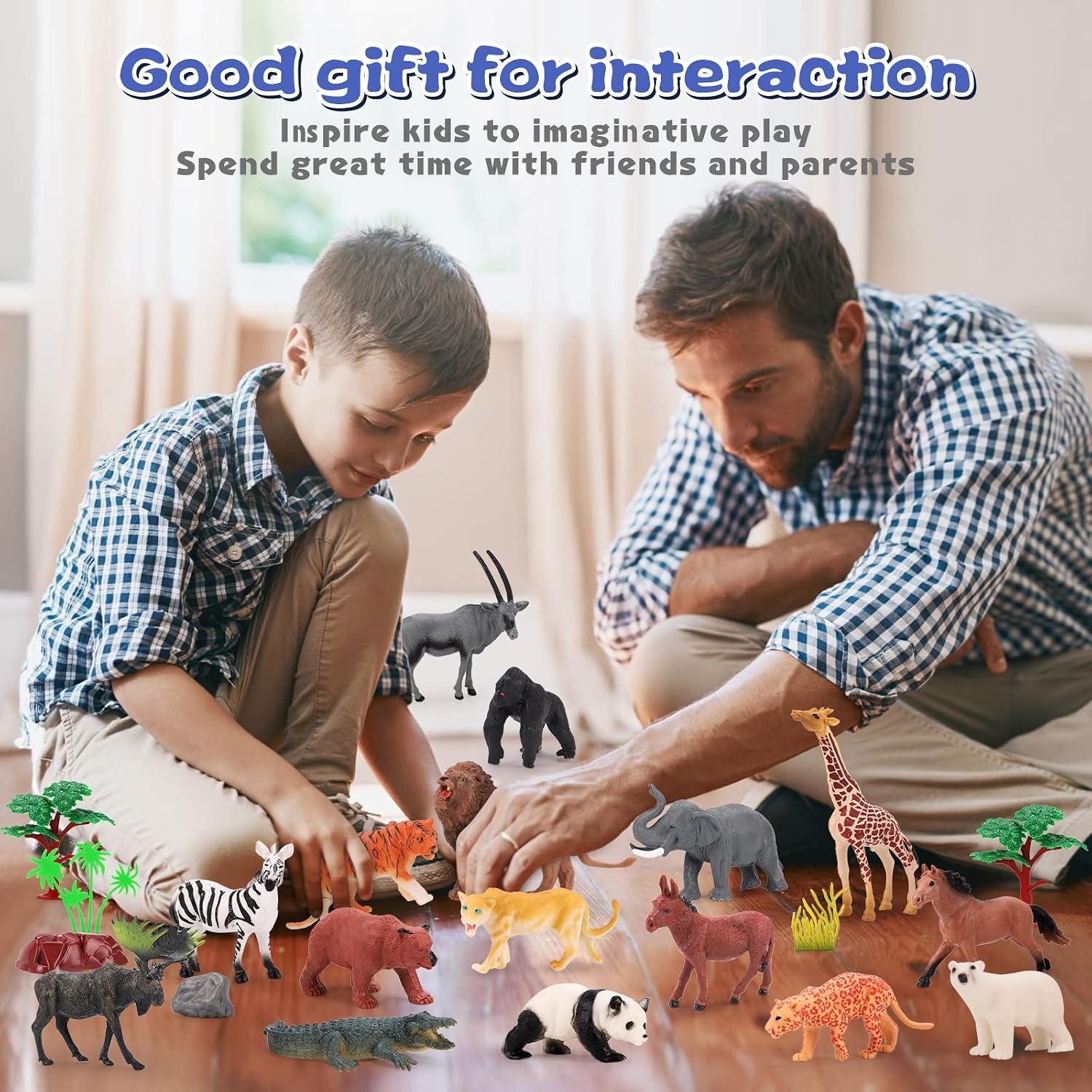
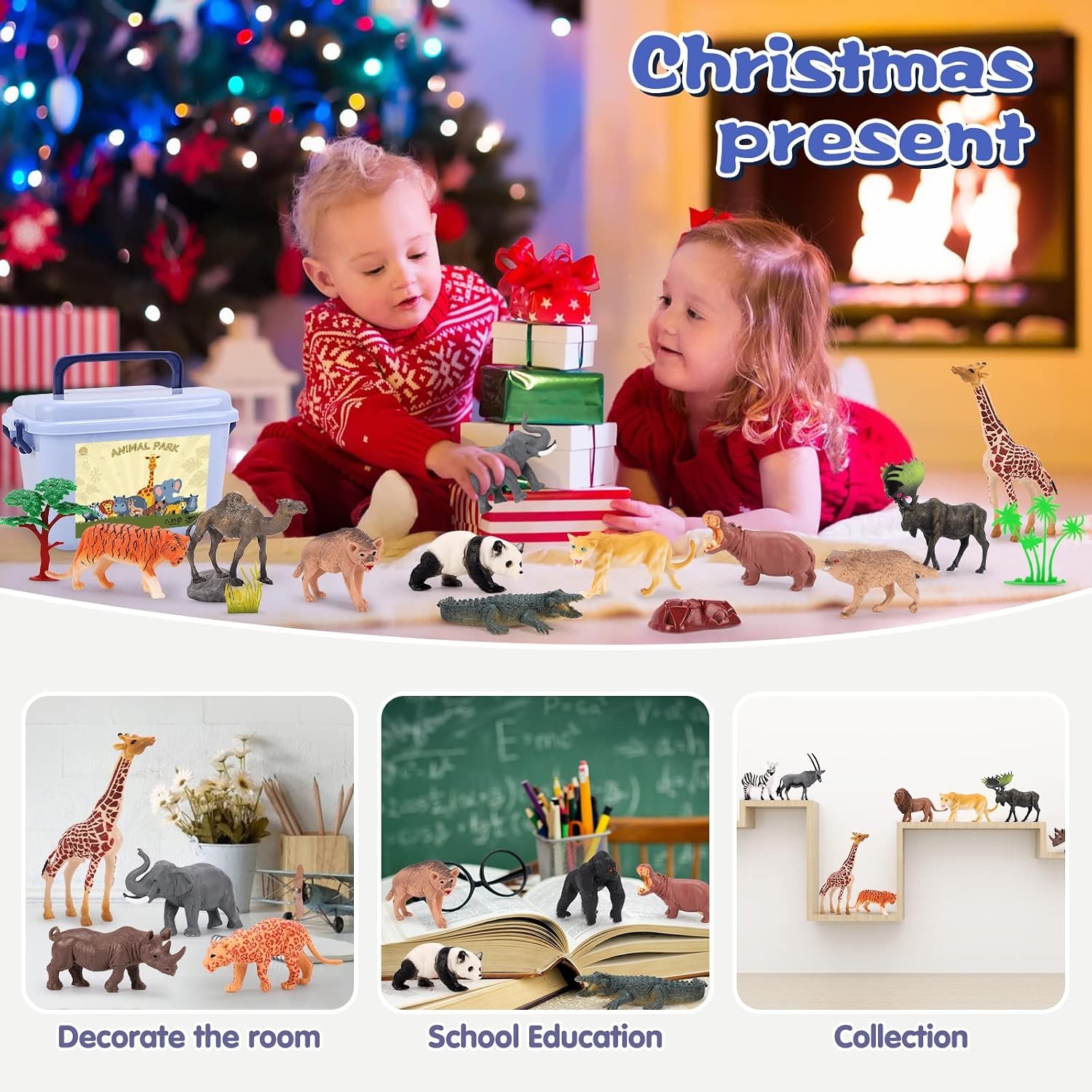
This one has 42 pieces. Twenty of those are animal figures. The other 22 are scenery, split between fourteen trees and six stones and rockery pieces. Everything lives in a handled storage case.
That ratio matters more than the headline number. Plenty of sets advertise a big piece count and then deliver fifty near-identical animals. Scenery is what turns a collection into a scene. Trees give animals somewhere to shelter. Rocks give them something to climb and a boundary to work around. Children stop lining figures up in a row and start making decisions about where things go, which is where the real play begins.
No assembly is required, which is worth noting on a birthday morning. There is nothing to clip together, no stickers to apply and no batteries to find. Open the case and go.
The manufacturer recommends it for ages 3 years and up.
How children actually use it
Watch a four year old with a set like this and you will see three stages, usually within the first twenty minutes.
First comes the sorting. Everything gets tipped out and arranged. Big animals here, small ones there. This is not stalling, it is how children get to know what they have.
Then comes the building. The trees go in a cluster, the rocks become a wall or a cave, and suddenly there is a place. Some children build with great care. Others dump the trees in a heap and declare it a forest. Both are fine.
Last comes the story. The hippo is thirsty. The tiger is lost. A ranger (usually the child's hand) comes to help. This is the part that lasts, and it is the part that quietly does all the useful work, building vocabulary, sequencing, empathy and problem solving while it looks like nothing much is happening.
Who it suits
Three to around seven is the sweet spot. At three, the appeal is naming and handling. At five, children start grouping animals by where they live and what they eat. At seven, the set tends to get absorbed into bigger games with vehicles, blocks or other figures.
It works well for a child who already loves animals, obviously. It also works for a child whose interests you do not know. That makes it one of the more reliable animal figures birthday gift options when you are buying for a niece, a nephew or a classmate.
It is also a good fit for nurseries, kindergarten rooms and family daycare. Small world play is a standard part of early years practice, and a set with its own lidded box is far easier to run as a shared resource than a loose basket.
One honest note. If you are buying for a child under three, wait. The age guide is three and up, and no amount of supervision makes a small figure the right toy for a child who is still exploring with their mouth.
How to choose between animal sets
A few things separate a set that gets played with from one that gets shelved.
Count the non-animals. As covered above, scenery is what gives the play somewhere to go. A set with trees and rocks will outlast a set with none.
Check for a container. This is the single best predictor of whether a set survives the year. If it ships in a cardboard box, that box will be in the recycling within a fortnight and the pieces will scatter. A case with a handle is worth paying a little more for.
Look at the size of the figures. Small enough to carry, big enough not to disappear into the carpet. Chunky play figures suit small hands better than fine detailed display models, which tend to have delicate horns and tails that snap.
Think about variety over volume. Twenty different animals beat forty copies of five animals every time. Variety is what drives the naming, the sorting and the conversation.
Consider what they already own. Animal figures mix happily with other toys. If there is already a dinosaur collection in the house, these trees and rocks will get drafted in. That is a feature, not a clash.
Making it last
Care is straightforward. A damp cloth and a little mild soap handles most of it. After sandpit or garden play, rinse the pieces and let them dry fully before they go back in the case, because trapped damp is what makes a toy box smell.
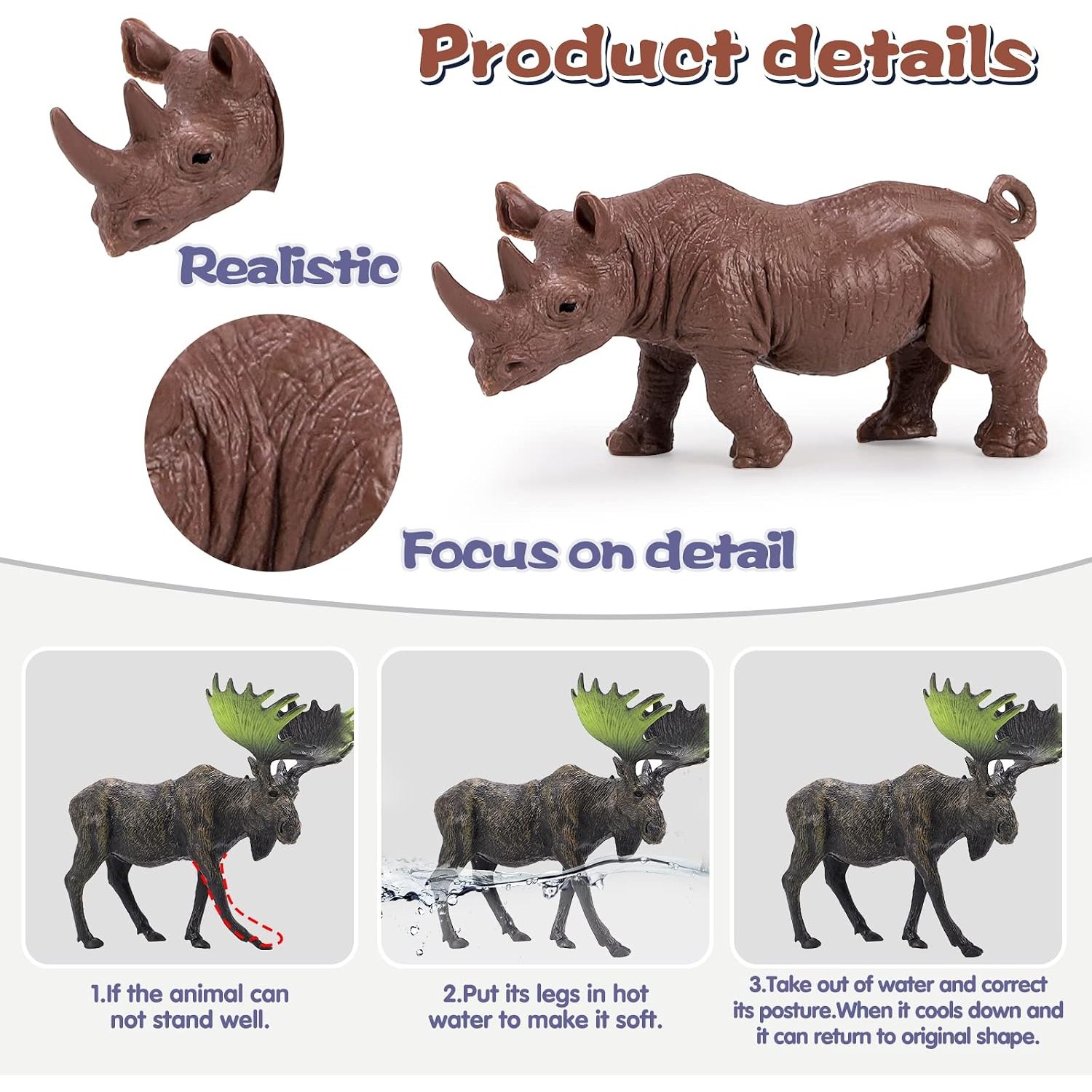
Skip the dishwasher. Heat can warp moulded toys, and there is no need for it.
Make packing up part of the game rather than a separate instruction. "Can you get all the animals back to the park before dinner?" works far better than "tidy up now" and takes about the same amount of time. Children who put the set away themselves tend to keep it complete.
Every few months, tip the whole thing out and have a look. Set aside anything cracked or chipped. It takes two minutes and it keeps the set safe.
Getting more out of it
If you want to stretch the set beyond basic play, a few easy additions cost nothing.
A green towel becomes grassland. A baking tray of dry rice or sand becomes a desert. A shallow dish of water becomes a watering hole, and that one alone can buy you half an hour.
Sorting games are easy wins. Group by size, by colour, by who has horns, by who lives in water. Older children can be asked to sort by continent or by diet, which turns the set into a quiet geography lesson without anyone announcing it as one.
Counting works too. Twenty animals is a good number for simple maths. Take three away, how many are left. Line them up in pairs, is anyone left over.
And a set like this is a genuinely good talking prompt. "Where do you think this one sleeps?" gets better answers than most direct questions, because the child is already thinking about the animal.
The short version
This is a 42 piece safari set with twenty animals, fourteen trees, six rocks and a carry case, recommended for ages three and up and ready to play with straight from the box.
It suits children who like animals, children you do not know well enough to buy for precisely, and any household that is tired of finding small plastic legs under the sofa. The scenery makes the play last. The case makes the set last.
If it turns out not to be right for your child, message us with your order number and we will sort it out.