
The complete guide
Steel Tongue Drum Buyer's Guide, How to Choose and Play Your First One
The problem with picking up an instrument
Most people who say they wish they played something are not lazy. They are blocked. A guitar needs calluses and a month of sore fingers before it sounds like anything. A keyboard needs you to learn where the notes live. A recorder needs breath control and a patient household. Every one of them has a stretch at the start where you sound bad, and that stretch is where nearly everyone quits.
A steel tongue drum removes that stretch. The tuning does the hard part for you. You tap, and it sounds nice. Tap again in a different spot, and it still sounds nice. There is no period of making ugly noises while you learn, which means there is nothing to push through and nothing to give up on.
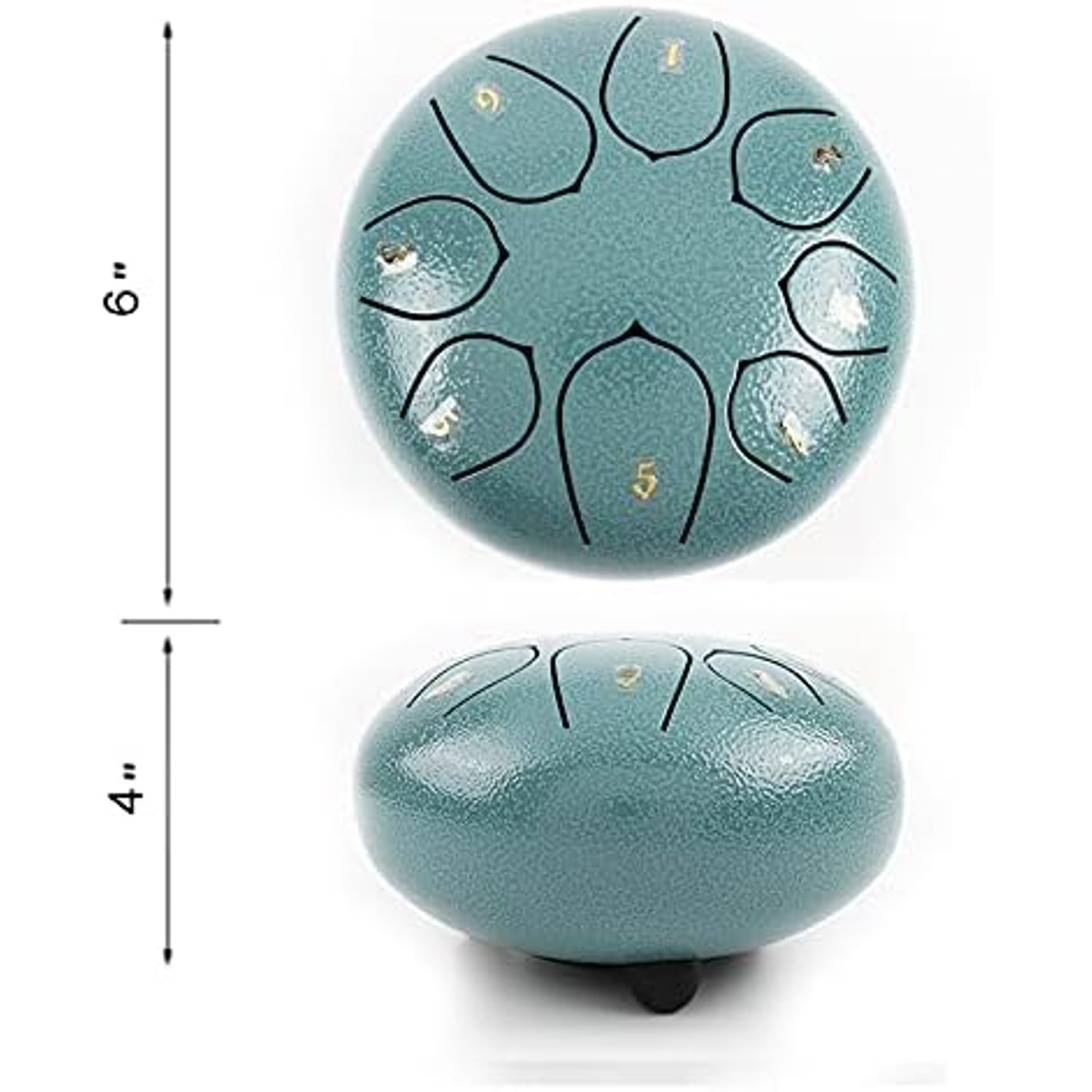
That is not a trick or a toy shortcut. It is how the instrument is designed. Eight tongues cut into a steel body, tuned to a C major pentatonic scale, chosen precisely because those five repeating notes do not clash with each other.
How a steel tongue drum actually works
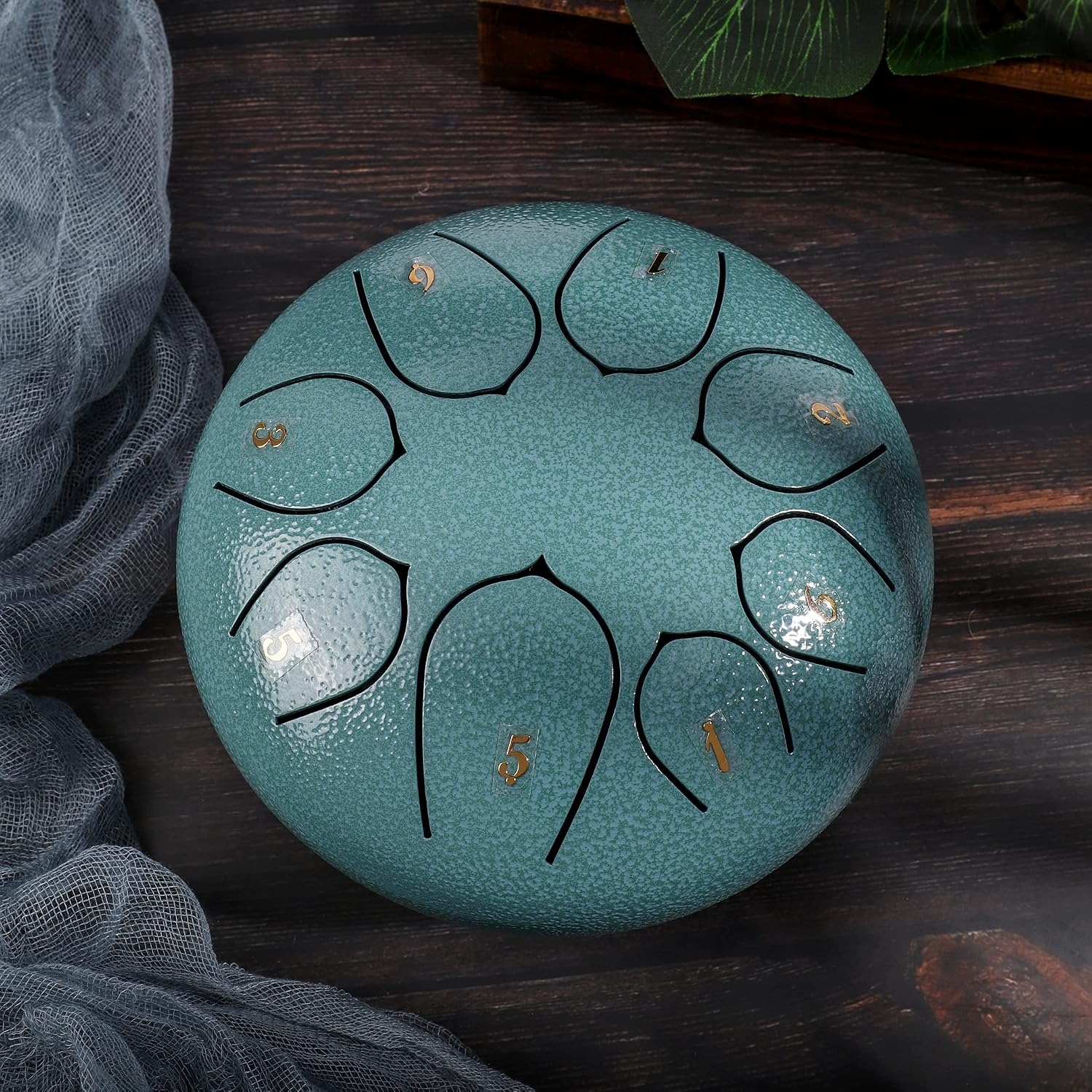
Picture a small steel dome with slots cut into the top surface. Those slots leave tongues of metal, each a slightly different length and shape. Longer tongues vibrate slower and give lower notes. Shorter ones give higher notes. Strike one and it rings, the hollow body below amplifies the vibration, and you get a clear tone with a long, soft decay.
On this 6 inch drum, the slots are cut with lasers. That matters because the pitch of each tongue depends entirely on its exact dimensions. Precision cutting is how you get eight tongues that agree with each other. Once the steel is cut, the tuning is fixed. There are no strings to stretch, no reeds to warp, nothing to adjust. You will not need to tune it, this year or in ten years.
The body is polished alloy steel in turquoise. Steel is what gives you that bell-like clarity rather than the thud you would get from wood or plastic. It also means the drum has a bit of weight to it for its size, 500 grams, which helps it sit still while you play.
Fingers or mallets, and why you want both
The two mallets included are the obvious way to play. They give a bright, defined attack and more volume, and they make it easier to hit a tongue cleanly in the middle where the tone is fullest. If you are following a score, mallets are the straightforward choice.
Fingers give you something different. The tone goes softer, warmer and a little more muted, and you get much more control over how hard each note lands. Quiet late-night playing is almost always a fingers job. So is anything where you want the drum to blend into the background rather than lead.
Most people end up moving between the two, sometimes in the same piece. A common trick is mallets in one hand for the melody and a bare fingertip in the other for soft filler notes underneath. There is no rule about it. Try both in the first week and you will work out which one you reach for.
Who this suits
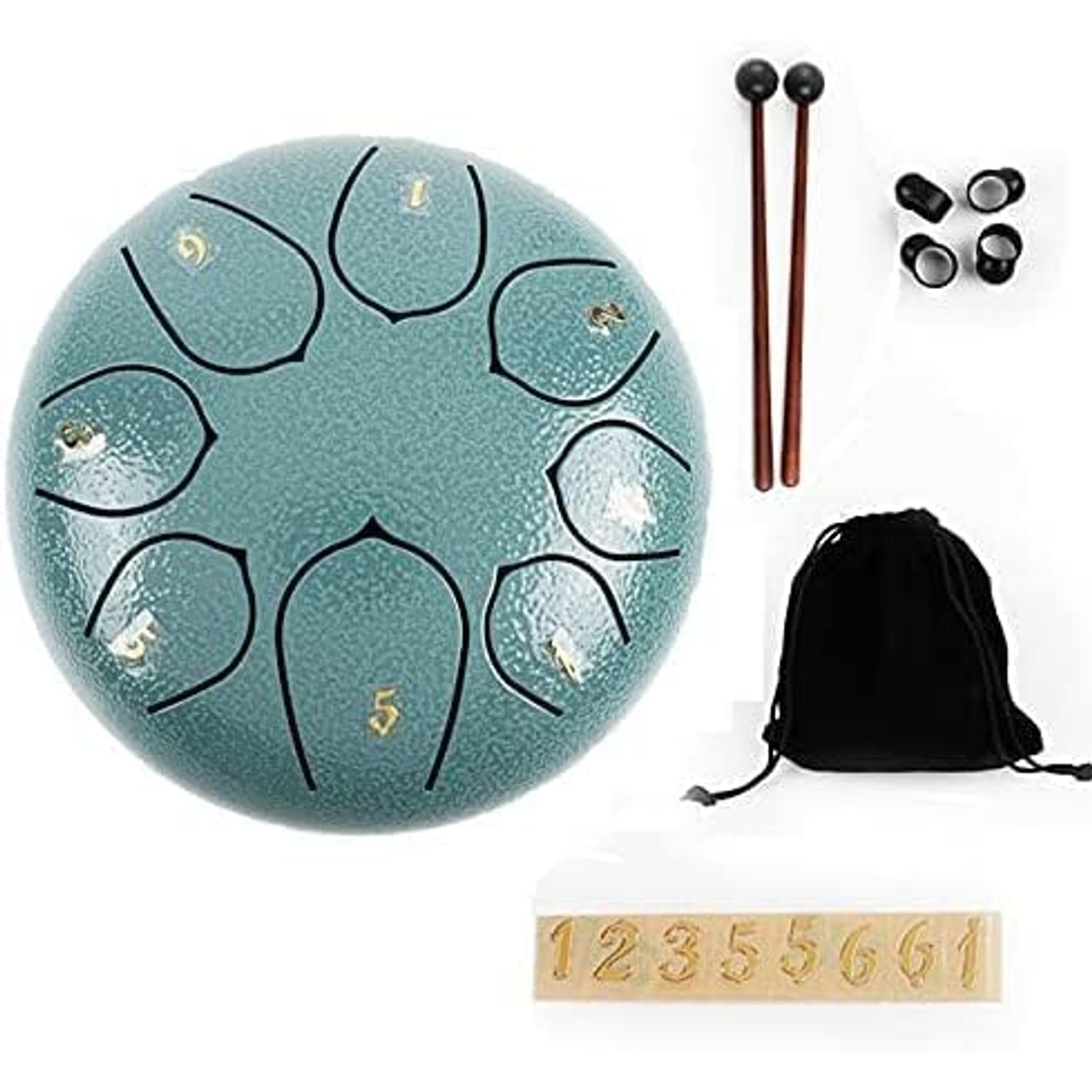
Complete beginners. If you have never played anything, this is about as gentle an entry as exists. The numbered tone sticker included in the set maps each tongue, so you can follow a number-based score without learning to read music first.
People who want five quiet minutes. A lot of buyers are not trying to become musicians at all. They want something physical and calming to do that is not a screen. Tapping out slow patterns on a tongue drum does that well, and the long ring between notes gives your attention somewhere soft to land. It is one of the more popular picks when people search for a best stress relief instrument.
Yoga and meditation practitioners. The sustained decay works for opening and closing a session, marking transitions, or just filling a room with something gentle. Teachers like it because it needs no setup and no power.
Teachers and therapists. Classrooms and group sessions work better when everyone can participate immediately. Hand this to someone with no musical background and they contribute something listenable in seconds. The maker lists music education and mind healing among the intended uses, and that tracks with how these instruments get used in practice.
Parents. Children take to it fast. There is nothing to break, nothing to tune, and no wrong note, which makes it one of the easier options when you are looking for a best percussion instrument for kids. Keep the mallets aside for very small children and let them use fingers.
How to choose between tongue drums
Size is the first decision. Bigger drums have more tongues and a lower, deeper voice, but they are heavier and cost more. A 6 inch drum like this one sits at the practical end. Eight notes is enough for real melodies, and the whole thing fits in a backpack. If you want something you will actually carry to a class or a park, smaller wins.
Scale is the second. C major pentatonic is the most common choice for a first drum and for good reason. It is bright, it suits simple folk tunes and lullabies, and the five-note structure is what makes everything sound good together. Minor scales exist and sound more brooding, which some people prefer for meditation, but they are a less forgiving starting point.
Material is the third. Steel is the standard for this style and gives the clarity and sustain people want. Alloy steel with a polished finish, as used here, holds up well in ordinary household use as long as you keep it dry.
Last, check what comes in the box. A drum on its own is a drum. A drum with mallets, a tone sticker and a bag is something you can use properly on day one, and the bag in particular makes a real difference to whether it gets played or shelved.
Looking after it
Steel and moisture do not get along. That is the whole of the care instructions, really. Wipe the drum with a soft dry cloth after you play to clear fingerprints and any damp from your hands. Keep it out of bathrooms, basements and anywhere that gets condensation.
Store it in the bag when you are not using it. The polished surface shows scratches, and most scratches come from the drum knocking against something in a cupboard or a bag with keys in it. Do not strike it with anything hard or metal beyond the mallets supplied, and do not leave it baking in a car on a hot day.
That is it. No oiling, no restringing, no annual service. Done sensibly, a steel tongue drum is the kind of object that outlasts most of the things you buy in the same week.
Getting good at it
The first session is about exploring. Hit every tongue, listen to how long each one rings, try fingers and mallets, and see which sounds you like. No structure needed.
After that, the numbered sticker is your friend. Tongue drum scores written in numbers are easy to find and easy to follow, and playing a few short tunes teaches your hands where the notes live faster than any theory would. Once the layout is in your fingers, peel the sticker off and start making things up.
Slow is better than fast. The long decay is the best part of the instrument, and rushing covers it up. Leave space between notes and let each one finish. That single habit is the difference between a drum that sounds calming and one that sounds busy.
The short version
Eight laser-cut tongues, C major pentatonic, polished alloy steel, 500 grams, with two mallets, a tone sticker and a carry bag. It needs no tuning, no training and no setup. You can play it with fingers or sticks, it suits children and adults equally, and it is small enough to take anywhere.
If you have wanted to play something for years and never started, this is the instrument with the lowest barrier in front of it. Tap it once and you are already playing.