
The complete guide
Take Apart Dinosaurs with Drill, A Parent's Buying Guide
The toy that keeps starting over
There is a familiar pattern with children's toys. A new figure arrives, it gets carried around for three days, then it joins the pile under the bed. The problem is not the child. It is that the toy only has one state. It came finished, so there is nothing left to do with it.
A take apart dinosaur set works differently because it has two states, built and unbuilt, and the child controls both. Finishing a Tyrannosaurus Rex feels like an achievement. Twenty minutes later, unscrewing it back into a heap of panels feels just as good. That loop is why these sets stay in rotation long after a static figure has gone quiet.
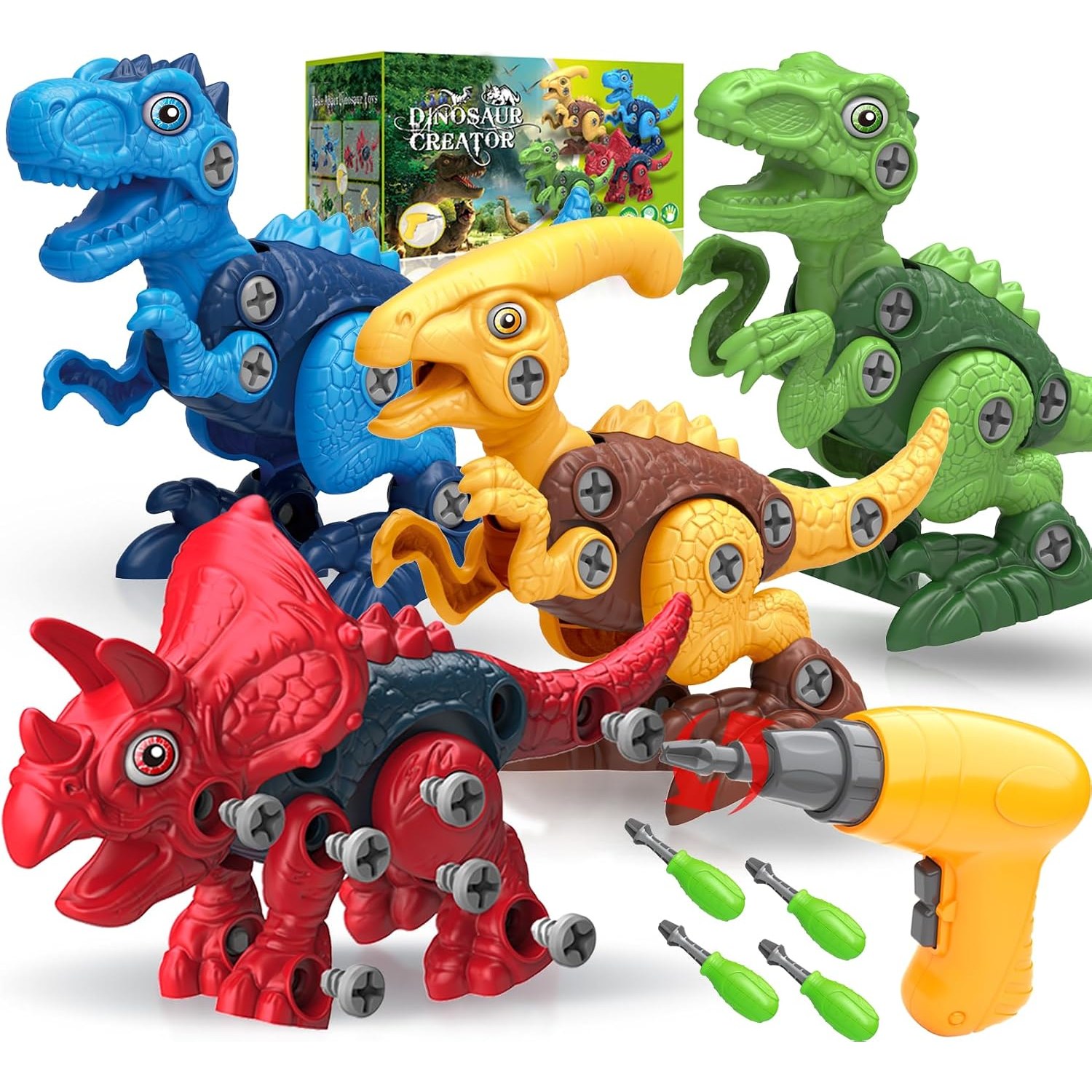
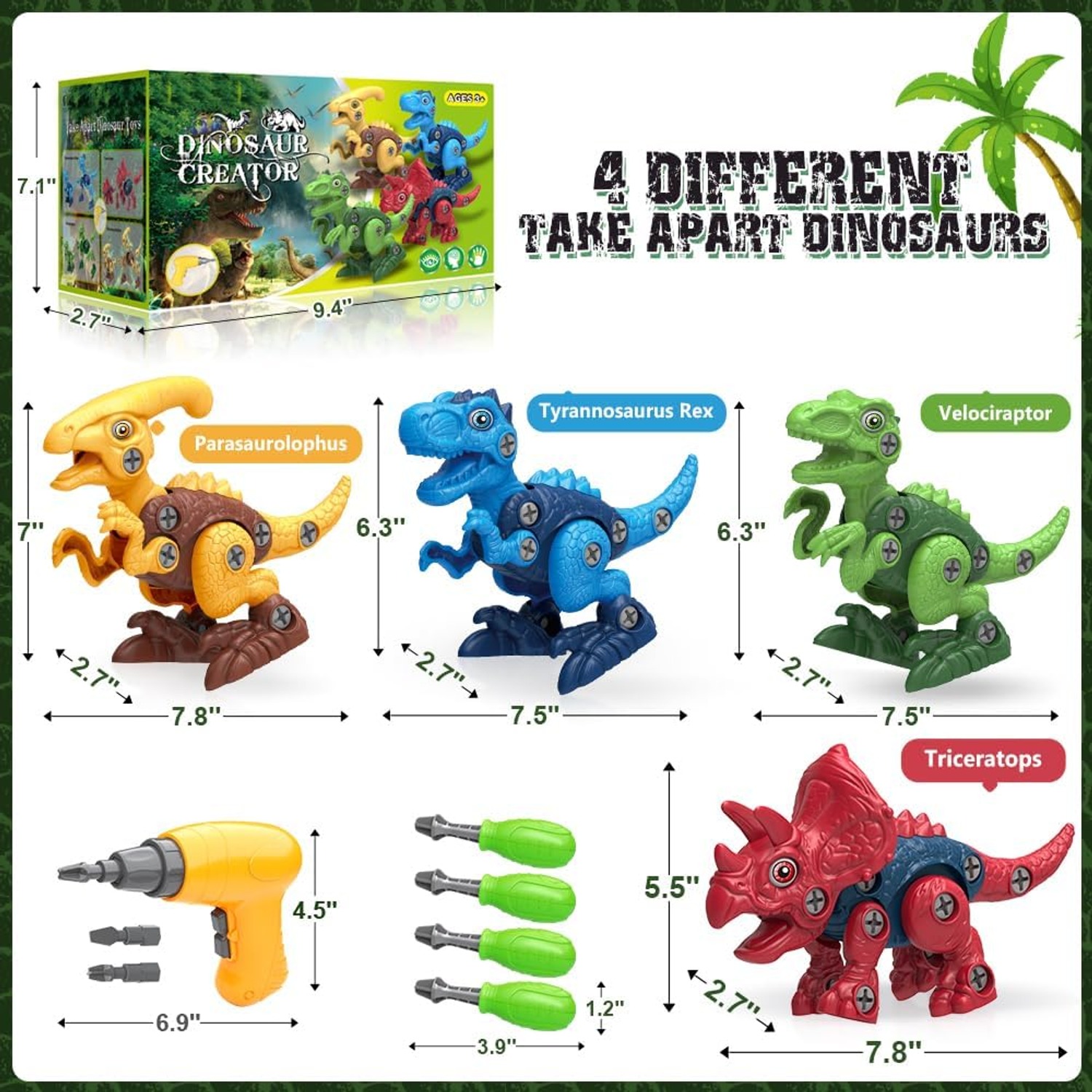
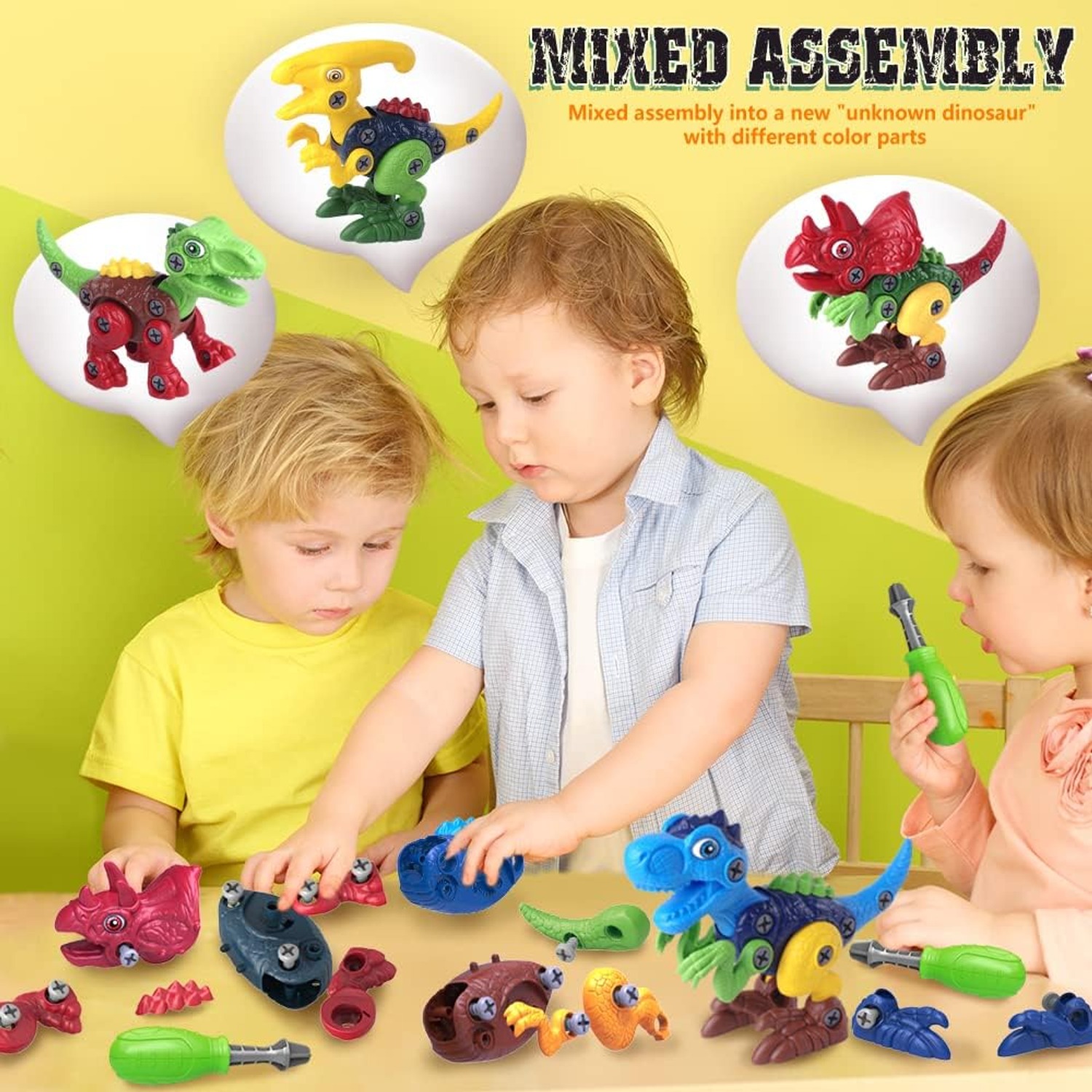
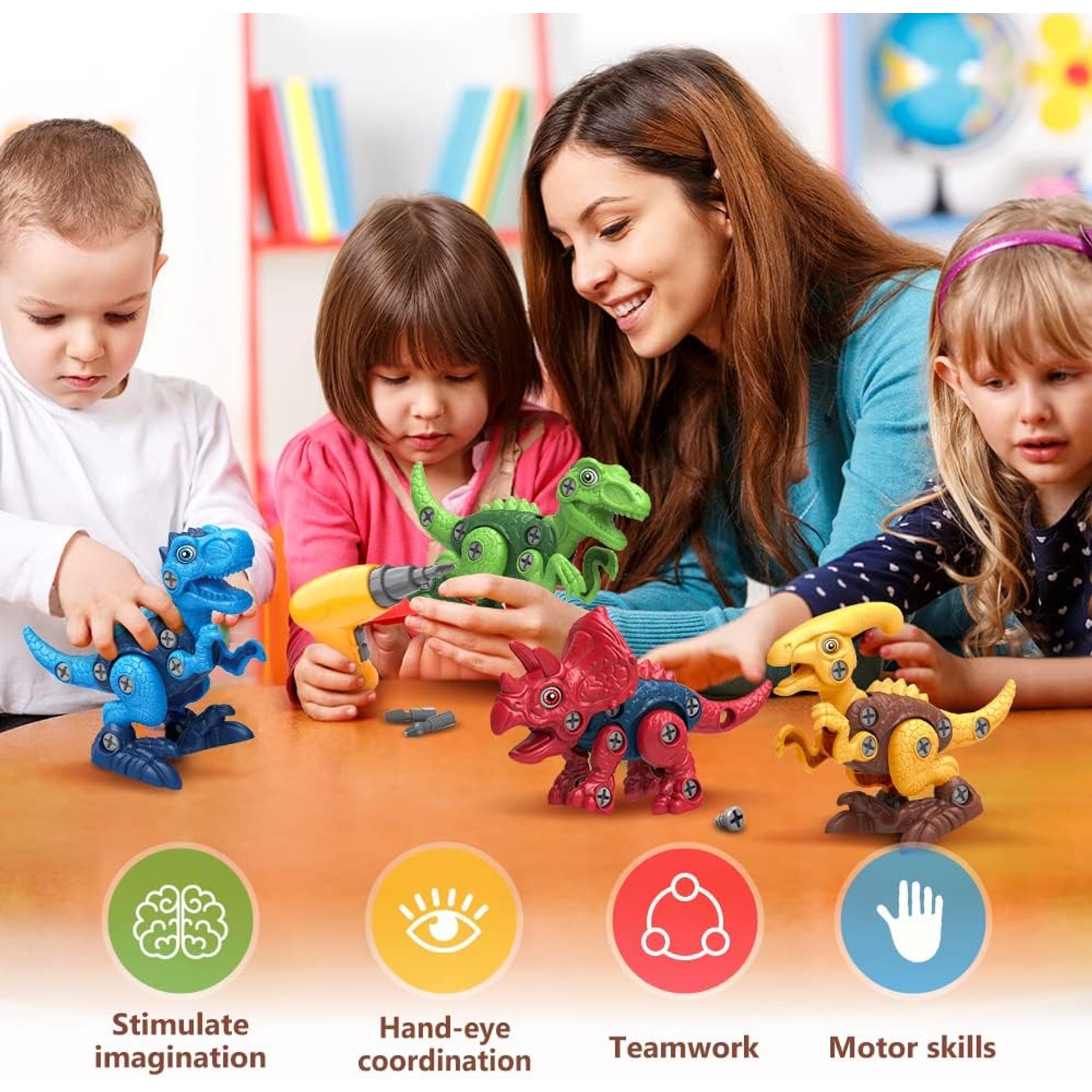
This particular set includes four dinosaurs. A blue T Rex, a red Triceratops, a yellow Parasaurolophus and a green Velociraptor. Each is a separate build with its own screws, and each one comes apart as readily as it goes together.
How the set actually works
The dinosaurs are moulded from ABS, a rigid plastic used widely in construction toys because it holds a screw thread without stripping after a few goes. Panels fit over a frame and screws hold them in place. Nothing is glued. Nothing is permanent.
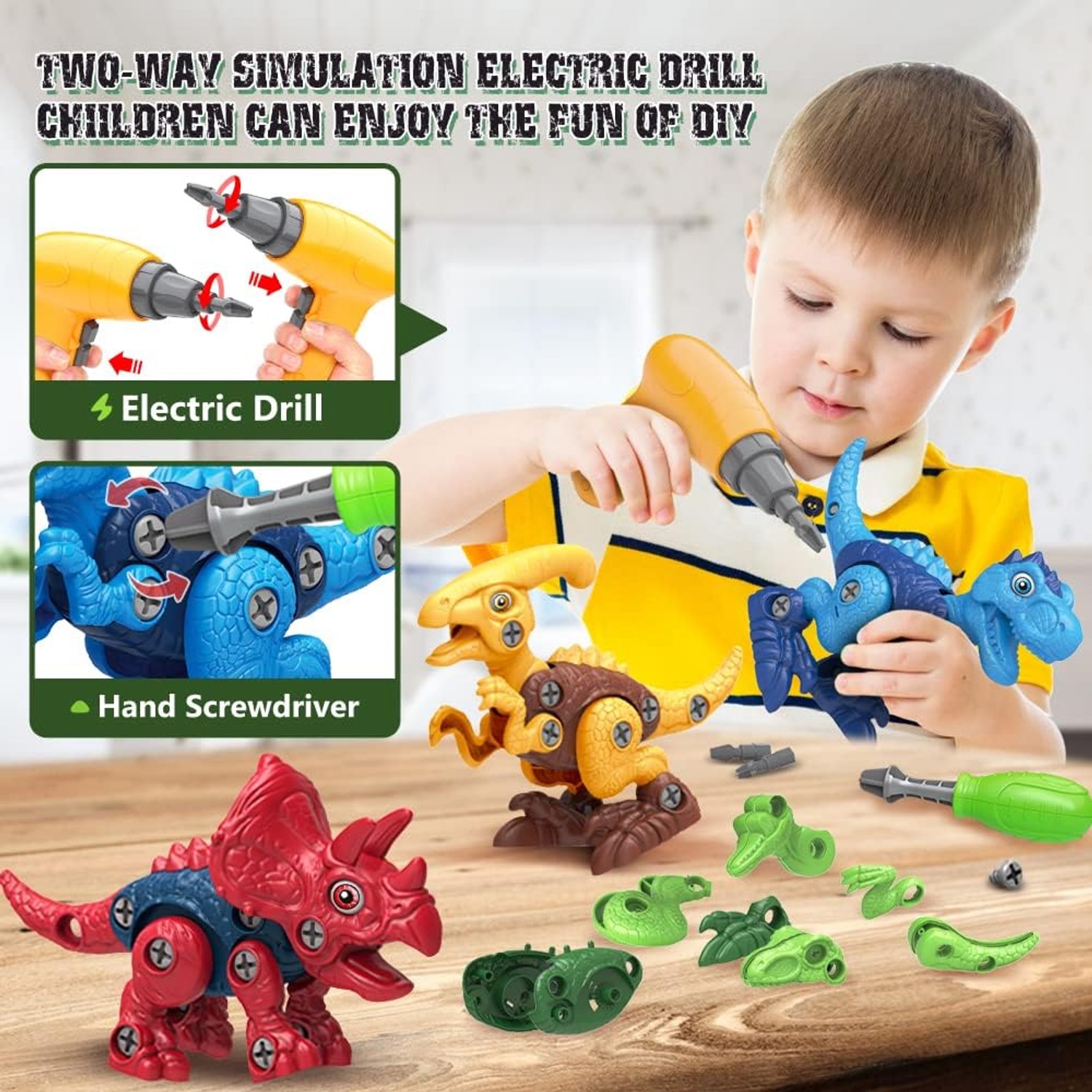
Two tool options come in the box. The first is a low-speed electric drill with two drill bits. A child presses the trigger, the bit turns slowly, and the screw drives itself in. For a three or four year old whose wrist tyres after two turns of a screwdriver, this is the difference between finishing a dinosaur and giving up halfway.
The second option is four manual screwdrivers. Plenty of children prefer these. Twisting by hand gives more feedback, it is slower, and some kids simply like doing it the harder way. Four of them also means a group can work together rather than queuing for one tool.
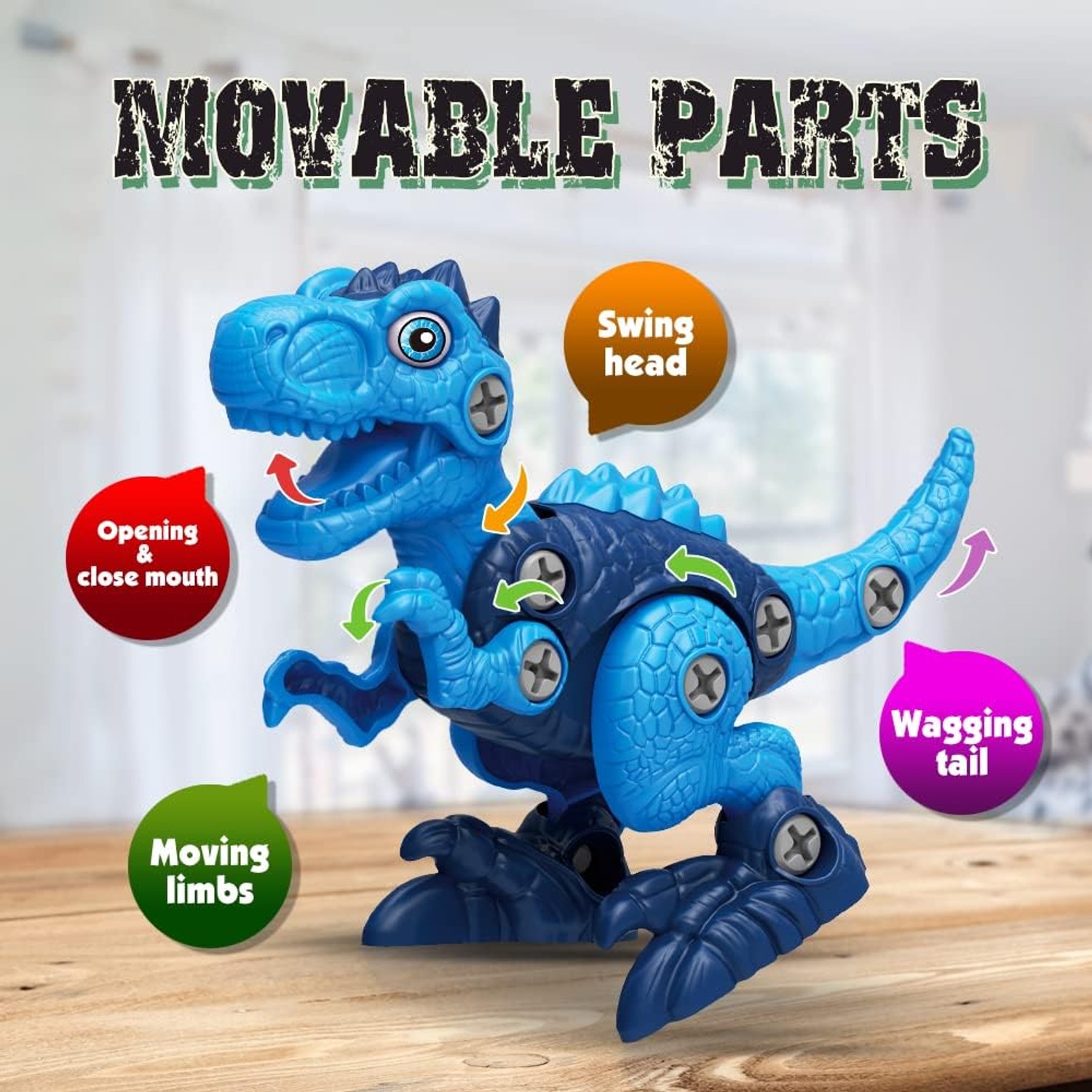
Once a dinosaur is assembled, the head, arms and legs move. That matters more than it sounds. A build that ends with a stiff plastic statue is a build that ends. A build that ends with a poseable dinosaur turns into an afternoon of stomping around the lounge room floor.
Who this suits
The recommended age is 3 years and up. In practice the experience changes a lot across that range.
A three year old will need company. Expect to sort screws for them, hold the body steady while they drive a fastener and read the instruction steps aloud. The first build is a joint project. The second one, they will want to try more of it themselves.
Four to six is the sweet spot. Children in this range can usually follow illustrated steps, have the hand control to line up a screw and get real satisfaction from finishing something without help. This is where a dinosaur construction toy earns its keep.
Seven and eight year olds will finish all four builds fast, then make the set their own. They start timing themselves. They build hybrids. They take one apart blindfolded. The replay value shifts from challenge to invention, and that is fine.
It also suits households with more than one child. Four dinosaurs and four hand screwdrivers mean two or three kids can build in parallel. The drill becomes the shared item, which is a decent lesson in taking turns.
Choosing between construction sets
If you are weighing up a few options, a handful of things actually matter.
Count the tools. A set with only hand screwdrivers will frustrate a younger child. A set with only a drill removes the slower, more deliberate way of working. Having both is more useful than it looks on a product page.
Check the number of models. One dinosaur is a single afternoon. Four builds give a child a sense of progression, because the second one always goes faster than the first, and they notice that.
Look at the material. Rigid ABS with smooth edges handles repeated assembly better than soft, flexible plastic, which tends to let screws spin loose over time. Smooth edges also matter when small hands are gripping panels hard.
Think about whether the finished model does anything. Moving head, arm and leg joints extend play well past the build. A model that cannot move gets admired, then shelved.
Finally, consider the instructions. Clear step-by-step pictures let a child work independently, which is really the point. If a parent has to narrate every stage forever, it stops being the child's project.
Getting the first build right
A little setup makes a big difference. Build on a tray, a towel or a baking sheet with a lip. Screws roll, and they roll towards the one gap in the floorboards every time.
Open the box with your child and sort the parts before starting. Grouping by colour works well here, since each dinosaur has its own shade. Put all the screws in one small container rather than leaving them loose.
Read through the instructions once yourself before handing them over. You do not need to explain everything, just know where the tricky step is so you can help without taking over.
Start with whichever dinosaur looks simplest to your child. Confidence from a finished first build carries into the harder ones. If something will not line up, stop and check the orientation of the panel rather than forcing a screw. Forced screws are how threads get damaged.
Let them take it apart whenever they want. Resisting that instinct misses the whole point of the design.
Keeping it in good shape
Care here is simple. Wipe the dinosaur parts and tool handles with a damp cloth, then dry them before packing away. Skip the dishwasher, the washing machine and hot water, all of which can warp moulded plastic.
Keep the electric drill away from water entirely. If the set is going into storage for a season, take any batteries out of the drill so nothing leaks inside it.
Storage is where most sets live or die. Screws disappear first, so give them their own sealed bag or small tub inside the box. Keep the instructions with the set rather than in the recycling, because you will want them again in six months when your child comes back to it.
Store the whole lot somewhere cool and out of direct sunlight. Long exposure to heat and UV is unkind to plastic over the years.
As a gift
This works well as a present precisely because it is not finished. A wrapped box of parts and tools promises an activity rather than an object, and children pick up on that quickly.
It suits birthdays, Christmas, school holidays and dinosaur-themed parties. It is also a reasonable choice when you do not know a child well, because the interest it asks for is broad. Liking dinosaurs or liking tools is enough. Many kids like both.
Because the set contains four dinosaurs, it also works as a gift for siblings without needing to buy two of anything.
The short version
Four dinosaurs that screw together and come apart again. A low-speed electric drill with two bits for younger hands, four manual screwdrivers for anyone who prefers to feel the work. Sturdy ABS parts with smooth edges, moving head, arm and leg joints, and instructions clear enough for a child to follow.
Rated for 3 years and up, best suited to roughly four through eight, and genuinely replayable because the fun resets every time a dinosaur comes apart. No screen, no batteries needed for the dinosaurs themselves, no glue, nothing permanent.
If you want a gift that lasts longer than the unwrapping, this is a sensible place to spend the money.