
The complete guide
How to Choose a Kids Tea Set That Actually Gets Played With
The problem with most toy tea sets
Buy a cheap tea set and you usually meet the same two disappointments. The first is that it is flimsy. Thin plastic cups tip over if a child breathes near them, handles snap off in the first week, and the teapot lid never quite sits right. The second is that the pieces vanish. There are seventeen of them, there is no box, and within a month you are finding saucers behind radiators and under car seats.
Both problems kill the game. A child who keeps knocking cups over stops setting the table. A child who cannot find four matching plates stops inviting guests. The toy quietly stops being used, and nobody can point to the moment it happened.
A tin tea party set with a carry case solves both. The weight of metal keeps the pieces where they are put, and the case gives everything a home. That is the whole pitch, and it is enough.
Why tin changes how children play
Pick up a tin cup and then a plastic one and you will feel the difference immediately. Tin has heft. On a wobbly coffee table or a bumpy picnic rug, that heft means the cup stays upright while a three year old pours with both hands and a lot of concentration.
There is a sound difference too. Metal pieces clink when they touch. Children notice this and use it. The lid going on the teapot, the cup landing on the plate, the stack of plates being carried across the room: these small sounds make the pretend version feel closer to the real thing, which is exactly what role play is built on.
Durability is the practical part. Tin dents before it breaks. A plastic handle that snaps is rubbish, but a slightly dented tin cup is still a cup, and children do not care about the dent. Over a few years of use, that difference adds up to a set that stays complete instead of slowly losing members.
What fourteen pieces actually gives you
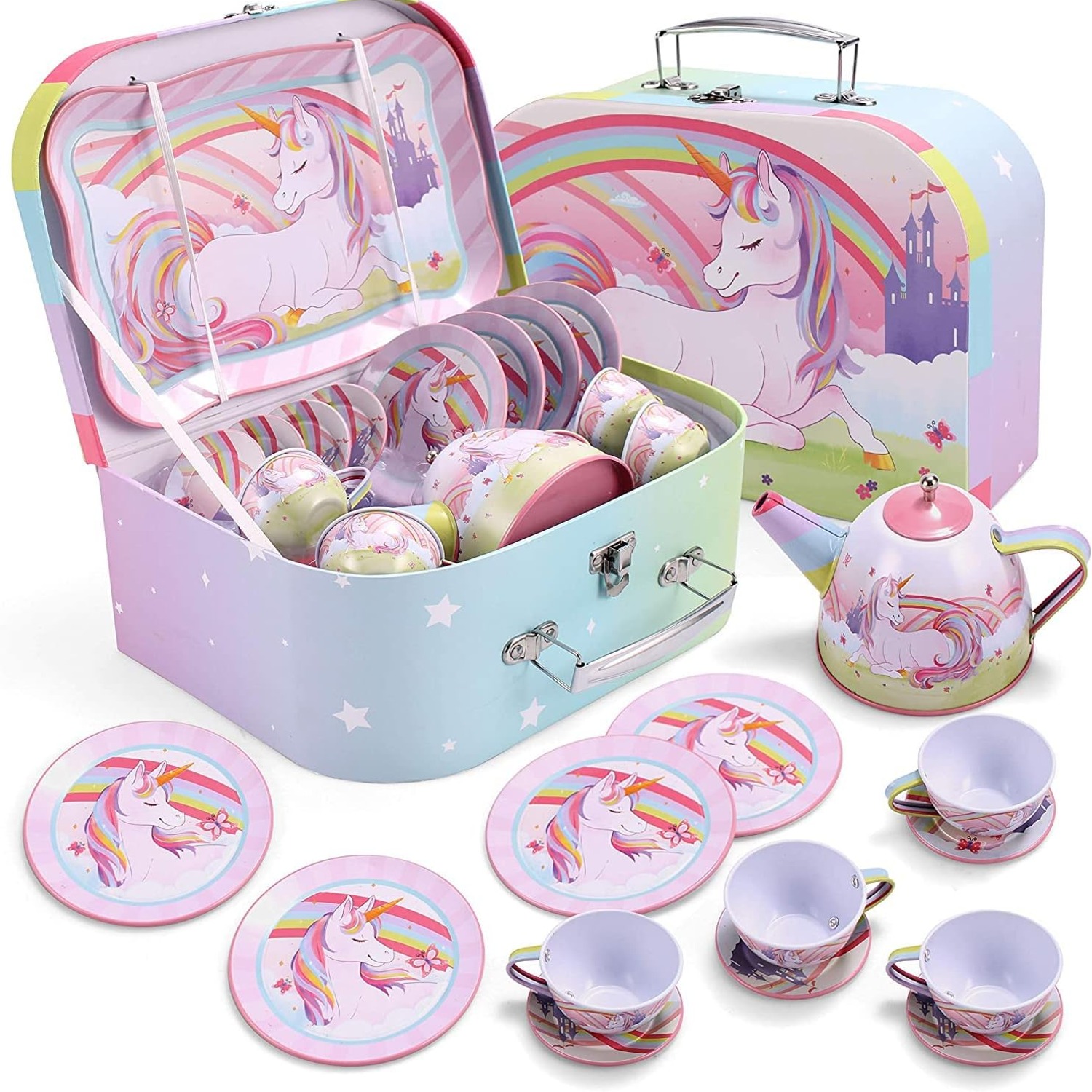
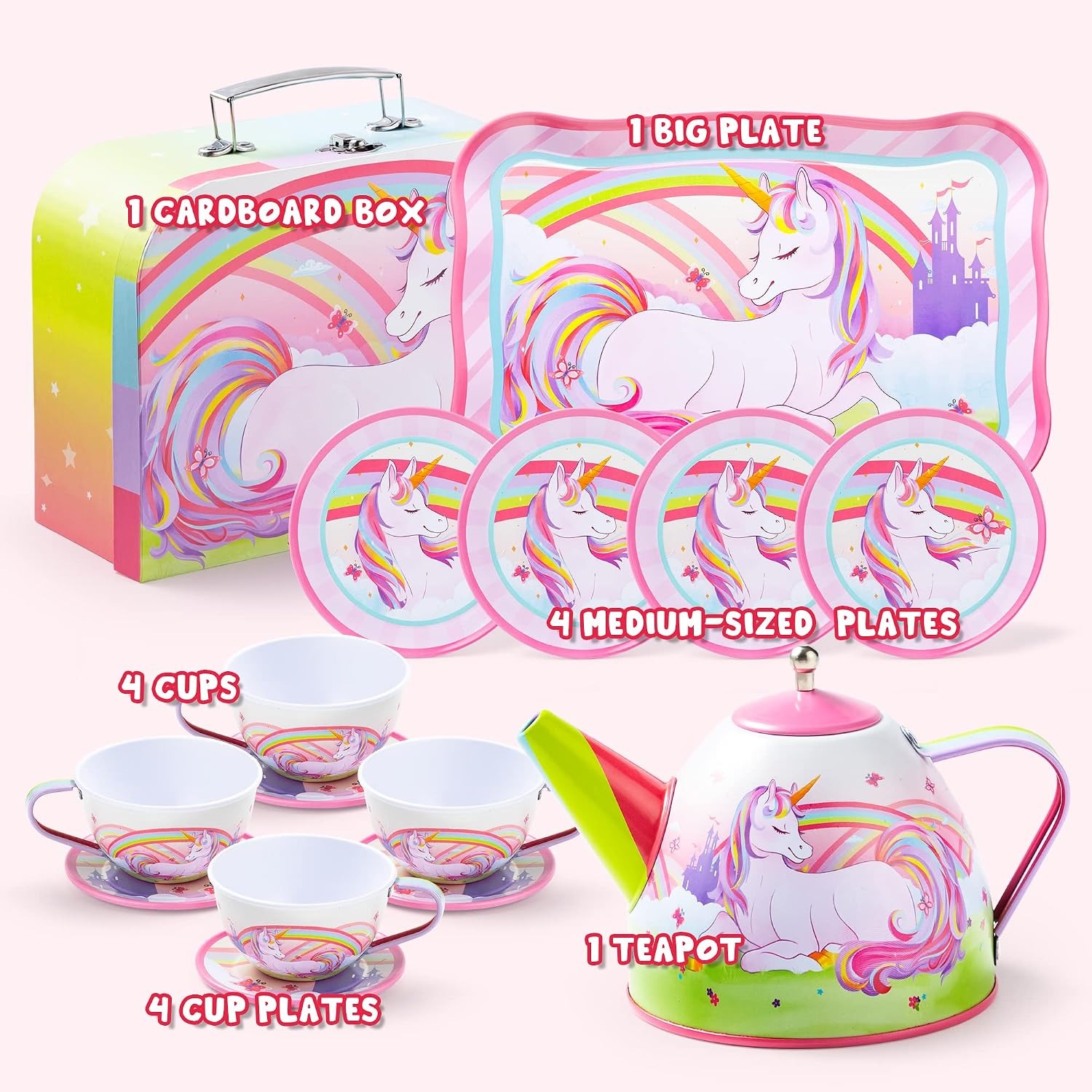
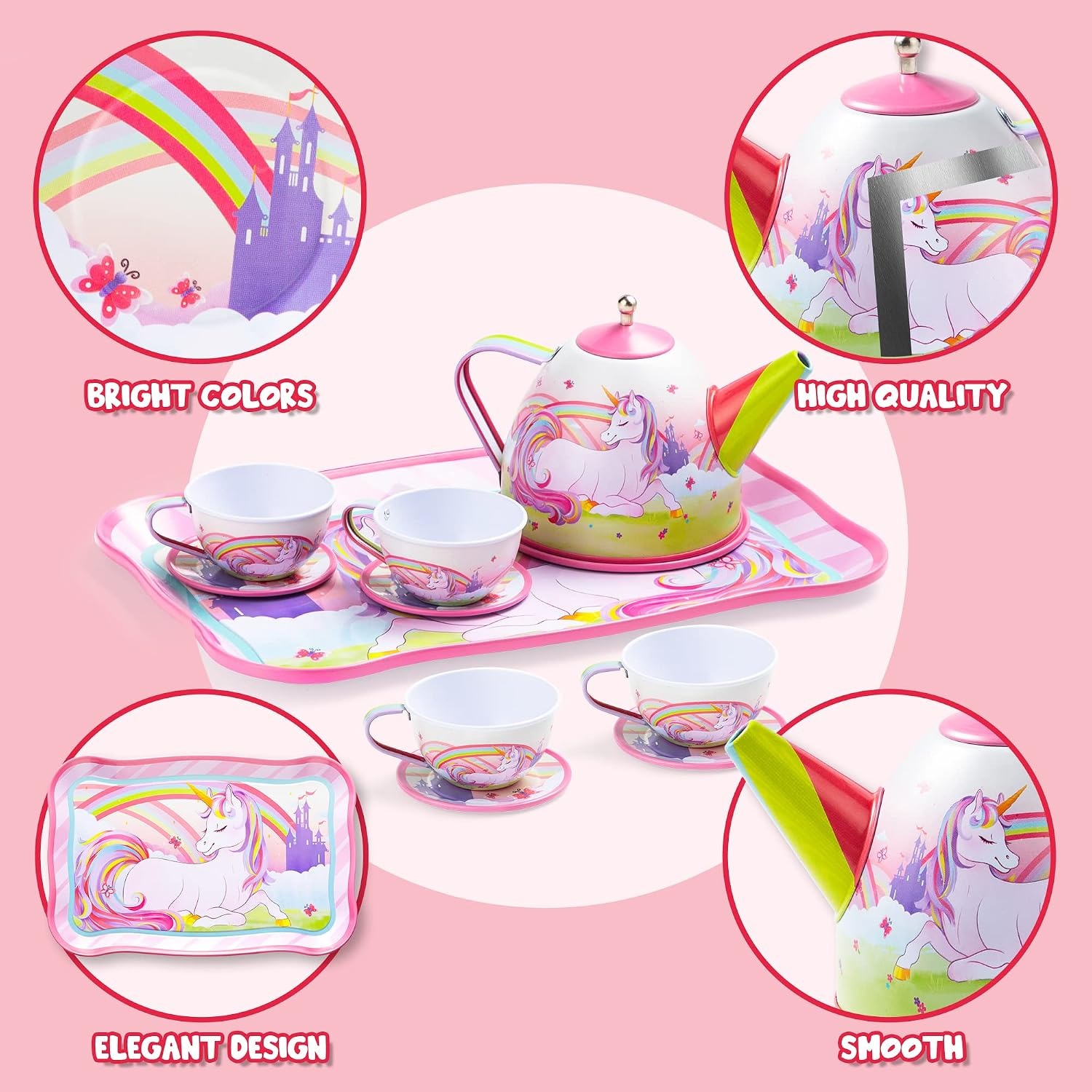
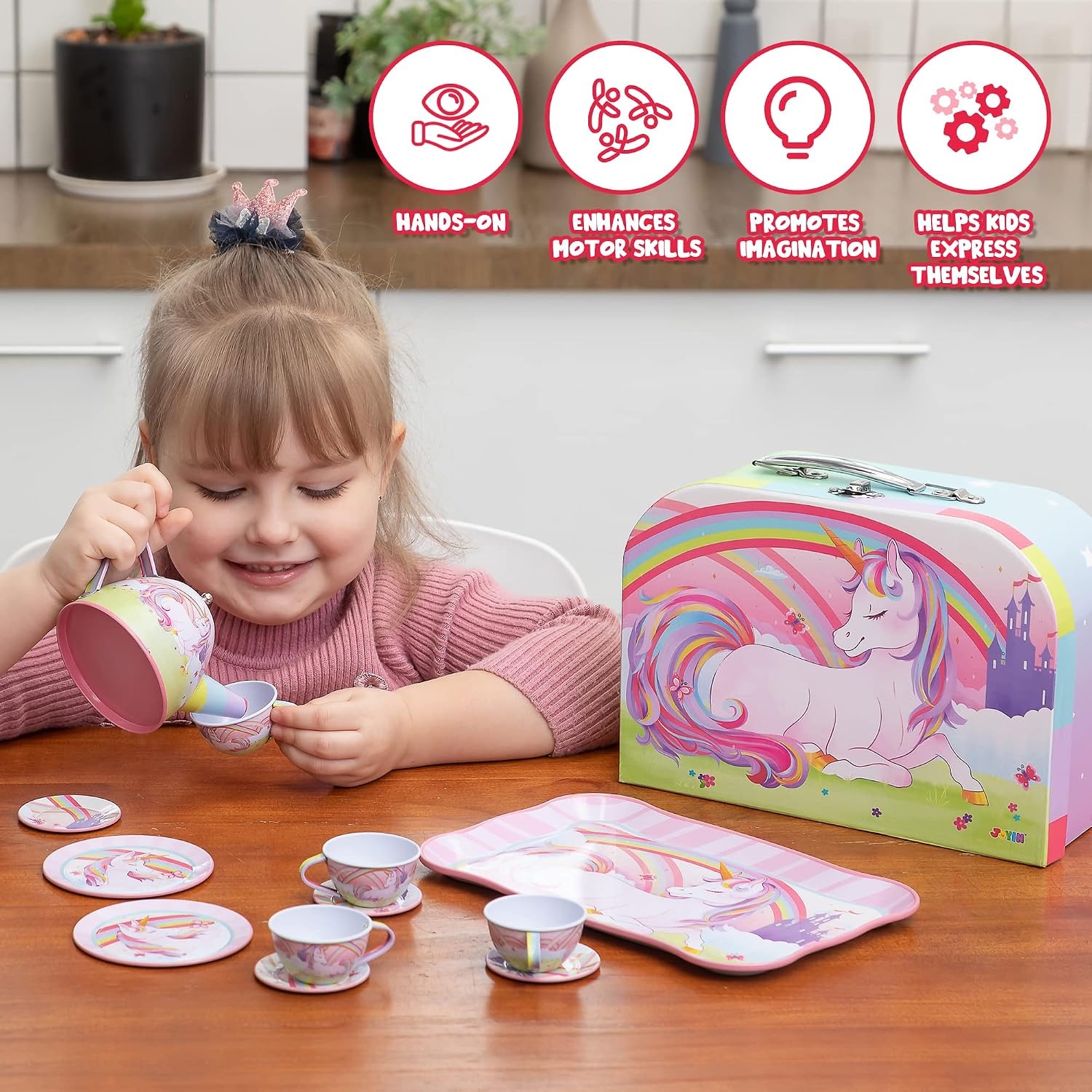
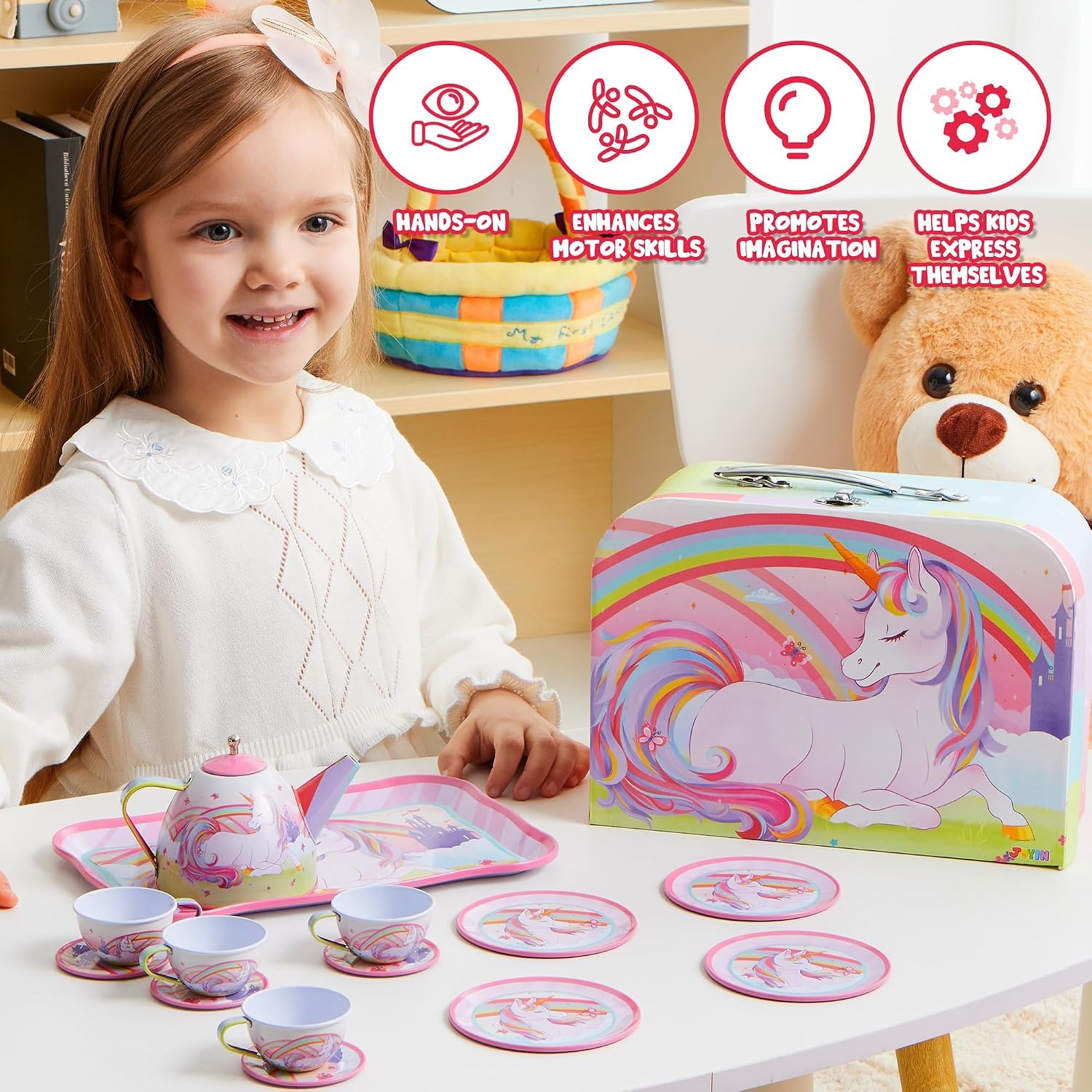
This set has one teapot, four cups, four medium plates, four small plates and one large serving plate. The large plate is the quiet hero. It becomes the cake stand, the sandwich platter or the biscuit tray, and it gives the table a centre.
Four of everything else means four places. That covers a child plus a parent plus two toys, or four children at a party, or one child who wants to serve a whole row of teddies. Three place settings would be awkward. Four is the number that works for most households.
If you are comparing options and weighing up the best kids tea set for your home, count the pieces against the number of people likely to play. A two-cup set looks neat but limits the game to one guest. Fourteen pieces gives room for the story to grow.
The case matters more than people expect
A carry case sounds like packaging. It is actually a feature. Tidy-up is easier when there is an obvious place for each piece, and children are far more willing to pack away when the container is part of the toy rather than a plastic tub from the cupboard.
It also makes the set portable. A unicorn case under one arm means the tea party can move to the garden, to grandma's kitchen, or into the car for a weekend away. Portable toys get used in more places, and toys that get used in more places last longer in a child's affections.
Keep one house rule and the case earns its keep: the set goes back in the case at the end of every session. Do that from day one and you will still have fourteen pieces in a year.
Who this suits
The manufacturer recommends three years and up, and that lines up with how children play. Around three, pretend play shifts from solo to social. Instead of simply pouring, a child starts asking who wants tea, remembering that one guest takes sugar, and getting cross when a teddy refuses a biscuit. That is a story with characters in it.
The set works for the shy child who rehearses conversations with toys before trying them on people. It works for the chatty child who wants an audience. It works for siblings of different ages, since an older child can run the party while a younger one is given the simple job of handing out plates.
It is also a good gift when you do not know the recipient well. A tea set is not tied to a franchise that might go out of favour, there is nothing to configure, and it works straight out of the box.
How to choose between sets
A few things are worth checking before you buy any set, not just this one.
Count the pieces and compare them to the price. A set with a handful of items at a similar price is usually relying on packaging rather than contents.
Check the material. Tin and wood both last. Thin plastic rarely does. If a listing is vague about material, that is usually a sign.
Look for storage. If a set has no case or box, assume you will lose pieces, because you will.
Check the age guidance and follow it. Age recommendations are about piece size and handling, not about how clever your child is.
Think about the theme honestly. Unicorns and rainbows are a strong preference for some children and a non-starter for others. There is no point buying the best pretend play teapot set in the world if the design does not appeal.
Looking after it
Tin with printed artwork wants gentle treatment. Wipe each piece with a damp cloth after play and dry it right away. Water sitting on metal is the enemy, and so is a dishwasher, which will strip the print and leave you with sad grey cups.
Skip abrasive scourers and strong cleaners entirely. Mild soap on a cloth handles anything sticky. If the set has been used outdoors, bring it in the same day and dry it properly before packing it away.
Store the pieces in their case rather than loose in a toy box, where they will get scratched by harder toys. If a piece ever gets badly bent or develops a rough edge, take it out of rotation. That is simple common sense with any metal item.
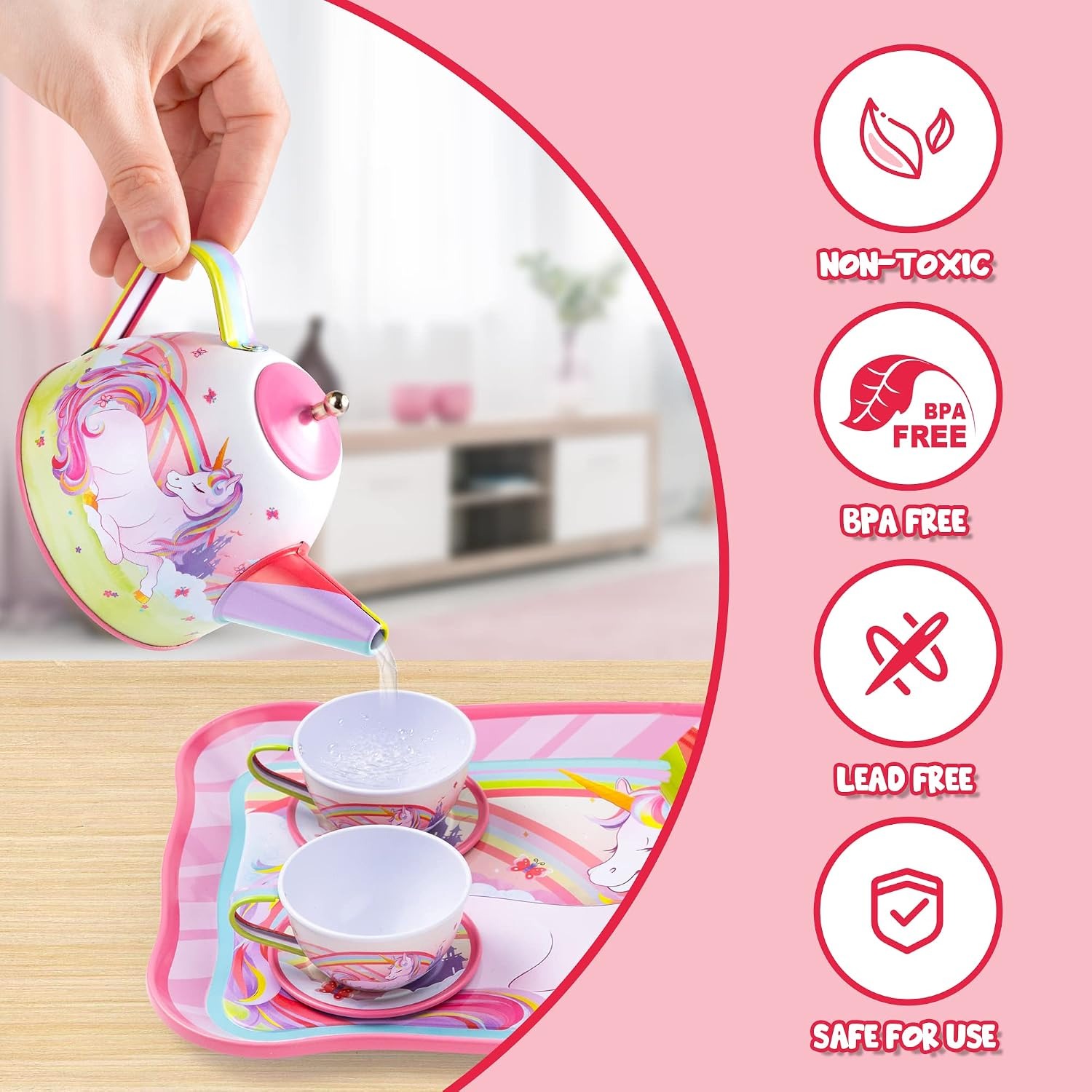
Keep the set away from real hot drinks and real food that needs refrigeration. It is a toy, and treating it as one keeps it safe and keeps it looking good.
Getting more out of it
A tea set is a starting point, not the whole game. A few small additions stretch it a long way.
Add a tea towel as a tablecloth and the table suddenly looks set. Let children fold the cloth themselves, since folding is a decent fine motor task in disguise.
Make real snacks occasionally. Actual biscuits on the large plate turn a pretend party into a genuine event, and it is a soft way to practise table manners without a lecture.
Give the party a reason. A toy's birthday, a welcome party for a new doll, a tea for grandparents on a video call. Children who are given a scenario usually play longer than children handed props with no context.
Invite an adult in for ten minutes. The quality of the language jumps when a grown-up plays along and asks proper questions. You do not need to stay for the whole party, just long enough to model how a host behaves.
The short version
This is a fourteen-piece tin tea set with a unicorn carry case, recommended for ages three and up. It has one teapot, four cups and nine plates, enough for four places at the table. The metal pieces are steadier and tougher than plastic, and the case keeps them together between sessions.
If you want a toy that works without batteries, survives being dropped, and gives a child a reason to talk, host and share, it is a straightforward choice. Wipe it dry, pack it away, and it will be out again tomorrow.