
The complete guide
Choosing a First Sewing Kit for Children, A Practical Buyer's Guide
The problem with most "learn to sew" sets
Plenty of children want to make something with their hands. The trouble starts at step one. A standard sewing project asks a child to trace a shape, cut it out neatly, work out where the stitches go, thread a thin metal needle and then sew a straight line, all before anything looks like the picture on the box. That is four or five separate skills stacked on top of each other, and most of them are frustrating rather than fun.
What usually happens is that an adult ends up doing the hard bits. The child watches, loses interest, and the kit goes in a drawer half finished. The problem was never the child's ability. It was that the kit asked for the wrong things in the wrong order.
A good beginner sewing craft set flips that. It hands the child the satisfying part first and quietly takes care of the rest.
How a pre-punched felt kit actually works
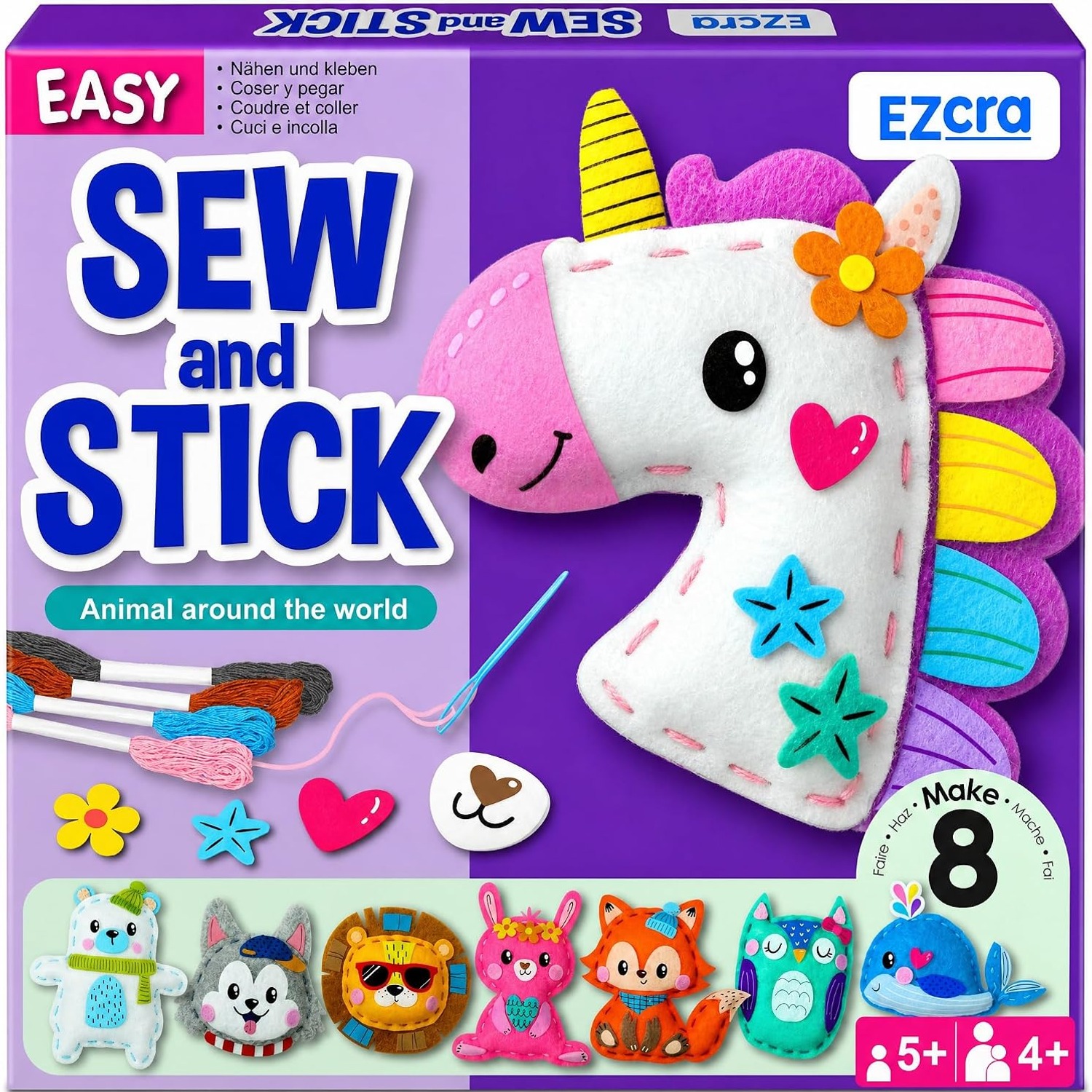
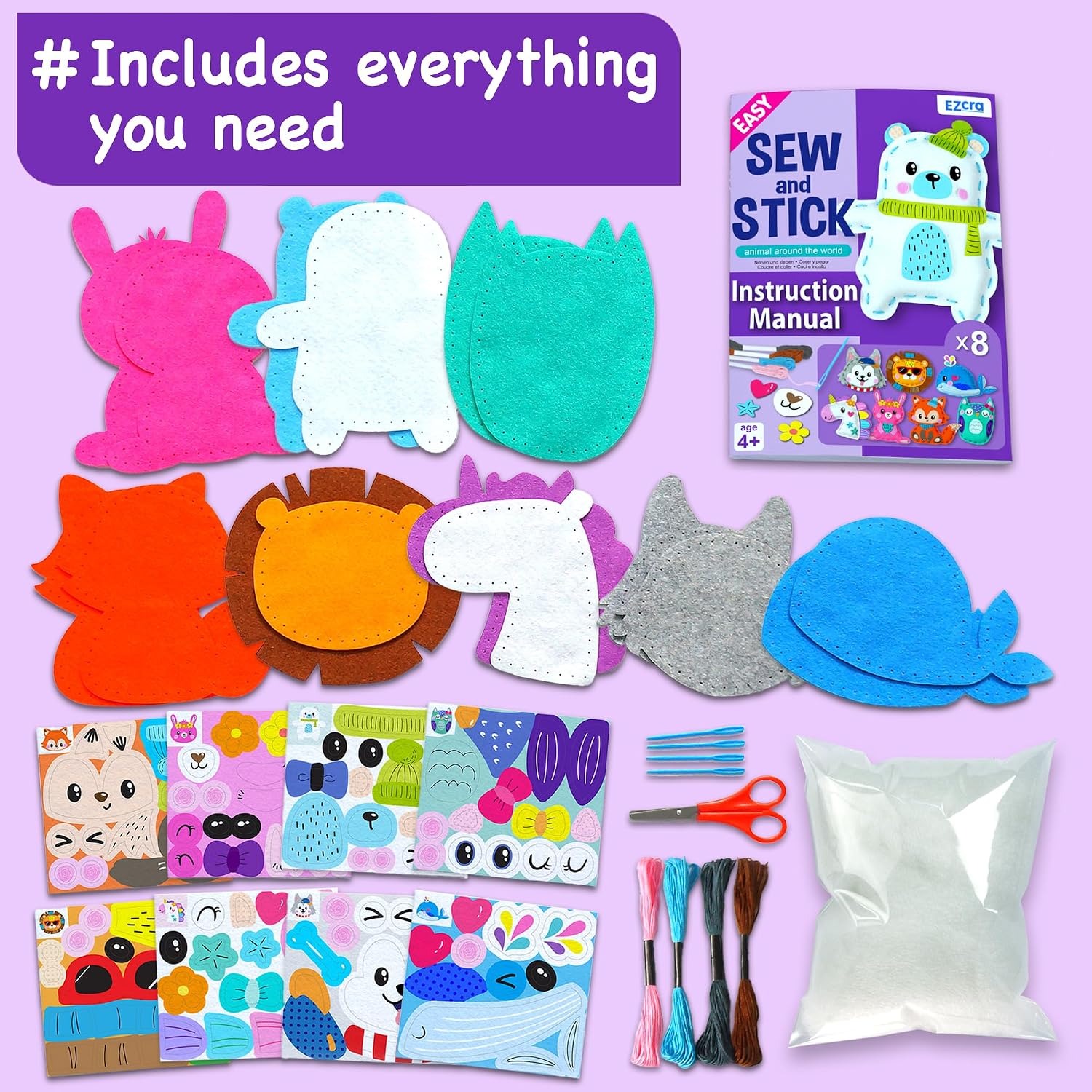
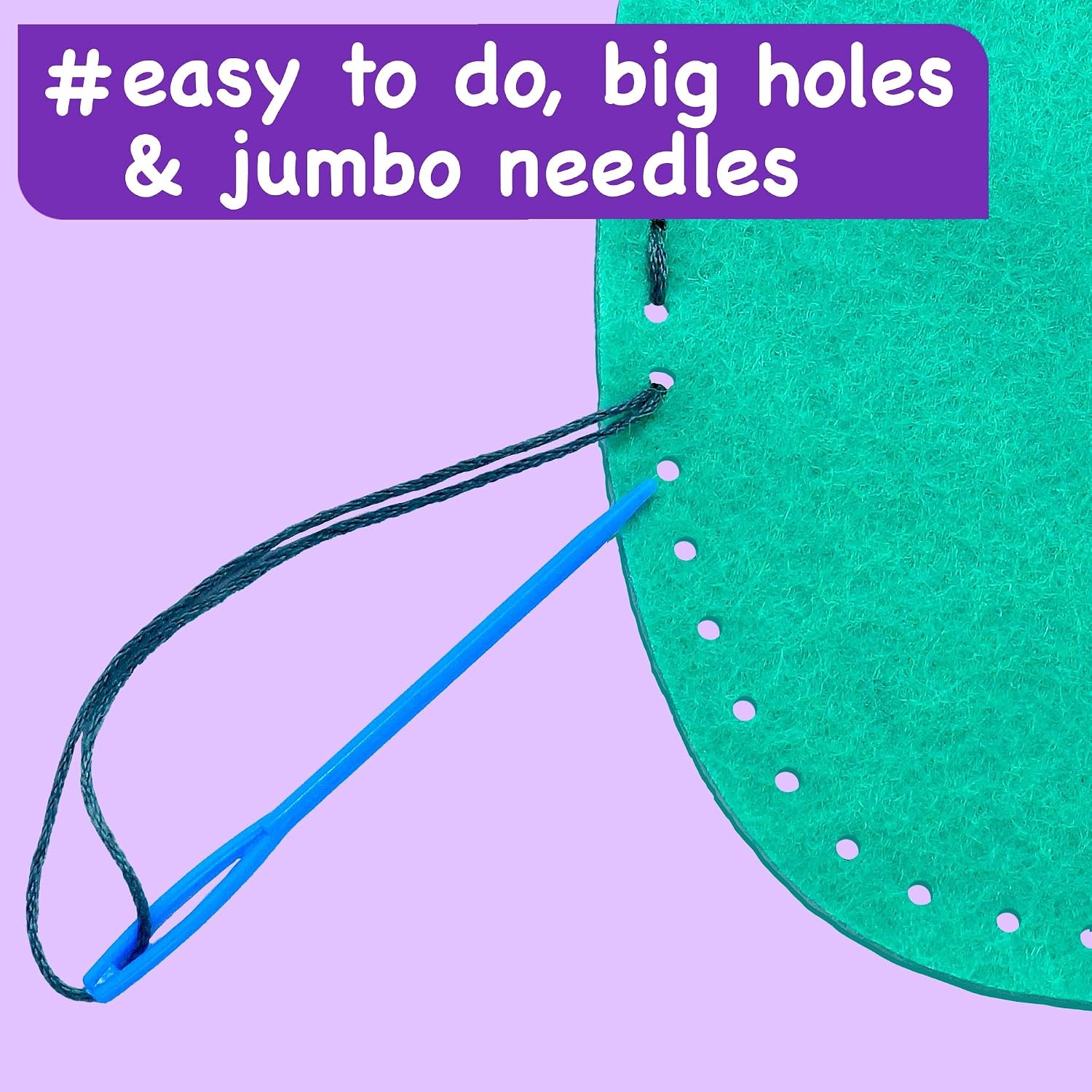
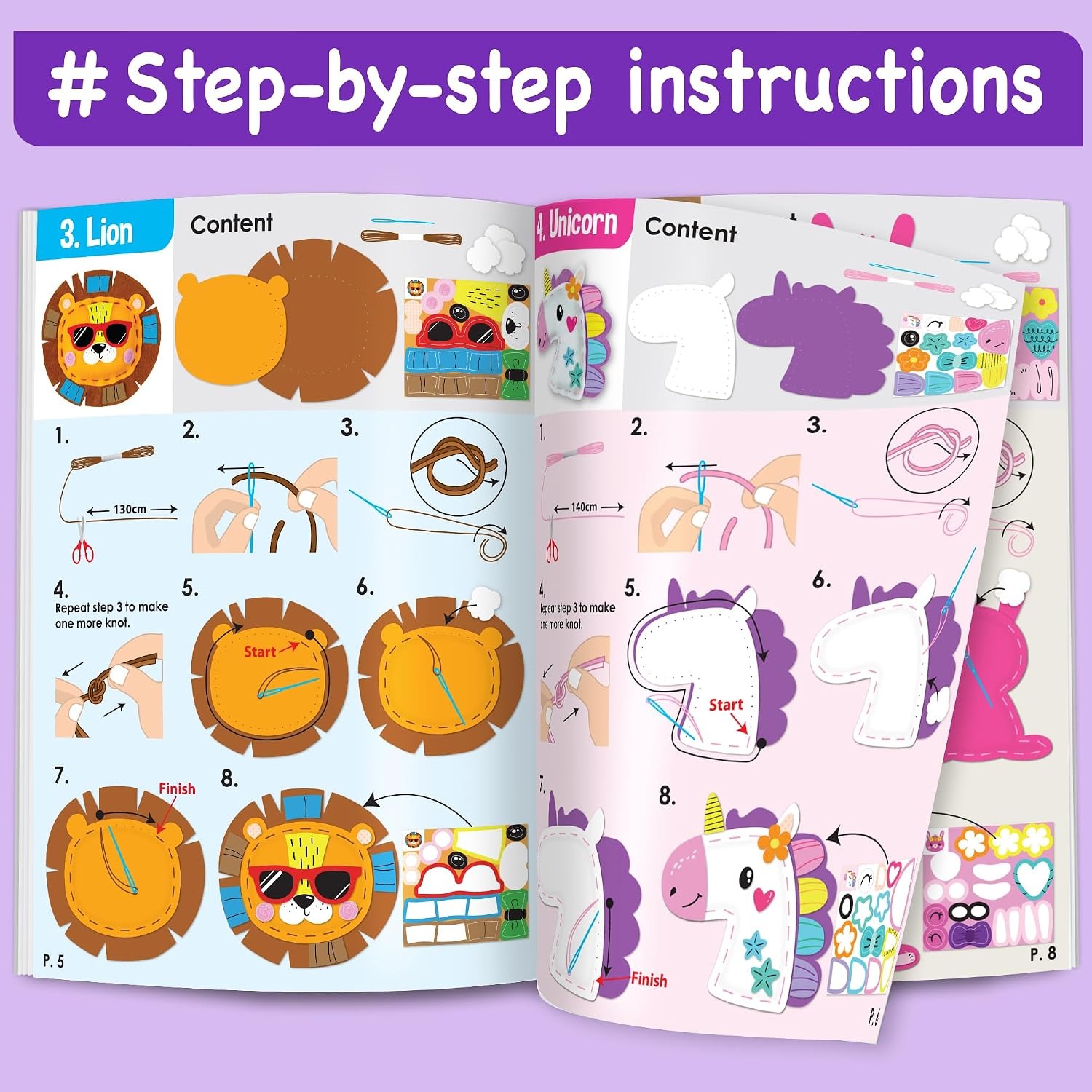
This unicorn sewing kit comes with the felt animal shapes already cut and the stitch holes already punched around the edges. The child does not decide where the needle goes. The holes tell them. All they have to do is push the needle through, pull the thread, and find the next hole.
That one change makes a huge difference. Stitches come out evenly spaced because the holes are evenly spaced. The finished animal looks like the picture, which is the single biggest factor in whether a child wants to make a second one.
The needles are jumbo plastic rather than slim metal. They are thick enough to grip properly, blunt at the point, and have a large eye that makes threading possible for small fingers. Safety scissors are included for trimming thread. Step-by-step instructions and a short brief on basic sewing skills come in the box, so an adult who has never sewn anything can still guide the session.
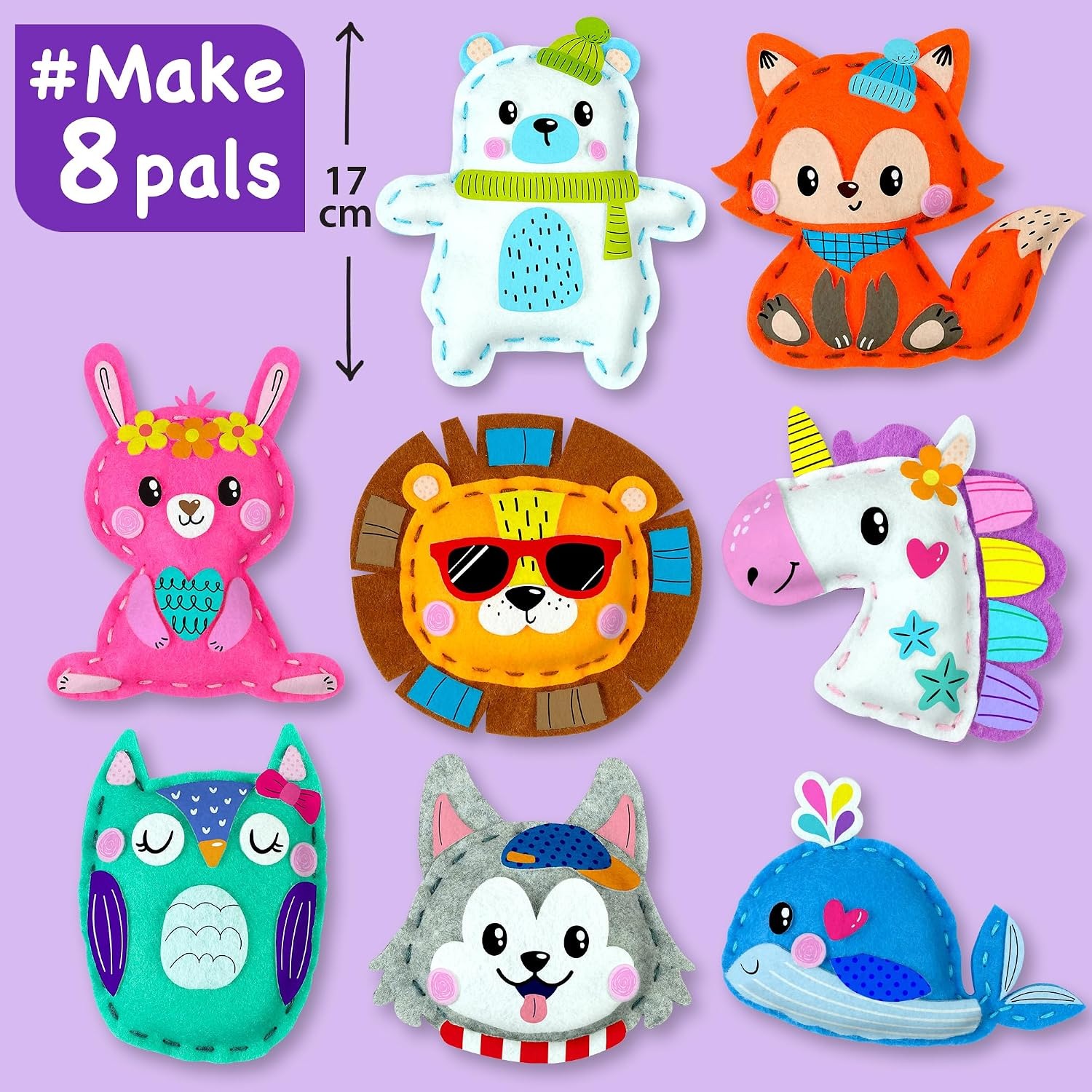
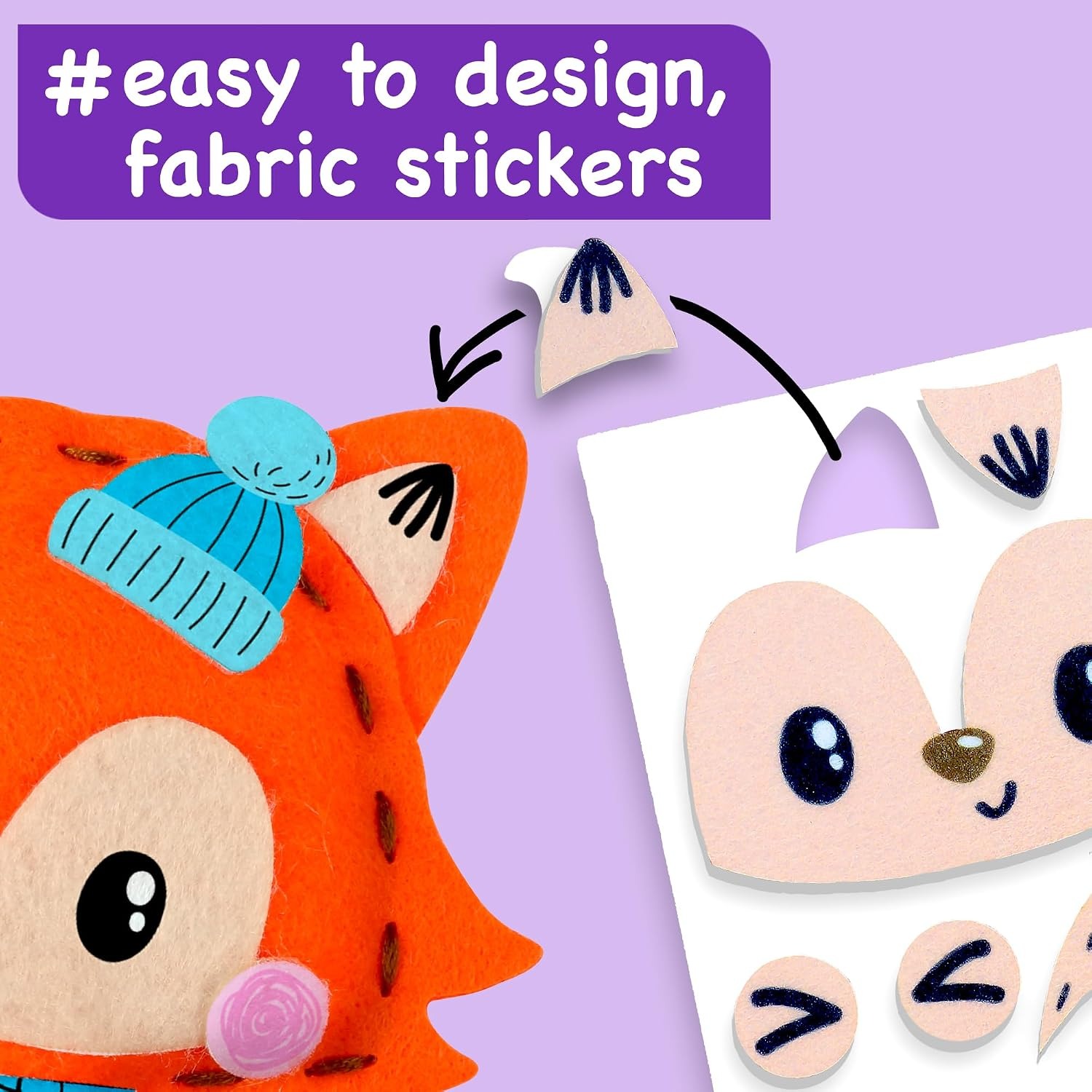
Then there are the stickers. Eight sets of them. Once an animal is stitched together, the child decorates it however they want. This is the part that turns a craft exercise into something personal, and it is also why the kit works well for siblings. Two children making the same unicorn will finish with two obviously different unicorns.
Who this kit suits
The age range in the product details is simply listed as "Kid", which is not especially helpful on its own. The more useful question is about hand control and patience.
A child who can hold a pencil properly, thread a chunky lace through a card, and sit still for ten or fifteen minutes will manage this with light help. A younger or less patient child can still do it, but expect to sit alongside them, thread the needle each time, and accept that you might finish the last few stitches yourself. That is not failure. Doing half of it and seeing a finished unicorn at the end is still a win.
Older children, say from around nine upward, may find the pre-punched holes a bit too guided. They can still enjoy it as a relaxed evening activity, but if they are already confident with a needle, look for a kit that lets them stitch freehand.
It also works well for grandparents. It is an activity that does not require getting on the floor, does not make noise, and gives you something to talk about while you work. A lot of families use a kids sewing kit for beginners as a quiet alternative to screen time on a wet weekend.
What to look for when comparing kits
Pre-punched holes. This is the single most important feature in a first sewing kit. Without it, a young child is guessing where to put the needle and the result looks messy no matter how hard they try.
Needle type. Plastic jumbo needles are the right call for early learners. Blunt metal needles are the next step up, and sharp sewing needles come much later.
How many projects. A single-project kit gets finished and forgotten. Eight projects, as in this set, gives a child time to improve and gives you several sessions out of one purchase.
Whether it needs anything extra. Check the included list. If you have to supply thread, scissors or a needle, you will discover that at the worst possible moment. Everything here is in the box.
Mess level. No glue, no paint, no glitter. That matters if the activity is happening on a dining table or in a hotel room. A mess free craft kit genuinely does make a difference to how often it gets pulled out.
Size and portability. The box here is 20.3 x 15.2 x 1.3 cm and the whole thing weighs 0.27 kg. It fits in a backpack. A bulky kit tends to live in a cupboard.
Getting the most out of the first session
Set up on a clear surface with a small tray or bowl for loose pieces. Felt shapes and sticker backing paper spread fast otherwise.
Read the sewing basics brief together before starting. It takes two minutes and saves ten minutes of confusion later. Thread the needle yourself the first time and show the child how the knot sits at the back of the felt.
Start with a simple shape rather than the most detailed one. Let the child feel competent before they tackle the animal they are most excited about. Save the unicorn for second or third if they are keen on it, because by then their stitching will be noticeably neater and they will be happier with the result.
Resist the urge to correct every stitch. Uneven stitching on a first project is normal and nobody will notice it once the stickers go on. Children who feel corrected constantly tend not to ask for the second project.
When the stitching is done, step back for the sticker stage. This is the child's part. Let them put the stickers wherever they want, even if the placement makes no sense to you. That ownership is what makes them proud of it afterwards.
Looking after the kit and the finished animals
Keep everything in the original box between sessions. Loose felt pieces and sticker sheets are easy to lose and hard to replace individually. Store it flat and dry, out of direct sunlight, since sun fades both felt and sticker printing over time.
Put the needles and scissors away somewhere a younger sibling cannot reach. Plastic needles are blunt, but they are still a small object.
Finished animals should be treated as keepsakes rather than everyday toys. Spot clean with a barely damp cloth and let them air dry. Machine washing is a bad idea, because beginner stitching and applied stickers will not survive the drum. If an animal does come apart at a seam, it is usually a two-minute fix with the same needle and a bit of spare thread.
Materials are listed as polyester. Beyond that, the maker does not specify fabric weight or thread composition, so if anyone in the household has a specific sensitivity it is worth checking the packaging on arrival.
The short version
If you want a child to actually learn something and enjoy it, the kit has to remove the obstacles that have nothing to do with the skill itself. Pre-cut shapes, pre-punched holes and a blunt plastic needle do exactly that. The child gets the rhythm of sewing, the satisfaction of a finished object, and a sticker stage that makes it theirs.
Eight projects means it lasts. Everything in one slim box means it travels. No glue or paint means it can happen at the kitchen table on a Sunday afternoon without anyone needing to clean up afterwards.
For a first sewing kit, that combination is hard to beat. If you are unsure whether it matches your child's stage, ask us before you order and we will give you a straight answer.