
The complete guide
Wooden Breakfast Play Food Set Buyer's Guide
The problem with most toy food
Walk into any house with a small child and you will find toy food. Usually it is a hollow plastic banana with a crack in it, half a pizza slice with no partner, and a strawberry that has been chewed flat. It gets scattered across three rooms. Nobody can find the bits that match, so the game stops before it starts.
That is the real issue with play food, and it has very little to do with how it looks in a photo. It is about weight, durability and whether the set stays together long enough to be played with properly.
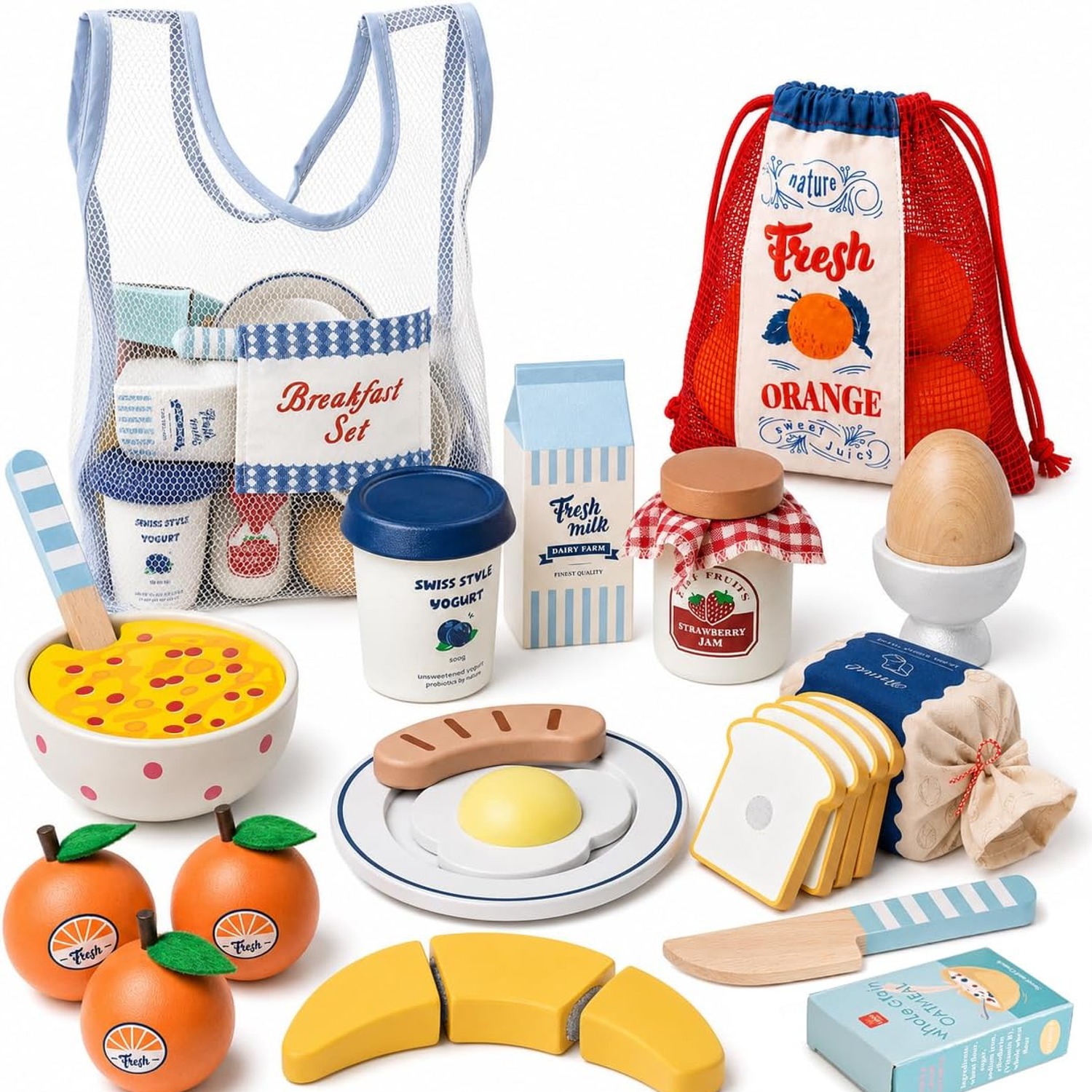
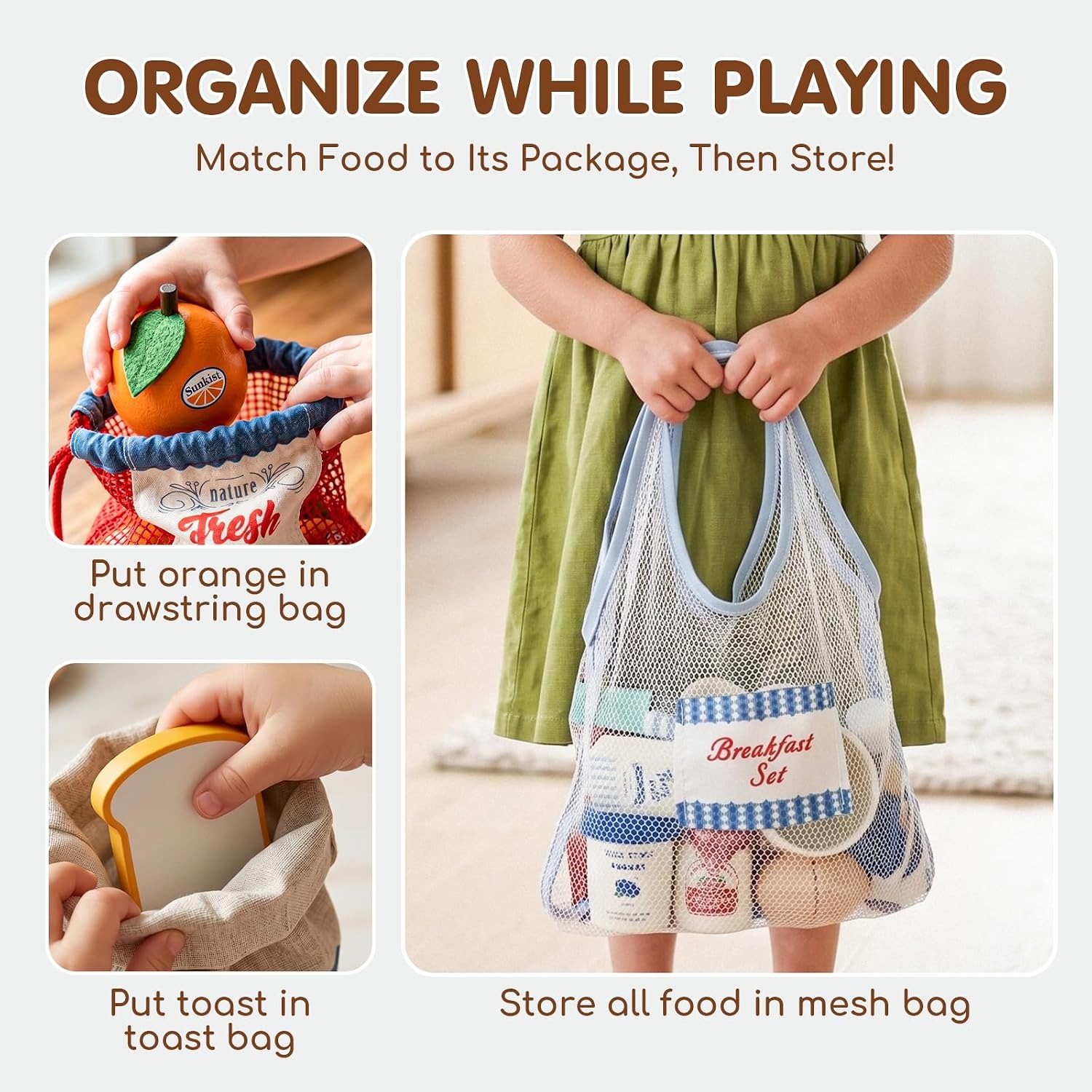
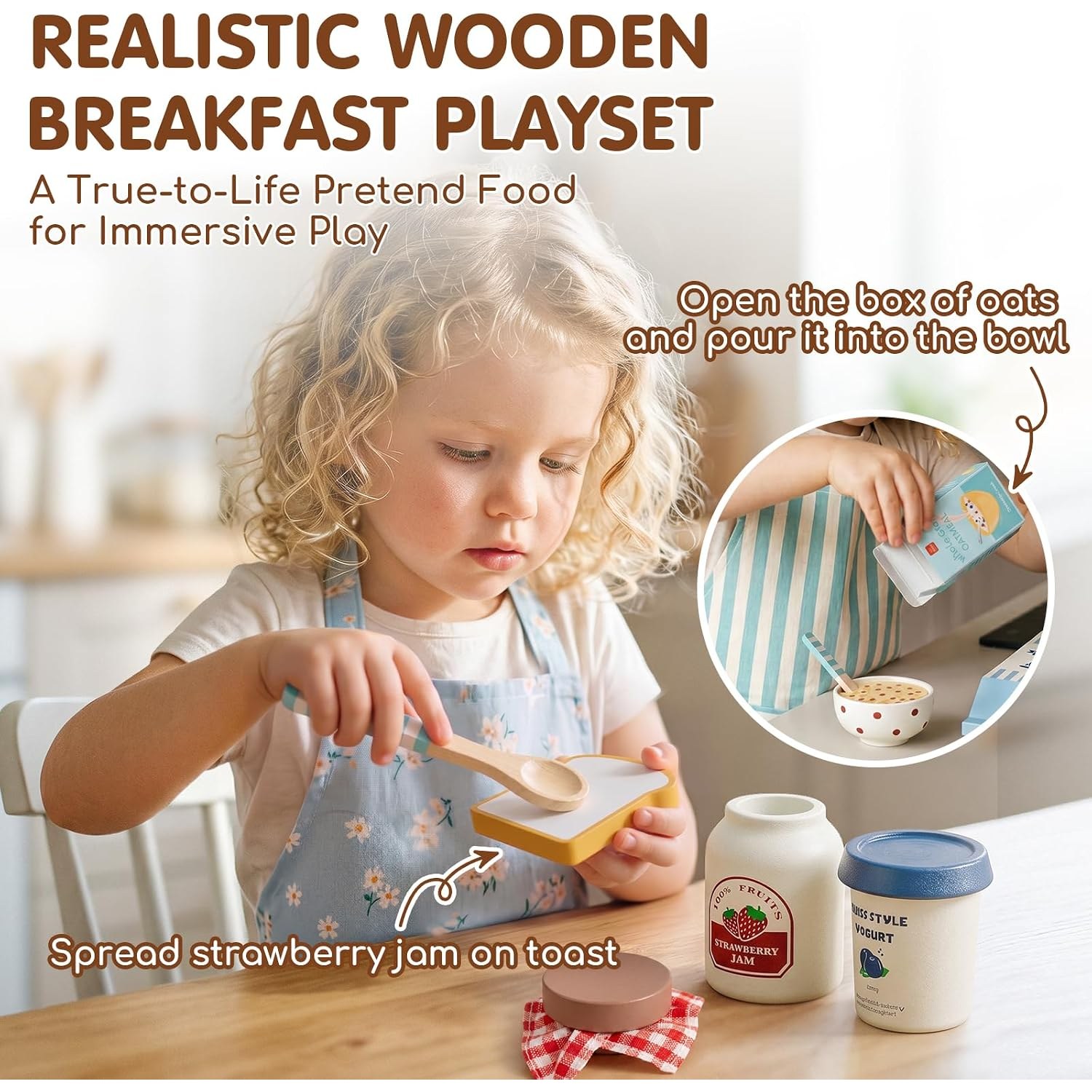
A wooden breakfast play food set tackles all three. The pieces have enough heft that they sit where a child puts them. Wood does not crack into sharp edges the way thin plastic sometimes does. And when the whole set lives in one mesh bag, a four year old can put it away themselves, which means it survives to the next morning.
Why breakfast works so well as a theme
Children copy what they see. Breakfast is the meal they witness most reliably, usually in a hurry, usually with an adult doing several things at once. Toast, eggs, cereal, milk, a drink. They know the order of operations before anyone teaches it to them.
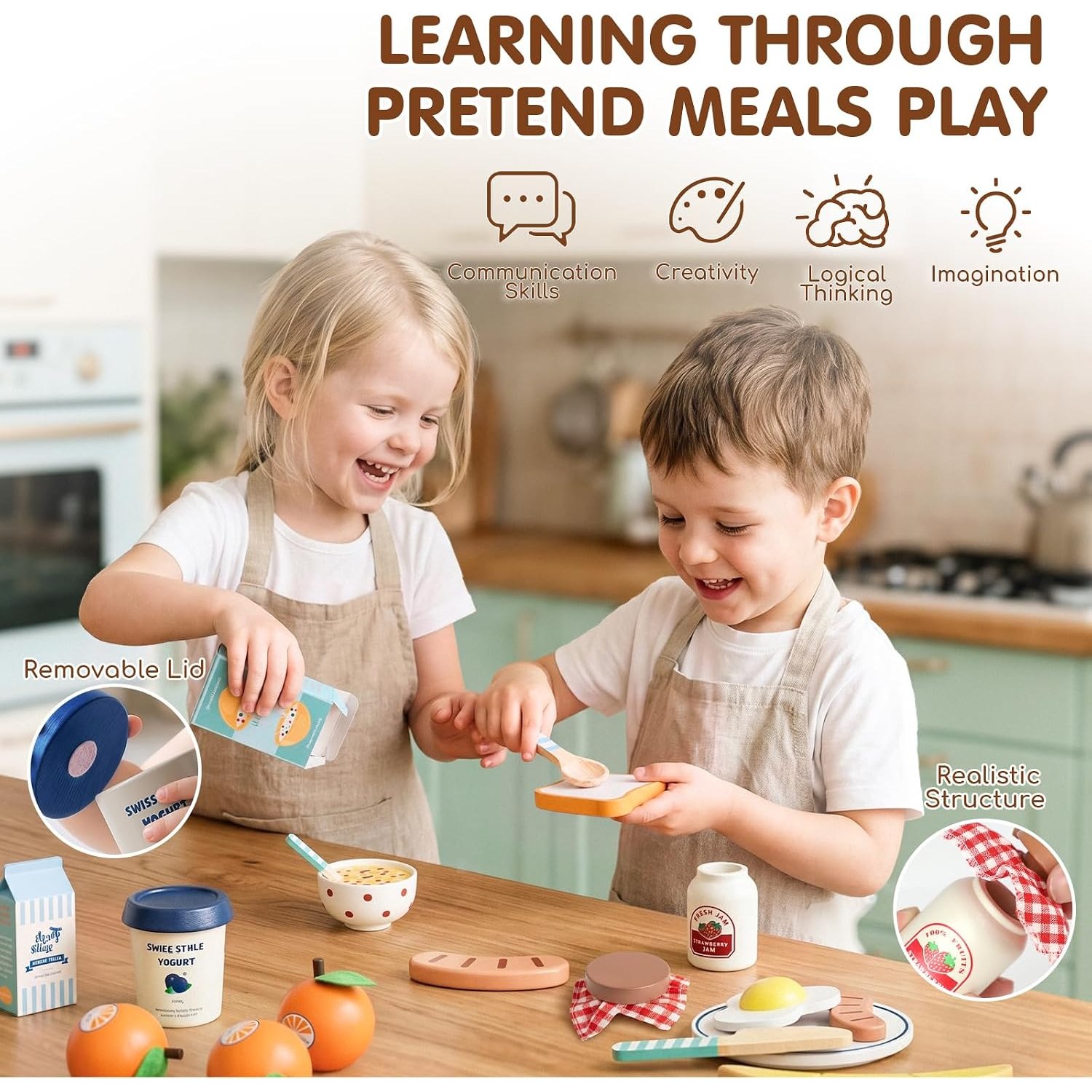
That matters because pretend play needs a script. A child who does not know what a toy represents will fiddle with it and move on. A child who recognises every item can get straight to the good part, which is deciding who is cooking and who is eating and whether the eggs are ready yet.
It also gives you an easy way into conversations about food without turning it into a lesson. Asking which things go on a plate together is a game. Explaining nutrition at the dinner table is not.
How wood changes the play
There is a noticeable difference in how children handle wooden toys compared with light plastic. Wooden pieces have presence. They need to be picked up deliberately, set down deliberately, and arranged with a bit of care. That small amount of extra effort slows the play down in a good way.
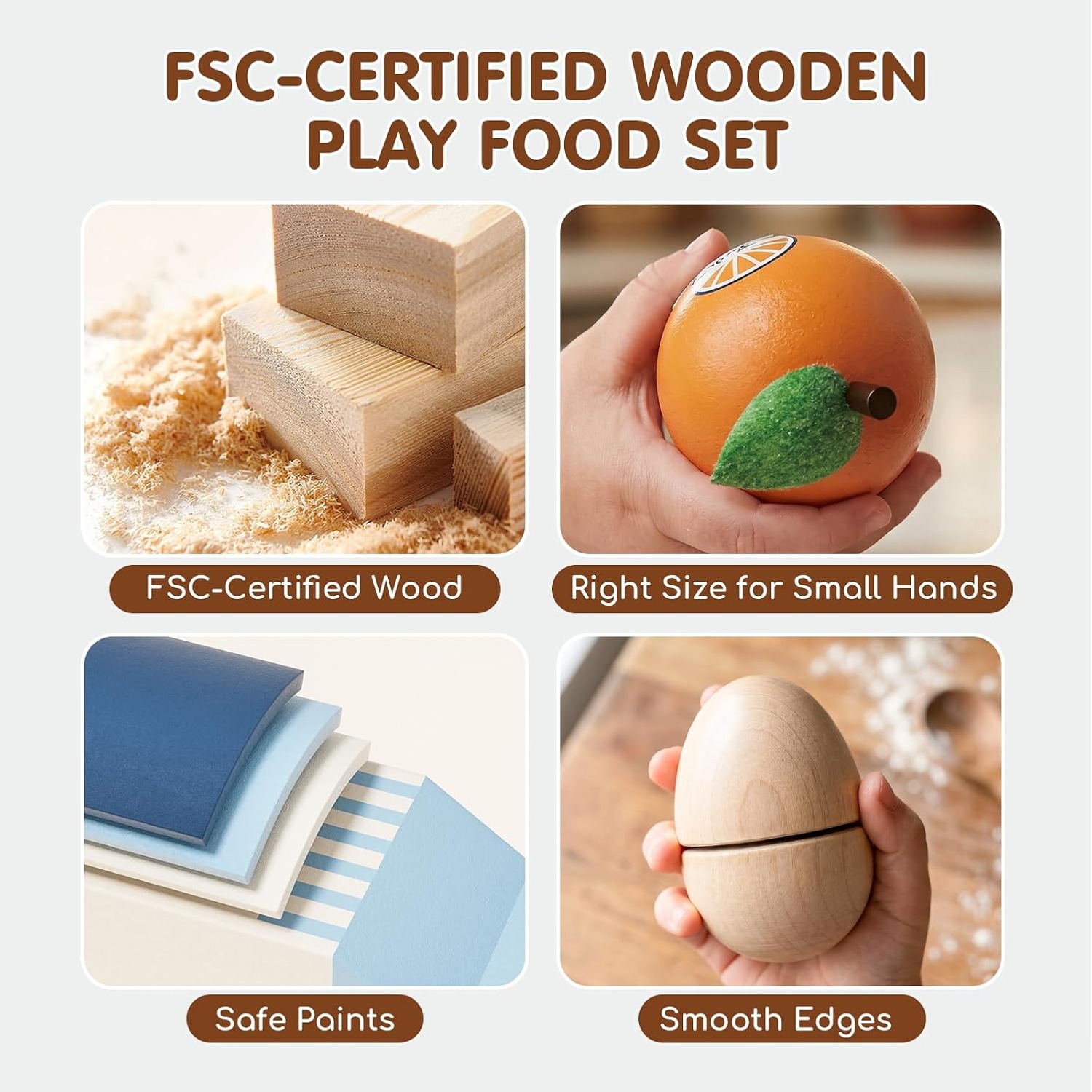
This set is listed as wood with a finely polished surface. The whole thing weighs 848 g packaged, which tells you there is real material in there rather than hollow shells.
Wood also tends to age better. Plastic toys tend to look tired quickly once they scuff. A wooden toy with a few dents from years of use just looks like it has been loved. That is part of why wooden toys often get handed down to a younger sibling or passed on to friends rather than thrown out.
Who this suits
The maker recommends 36 months to 8 years. In practice, you will see three distinct stages across that range.
At three, the play is mostly naming, sorting and carrying. Children pick up a piece, announce what it is, and move it somewhere else. That sounds simple but it is building vocabulary and classification at a fast rate.
Between four and six, the stories arrive. Now there is a cafe, a customer, an order and a complaint about the service. This is the peak of the set's usefulness. Communication, negotiation and sequencing all get a workout, and the child does not notice any of it because they are busy running a business.
From six upward, the play gets more elaborate and often merges with other toys. The breakfast set becomes stock for a shop, props for a dolls' house, or part of a bigger game involving everything in the room. Some of the best imaginative play toys are the ones that fold into other games rather than demanding their own.
Choosing between play food sets
A few things are worth thinking about before you buy any set.
Consider where it will live. A full toy kitchen needs a permanent corner of a room. This set is 22 x 19 x 9 cm and packs into a bag, so it fits on a shelf or in a drawer. If you are in an apartment or the toys share a bedroom, that difference is significant.
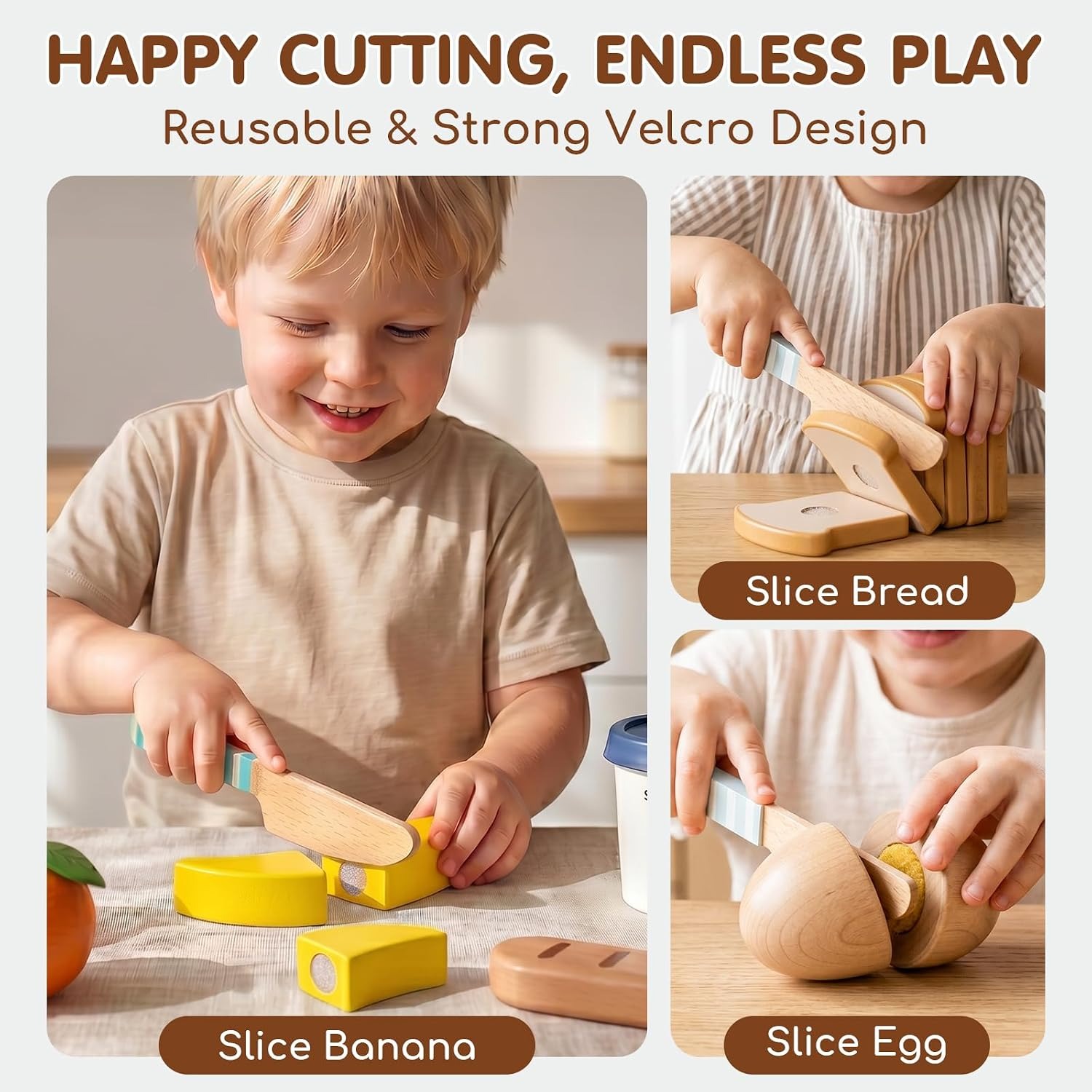
Think about whether you want cutting pieces. Food that separates and sticks back together adds a whole layer to the play, and it gives small hands fine motor practice. The maker's description mentions cutting fruit as part of this set, though the specific pieces that separate are not detailed in the maker's details.
Check how it stores. Any set without a bag or box will end up scattered within a week. Built-in storage is the single most underrated feature in play food, and it is the reason some sets still get used two years later while others get abandoned.
Finally, look at how well it plays with what you already own. Play food is not brand locked. If your child already has toy plates, a till or a shopping basket, this set slots in alongside them without any fuss.
Keeping it in good shape
Wooden toys are not difficult to look after, but they do have one enemy, and that is water.
Wipe the pieces with a slightly damp cloth and dry them immediately. Never soak them, never run them under a tap, and never put them in a dishwasher. Water that sits on wood swells the grain and lifts the finish, and once that starts there is no undoing it.
Keep the set out of direct sunlight when it is stored. A sunny windowsill will fade colour over a few months. The mesh bag makes it easy to tuck the whole lot into a cupboard, which is the best place for it anyway.
Give the pieces a quick look over every so often. Check for chips, splinters or anything that has come loose. That is standard practice for any toy and it takes about thirty seconds.
If the set gets used in a shared setting like a kindergarten, follow your own cleaning routine for shared toys, keeping in mind that wood needs a damp wipe rather than a soak.
Getting more out of it
A few small things extend the life of a play food set well beyond what you would expect.
Give it a destination. A small table, a cardboard box turned on its side, or a cleared shelf becomes "the cafe" and suddenly the game has somewhere to happen.
Join in sometimes, but not every time. Being a customer for five minutes shows a child what the game can look like. Then step back and let them run it. The play goes further when it is theirs.
Add a prop occasionally rather than a whole new set. A notepad for taking orders, a tea towel, a small tray. These cost almost nothing and they reset interest in a toy that has gone quiet.
Let the child pack it away. Fitting everything back into the mesh bag is a sorting task in itself, and it builds the habit of looking after things.
The short version
This is a wooden breakfast themed play food set from Lehoo Castle, model FT-005, recommended by the maker for ages three to eight. It is made from wood with a polished finish, it measures 22 x 19 x 9 cm, it weighs 848 g, and it comes with a mesh storage bag.
Its strengths are familiarity, feel and tidiness. Children already know breakfast, so they play immediately. The wooden pieces feel good in the hand and stand up to years of use. And because everything packs into one bag, the set tends to stay complete rather than disappearing piece by piece.
If you want a pretend play kitchen toy that earns its shelf space in a small home, or a gift for a three to six year old that will still be in rotation next year, this is a solid choice.