

The complete guide
How to Choose and Use a Wooden Tangram Set
The problem with quiet time
Most parents hit the same wall. You need twenty minutes. The child needs something to do. The tablet is right there, and it works, and afterwards everyone feels slightly worse about it.
The trouble with screens is not that they fail to hold attention. They hold it far too well. What they rarely do is leave a child with a thing they have made, or a problem they have cracked on their own.
A tangram sits in the opposite corner. Seven wooden shapes in a box. No sound, no battery, no notification. And yet children who sit down with one often stay there longer than anyone expects, because the puzzle keeps dangling the next shape in front of them.
What a tangram actually is
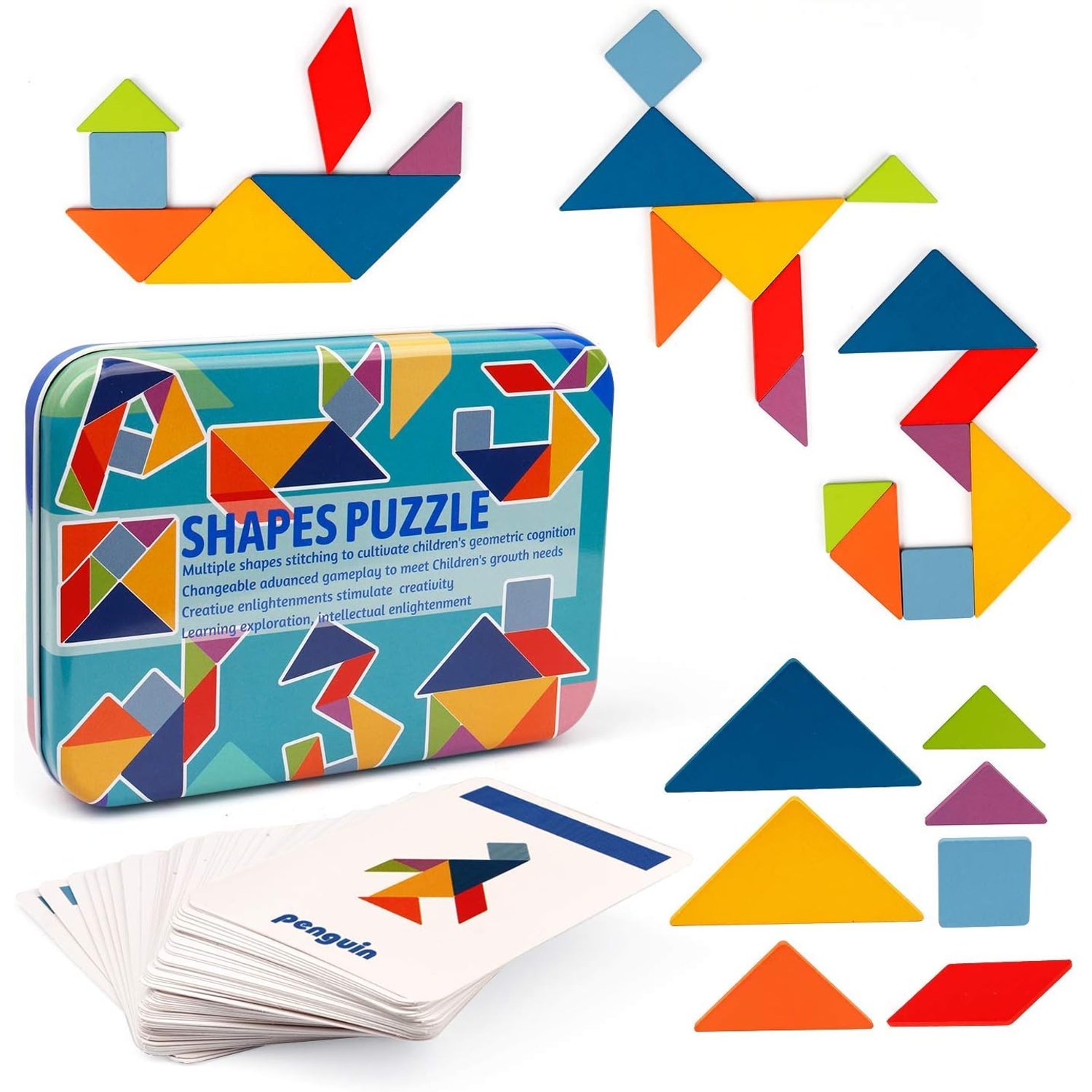
The tangram is an old Chinese dissection puzzle. A square is cut into seven flat pieces, called tans, and the game is to rearrange all seven into a given outline. Two large triangles, one medium triangle, two small triangles, a square and a parallelogram. That is the whole set, and it has not changed in centuries.
The rules are short. Use every piece. No overlapping. The finished shape should match the picture. That is it.
What makes it hard is that there is usually only one way to do it, and the pieces often sit at angles a child would not guess. The parallelogram in particular causes trouble, because it is the only piece that has to be flipped over for some designs. Working that out for the first time is a genuine lightbulb moment.
What is in this box
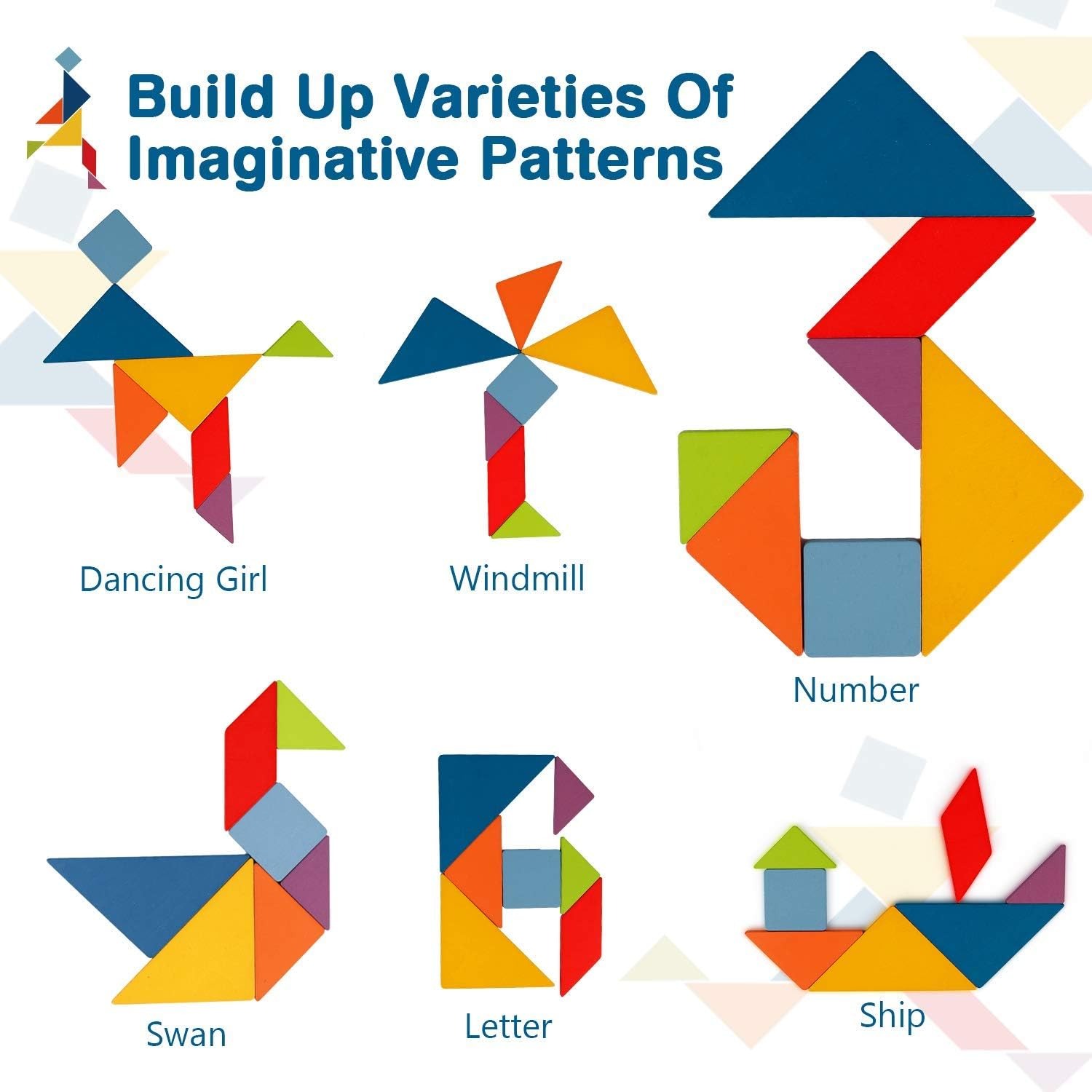
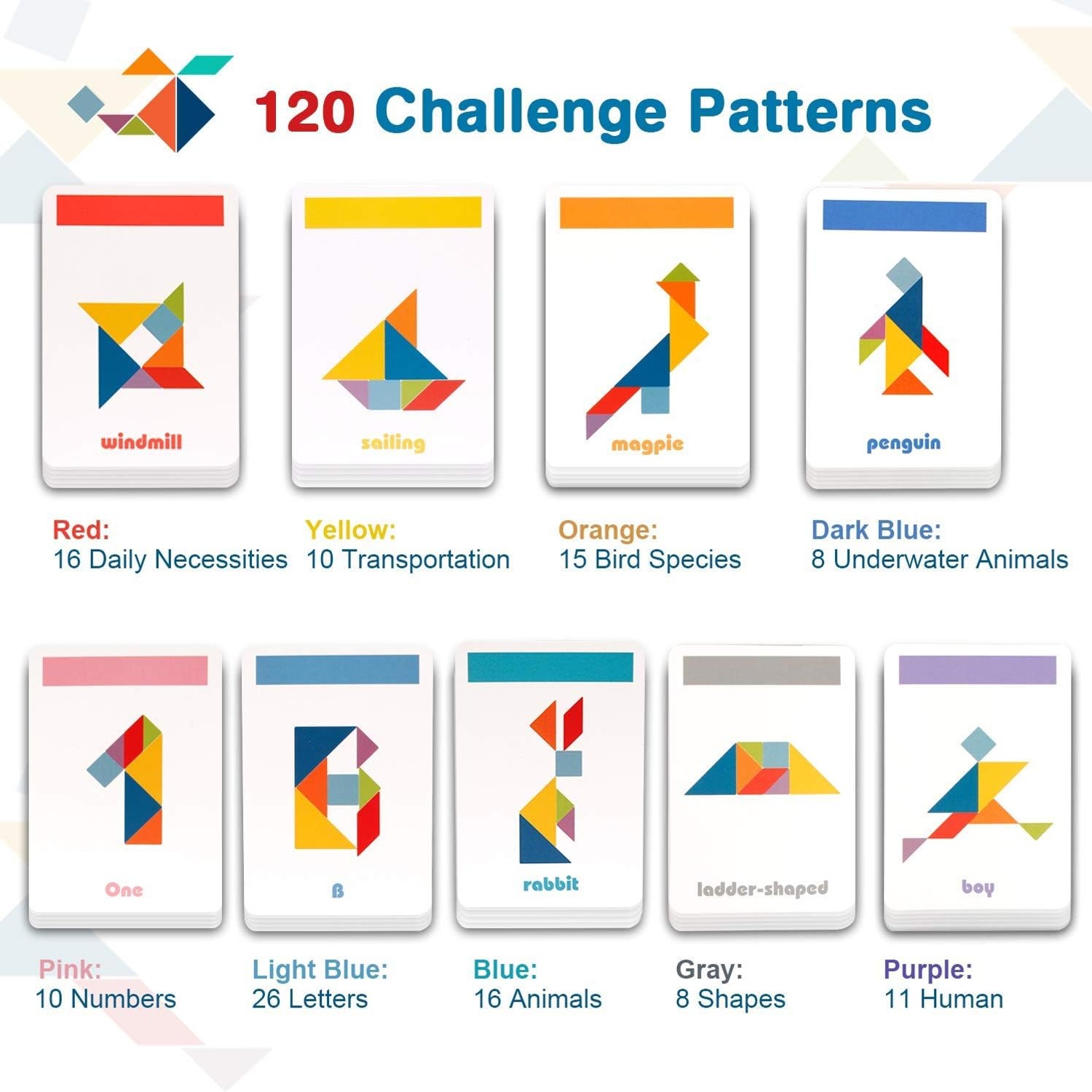
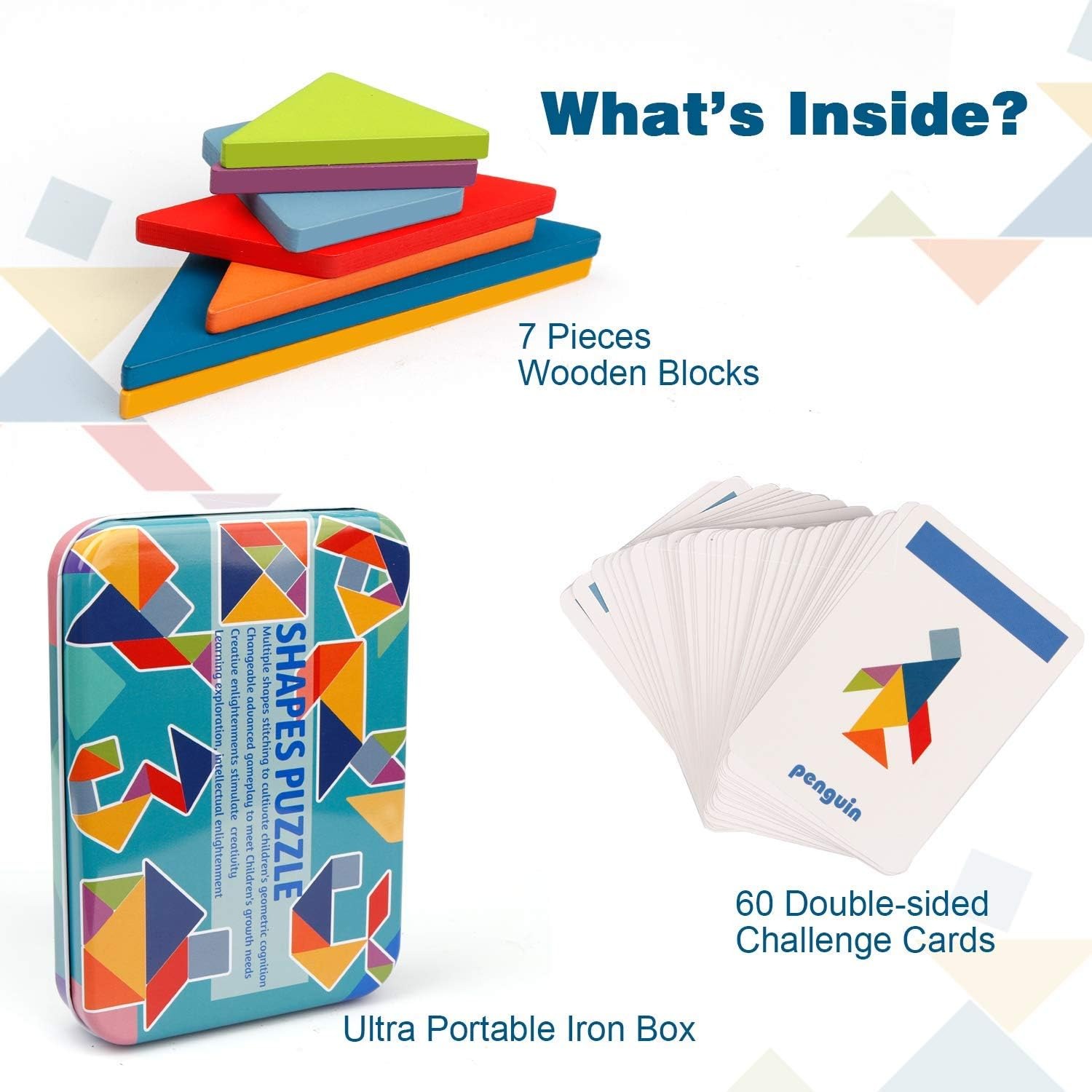
This set gives you the seven wooden tans, 60 double-sided pattern cards and a portable box to keep it all in. The card themes cover animals, vehicles, letters and numbers, which is a wide enough spread that children with very different interests can all find something they want to build.
The pieces are wood, listed as lead free, in a multicoloured finish. The overall item measures 16.7 by 12.3 by 0.1 centimetres and weighs 186.3 grams. No assembly is needed and the operation is entirely manual.
The manufacturer recommends ages 36 months to 12 years and lists the skill level as suitable for all. It is designed as a single-player tabletop activity, though in practice plenty of families play it as a two-person turn-taking game.
Who it suits
Preschoolers, roughly three to five. At this age the trick is to let them build directly on top of the card rather than beside it. The printed shape becomes a template, and the child just finds the matching piece and puts it down. It is still real work for small hands, and it builds the habit of looking carefully before acting.
Early school age, around five to eight. This is the sweet spot. Children can work from the outline alone, and they start to understand that two small triangles can stand in for one medium triangle. That is the beginning of real geometric thinking, and it arrives through play rather than a worksheet.
Older children up to twelve. The harder card designs still take effort. Older kids also tend to shift into inventing their own shapes, which is where the set stops being a puzzle and starts being a sketchpad.
Adults. Do not rule yourself out. A few of these outlines will hold your attention longer than you want to admit.
Choosing between tangram sets
If you are comparing options, a handful of things actually matter.
Piece count should be seven. Sets with more pieces are pattern block sets, which are a different and perfectly good toy, but they are not tangrams. The classic seven is what every tangram card and book in the world is designed around.
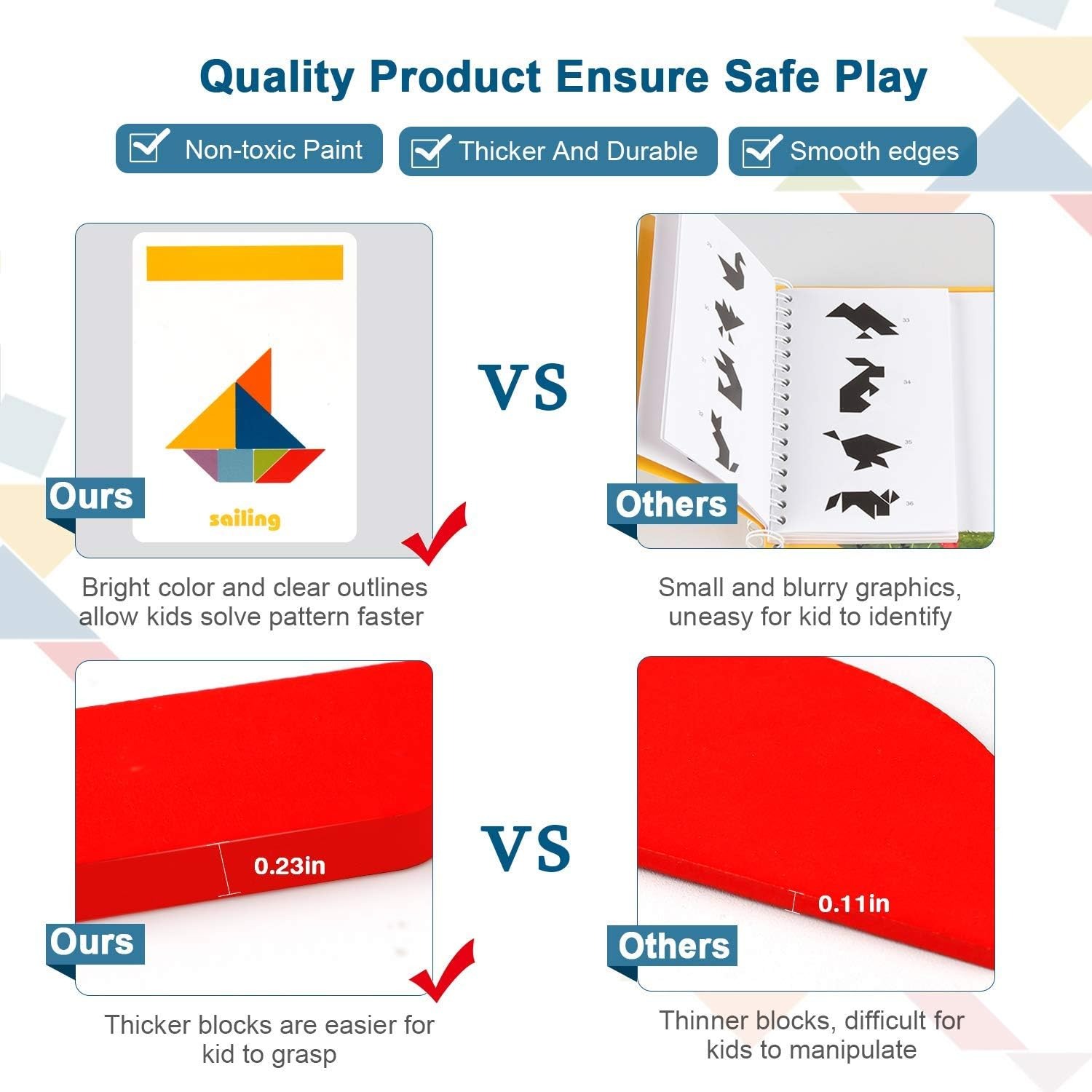
Material changes the feel more than you would think. Wooden tans sit flat, stay put and do not skid off the table the way thin plastic or foam does. They also survive being dropped, trodden on and shoved into a bag.
Card count tells you how long the set will stay interesting. Sixty double-sided cards is a solid library, enough that most children will not exhaust it quickly. Once they do, they usually move to inventing shapes anyway.
Storage is the quiet deciding factor. A set that lives in one box gets packed for trips. A set in a bag with a split seam ends up with three tans under the sofa and the rest unusable, because a tangram missing one piece is just a handful of triangles.
Getting the most out of it
Start easy. Pick a card with a shape your child recognises, like a cat or a boat, rather than an abstract outline. Recognition gives them a reason to care how it turns out.
Resist solving it for them. The temptation is strong, especially when you can see the answer and they are rotating the same triangle for the fourth time. A better move is to point at one piece and ask whether it might go somewhere else. That keeps the solution theirs.
Use the letter and number cards for something other than puzzling. Build a letter, then ask what word starts with it. The set doubles as a shape recognition toy and a literacy prompt without feeling like a lesson.
Try timed rounds with older children. Same card, see who gets there faster. It changes the mood completely and works well on long journeys.
Keep it in the travel bag rather than the toy shelf. A puzzle you can produce at a restaurant table or a delayed gate earns its place quickly. Low weight and a flat box make that practical.
Looking after it
Wooden pieces need very little. Wipe them with a dry or barely damp cloth and let them dry fully before they go back in the box. Avoid soaking, dishwashers and strong cleaners, all of which are rough on painted wood.
Keep the cards dry too. They are the part most likely to suffer in a bag with a leaking water bottle, so a sealed pocket helps on trips.
Build a counting habit at tidy-up time. Seven is an easy number for a child to check, and it turns packing away into part of the game. It also means you find a missing tan the same day rather than a month later.
Store the set somewhere dry. Wood in a damp cupboard can swell over time, which is the one thing likely to shorten its life.
The short version
A wooden tangram set is about as simple as toys get, and that is the point. Seven pieces, 60 double-sided cards, one box that packs into any bag.
It covers a genuinely wide age range because the difficulty lives in the cards, not the pieces. A three year old matches shapes on top of a picture. A nine year old works out a silhouette from scratch. Same seven tans.
It needs no power, no screen and no setup, which makes it one of the more reliable screen-free travel games you can carry. And when the cards run out, children start inventing, which is usually when they like it best.